

INTERESTING TIMES
What can we expect of 2015 in terms of global geopolitics?



Author: Fuad HILALOV Baku
The confrontation between Russia and the West, the deterioration of the Russian economy, separatism in eastern Ukraine, civil wars in Syria and Libya, the situation in Iraq that is virtually torn apart, the recognition of Palestine, the situation with the Taliban after the US withdrawal from Afghanistan - these are the issues that remain on the agenda of world politics in 2015.
"Migration of hawks"
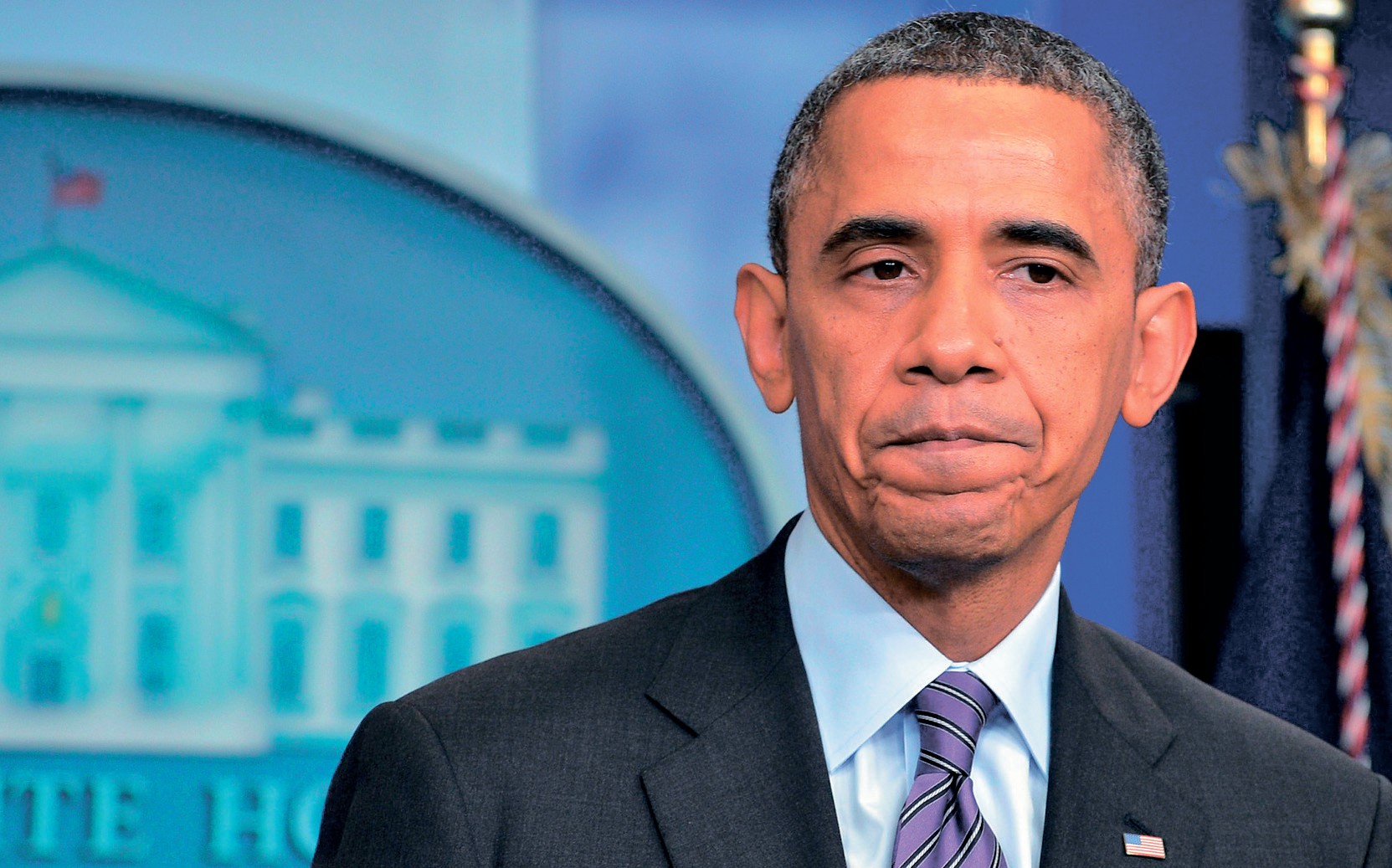
This year precedes the election year in the United States, the main player in world geopolitics. Last year's elections to the United States Congress already showed to what extent the Democrats had lost their positions. The Republicans won the majority in both houses effectively making Obama, who is a Democrat, a lame-duck president. Obama's major promises such as ObamaCare providing for reforms in health insurance to protect low-income citizens have not been fulfilled. Today, the average level of the American household purchasing power corresponds to that of 1962. Another factor to keep in mind is mass protests in defence of the rights of African Americans that may continue. Illegal intrusions of people into the White House, the events surrounding former intelligence officer Edward Snowden, the declassification of acts of torture used by the US secret services - all these undermine the image of the country as the exporter of democracy and at the same time cause anger among Obama's opponents.
They accuse him of being too soft in dealing with such countries as Russia, Iran, Syria, and North Korea. The position of the Congress with a Republicans majority on the issue of improving US relations with Iran and Cuba will become known this year too.
It will make sense if the Democratic Party nominee is chosen from among hardliners. For example, Hillary Clinton, who is credited with the success of the military operation to overthrow the Gaddafi regime and views not unlike those of the Republicans'. Meanwhile, the Republicans may nominate a still more aggressive candidate. Hence, to distract Americans from domestic problems including economic woes, and to please the military-industrial sector, the United States may elect a president with tough rhetoric, capable of provoking a global conflict.
Who will be the main opponent of the United States in this conflict? Iran, despite pressure from the West, has been able to survive. China with its powerful economy is not even considered as an opponent because, among other things, it is also a holder of US debt. Thus, the only plausible candidate is Russia in respect of which the United States is expected to take a more aggressive stance.
Russia: the moment of truth
Contrary to a popular view backed by analysts that the confrontation between Russia and the West has been caused by events in Ukraine, one should recall that it began much earlier: the US Magnitsky Act, Russia's law banning the promotion of homosexuality, Russia's tough position on the Syrian issue which was one of the reasons for the cancellation of a NATO military intervention in the country, etc.
But where are the roots of the confrontation? Since 2000, the Russian economy has been receiving large sums of money because of high oil prices. Despite the problems in the economy, high levels of corruption and bureaucratic arbitrariness, Russia began to gradually recover from the economic shock of the early 1990s and the 1998 default. Of course, Russia has missed a chance to build a competitive and diversified economy over these years, which would be less dependent on imports. Even so, the Russian economy has been developing in recent years, and it could not but have affected its geopolitical positions, which was unacceptable for Russia's traditional opponents.
In an interview to the Russian media late last year, George Friedman, an American political scientist and the CEO of Stratfor, a private US-based global intelligence company, also known as "The Shadow CIA", said: "No American president can afford to sit idly by while Russia is becoming ever more influential". World-famous Zbigniew Brzezinski was even more revealing in this regard: "The New World Order will be built against Russia, on the ruins of Russia and at the expense of Russia". Such words speak for themselves, indeed.
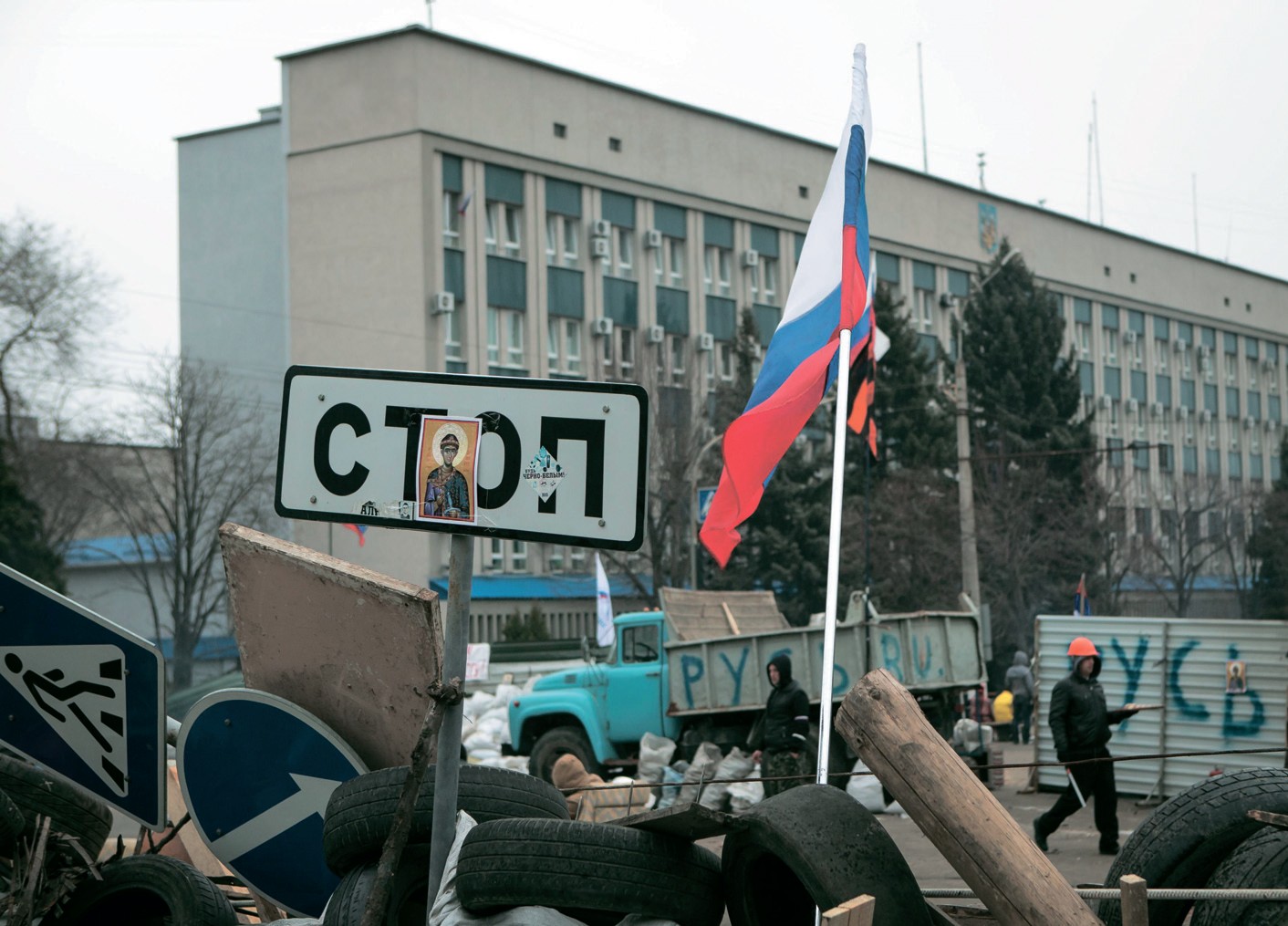
In this context, the events in Ukraine can be regarded as an attempt to stop Russia's geopolitical strengthening. Despite gaining Crimea and Donbass, with which even the Russian leadership does not seem to know what to do, Russia has lost its battle for Ukraine. However, the opponents of Moscow have also failed to achieve their main objective: to embroil Russia in full-scale hostilities leading to an open invasion and accuse it of aggression so that to rally against it the rest of the world. Despite the undisguised participation of Russian volunteers in south-eastern Ukraine, there is no talking about an open deployment of troops. On the contrary, Russian officials ever more often make statements in support of the territorial integrity of the country. In 2015, provocations are possible in the territory of Ukraine to draw Russia into an open conflict; however, it is also possible that the West would tacitly reconcile itself with Russia's annexation of Crimea and the guarantees of Ukraine's non-entry into NATO or the European Union in exchange for Kiev regaining control over the breakaway regions. But to what extent would such an agreement be real and effective? After all, the Ukrainian issue has involved forces whose interests diverge. Solving or freezing of the conflict is also possible in the case of switching over the attention to another global event.
In all these events, Ukraine will be assigned not so good a role of an outpost of the Western powers in the fight against Russia. According to experts, the state budget adopted in the last days of 2014 and completely stripped down of all social programs and benefits cannot save Ukraine from economic disaster, while a conflict on its territory will not allow Ukraine to join NATO, that is, of course, if the Alliance does not amend its charter.
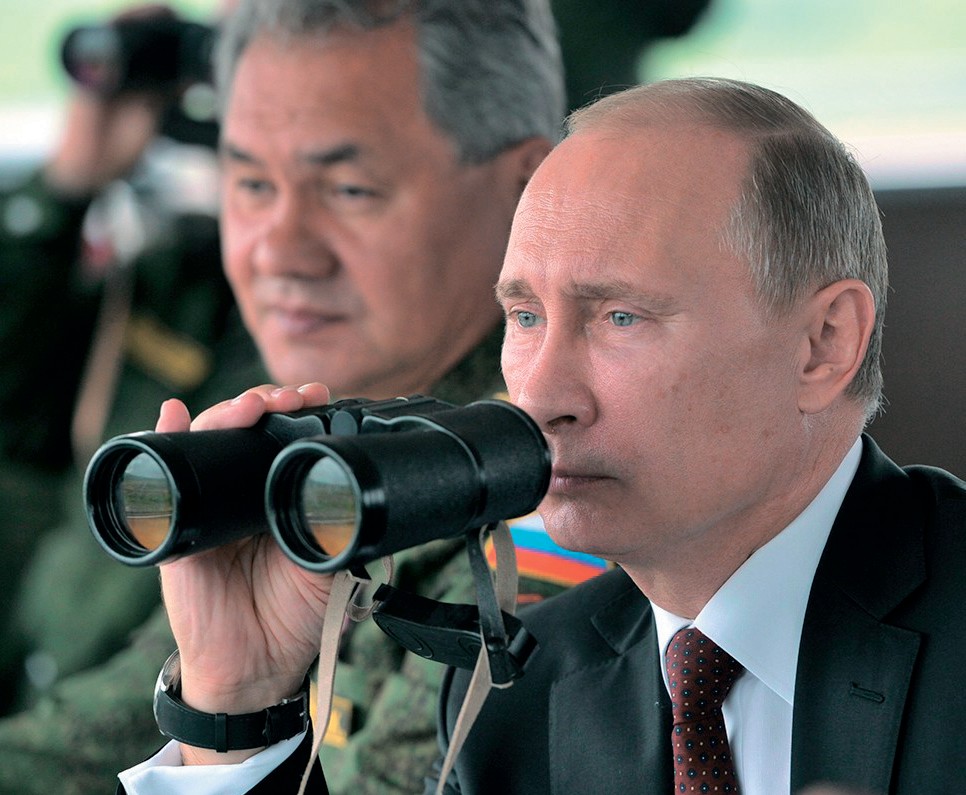
In Russia, the economic situation will also deteriorate. Thus far, the country's population has not fully assessed the burden of Western sanctions, the fall in oil prices and devaluation of the rouble. The situation will seemingly manifest itself in the spring, creating the preconditions for social tension. This is the main objective of the Western sanctions. "The sole purpose of the sanctions is to overthrow the current regime," Russian Foreign Minister Sergey Lavrov said recently. Anyway, it is clear that Russia and its president are going to live through hard times when it is necessary to maintain a balance inside one's own team and be very selective in foreign moves. Putin himself said that two years would be needed to get out of the deadlock. But to create an efficient economy, such a period is too short. Experts believe that Putin is waiting for a moment when a crisis strikes the Western world.
Meanwhile, the "Old World" will have to deal with such problems as the failure of the multicultural model, a systemic crisis, and the risk of disintegration of the European Union. Moreover, Europe significantly suffers from its own sanctions against Russia. The Ukraine crisis has brought Europeans and their overseas counterparts closer together. At the same time, one should not forget the efflorescence of patriotic political parties in Europe which are rather averse to the supranational structures. Thus, Europe itself will face hard times. And China appears to be the only real beneficiary of the recent political processes.
To some war is hell, to others, a kindly mother
There was a strategic principle in ancient China: to overpower the enemy slowly, just like a silkworm eating the leaf. China is slowly but consistently strengthening its position, reaping benefits from the confrontation between the West and Russia. Multibillion-dollar contracts with Russia profit Beijing in the first place, not Moscow. For the time being, it looks like China will continue to strengthen its position.
Avoiding the risk of an open confrontation, the US will try to curb the rise of China in indirect ways and through third parties, for example, by supporting China's neighbours in the Asia-Pacific region which fear the power of China. At the same time, it is no secret that there are deep economic and social divides within the Chinese society, and the country is in need of reform. There is also a possibility of sabotage of China's economic projects in different parts of the world, carried out in different ways. A prime example is the events surrounding the Nicaragua Canal, when environmentalists and local farmers all of a sudden began to protest at the launching of a China-backed construction project.
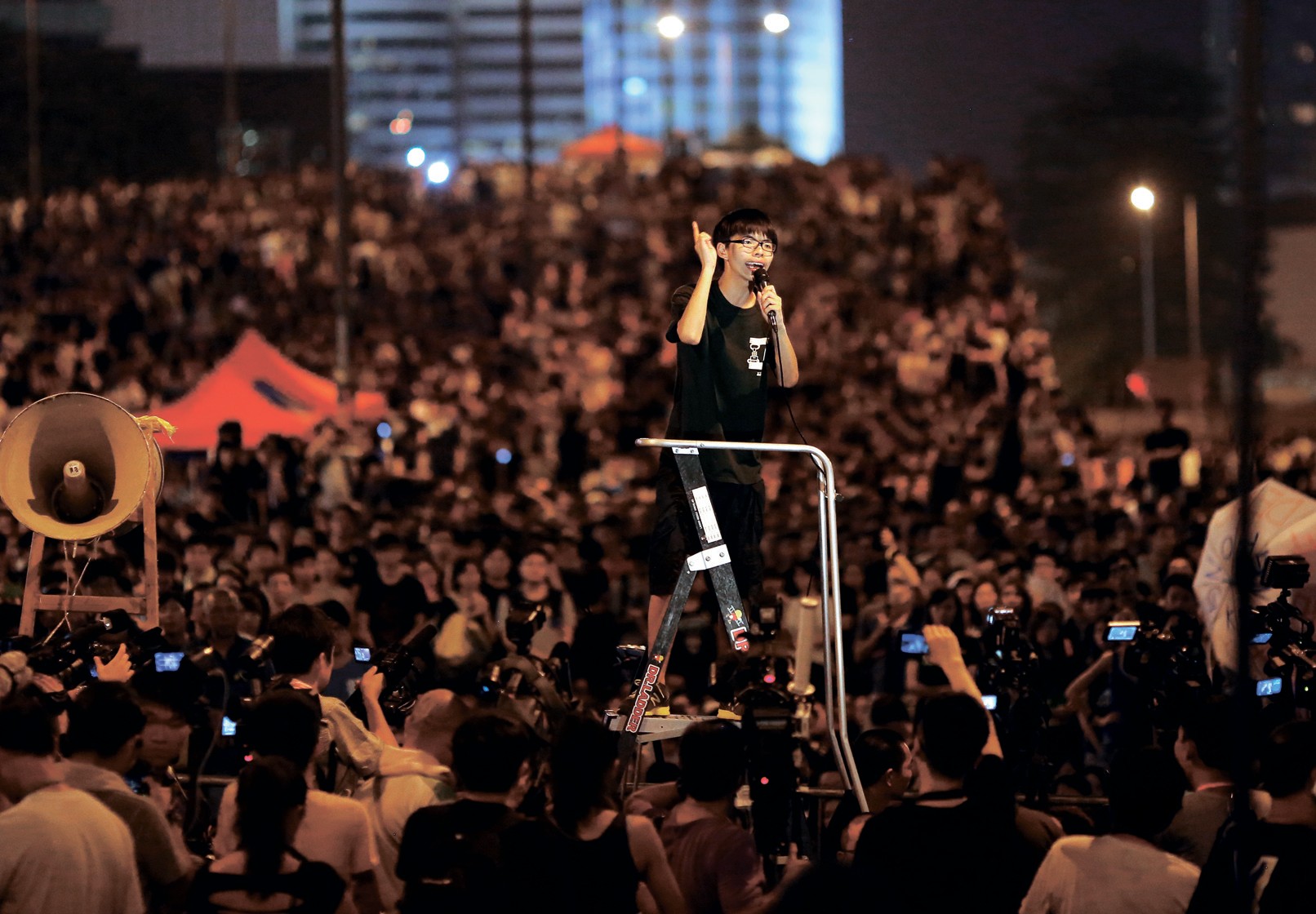
However, we should not forget the "first Chinese warning" given in Hong Kong last year, which could be repeated. Of even greater concern for China is the ethnic and religious separatism of the Uighurs. Uighurs are fighting in different parts of the world, in groups obsessed with the idea of jihad, and make no secret of their plans for war against China. The position of Uighurs in terms of intelligence and analysis is strong enough in the Taliban movement in Afghanistan neighbouring China. Following the withdrawal of NATO troops this year, the Taliban in Afghanistan and northern Pakistan could become the driving force of the fire in the East - from Libya to Afghanistan.
A four-part Syria
It seems that the arc of instability stretching from Libya to Afghanistan will only grow this year. There is a possibility of the conflict spreading to the neighbouring regions. Syria and Iraq will remain in the epicenter of events, just as last year.
To date, Syria is divided into four parts, which are controlled by the government forces, the Free Syrian Army, the Islamic State of Iraq and the Levant (ISIL), and the Party of Democratic Union of Syrian Kurds. Because of the long period of clashes and bleak prospects for the future the number of rebels supporting a democratic solution to the conflict is on the rise but the difference in their views and positions is also growing.
This year, the course of the conflict in Syria will largely depend on how well the United States will support the rebels while Russia and Iran, the government. ISIL may affect the situation too, redeploying its main forces from Iraq to Syria.
However, the war where all are fighting against all others is not expected to come to an end this year.
A three-part Iraq
The year 2015 is going to be a test for the normalization process initiated by the new government of Iraq headed by Prime Minister Haider al-Abadi, whose main task will be fighting ISIL that controls a third of the country. A large-scale offensive to liberate Iraq from the terrorists is expected to be launched in spring. Haider al-Abadi also makes feeble attempts to come to an agreement with the Kurds and Sunnis. Negotiations are successfully being conducted on the division of the country's energy resources between Bagdad and the Iraqi Kurdish capital of Erbil. In contrast to the situation with previous Prime Minister Nouri al-Maliki, the Sunni tribes are more loyal to the new prime minister, which can have a positive impact on the fight against ISIL. However, the completion of all of these processes takes time. In the meantime, Iraq is divided into three parts: a Kurdish part, a Sunni part controlled by ISIL, and a Shiite part.
A two-part Libya
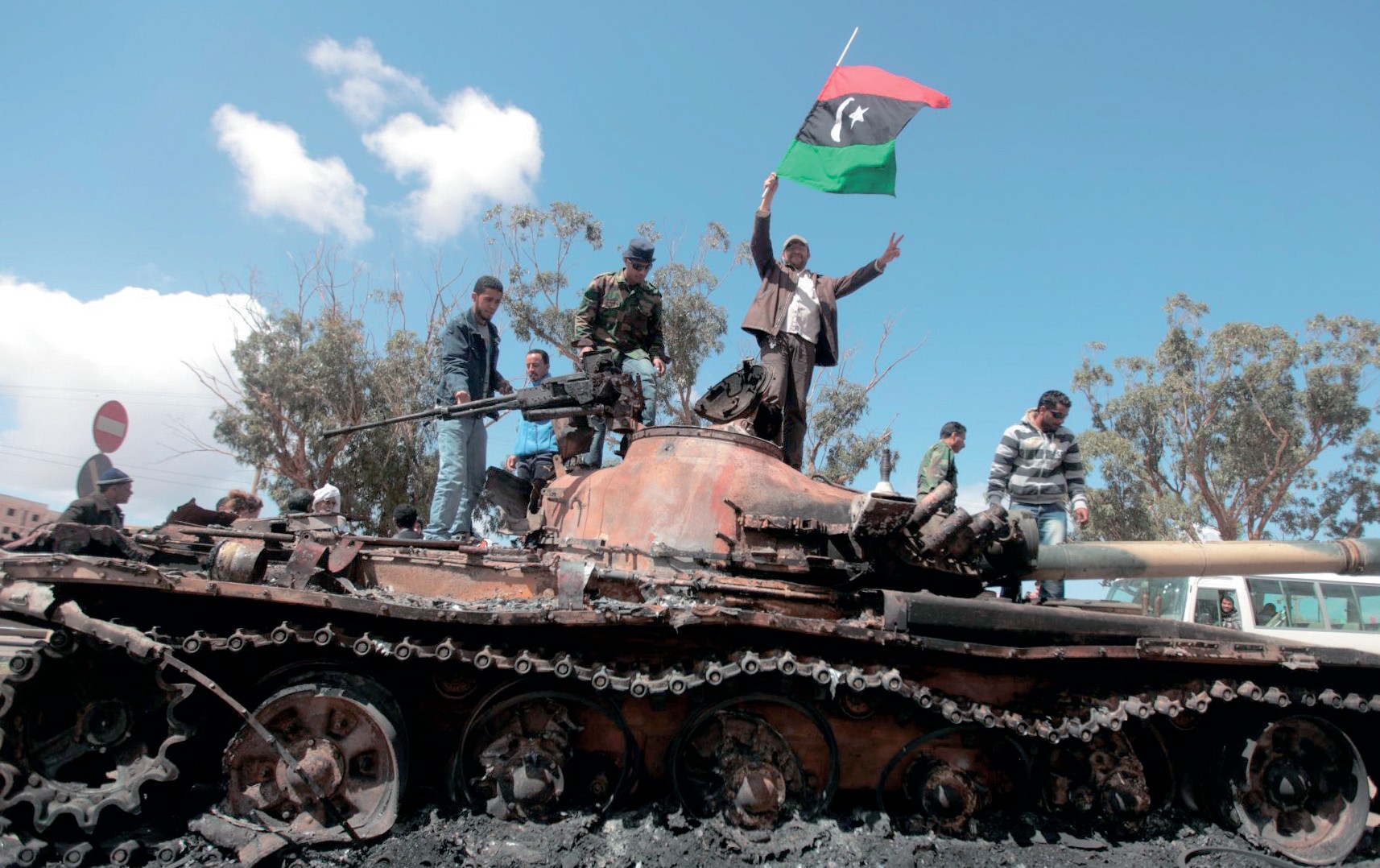
After the overthrow of the Gaddafi regime, there are more than four forces operating in Libya, which are equal in importance, control different parts of the country and establish there own laws. Contradictions between them run deep.
Nominally, the country is governed by two parliaments that do not recognize each other. Negotiations between the parties scheduled for 5 January were postponed to a later date.
The outlines of the struggle for Libyan oil, the cost of which is much lower than in Saudi Arabia, can easily be perceived behind all this chaos in the country. According to analysts, it is in the interests of the latter that such competitors as Libya withdraw from the oil market. On the other hand, when the oil terminals and reservoirs are controlled by unknown persons, one can talk about the black market of "black gold".
Attacks on the coastal areas of Libya with terminals of Ras Lanuf, Es Sider and Brega located on the so-called "oil crescent" have increased in recent months. Militant groups also attack tankers, and it goes as far as the use of combat aircraft. Based on what is happening in Libya now, one can expect either the appearance of any external force or a merger of the conflicting parties against a single opponent.
Yemen: North vs. South
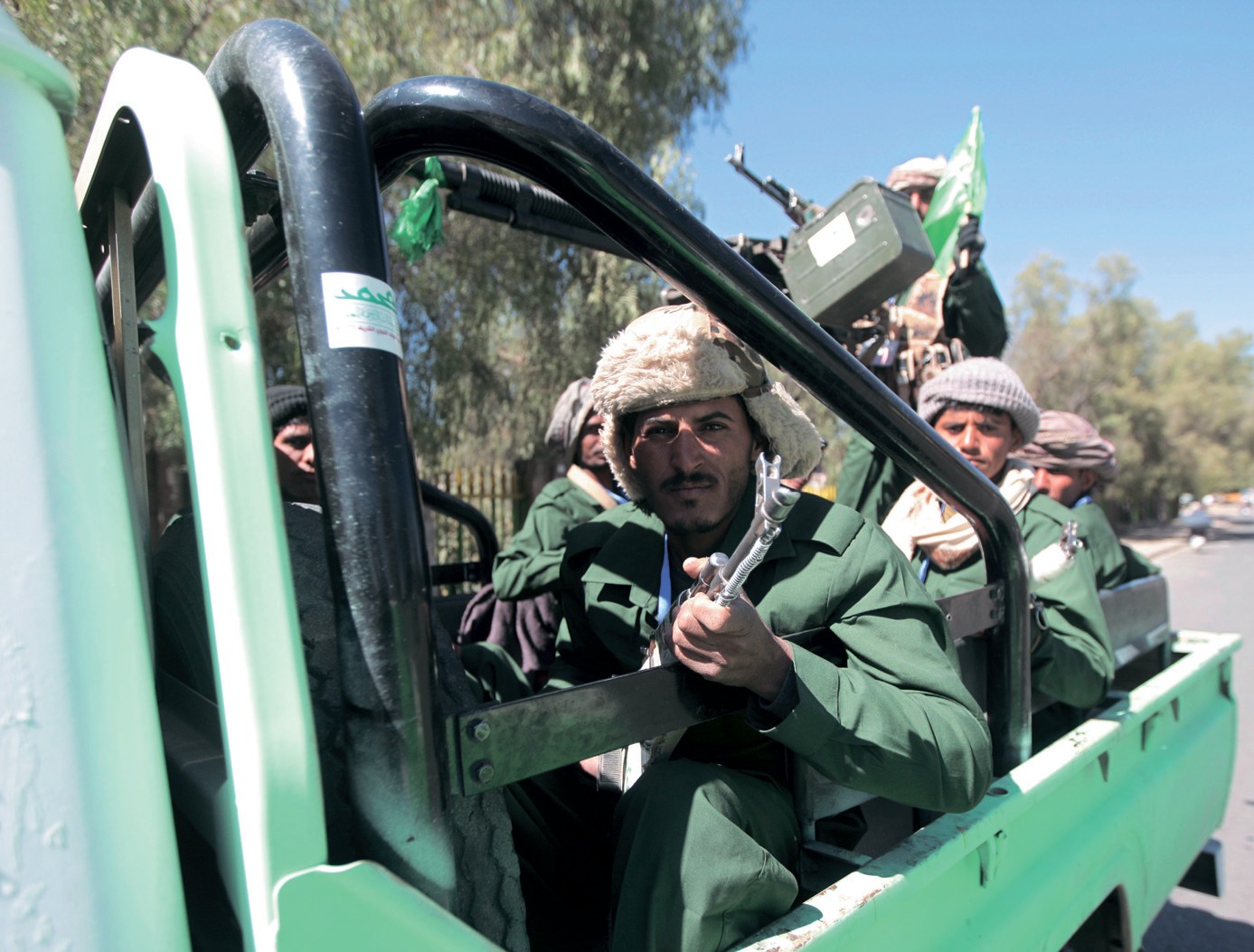
Yemen is yet another state affected by the "Arab Spring", in which 2015 is going to be turbulent. The country is engulfed in such problems as the confrontation between North and South. Ali Abdullah Saleh, the former president overthrown during the Arab Spring, seems to have come to terms with the Shia-Huthis north and is preparing to regain power. However, in this case еру Huthis will be vested with enormous powers, which is not going to be liked by the Sunnis of the south, which have traditionally been a stronghold of al-Qa'eda. Incidentally, the Shia headquarters suffered a terrorist attack right after New Year's Eve. It looks like we may witness another civil war in the near future.
Saudi Arabia: Iran stole up unnoticed
The Saudi Arabian leadership cannot but feel concerned about the strengthening of the Yemeni Shiites on their southern borders. The Saudis see "the hand of Shiite Iran" behind the strengthening of the Shiites in Yemen and in the east of Saudi Arabia. Indeed, having control over half Iraq through its Shiite government and supporting Asad, if the Houthis win, Iran can take under its protection this country in the south of the Arabian Peninsula. And if protests in Bahrain result in an overthrow of the local regime, Iran may put down roots in the "soft underbelly" of Saudi Arabia. Prospect for Iran's accords with the G6 will basically depend on the USA. If Iran achieves such accords with the G6 and the sanctions are lifted, it has every chance of transforming into a regional power.
Alongside this, the Saudi Kingdom has enough problems as it is. There are already rumours on the web about the health of King Abdullah that confirm his death. After Abdullah's death, the issue of his heir will arise which threatens with intrigues inside the royal family.
In conclusion
One of the long-standing problems of the Middle East - the Palestinian-Israeli conflict permanently passing from a cold phase to a hot one - will be under the influence of two factors during this year: the world community's stance on recognition of Palestine as an independent state and the March polls in Israel. Israeli Prime Minister Benjamin Netanyahu is running in this election to enlist absolute voter support and establish total control over the government. His major opponents Tzipi Livni and Isaac Herzog have set up their joint left-centrist bloc thus putting to hazard the right ultras' chances of winning a sweeping victory. If Netanyahu's ratings are low, Israel may expect all kinds of terrorist attacks and new clashes.
Such is the incomplete picture of the global politics as of today and some forecasts for the near future. In any case, by all appearances, we are in for an exciting year full of political turmoil.
RECOMMEND:
 782
782

