

AN EMPIRE IN REFLECTION
Vienna: where the past sings and the future waltzes
Author: Elchin HUSEYNOV, Baku-Vienna-Baku
Vienna is more than just the capital of Austria. It is a city that knows how to listen. It listens for the sound of a carriage on the cobblestones, the gentle hum of a tram on the central Ringstrasse boulevard, the voice of a cello from the windows of an old house, and so much more. Tourists often say that Vienna is "like a postcard." It is also said that nowhere else in Europe is there such a dense layer of history per square metre. Every façade, every vaulted ceiling, seems to have been signed by Mozart or Franz Joseph. But importantly, Vienna is not stuck in the past; it lives a full life in the 21st century.
A rhythm beyond seasons
Vienna is a year-round city. There is no unsuitable month to visit. It lives life to the fullest in winter, spring, summer, and autumn, changing its mood, scents, street music, and even its rhythm. In spring, during April, the city awakens; trees slowly unfurl their buds, and the air becomes softer and cleaner. In May, tulips bloom in the parks, lime trees fill the air with honeyed tones, and the first terraces appear on the streets. People come out with books, with dogs, with a cup of coffee—simply to sit. This period is especially lovely for strolls: along the banks of the Danube, through the avenues of Schönbrunn, or around the Belvedere. In spring, the first music festivals are held here, markets and coffee houses come alive, and the wine cellars fill up.
Summer in Vienna is different—more vibrant. The heat makes the rhythm a little lazy, but this has its own charm. People gather by the water—on the Danube islands, on floating platforms, in street cafés under awnings. The city becomes a stage: concerts, cinema in the square, dancing in the parks, exhibitions in the arches. One of the largest free summer festivals, the Donauinselfest, gathers thousands of spectators by the water. A huge screen is set up on the Rathausplatz (City Hall Square), showing operas, concerts, and ballets every night. At this time of year, Vienna seems to stop being a museum and becomes a living venue for contemporary art. In the evenings, there is wine, street food, live music, and sunsets over the church spires.
Autumn in Vienna draws visitors back into the museum halls and coffee houses, where one again wants to sit by the window. September can still be warm, almost like summer, but October brings the scent of wet leaves, grapes, pumpkins, and hot strudel. In November, Vienna becomes especially atmospheric—quiet, intelligent, slow. It is a time for new exhibitions, chamber concerts, and art-house film festivals.
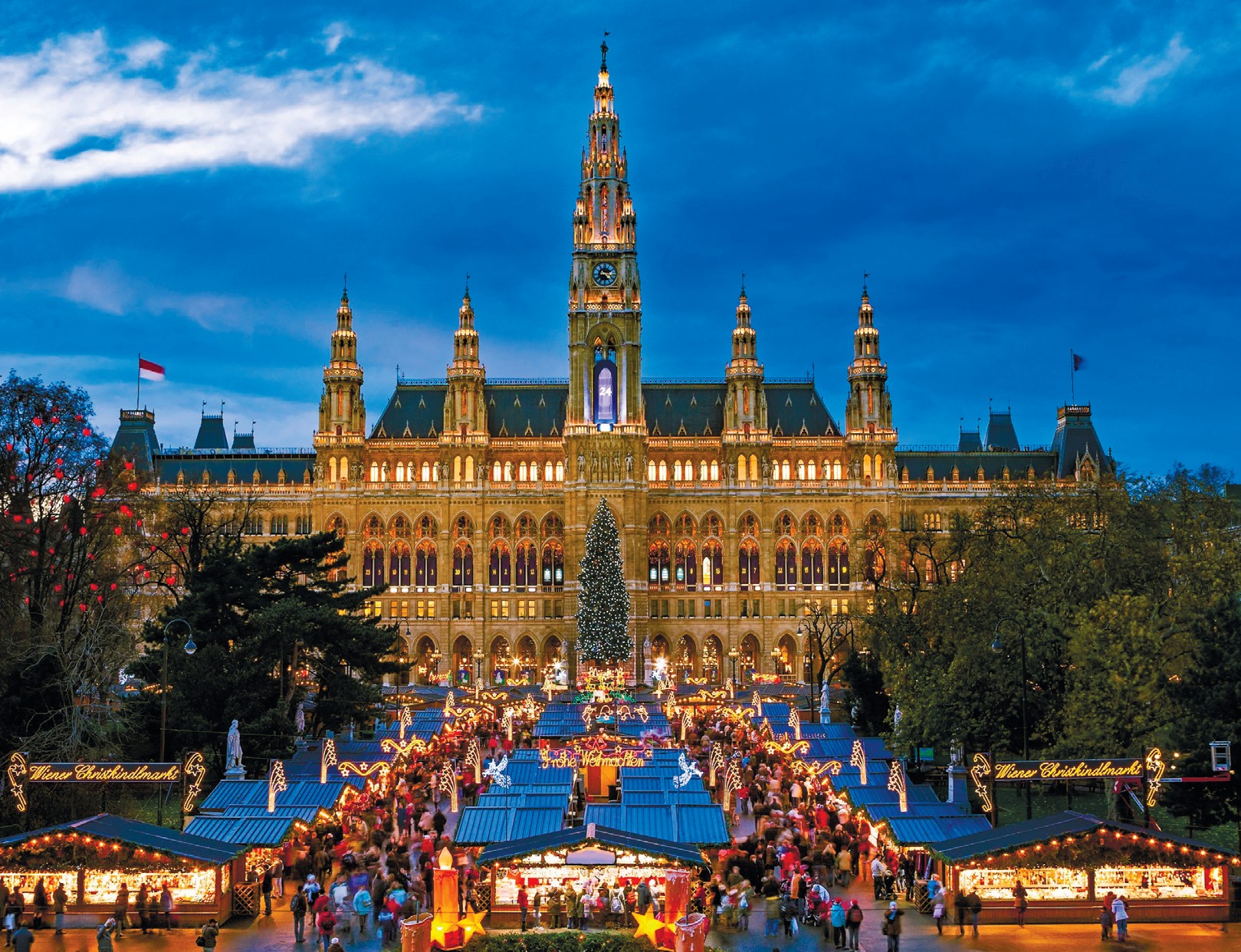
Winter in Vienna, however, is special. At this time, the city transforms into a postcard one wishes to stay in a little longer. Hundreds of Christmas lights, the smell of cinnamon, oranges, and mulled wine, music both choral and jazz, snow on the rooftops. In front of the Rathaus (City Hall), the Christmas market—one of the oldest in Europe—takes place. The cafés once again become shelters from the cold, and every other one serves hot chocolate, spiced cakes, and gingerbread biscuits. January is the time of the balls. The Vienna Opera Ball at the State Opera house is not a performance; it is a reality one can enter, wearing gloves and spinning in a waltz.
Like an open-air museum
While strolling the streets, you do not need to specifically search for landmarks—they find you. And yet, there are places that cannot be missed, because they contain the essence of Vienna, its portrait painted over centuries.
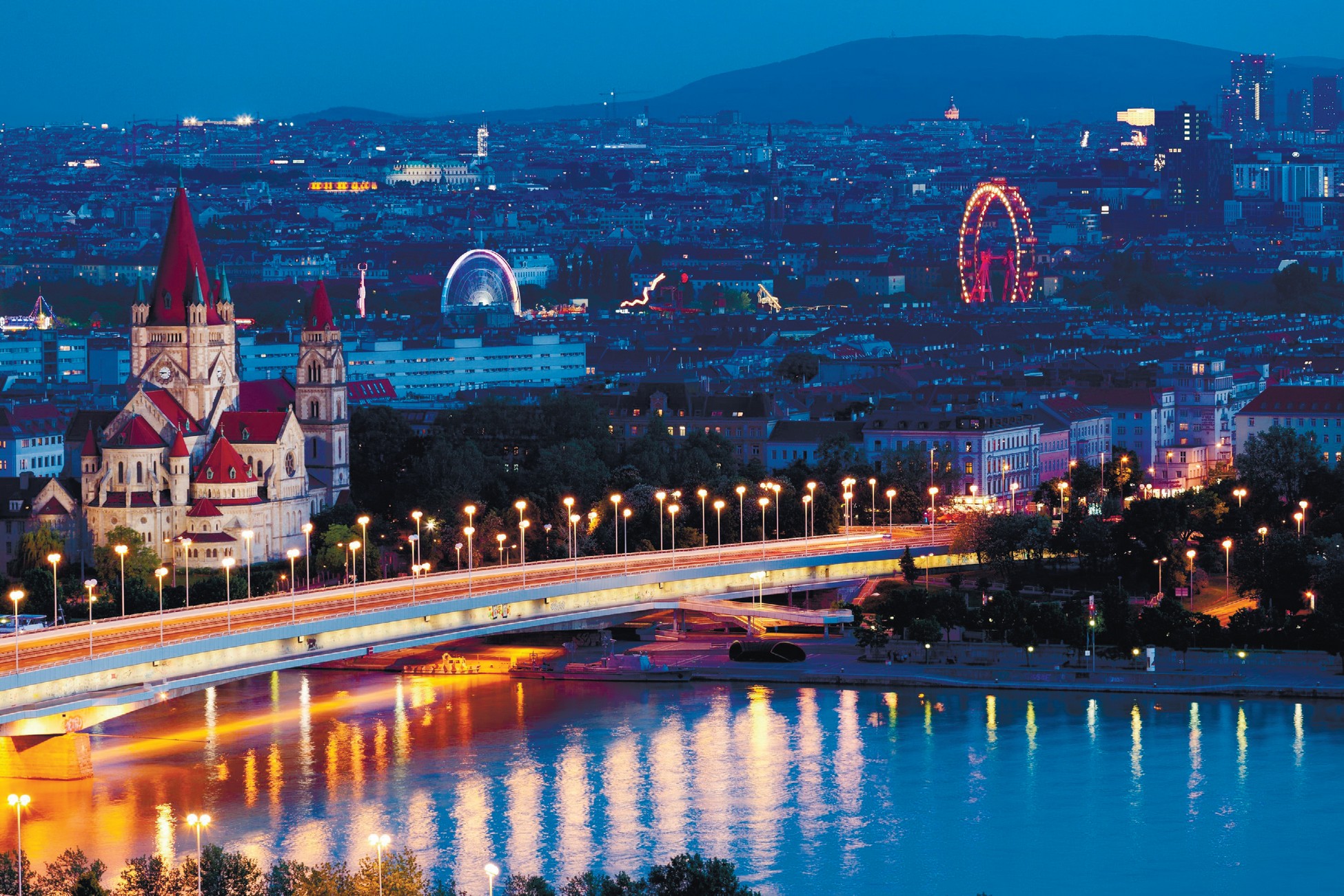
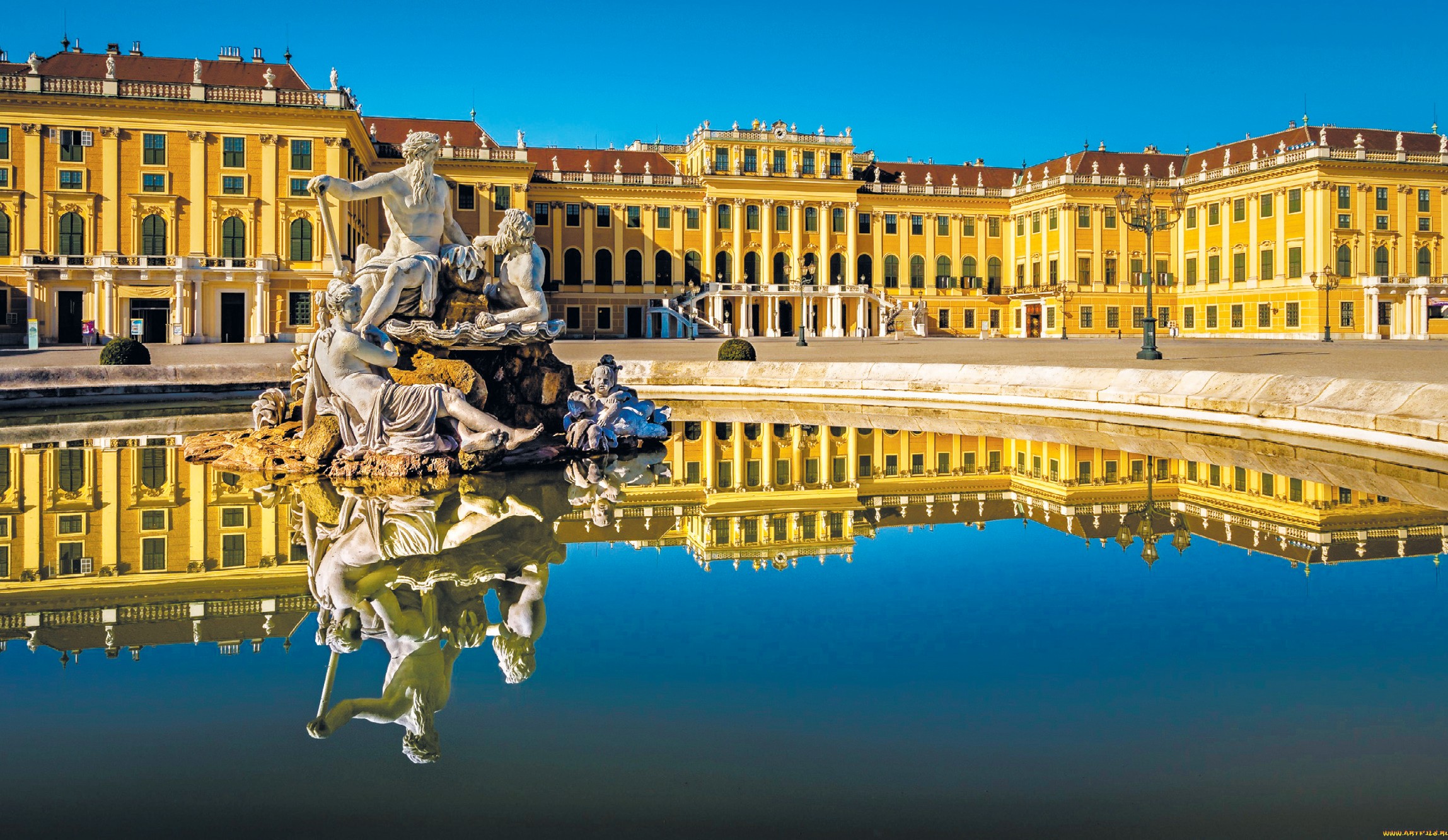
You must start with Schönbrunn. It is not just a palace; it is an entire empire under vaults, in mirrors, in labyrinths, and in the ceiling frescoes. It smells of old wood, gilding, and mystery. The summer residence of the Habsburgs holds within it the silence of royal mornings and the weight of diplomatic evenings. In the garden, one can get lost, or one can find a panorama from which Vienna looks like a toy. In winter, it is bright with snow; in spring, with tulips; in summer, with greenery; and in autumn, with the gold of the leaves.
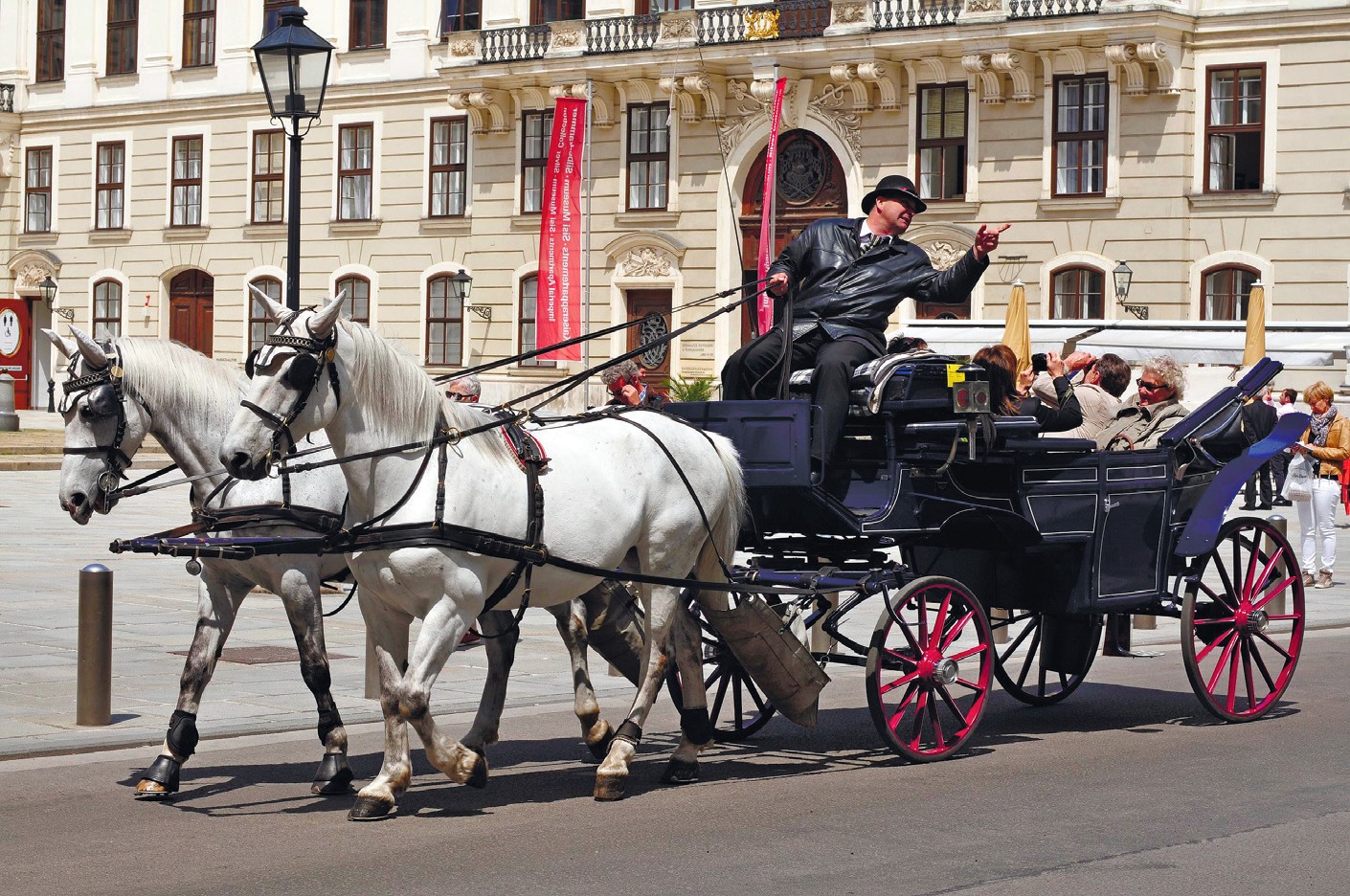
The second address where imperial Vienna begins is the Hofburg palace complex. This is the former winter residence of the Habsburgs, and now home to the Imperial Apartments, the Sisi Museum, the Imperial Treasury, the Spanish Riding School, and the presidential residence. At the Hofburg, which was assembled over centuries, many cultural and official events are held today. Even just standing in the square in front of the palace is a journey through time.
The Belvedere Palace is another pearl, but of a different character. It is not about power, but about beauty. Built as the summer residence for Prince Eugene, today it has become a home for art. The Upper Belvedere houses Klimt's "The Kiss"—a painting that perhaps does more to advertise Vienna than all the guidebooks. The palace itself is surrounded by gardens that perfectly reflect the Viennese style: everything is beautiful, but there is no pretentiousness.
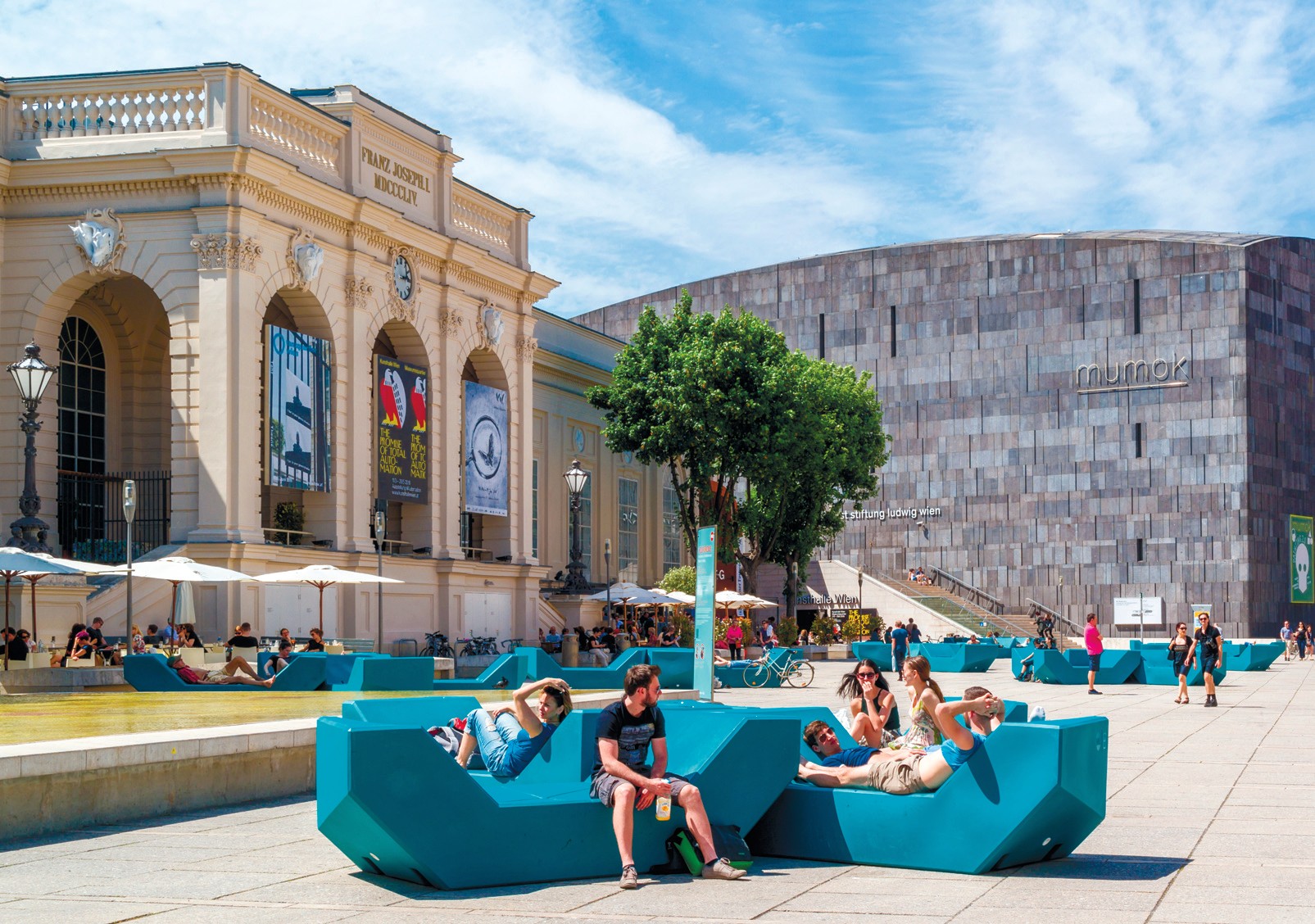
If you want to understand modern Vienna, you should head to the MuseumsQuartier. This is a cultural quarter of the new era, where classical art coexists with the avant-garde, and where you can sit on a bright plastic lounger and read a book while listening to street musicians. It is home to the Leopold Museum (a treasure trove of Viennese modernism, the Wiener Werkstätte, and expressionism), the Mumok (Museum of Modern Art), and the Kunsthalle Wien.
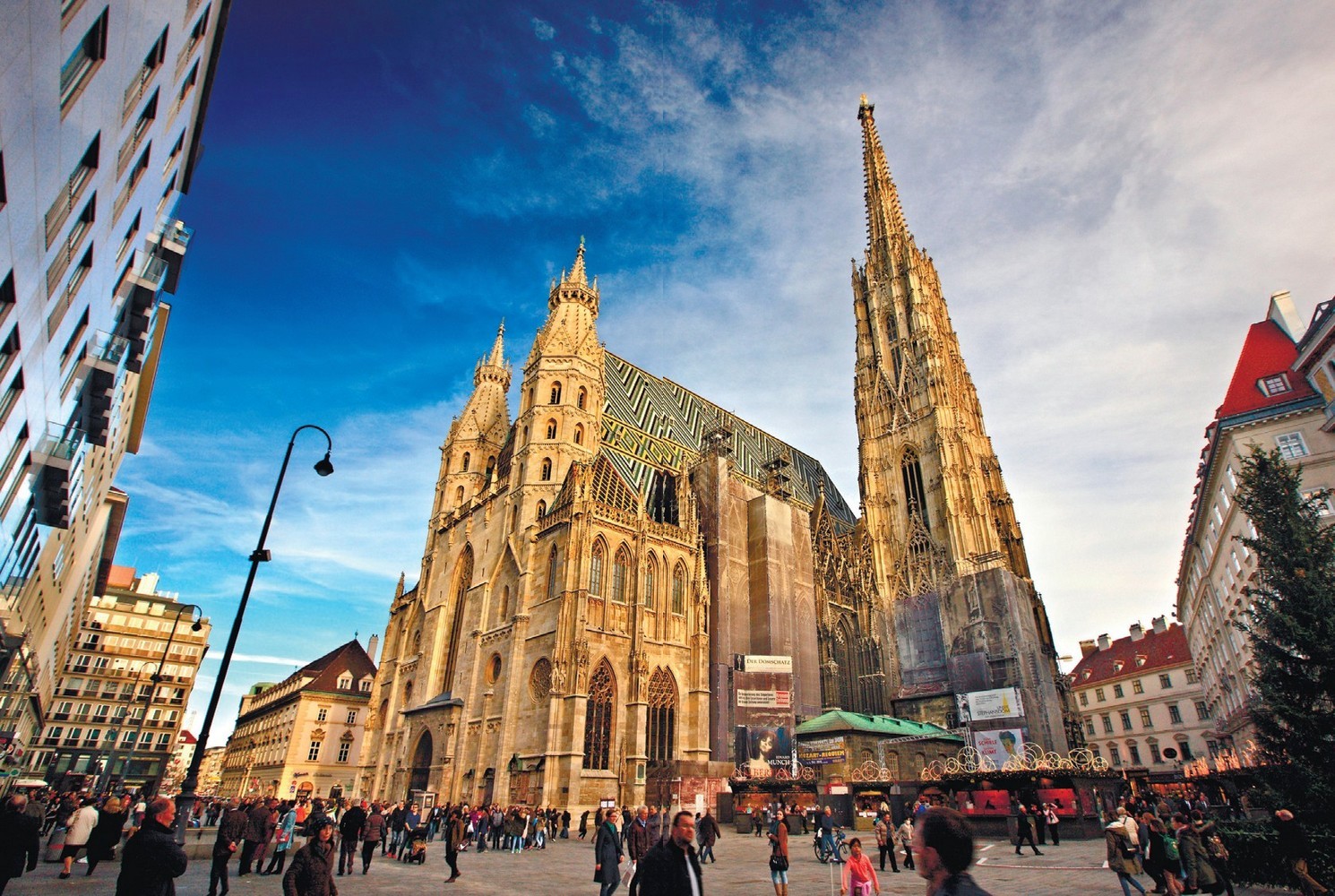
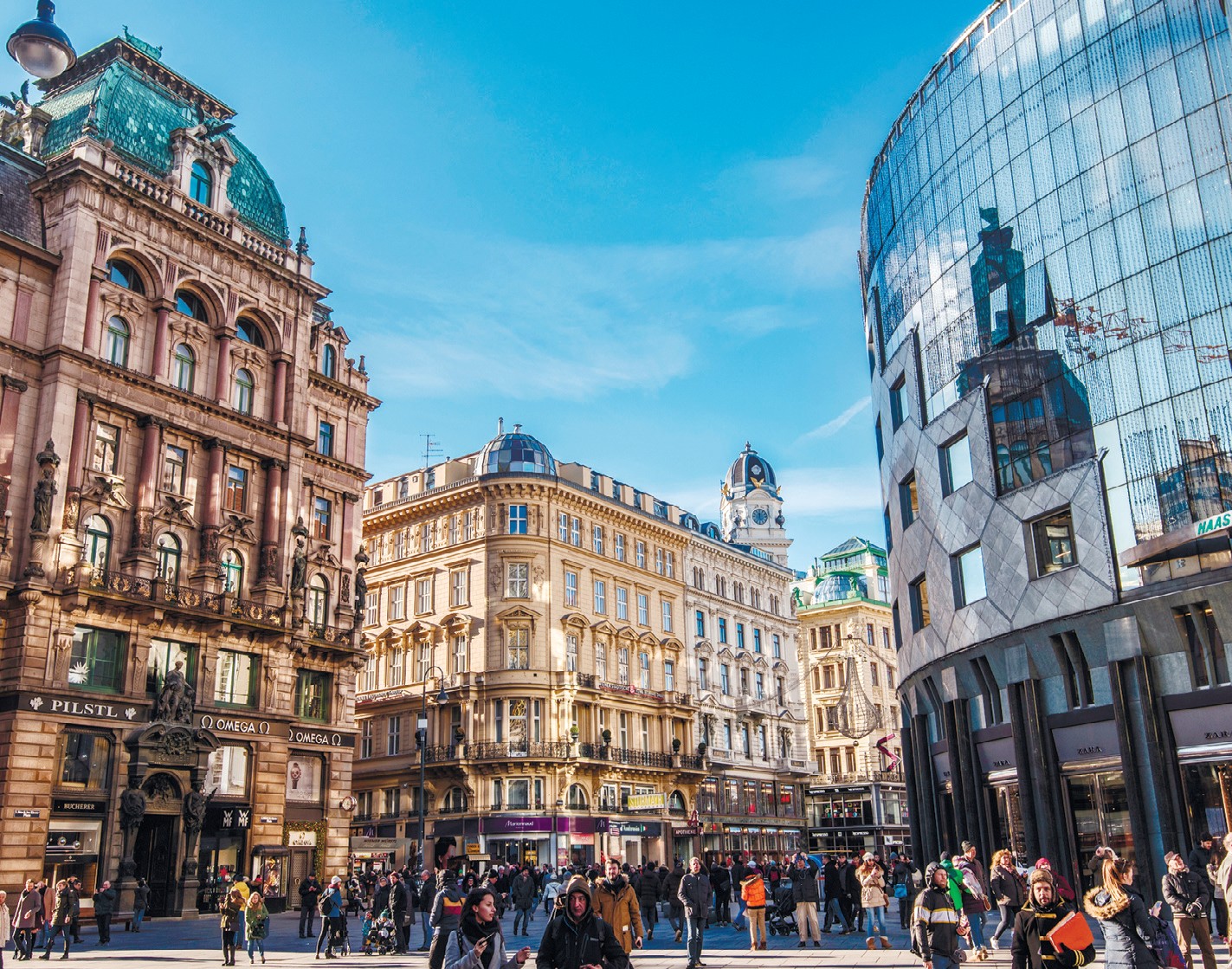
While walking through the central square, Stephansplatz, you will definitely see St. Stephen's Cathedral among the boutiques. This is Vienna's main church and a unique compass, used for orientation by tourists and locals alike. It is visible from almost everywhere. When you enter, the walls breathe with thousands of candles, prayers, and chants. And if you climb the tower, the city opens up before you like the palm of your hand.
The Maria Theresa Monument, the Parliament building, the Vienna Rathaus (City Hall), the University, the Vienna State Opera—all these are not just architecture, but milestones. If every city has its clock, then in Vienna it is the Anker Clock (Anker-Uhr), where figures of emperors and philosophers parade every day at noon, like a silent reminder of time and eternity. If you are a nature lover, visit the Prater park, with its Giant Ferris Wheel, and the Burggarten park, where you can sit by the palm trees and listen to the rustling of leaves.
In Vienna, various options are available for tourists to get acquainted with the city. One of the most convenient is the hop-on hop-off bus tours, which allow you to get on and off at stops throughout the day. A Big Bus or Vienna Sightseeing ticket for 24 hours costs around 34 euros, and for two days, from 45 euros. You can combine these buses with the Vienna City Card, which provides free public transport for 24, 48, or 72 hours and discounts at museums, restaurants, and shops. The price for such a combo ticket starts from 48 euros. The Vienna Pass costs around 98 euros, but it includes entry to all major attractions without queues or additional payment.
If you are looking for romance and a view of the city from the water, river cruises on the Danube are ideal. A short tour of about an hour will cost around 25 euros. There are evening cruises with dinner or music starting from 65 euros. For connoisseurs of wine and picturesque views, a wine tour through the Nußberg vineyards is offered. A private tour for two costs about 599 euros, and for four, 699 euros, including a tasting and views of the city.
As for getting around the city independently on regular transport, a 24-hour ticket costs around 12 euros, and a 48-hour ticket starts from 19 euros. It provides access to trams, buses, the U-Bahn (metro), and suburban trains.
With or without a view of the Danube
Vienna is a city where every corner is steeped in history and elegance, and the choice of hotel plays an important role in shaping the overall impression of your trip. For those travelling on a limited budget, it is worth noting that accommodation in Vienna is not cheap. Among the economical options for hotels and guesthouses, there are two- and even one-star establishments, with prices starting from 70 euros for two people without breakfast. Three-star hotels cost an average of 100-110 euros per night. These establishments usually offer basic amenities and are located in less central areas of the city, which allows you to save on lodging.
If you are looking for comfort at a reasonable price, mid-range hotels are an excellent choice. Prices per night in a 4-star hotel start from 140 euros with breakfast, and in a 5-star hotel, from 250. These hotels offer a higher quality of service, a convenient location, and additional amenities—fitness centres, spas, and restaurants. Hotels in the central districts of the city, such as Innere Stadt or Leopoldstadt, provide convenient access to the main attractions. And for lovers of luxury, hotels are available in historic buildings with views of the Danube or proximity to the opera.
Naturally, we must not forget that accommodation prices can fluctuate significantly depending on the season. The average cost of a hotel night in June is almost 157 euros, in July 160, and in September 166 euros. In contrast, prices in January and February are lower—around 114 euros per night. This is due to increased demand during the summer months, when various festivals and events take place in the city.
From Sacher to Döner: an unvarnished taste of Vienna
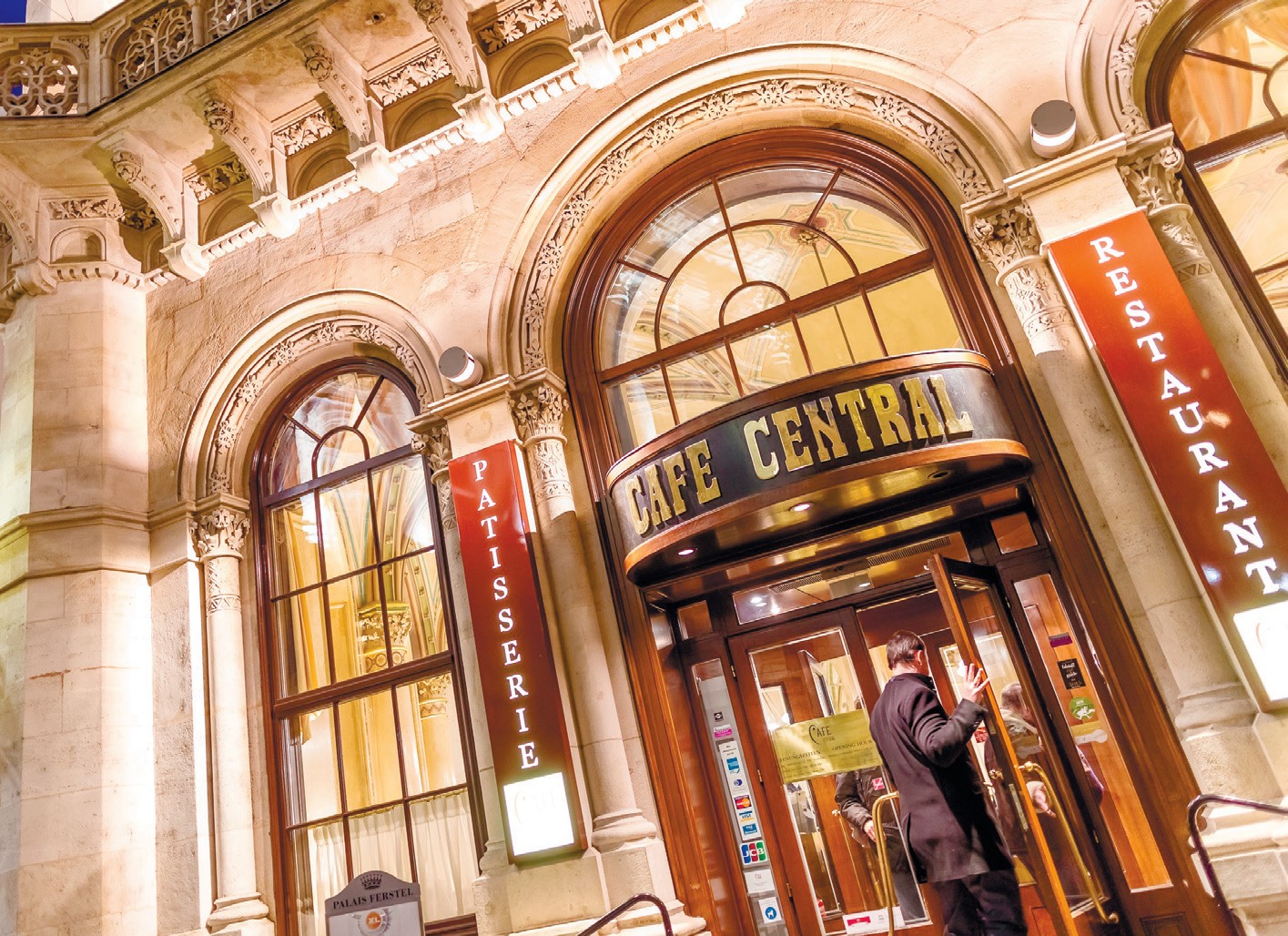
One cannot speak of Vienna without mentioning its cafés. These are not just places that serve coffee; they are akin to cultural institutions. Trotsky liked to write in Café Central; Zweig sat there; Freud and even Lenin often dropped by. Here, coffee is served unhurriedly, and the waiters move as if time has no effect on them. At Café Sacher, they offer the famous Sacher Torte, with that specific apricot note and that particular chocolate that melts just a moment later than you expect. At Café Demel, the display windows are like museums, where the pastries look like jewellery. And at Café Sperl, there is quiet and billiards, the aroma of newspapers and old wood. Yes, they are not cheap, but it is worth it.
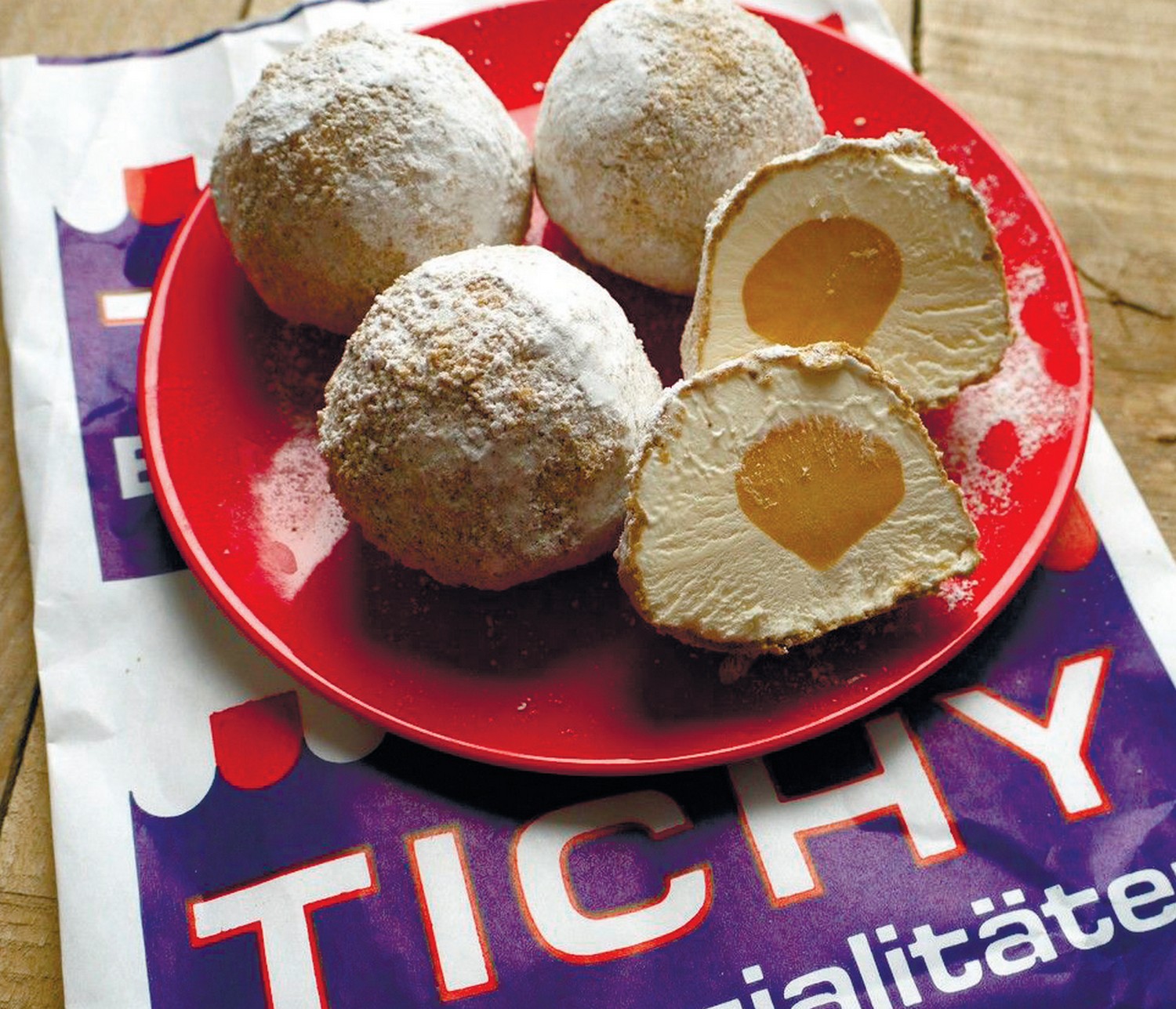
Ice cream lovers should try Tichy—their signature Eismarillenknödel (apricot dumpling made of ice cream), which has already become a gastronomic legend. And if you want a truly Viennese evening, pop into a Heuriger—a wine tavern serving local wine, snacks, and featuring live music. They are especially crowded in the Grinzing and Nussdorf districts, where the vineyards reach right up to the city.
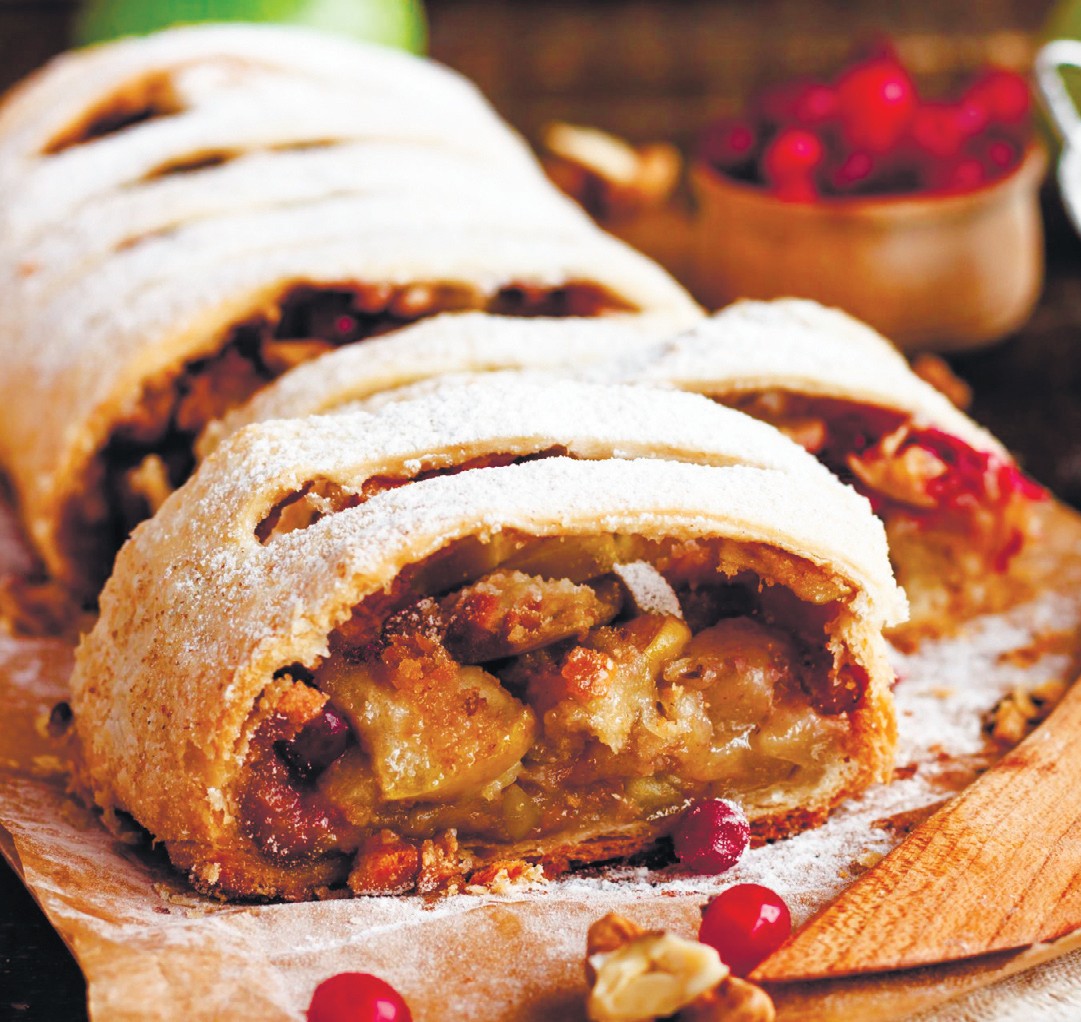
Do not forget to also try the very thin Viennese schnitzel and the aromatic apple strudel. Visit the Naschmarkt—Vienna's largest and one of its most colourful markets, which has been operating for hundreds of years. It stretches for one and a half kilometres along the Wienzeile street, over the Vienna River. Here you can find everything: from fresh fruits and vegetables, exotic spices, and cheese to international snacks, cafés, and restaurants.
There have always been many Turks in Austria, and even now, according to some data, there are 250,000-300,000 of them in the country. Turkish döner, kebab, and other small restaurants and cafés are common in Vienna. If you want to eat familiarly and inexpensively, Turkish eateries will be just right. Just as we notice Turks, Turks notice Azerbaijanis from afar. So, very often, even before you reach the establishment, you will hear a familiar "Buyurun" (please).
Music that never falls silent
Vienna is not just the homeland of Mozart, Beethoven, and Strauss. It is a city where the streets are soaked in music. It hides in shop windows, drifts up from cellars, and pours out of windows. Here, a concert can begin simply on a park bench. Or it can begin in the Golden Hall of the Musikverein, where even the walls sing. Here, students attend opera performances, and there are queues at the philharmonic.
Here is a street scene—in a metro passage or by the walls of an old church, where conservatory students play Beethoven on the clarinet, and passers-by freeze, slowing their pace to listen. And there is a man with a double bass near the State Opera—he plays there every evening, as if accompanying the people leaving after the performance.
Or consider the "standing tickets" at the Vienna Opera. Yes, here you can still hear world-class soloists for 3-4 euros, but only while standing. There is a whole philosophy to this tradition—queueing up in the morning, claiming a spot, tying a scarf around it, and returning for the start of the performance. It is not just a way to save money; it is a ritual that unites students, music lovers, tourists, and simply those who want to touch the highest art without spending money.
Today, Vienna is not just Austrians. It is Serbs, Turks, Romanians, Germans, Syrians, Ukrainians, and Indians. Each has brought a little something with them—spices, language, rhythms. And now all of it lives in one rhythm—the Viennese rhythm. To walk through the densely populated Favoriten district is like flipping through a global cookbook. To listen to a street concert in the central Karmeliterplatz square is to hear where the Balkans and the Middle East meet.
In spring and summer, when it is warm, Vienna reveals itself through its restaurant terraces, or Schanigärten—street tables set up right on the pavement. This is a special culture: sitting not indoors, but facing the city. Drinking a *Melange*, reading a newspaper, watching the passers-by. No one here is in a hurry. A waiter might bring your coffee after ten minutes—and this is not rudeness, but respect for tranquillity.
Here, aromas lead you through the streets. In the morning, it is fresh-baked rolls from the bakery on the corner; later, the sweet trail of warm apple strudel; in the evening, the smoke of roasted chestnuts or fried potatoes with sausages from street stalls. A gastronomic memory lives in the air.
There are also small urban wonders. Like the glass of water that is brought with every coffee in Vienna. This is not a service; it is a gesture, an almost invisible sign of care. Or the newspaper holders in the old cafés—heavy wooden frames in which the daily press is clamped. Here, you can still read the newspapers to the sound of spoons clinking in cups.
Such details create the Vienna that you cannot see from a tour bus. It can only be felt. Heard. Remembered. Not from a photograph, but by taste, sound, scent, and gesture. This is where the true atmosphere of the city lies.
RECOMMEND:
 250
250

