

ORBIT UNDER THREAT
Space competition threatens global security, putting an increasing number of countries at risk

Author: Zaur HASANOV
It is becoming increasingly apparent that space is evolving into a new arena of strategic competition. In September, the US acknowledged that it possessed space-control capabilities. Washington did not specify what these weapons were. However, just a few days later, China warned that such a course of action could provoke a new arms race.
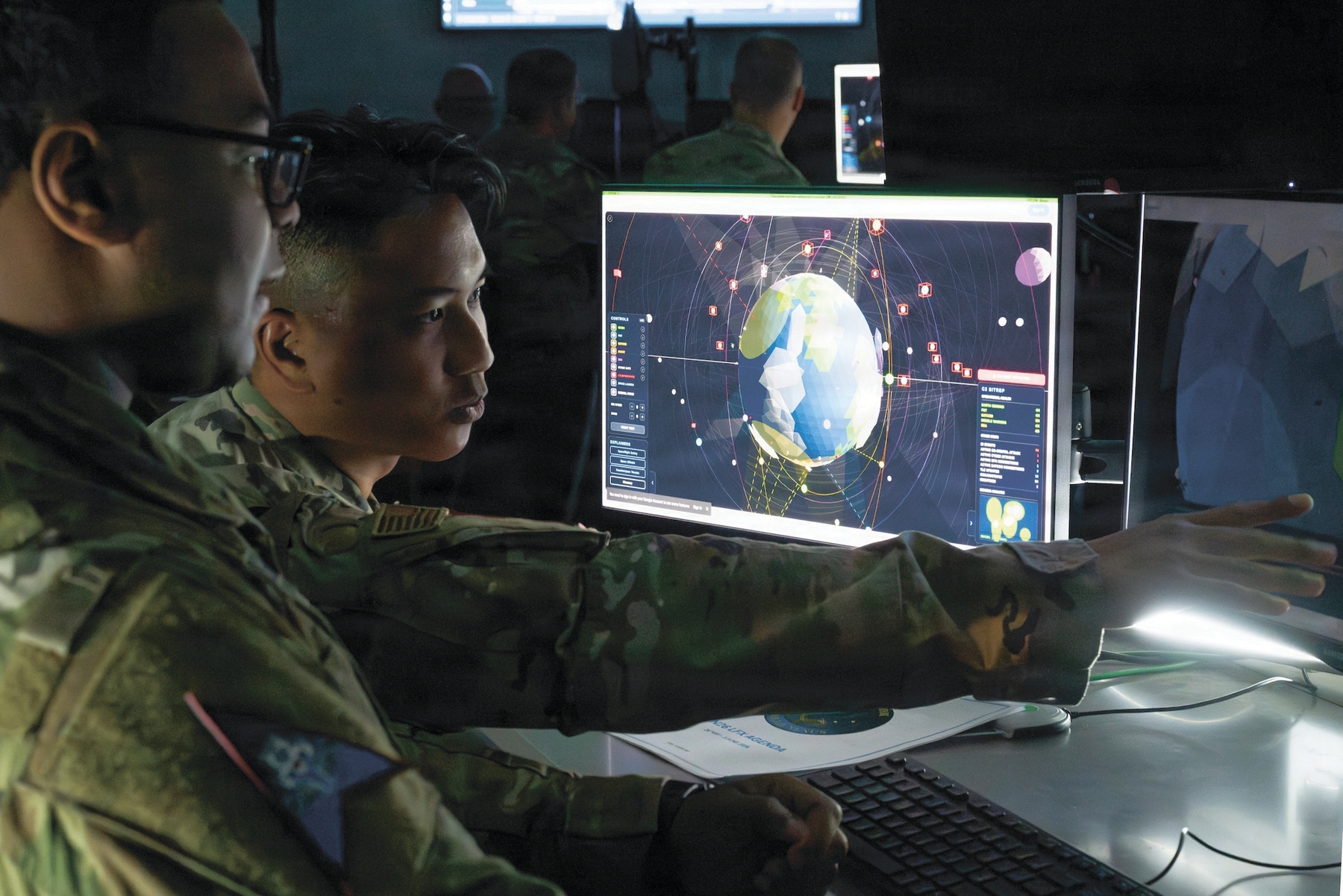
This is no longer a remote possibility. Satellites are becoming an integral part of military infrastructure, and the space above our planet is rapidly becoming a domain where the interests of the major powers intersect. The ramifications of this competition could potentially impact states that do not possess offensive space systems.
A new level of confrontation
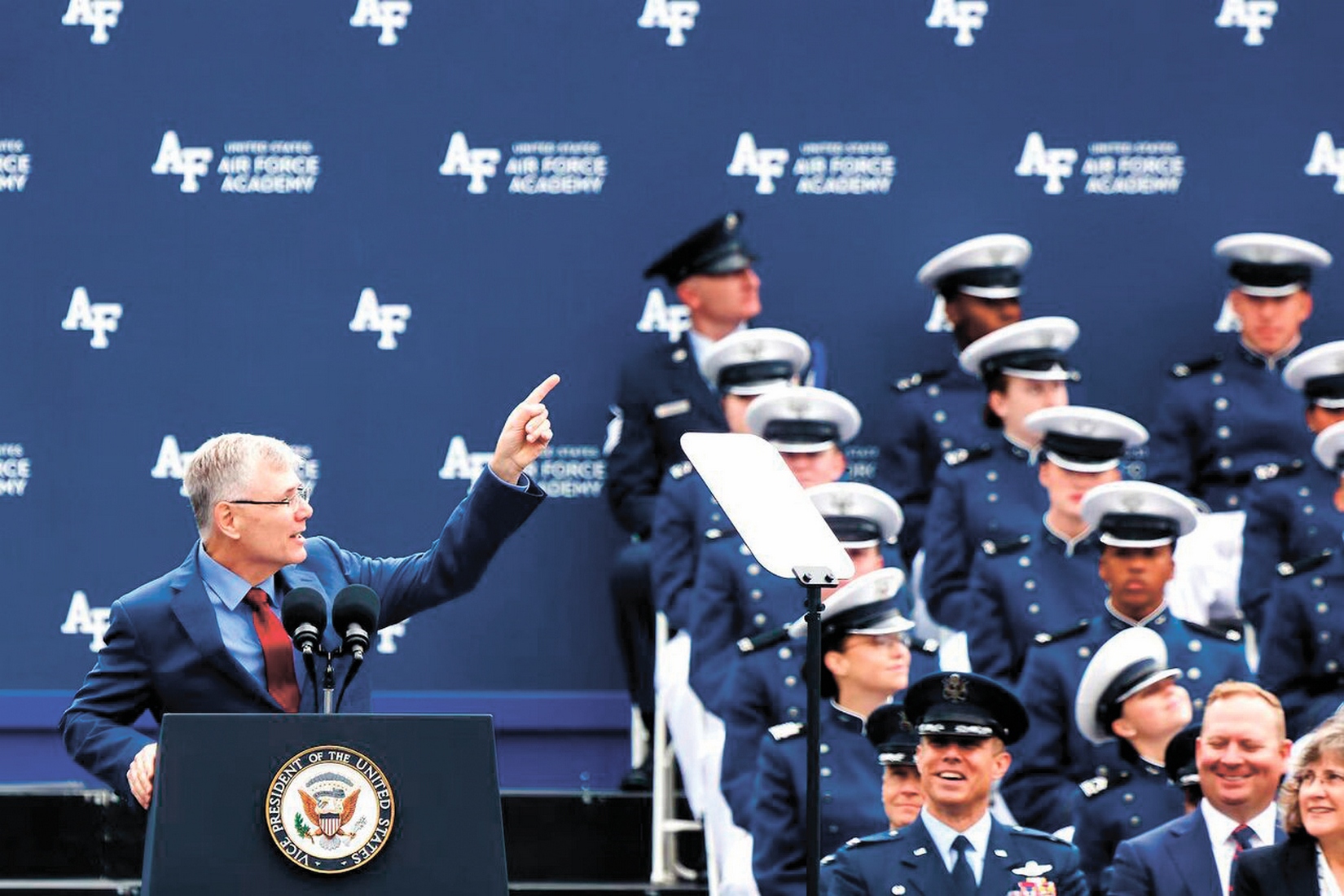
On 14 September, US Secretary of the Air Force Troy Meinck publicly announced that the US armed forces had acquired orbital systems capable of protecting the joint force against hostile actions. The following day, General Douglas Schiess, head of the US Space Force, confirmed that personnel in this branch of the armed forces were already operating such systems. Washington did not disclose the number of these units, their specific capabilities, or the types of objects they could damage or disable.
The admission itself was more significant than the technical details. Until that time, the US had only expressed the necessity to develop capabilities to counter threats in space. The direct confirmation that such weapons existed therefore represented a significant change in public rhetoric. On October 5, Chantal Lee, an analyst at the Center for Strategic and International Studies, observed that merely disclosing the existence of such systems was insufficient for effective deterrence. A potential adversary must have at least a general understanding of their capabilities and know what actions could trigger a response.
This does not necessarily imply missiles capable of physically destroying satellites. In the contemporary business world, competition among modern counterspace has evolved to encompass a much broader spectrum. According to the non-profit Secure World Foundation (SWF), 13 countries are already developing capabilities in five main areas: orbital systems capable of approaching other spacecraft, direct-ascent missiles, electronic warfare, directed energy and cyber capabilities. The researchers emphasise an important detail: in real conflicts, non-destructive means of countering space systems are currently the ones being used.
Rendezvous and proximity operations (RPOs) are of particular importance. One satellite can approach another spacecraft, observe it, alter its orbit relative to it and potentially acquire the ability to act on it physically. Russia has been conducting such operations since the 2010s, while China has demonstrated a range of capabilities, including the ability to approach, capture and move a space object. Concurrently, there is an increasing interest in "bodyguard satellites", which are designed to accompany other spacecraft and provide protection. According to the SWF, programmes or plans of a similar nature have already been implemented in France, Germany, India and Japan.
The scenario of a missile shooting down a satellite is therefore gradually receding into the background. A satellite can be blinded, jammed, deceived with a false signal, attacked through cyber systems that control it or approached by another spacecraft. It is important to note that a significant proportion of such actions can also remain below the threshold of open armed conflict.
This is precisely what makes the current situation particularly complex. A missile attack on a satellite is difficult to miss and virtually impossible to interpret ambiguously. By contrast, the causes of manoeuvring, electronic interference and cyberattacks may be entirely different. Consequently, space is evolving into a new theatre of military confrontation, and it is becoming increasingly challenging to distinguish between peaceful activity and hostile action.
For Washington, this is already a matter of strategic deterrence. For other states, the issue is also how reliably they will be able to use space if the confrontation between the major powers continues to expand.
Orbit is not limitless
The military's presence in space has already had a long-lasting impact, which will continue to be felt even after the testing phase is over. According to the SWF, destructive anti-satellite tests conducted by the US, Russia, China and India have created 6,904 catalogued pieces of space debris. Of these, 2,773 remain in orbit and could pose a danger to operational spacecraft.
The issue is further compounded by the increasing density of the space environment. At the beginning of October, aerospace company SpaceX reported approximately 650 potentially dangerous close approaches involving Starlink satellites and other spacecraft during 2026 alone. Over the previous six months, the company had recorded approximately 164,000 potential conjunction events. This does not imply that collisions are inevitable; rather, it highlights the increasing complexity of navigation in the presence of a growing number of objects.
The presence of any new fragment or uncontrolled spacecraft has been shown to have a detrimental effect on the integrity of the orbital infrastructure as a whole. Should the number of collisions reach a sufficiently high level, a chain reaction known as Kessler syndrome could begin: a collision creates debris, which increases the likelihood of further collisions, and those collisions, in turn, generate even more debris.
For states that primarily use satellites for peaceful and commercial purposes, this creates a fundamental problem: the consequences of another party's military confrontation cannot be confined to the territory of the participants. A destroyed satellite or cloud of debris has no means of identifying which spacecraft owners may be at risk from a collision.
War without an explosion
It is becoming increasingly evident that the space competition is evolving into a multifaceted challenge that extends beyond the conventional focus on the development of anti-satellite missiles. Non-destructive capabilities are advancing particularly rapidly. A satellite signal can be jammed or replaced with a false signal, while an attack on the spacecraft itself can be replaced by an assault on the ground infrastructure through which it is controlled. It is important to note that such operations are more difficult to detect and even more difficult to interpret unequivocally as acts of war.
In the contemporary business environment, there is an increasing demand for a more diverse and accessible range of counterspace capabilities. At the same time, the boundary between a military operation and activity below the threshold of open conflict is becoming increasingly difficult to identify.
For the typical user, the consequences may appear rather unremarkable, such as a communications failure, loss of navigation, or issues transmitting data. However, such a malfunction may not be due to a technical accident, but rather deliberate interference.
Space as a resource
For states not participating in the anti-satellite arms race, developments in orbit are of primarily practical significance. Space technologies have become an integral part of modern communications infrastructure, data transmission, remote sensing of the Earth and other civilian activities. The stability of the space environment is, therefore, gradually becoming a matter of shared international security concern.
Azerbaijan is also developing its own space capabilities. The national satellite programme has become part of the country's technological and infrastructure development, while Azerkosmos connects Azerbaijan with the global satellite-services market.
In this context, the focus for Baku is not on competition in anti-satellite systems, but on preserving an open and secure space environment in which satellite technologies can be used for peaceful purposes. As states become increasingly involved in space activities, the importance of international rules in maintaining the stability of this environment is also increasing.
International cooperation is also becoming an important area. On October 6, in Antalya, the heads of the space agencies of the member states of the Organisation of Turkic States signed an agreement on cooperation in the space industry. The document aims to establish a more systematic and practical framework for cooperation. The proposed steps include a joint CubeSat project, satellite development, Earth observation, space science, research and the development of human capacity.
This form of cooperation demonstrates that the space agenda is gradually moving beyond the programmes of individual states. For countries that do not have the capacity to dominate space, a collaborative approach that combines technical capabilities, expertise and resources could be a viable strategy to enhance their own presence in space while supporting the peaceful use of outer space.
Rules for orbit
As states and private companies enter the space sector, the lack of clear rules of conduct is becoming more apparent. The 1967 Outer Space Treaty continues to serve as the foundational document of international space law. However, it was created at a time when there were far fewer spacecraft in orbit and many modern technologies—from inspection satellites to cyberattacks and sophisticated electronic-warfare systems—did not yet exist.
For several years, the UN has been discussing measures to reduce space threats and prevent dangerous actions. The issue lies in the fact that agreeing on new restrictions is considerably more difficult than developing yet another technology. The major powers regard space as an increasingly vital element of their own security and are unwilling to relinquish capabilities that could provide them with a competitive advantage.
It is therefore of the utmost importance to preserve scope for international cooperation in areas where states' interests coincide. In the absence of consensus on a complete ban on particular systems, the following measures could help to reduce risks: the sharing of information about space objects; the prevention of dangerous close approaches; the reduction of the creation of debris; and the development of joint projects.
This may be regarded as a key paradox of the new space race. As conflict capabilities in orbit continue to develop, it is imperative to acknowledge that space remains a shared environment. Any major accident or conflict in this region has the potential to create problems that extend far beyond the immediate countries involved. The question of rules of conduct in orbit is therefore gradually becoming a matter of security, not only for individual powers, but for everyone who uses space.
RECOMMEND:
 46