
THE TURKIC TURN
The Ankara Summit set out new guidelines for integration and perspective priorities of the OTS
Author: Elchin HUSEYNOV
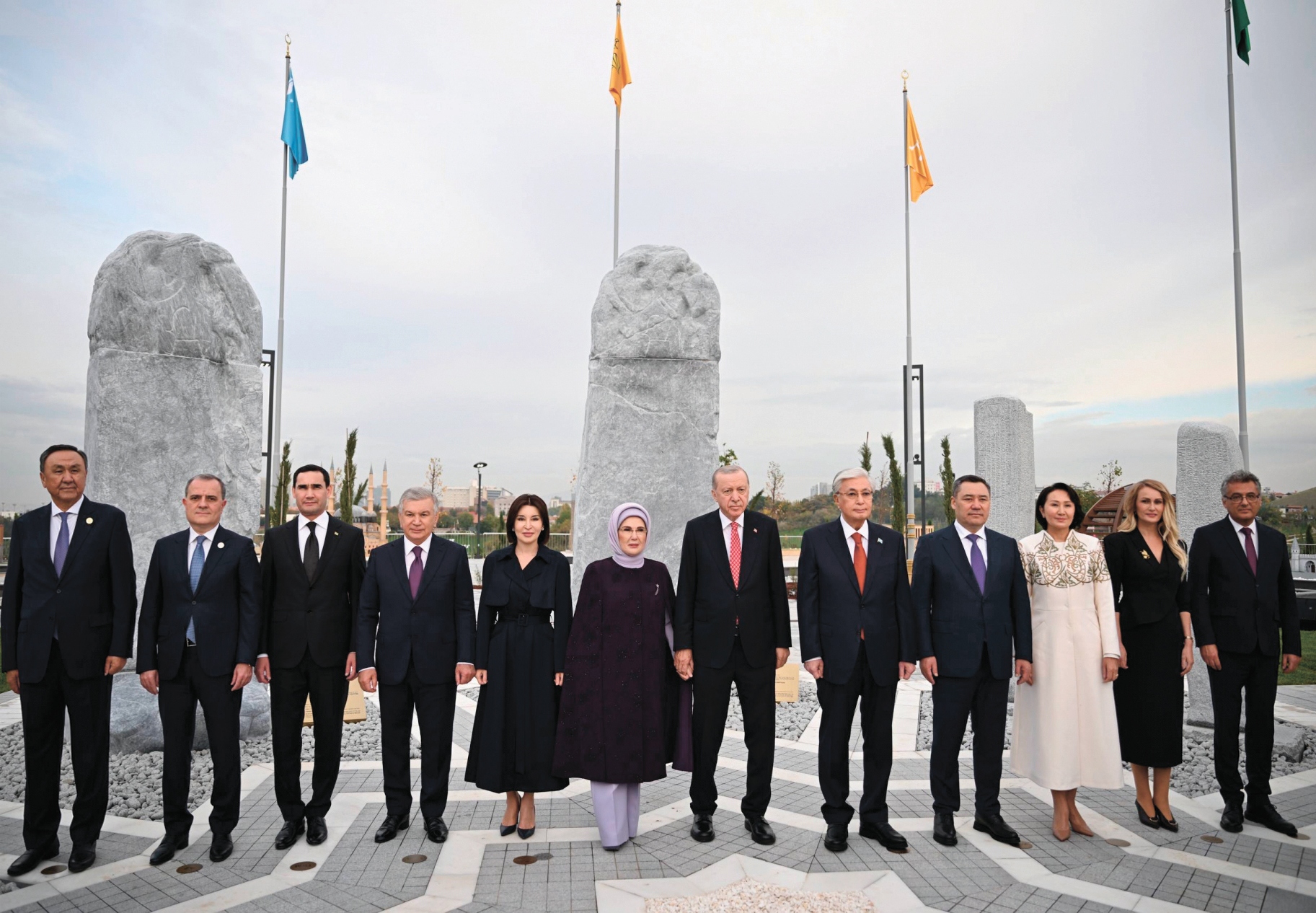
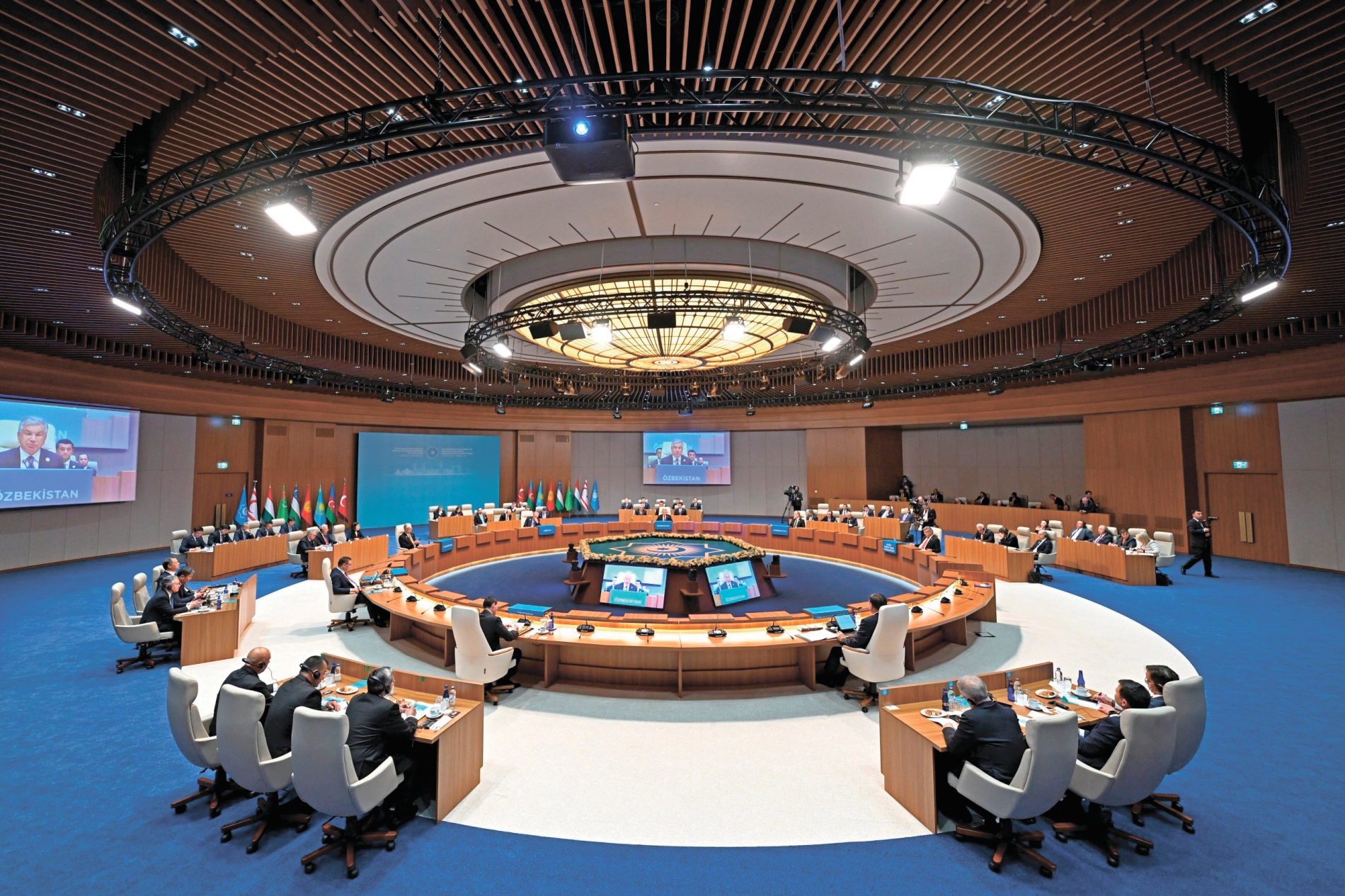
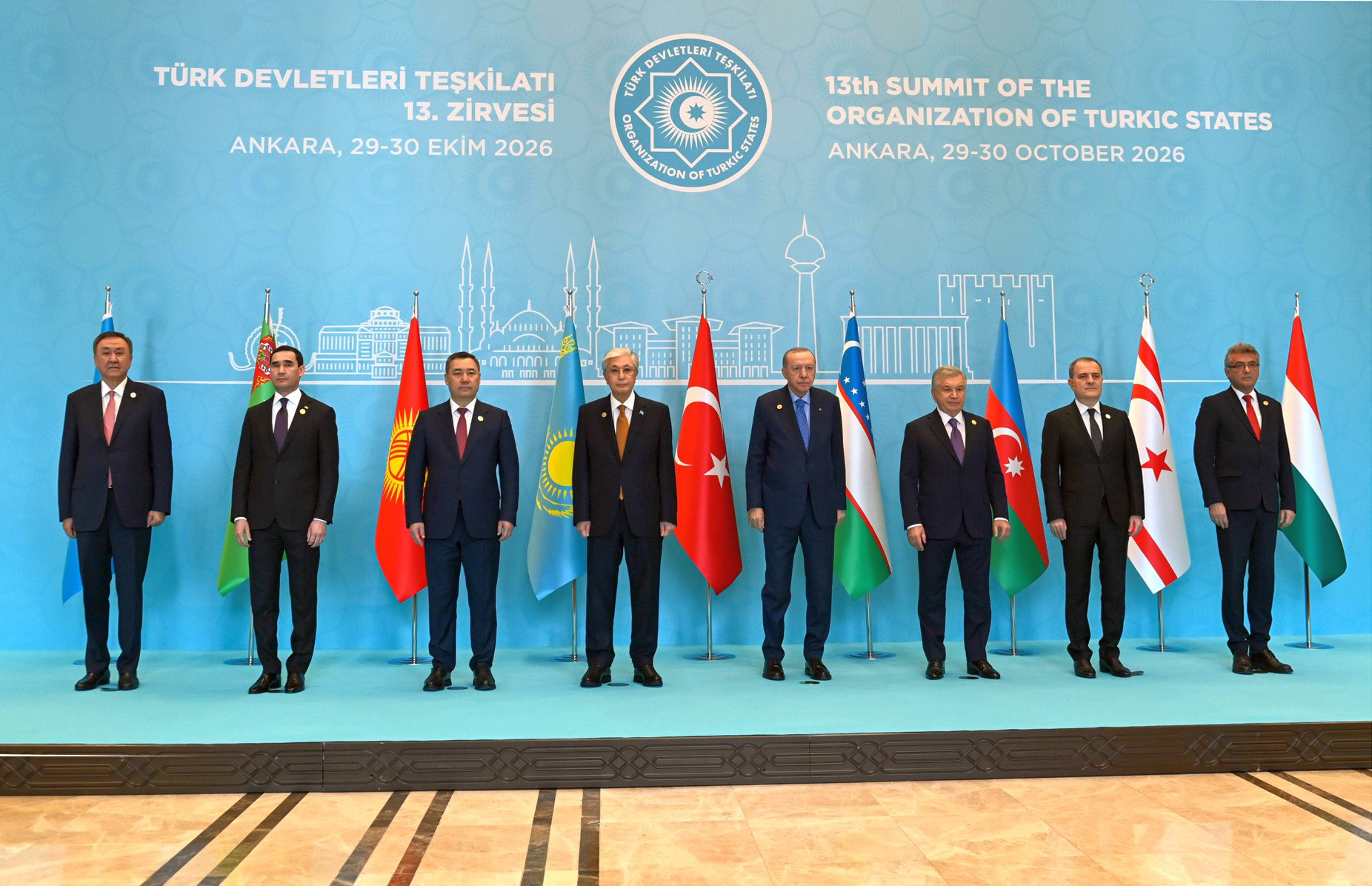
The 13th Summit of the Organisation of Turkic States (OTS) was held in Ankara, convening heads of state and representatives from member states and observer countries. The main session of the meeting took place on 30 October at the Exhibition Centre of the Presidential Complex, chaired by Turkish President Recep Tayyip Erdogan. The summit, held under the slogan 'The Turkic Century: Unity in Language, Thought and Action', a significant milestone in the organisation's development, marked the transition of the chairmanship from Azerbaijan to Türkiye.
The summit was attended by the presidents of Kazakhstan, Kyrgyzstan, Uzbekistan and Turkmenistan, as well as representatives of observer states and partners of the organisation, including Hungary and the Turkish Republic of Northern Cyprus. Azerbaijan was represented by Foreign Minister Jeyhun Bayramov. President Ilham Aliyev was unable to travel to Ankara due to a busy work schedule and his previously planned attendance at the closing ceremony of the FIFA U-15 World Cup in Baku.
From Azerbaijan’s boost to a new chapter
Azerbaijan's chairmanship of the Organisation of Turkic States marked an important milestone in the expansion of its political and practical agenda. Following the Gabala Summit in October 2025, Baku focused its efforts not only on strengthening traditional ties between Turkic countries, but also on developing new mechanisms for cooperation in the fields of security, the economy, transport, technology and international diplomacy.
A notable outcome was the strengthening of political coordination. During 2026, four informal meetings of the foreign ministers of the OTS member states took place, enabling them to maintain a constant dialogue and coordinate positions on regional and international issues. Security cooperation was identified as a key area of focus. The meeting of the Secretaries of the Security Councils of the organisation's member states, held in Baku, gave this cooperation a more substantive character. Another key development was the Roadmap for 2027, which established plans for collaborative production and technological collaboration in the defence industry.
Concurrently, the economic agenda was expanded to encompass trade, investment, transport connectivity, energy, finance and digital development. The Azerbaijani chairmanship concentrated on inter-state projects in addition to the strengthening of the common humanitarian space. The organisation of Turkic World Week to mark the 100th anniversary of the First Turkic Congress, the meeting of heads of state bodies responsible for religious affairs in Shusha, and the session of the Council of Heads of Muslim Religious Administrations in Baku formed part of this work.
The expansion of the organisation's international presence took on particular significance. Joint statements by the OTS began to be circulated as official documents of the UN General Assembly and the UN Security Council. Diplomatic efforts to secure observer status with the UN General Assembly are ongoing. Furthermore, the OIC+ format, established at the Gabala Summit, opened up additional opportunities for engagement with third countries and international organisations.
During Azerbaijan's chairmanship, the organisation broadened the scope of its cooperation and took a number of steps to strengthen its institutional and international role. The subsequent stage involves the consistent implementation of decisions already taken, enhanced coordination between national bodies and improved efficiency of the OTS Secretariat.
From solidarity to practical integration
The handover of the CSTO chairmanship from Azerbaijan to Türkiye is occurring at a time when the organisation is facing the question of moving from political proximity to deeper practical integration. In recent years, the CSTO has succeeded in strengthening its mechanisms for interaction, expanding the geographical scope of its cooperation and raising its international profile. The subsequent stage will necessitate more intricate work: transforming shared interests into joint economic projects, sustainable transport links and coordinated approaches to regional security.
It is noteworthy that economic integration has emerged as a pivotal priority for Ankara's new chairmanship. In the context of evolving global trade routes, the Turkic states have a significant opportunity to enhance their position as key players in the network of connections between Asia and Europe. The Middle Corridor, which traverses Central Asia, the Caspian Sea, Azerbaijan and Türkiye, occupies a special place in this context. Its development has the potential to increase the transit capabilities of individual countries, as well as to create a common economic and logistical space in which the infrastructure of each participant will complement the capabilities of the others. As Turkish President Recep Tayyip Erdogan emphasised, 'Turkic geography has the potential to become one of the key hubs of global transport and logistics networks'.
However, geographical advantage alone is not sufficient. In order to achieve full integration, it is essential to harmonise customs procedures, remove barriers along trade routes, develop rail and port infrastructure, and expand investment cooperation. In this context, the Turkic Investment Fund could play a key role, as it is set to become one of the instruments for financing joint initiatives. The energy sector continues to present significant opportunities, ranging from the coordination of traditional resource utilisation to the implementation of renewable energy projects.
Economic integration invariably gives rise to security concerns. Transport corridors, energy networks and digital infrastructure require reliable protection, whilst common challenges—ranging from cyber-threats and cross-border crime to terrorism—call for closer coordination between states. In this context, cooperation in the defence industry and the development of joint technologies are not only of military-technical significance, but also strategic importance.
For Türkiye, the chairmanship represents a valuable opportunity to provide these areas with additional momentum. At the same time, Ankara must be aware that the members of the CSTO have differing economic capacities, foreign policy priorities and levels of infrastructure development. Integration, therefore, cannot be a one-off process or the result of political declarations alone. In order to proceed, concrete agreements, funding mechanisms and the consistent implementation of decisions taken are required.
The success of the new phase of the OTS will ultimately be determined by the organisation's ability to transform cultural and historical affinity and political solidarity into a sustainable system of mutual economic and strategic interests.
One of the key factors in achieving these objectives is the renewal of the leadership of the OTS Secretariat. The post of Secretary-General of the organisation will be taken up by a representative of Uzbekistan, the former Deputy Minister of Foreign Affairs Mirvohid Azimov, who will succeed the representative of Kyrgyzstan, Kubanychbek Omuraliev, who has led the organisation for the past four years. Therefore, the new leadership will comprise several key members of the Turkic organisation. The new Secretary-General will be tasked with ensuring the continuity of ongoing initiatives, strengthening coordination between states and facilitating the practical implementation of the identified integration priorities.
From ambitions to solutions
The current summit has demonstrated that the OTS member states share a common understanding of the need to deepen cooperation, whilst their vision of its future scope and mechanisms is gradually expanding. The leaders' speeches in Ankara outlined not only economic and infrastructure priorities, but also new political guidelines with the potential to influence the organisation's future.
In his welcoming address, Mr Erdogan noted that, during its chairmanship of the OTS, Türkiye intends to transform the institutional potential accumulated by the organisation into more concrete achievements. The head of state has stated that the South Caucasus will become a region of peace and stability, creating significant opportunities for the countries in the region and the entire Turkic world.
Furthermore, the Turkish leader expressed his hope that Turkmenistan would join the OTS in the near future: "We are optimistic that, under the dynamic leadership of my brother Serdar (Berdimuhamedov), Turkmenistan will become a full member of our family council in the near future."
The President of Uzbekistan, Shavkat Mirziyoyev, has called for the phased establishment of a Free Trade Area, the removal of tariff barriers and the digitalisation of customs procedures between the Turkic countries. In order to implement these measures, he suggested the establishment of a Permanent Council of Turkic States on Economic Partnership, with a focus on localising production. The Uzbek leader placed particular emphasis on logistics, proposing to accelerate the integration of the new China–Kyrgyzstan–Uzbekistan railway into the region-wide Middle Corridor to create a direct link between Asia and Europe.
Azerbaijan's Foreign Minister, Jeyhun Bayramov, stated at the summit that Baku is an active participant in ongoing regional projects: The development of the Middle Corridor, the implementation of the Zangezur Corridor and the expansion of transport links between our countries will increase our economic opportunities. According to Bayramov, the primary objective is to leverage these opportunities not only for transit but also for the development of mutual trade, industrial cooperation and investment.
The President of Kyrgyzstan, Sadyr Japarov, has proposed holding an informal OTS summit in Kyrgyzstan on 5–6 August 2027. He stated that this would enable the countries' leaders to explore issues of multilateral cooperation in greater depth and discuss new joint economic and infrastructure projects.
It is worth noting that this summit was of particular significance for Japarov. The President of Kyrgyzstan was awarded the 'Highest Order of the Turkic World' at an official ceremony held as part of the OTS meeting.
Among the practical initiatives put forward by the President of Kazakhstan, Kassym-Jomart Tokayev, the need to speed up the adoption of the OTS Strategy for 2027–2031 and to make more active use of the Turkic Investment Fund and the Turkic Chamber of Commerce and Industry for economic integration stands out. Nevertheless, the most significant proposal was his suggestion to include Russia in the organisation. Tokayev stated that, in order to enhance the prestige of the Organisation, it would be both appropriate and fair to respond positively to Russia's intention and invite them to join this framework or participate in the activities of the Turkic Council as an observer.
The President of Kazakhstan observed that Russia, as a major power, has historically maintained strong connections with the Turkic world. “Representatives of many Turkic peoples have historically lived within this country’s borders. Russia is currently promoting the ‘Altai—the Cradle of Turkic Civilisation’ project, which Kazakhstan supports. Quite a few words in the Russian language are of Turkic origin. Overall, if Russia were to become part of the Turkic countries—that is, our Organisation—this would benefit all our states,” he emphasised.
The Turkic World: Horizon 2040
The institutional strengthening of OTS and the development of transport interconnectivity became key components of the final Ankara Declaration. The document presents the organisation's future development strategy, in line with the 'Vision for the Turkic World 2040' concept. It covers areas such as energy, digital transformation, economic sustainability and the harmonisation of regulatory procedures in the field of transit. At the same time, the summit participants emphasised the importance of enhancing the Secretariat's internal operations and fostering greater functional integration between member and observer states.
The Middle Corridor is of particular significance in this context, as its importance extends far beyond the realm of transport links between individual countries. For the Turkic states, this represents an opportunity to establish a unified logistics chain linking Central Asia with the Caspian Sea, the South Caucasus, Türkiye and European markets. However, increasing freight volumes requires not only the modernisation of railways, ports and road routes, but also the resolution of existing infrastructure problems, including bottlenecks in the Caspian Sea region. The joint investment in port facilities, ferry services, transport infrastructure and the digitalisation of customs procedures is expected to result in reduced delivery times and enhanced competitiveness of the route.
For Azerbaijan, this issue is of particular importance, as a key section of the Trans-Caspian route passes through its territory, providing Central Asia with access to Türkiye and, further on, to Europe. Consequently, the development of the Middle Corridor will simultaneously strengthen regional connectivity and enhance Azerbaijan's strategic importance within the emerging system of Eurasian transport links.
The decisions taken at the Ankara summit are indicative of the OTS's aspiration to move towards more systematic cooperation, ranging from the coordination of national policies to the joint development of infrastructure and economic mechanisms. The 'Vision for the Turkic World 2040' concept sets a long-term direction, but its implementation will depend on the extent to which states are able to reconcile their interests, secure funding for projects and translate the adopted declarations into concrete results. This will determine the future direction of Turkic integration and the organisation's international role.
RECOMMEND:
 75