

THE NEW FACE OF THE OLD WORLD
Europe demonstrated its values and preferences at the Eurovision Song Contest




Author: Sabira MUSTAFAYEVA Baku
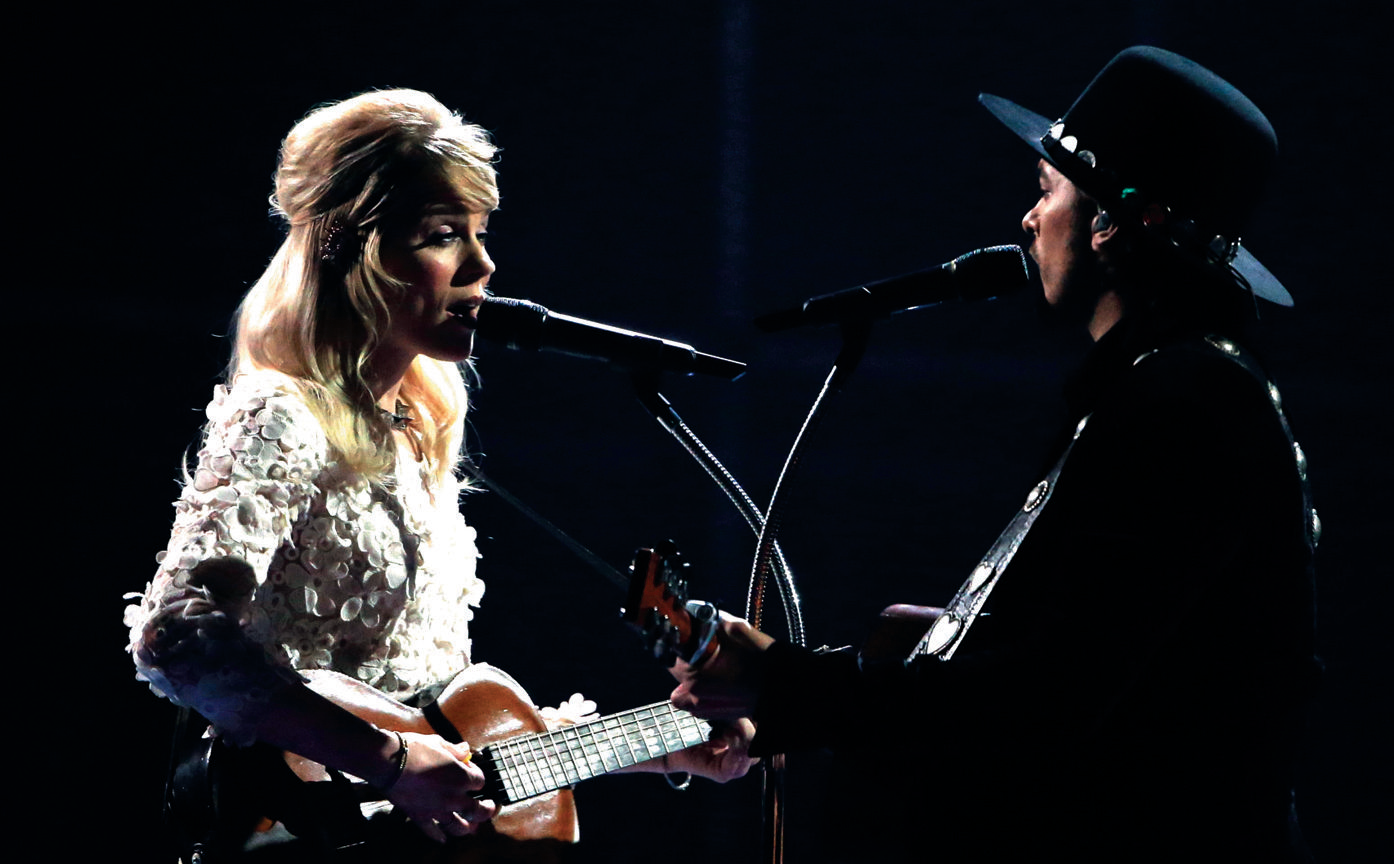
Eurovision's Crystal Microphone is with Thomas Neuwirth, the Austrian cross-dressing singer who performed as his alter ego Conchita Wurst, a glamorous bearded woman. The cross-dresser (cross-dressing is wearing clothes, which, according to public norms and conventions, are worn by the opposite sex - author's note) won Europe's heart with the song Rise Like a Phoenix and scored 290 points. The Common Linnets from the Netherlands scored 238 points and came second. Sanna Nielsen from Sweden (218 points) came third.
"Acceptance of It"
The results of Eurovision voting once again demonstrated that the stage of this international song contest is a mouthpiece and apologist of values that a considerable part of Europe is concerned about. And today the 100th anniversary of the so-called "genocide of Armenians" cannot be even compared to Europe's "homotolerance" - the joint efforts of all Armenians of the European continent were not enough for victory over the bearded woman. Yerevan's great desire to connect these two historical developments in the year 2015 met with a firm wall of "tolerance" and "acceptance of It". Armenia made a mistake in its calculations - it got fourth place and great disappointment, although, according to the reputable British bookmaker William Hill, Aram with the song Not Alone was to win Eurovision-2014. But, closer to the final, bets placed on Armenia started to go down. However, it cannot be ruled out that in this way Europe sought to punish Armenia for homophobic remarks that Aram himself had made. Prior to the contest, he called Conchita "abnormal" and "unsuitable to take part in the event" and advised her to have a rest and a think and to decide whether she was a man or a woman.
One way or another, the audience got together and Europe had its say. To accept or not to accept is, as the saying goes, everyone's personal business. However, today this tolerance results in very many questions: will promotion of homosexuality turn into a delay-action bomb, resulting, as time passes, in people with normal sexual orientation being a minority? However sacrilegious this may sound for advocates of "homotolerance", one should acknowledge that the spread of homosexuality leads to a spiritual and moral degradation of society, spread of the AIDS epidemic, and a demographic crisis and ruins the institution of family. Should something like this have happened 20 years ago, many in the same Europe would have been puzzled, thinking that people were mad, and they would have been right in thinking so. And one believes that the time has come today to decide which European values have a right to live and which are dangerous for society, and who wants to go to Europe today. For example, in Europe itself, the decision to send Thomas Neuwirth to represent Austria at Eurovision caused a strong reaction in that country. Over just a few days the "Anti-Wurst" page on Facebook gained 31,000 votes. In Belarus and Russia, conservatives demanded that the broadcasting of the contest be cancelled.
"I no longer want to live in Europe... I am not tolerant and I will not be able to behold Conchita everyday and explain to my child who It is."
"People are having a hard time, they do not know what to tell their children about Conchita, whether it is a girl or a boy. Can't they just say that it is a boy dressed as a girl? (It seems nobody cares when it comes to the likes of Serdyuchka)."
"They can't do it because they want to show their children that this is bad, while in order to say that this is bad, they have to have a detailed conversation with a sexual subtext."
From users' comments in social networking websites.
Incidentally, the first place that the cross-dressing performer got was quite in the contest's tradition over the past few years. In 1998, Israel presented Yaron Cohen, who had changed his sex (and his name to Sharon) five years earlier. The artist, who performed under the pseudonym Dana International and made it Eurovision in the second attempt, unexpectedly won first place with the song Diva. In 2002, the Slovenian drag trio Sestre performed wearing stewardess uniforms and got 14th place and very negative comments. One can also recall the Russian duet Tatu and Austria's Alf Poier, a wild clown, who called himself in an interview the messiah of European mindlessness and jumped on the stage with a terrible face - both performed in 2003. Interestingly, in a comment on Conchita Wurst's victory, Poier said that the former needed a psychiatrist's help. In 2007, the performance by Andrey Danilko, who represented Ukraine, was one of the most distinctive ones at Eurovision, with which the contest can quite be associated in its current look. In his alter ego - the well-known Verka Serdyuchka, the artist wore a woman's dress, fake breasts and a star on his head while singing the song Lasha Tumbai. The Danish cross-dresser Peter Andersen kept Danilko drag company at Eurovision in 2007. But if Danilko was only dressed as a woman, the bearded woman simply breaks one's psyche and is not something for the faint-hearted to see.
And now about politics
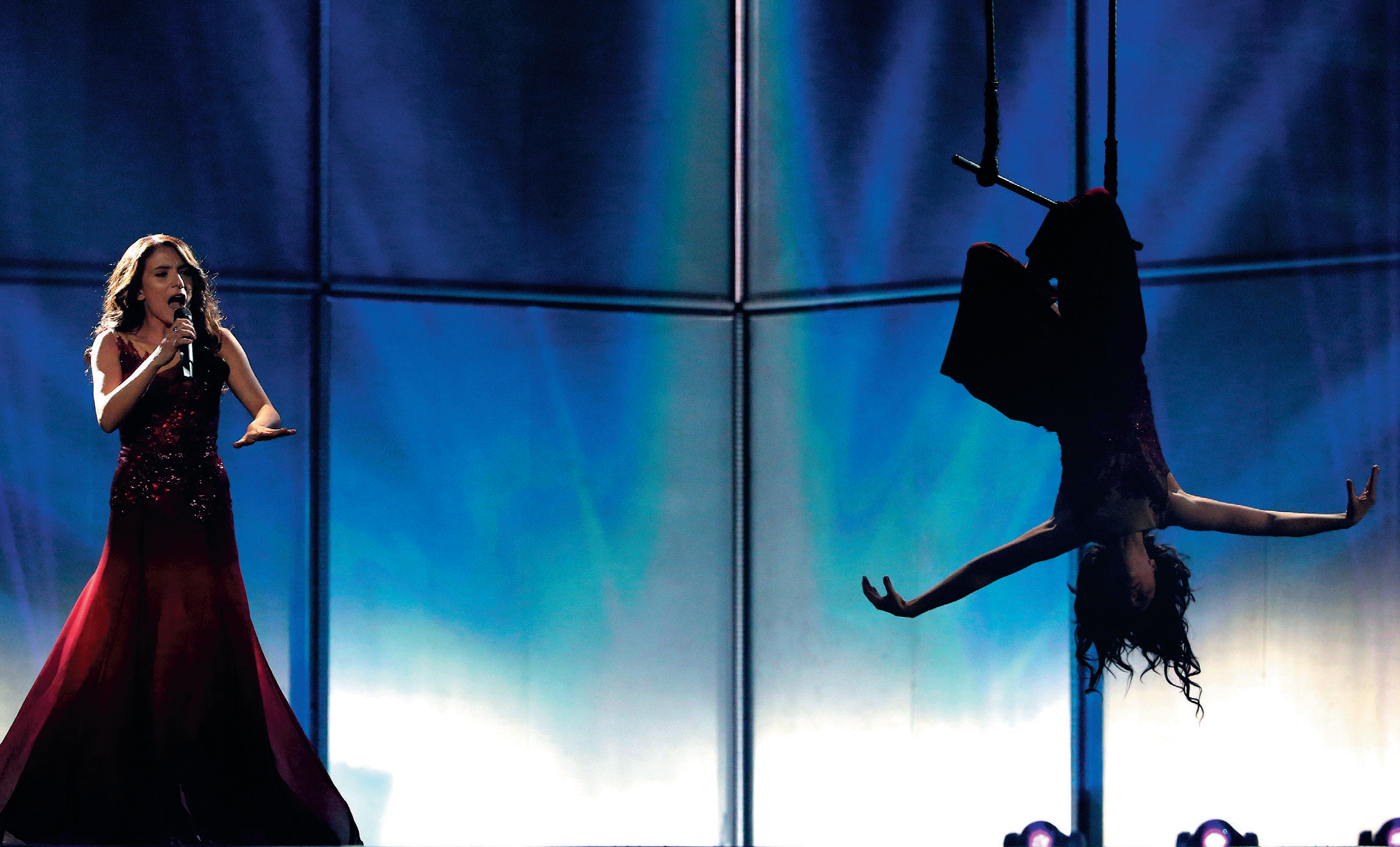
Azerbaijan came 22nd in the contest, but our country is far from calling Dilara Kazimova's performance a failure. Yes, that is the lowest result in the history of Azerbaijani performances in this competition. But does this really matter that much after the country's victory in the contest and last year's second place? Our "friends in misfortune" today are Greece - 20th place , Italy - 21st, Malta - 23rd , San Marino - 24th , Slovenia - 25th, and France - 26th (the last place). By the way, France is known for its vain attempts to take first place in the contest since 1977. And this is absolutely no reason to be upset. What's interesting is something else. This is a politicized competition and it is interesting in this context to look at its results through the prism of relationships between states that are represented in it. Ukraine, which Azerbaijan just recently backed at the UN regarding its territorial integrity, gave preference in its liking to Armenia rather than to Azerbaijan. Surprisingly, Georgians also gave their highest points to Armenia. Perhaps, one should not mix politics with neighbours' musical preferences and take the view that the song presented by Armenia was better?
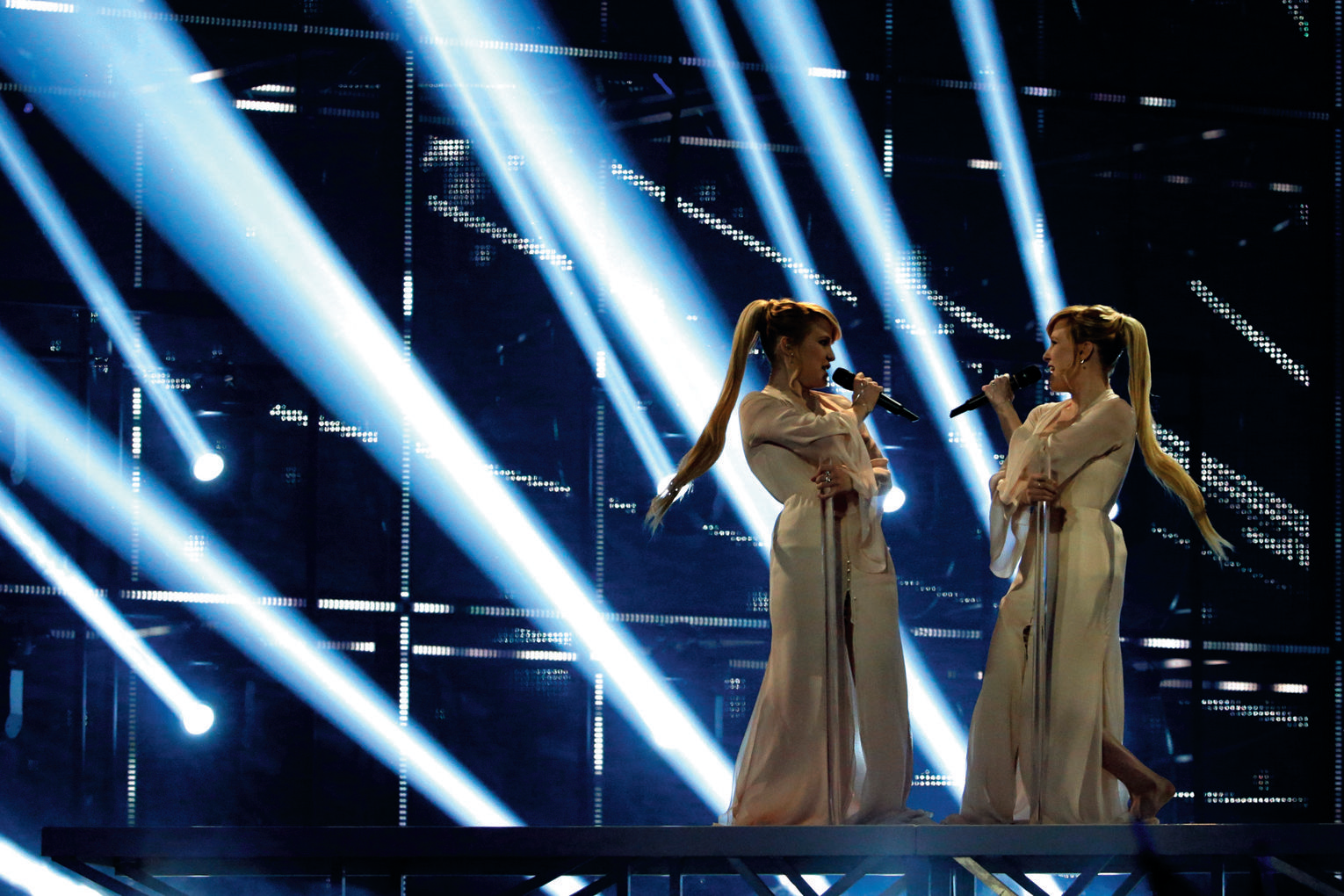
It was with great interest that voting by Russia and Ukraine was observed. The result of voting was that Ukraine's Maria Yaremchuk with the song Tick Tock came sixth. European viewers gave her 113 votes. In particular, Russia gave Ukraine seven points, but no country gave Ukraine the maximum 12 points. Ukraine got 10 points from Azerbaijan, Italy and Moldova. Russia's Tolmachev sisters with the song Shine scored 89 points. Ukraine gave them four points. In the final result [she took] seventh place (addenda).
The Russian portal www.24СМИ says that the Eurovision final did not pass without unpleasant moments for Russia. Long before the contest, everyone had predicted a fiasco for this country because of the very difficult situation Russia is in over the Ukrainian conflict. The Tolmachev sisters gained the maximum points only from Azerbaijan and Greece and 10 points from Armenia and Belarus. Many countries, which for many years had given high points to performances by Russian artists, gave them either the lowest or zero points this time round.
Moreover, when representatives of European countries announced the results of voting, boos could be heard in the Copenhagen concert hall - that was how the audience reacted when Russia received high points from participating countries. Singer Alsu, who announced the results of Russian vote via video-conferencing from Moscow, was also booed. The announcement of the results lasted more than half an hour: the reaction of the crowded hall was the same all that time - indignation at the high points given to Maria and Anastasiya Tolmachev. "We were in a very uncomfortable situation because of Eurovision. We cried," the Tolmachev sisters admitted in a broadcast on Rossiya 1 TV. Incidentally, a similar scandal involving the Tolmachev sisters took place in the first semi-final of Eurovision-2014 - they were booed after it was announced that Russia made it to the final. In addition, Danish journalist William Lee Adams said that the sisters' song contains hints about Crimea and relations between Ukraine and Russia. He described the Tolmachevs' performance as provocative.
One way or another, the Eurovision Song Contest has taken place. For some people, its results were shocking while for others they were quite predictable. What happens next? It is hard to say and even scary to think what tricks Europeans will go for in order to continue to call for tolerance of sexual minorities after the bearded woman.
RECOMMEND:
 721
721

