

THE CAUCASUS MOUNTAINS ARE NO LONGER A BARRIER
Azerbaijan, Georgia and Turkey are forming an axis of security, stability and cooperation in the South Caucasus
Author: Rasim MUSABAYOV Political scientist and Member of Parliament Baku
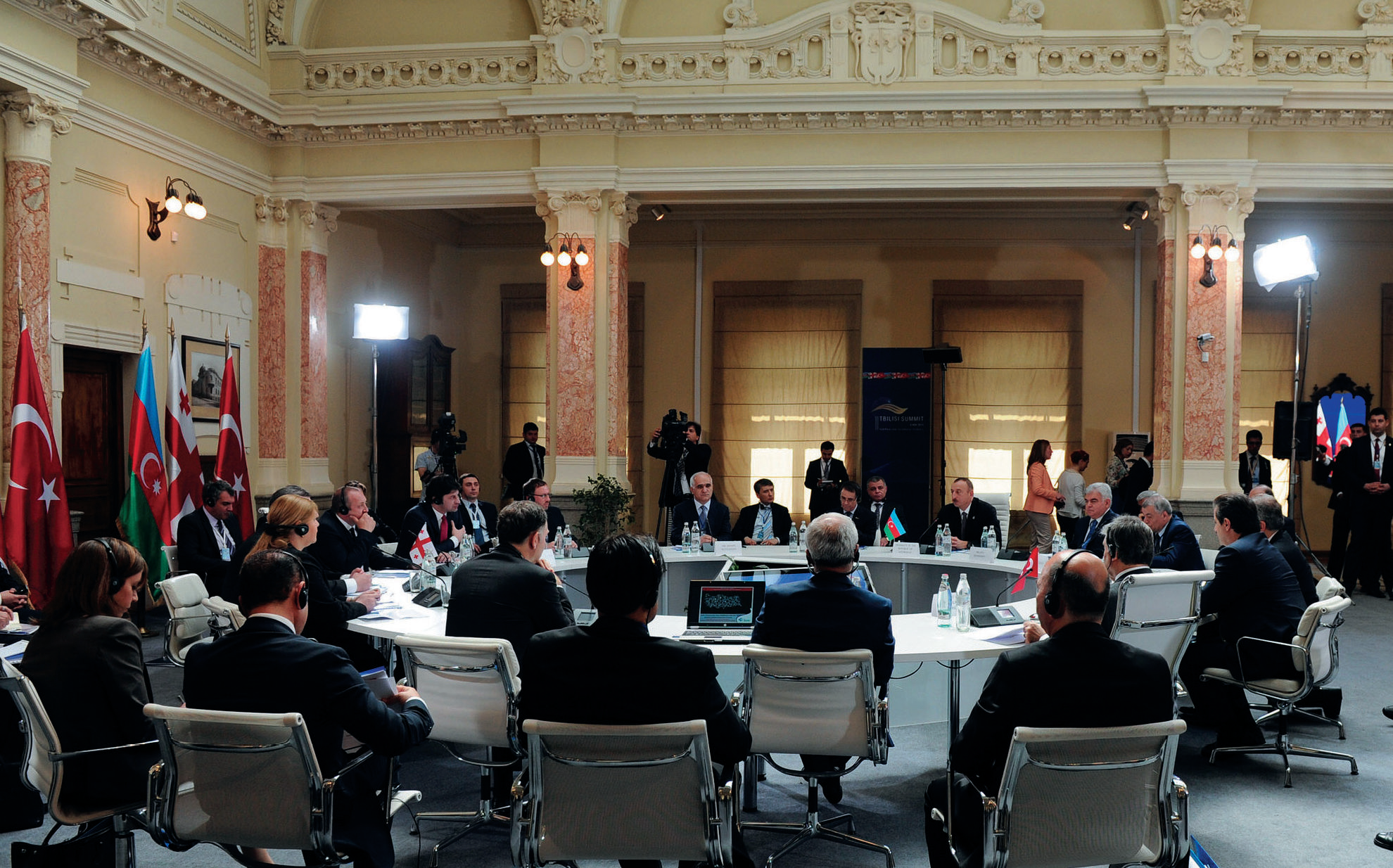
The Tbilisi Summit 2014 international forum attended by the presidents of Azerbaijan, Georgia and Turkey was held on 6 May in Tbilisi. This is not the first trilateral meeting of the presidents. Earlier they were timed to coincide with ceremonies to mark the start or completion of major regional projects such as the Baku-Tbilisi-Ceyhan oil pipeline and the Baku-Erzurum gas pipeline. The last meeting took place in 2007 during the laying of the Georgian section of the Baku-Tbilisi-Kars railway. A meeting in this format was held a few months earlier in Ganja by the foreign ministers, who had already met in Turkey. The interior ministers and heads of bodies that ensure the security of strategic export pipelines also meet and cooperate.
But amid tensions due to Russia's actions with regard to Ukraine, the meeting in Tbilisi sparked a wave of comments in the context of strengthening regional security. In this regard, the expectations were not entirely justified because, according to the results of the Tbilisi meeting of the presidents of Azerbaijan, Georgia and Turkey, no documents were signed and no joint statements were issued. However, the confidential dialogue certainly covered a range of issues relating to the South Caucasus region with a focus on strengthening trilateral cooperation in order to be prepared to respond appropriately to any challenges.
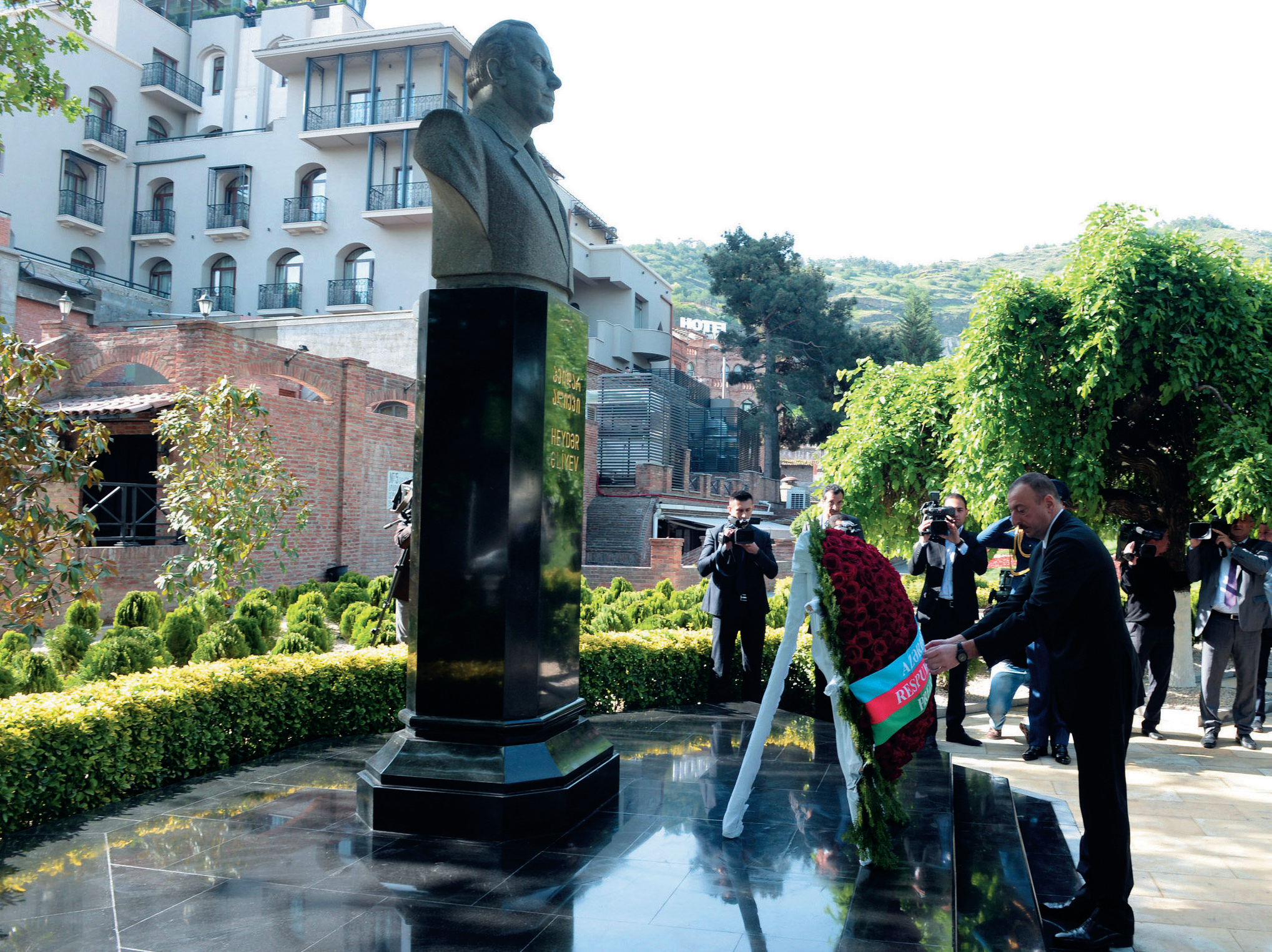
President Ilham Aliyev, who arrived in the Georgian capital on the eve of the summit, visited the Heydar Aliyev Park of Culture and Rest in Tbilisi and the Mirza Fatali Axundov Museum of Azerbaijani Culture, familiarized himself with the new Azerbaijani embassy in Georgia and visited the complex of SOCAR-Georgia administrative buildings. The Azerbaijani president held bilateral meetings with his counterparts Abdullah Gul and Giorgi Margve-lashvili, as well as with Georgian Prime Minister Irakli Garibashvili.
The official part of the meeting of the presidents of Azerbaijan, Georgia and Turkey was held at the National Library of Georgia. Then a briefing for the press was held at the Avlabar residence, and in conclusion, on behalf of President Giorgi Margvelashvili, a dinner was given in honour of the distinguished guests. It is clear that the presidents exchanged views on the most pressing regional issues in private, but the statement made by the presidents after the summit leaves no doubt about the intention of the parties to strengthen cooperation in all spheres. In a sense, one could say that a Baku-Tbilisi-Ankara axis is taking shape, which prioritizes economic cooperation, but will also be complemented by close political dialogue and partnership on regional security issues.
"Today, the joint projects we are implementing connect the Caspian, Black and Mediterranean seas. The main thing is that the union of Azerbaijan, Georgia and Turkey guarantees the preservation of stability in the region. This is a result of our will and desire," Georgian President Giorgi Margvelashvili said. He noted that this cooperation is not directed against anyone and serves not only the development of the three countries, but also of Europe and Asia.
Azerbaijani President Ilham Aliyev spoke in a similar vein. "The oil, gas, transport and investment projects successfully implemented once linked our countries more closely. I can also say that this trilateral format is of great interest on a global scale. Actually, this is a unique format since three independent states have built modern, cultural and equal relations based on mutual interests and respect, which meet the interests of our peoples. Our relations are based on cooperation. Each country derives great benefit from this cooperation," Ilham Aliyev said in his speech to the press. The Azerbaijani president also noted the priority of cooperation in the energy sector for the three partner countries and for Europe's energy security. Noting the fruitfulness of the Tbilisi summit, President Ilham Aliyev said that it was decided to engage in a trilateral format systematically and offered to host the next high-level meeting in Azerbaijan.
The Turkish president drew attention to the contribution of the three countries to maintaining peace and stability in the region, which has received universal approval. "Thanks to our efforts, the high mountains of the Caucasus are no longer perceived as a kind of wall. It is a door to a space of cooperation. And we are very happy with this fact," Gul said. He stressed that the peoples of Turkey, Azerbaijan and Georgia are fraternal.
Brotherly and good-neighbourly relations between the three neighbouring states and peoples were mentioned by the presidents of Azerbaijan and Turkey in their speeches. But they are connected by such important ties as the economy and regional geopolitics. Major energy projects (the ACG oil production project and oil transportation by the Baku-Tbilisi-Ceyhan oil pipeline, the first phase of the Shah Deniz [Sah Daniz] condensate field and the Baku-Erzurum pipeline), which have already been implemented, cost tens of billions of dollars. The Shah Deniz-2 project, which is about to be launched, with the accompanying TANAP and TAP pipelines will attract investment worth 45bn dollars. Azerbaijan is making the largest investments in Turkey and Georgia and is independently implementing large-scale projects in these countries, and our bilateral trade turnover is approaching one billion. In turn, the trade turnover between Turkey and Georgia is 1.5bn dollars. The volume of Turkish investments in Georgia is about 1bn dollars. As far as economic relations between Turkey and Azerbaijan are concerned, they have reached 4.7bn, while investments total 5.5bn dollars. Work is under way to unify the energy systems in order to secure a mutually beneficial flow of electricity. The imminent completion of the construction and reconstruction of the Baku-Tbilisi-Kars railway, fibre-optic lines and upgrading of ports and airports form an intercontinental transport corridor - a modern version of the famous ancient Silk Road.
As for the military component and the security sphere, there is also significant potential for partnership here. Turkey rendered great assistance to Azerbaijan and Georgia in transferring their armed forces and management structures to NATO standards. In 2002, in Trabzon, Turkey, Azerbaijan and Georgia signed an agreement "On military cooperation and joint fight against arms smuggling, trespassing, drug trafficking and transnational crime", and in 2007 - an agreement "On regional cooperation in the field of security". The three states are coordinating their activities in the field of border crossing, transport and transit security and the fight against transnational crime. In September of last year, Baku hosted the Eternity 2013 military exercises between Azerbaijan, Georgia and Turkey for the joint protection of the main export oil and gas pipelines.
We can add that Azerbaijan and Turkey are bound by allied relations that cover issues of foreign policy, defence and security enshrined in relevant agreements. If relations between Turkey and Georgia reach this level, any forces that pose a threat to regional stability and security will have to reckon with the consolidated will of the three states.
The emerging Turkey-Georgia-Azerbaijan axis is not directed against any state. President Abdullah Gul clearly articulated the position of the regional troika on this issue. "Our opinions on the preservation of peace and stability, which are based on universal values, coincide. We reiterate our strong support for the independence and territorial integrity of Georgia and Azerbaijan. We reiterate the importance of the peaceful settlement of the conflicts in our region on the basis of the principle of territorial integrity. At our meeting we also discussed the crisis in Ukraine. We are unanimous in believing that this crisis affects security and stability in our region. It is necessary to find a political solution to the crisis within the framework of the territorial integrity of Ukraine and international law."
As we see, in these words there are no threats and claims to dominance. The desire of the leaders of Turkey, Georgia and Azerbaijan, who met in Tbilisi, is to ensure the stability of the South Caucasus, security and cooperation. Everyone will be forced to consider the voice and opinion of Turkey, the strongest power on the southern flank of NATO, with which Azerbaijan and Georgia align themselves, and this is the main outcome of the tripartite summit in Tbilisi.
FIRSTHAND
"This trilateral format is of great interest on a global scale. Actually, this is a unique format, since the three independent states have built modern, cultural and equal relations based on mutual interests and respect, which meet the interests of our peoples,"
Ilham Aliyev, President of Azerbaijan
"Thanks to our efforts, the high mountains of the Caucasus are no longer perceived as a kind of wall. It is a door to a space of cooperation. And we are very happy with this fact,"
Abdullah Gul, President of Turkey
"Today, the joint projects we are implementing connect the Caspian, Black and Mediterranean seas. The main thing is that the union of Azerbaijan, Georgia and Turkey guarantees the preservation of stability in the region. This is a result of our will and desire,"
Giorgi Margvelashvili, President of Georgia
RECOMMEND:
 666
666

