

TRUTH MEANS POWER
The goal of the Diaspora is to spread accurate information about Azerbaijan
Author: Nurani Baku
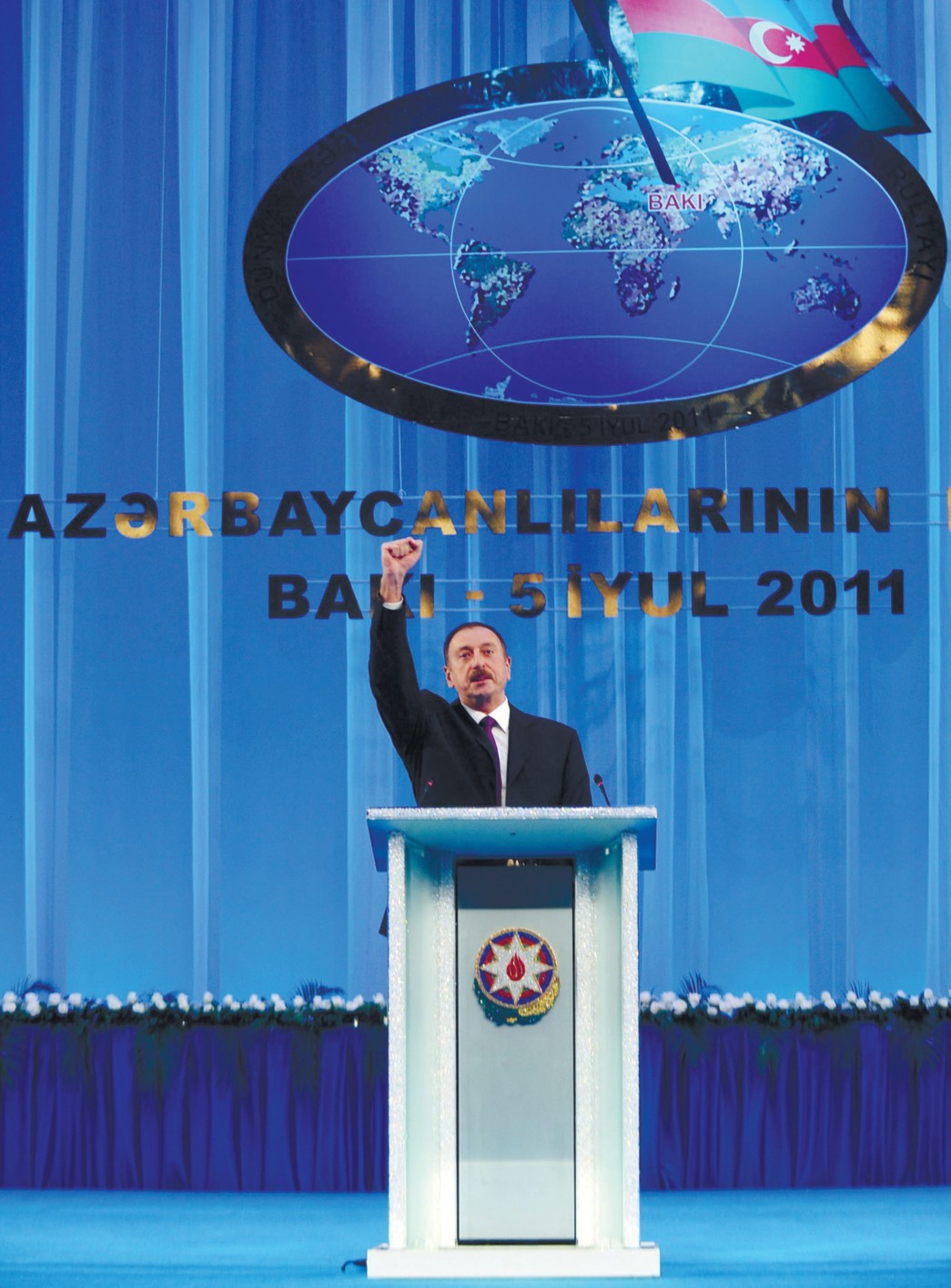
The Azerbaijani Diaspora is becoming a real force - this is the conclusion of the Third Congress of World Azerbaijanis.
It was a large-scale event attended by 1,272 delegates, 579 representatives and 211 guests from 42 countries. The highest number of delegates, 155, represented Russia, 101 came from Turkey, 49 from Ukraine, 43 from Germany, 41 from Georgia, 25 from the USA, 23 from Sweden, 21 from the Netherlands, 17 from Israel, 13 from Uzbekistan, 12 from France, 11 from the UK and 10 from Canada.
The documents adopted by the congress include a general address and an appeal to world Azerbaijanis and parliaments of foreign countries over the Nagornny-Karabakh conflict. The issue of reorganizing the Coordinating Council was put to vote and the decision was made that it should continue operating.
The presidium within the Council was abolished and an executive secretariat established instead. The President of Azerbaijan was re-elected as chairman of the Coordinating Council of World Azerbaijanis, while the chairman of the State Committee for Diaspora Affairs, Nazim Ibrahimov, became it executive secretary. The number of Council members has been increased from 107 to 115.
These bare figures will hardly create a full impression of what processes were examined during the congress. Contrary to the stereotypes pertaining to such activities, the Third Congress of World Azerbaijanis was a truly international event. Its delegates included renowned Israeli politician Iosif Shagal, Vladimir Kolesnikov, Mikhail Gusman who was interviewed by his Azerbaijani colleagues behind the scenes… It would be difficult even theoretically to imagine a more impressive demonstration of Azerbaijan's tolerance traditions.
Most importantly, Azerbaijan itself has changed since the previous congress. This is what President Ilham Aliyev said in his program statement. "Azerbaijan has created a strong economic potential. As a result of the economic reforms of recent years, our country can fully support itself, and even the financial and economic crisis that has led to major problems throughout the world had very little impact on Azerbaijan. In the worst years of crisis - 2008, 2009 and 2010 - the Azerbaijani economy continued to evolve and grow. Over the last seven years, our economy has grown threefold, i.e. the gross domestic product has risen by 300 per cent. This is unseen elsewhere in the world. Industrial production has increased about threefold. The number of people living in poverty has dropped five times. This shows that our reforms are socially oriented," the president said.
Ilham Aliyev stressed that the economic independence allows us to openly and clearly express our opinion on international issues too. Azerbaijan's influence on regional processes is growing. And this is natural because Azerbaijan accounts for 75 per cent of the South Caucasus economy. This should be an indication primarily for Armenia whose unconstructive position is to blame for the stalling Karabakh talks.
Sooner or later Azerbaijan's territorial integrity will be restored, the president said. We want to resolve this issue peacefully and soon. The potential created in Azerbaijan cannot be compared to Armenia's. Our economic power and potential are 10 times greater than Armenia's. Over time, this difference will become even greater, the abyss between us will expand further. Therefore, Armenia should be interested in seeing this issue resolved quickly because it can't compete with Azerbaijan now. Our military spend alone is 50 per cent higher than Armenia's total budget. And this is only the first result of our work," the President of Azerbaijan said.
Ilham Aliyev also indicated that Nagornny-Karabakh is a primordial and historical Azerbaijani land. Our people lived and created on this land for centuries. Armenians came to this territory as guests. We all know the story of their arrival in Nagorno-Karabakh. In fact, in 1978 Armenians established a monument in Nagorno-Karabakh that reflected their resettlement there. In the early years of war, the Armenians destroyed the monument. But history cannot be revised.
"History is history. Armenians, who marked the 150th anniversary of their resettlement to Karabakh in 1978, are well aware that they came to these lands as guests. And not only to Nagornny-Karabakh. The history of present-day Armenia was formed on Azerbaijani lands. The Erivan Khanate, the Zangezur Mahal - these are historically our lands," President Aliyev said.
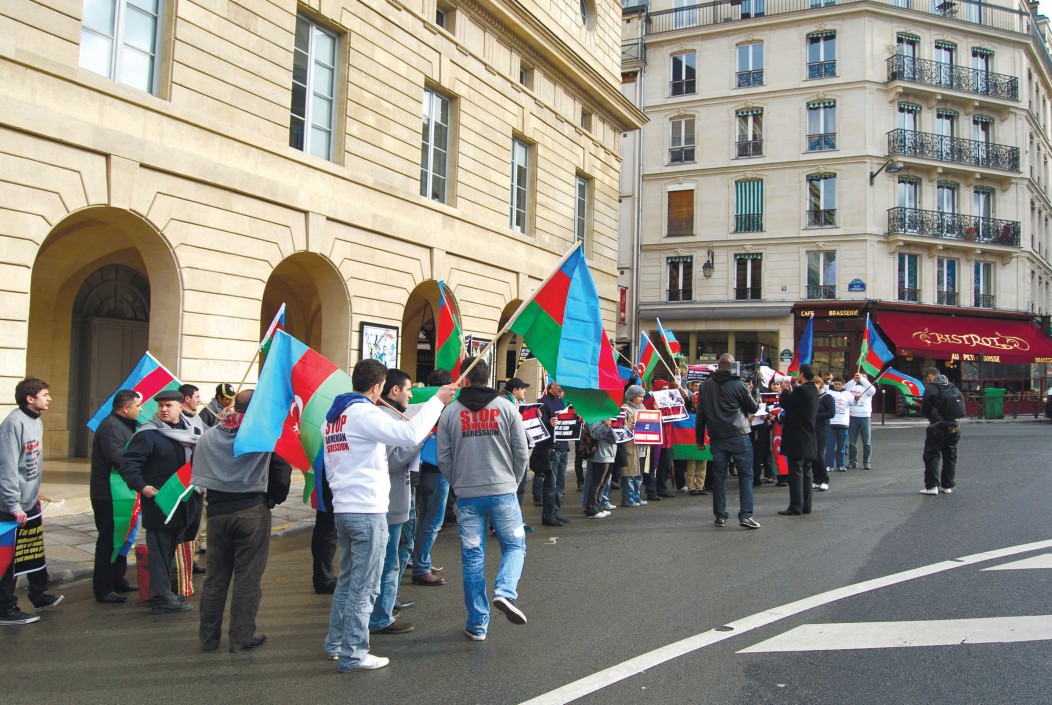
As it should have expected, the congress spoke extensively about the tasks facing the Diaspora, the need for unity in its ranks and for overcoming the differences that occasionally arise between Diaspora leaders and Embassy employees. The key tasks are to inform the world community of the real state of affairs in Azerbaijan and to counter the anti-Azerbaijani campaign of the Armenian lobby. As soon as the Azerbaijani Diaspora has started setting up its own lobbying structures, the Armenian lobby is no longer as omnipotent and invincible as before.
During the break, President Ilham Aliyev awarded a group of public figures with the Dostlug Order and the Taraqqi Medal for their contribution to the strengthening of friendship between peoples and the development of the Azerbaijani Diaspora.
The head of state awarded Basar Kemur, Ertan Demirtas, Iosif Shagal, Mehmet Akkan Suver, Suat Gunsel and Vladimir Kolesnikov with the Dostlug Order, and the Vice-President of the Heydar Aliyev Foundation, Mrs. Leyla Aliyeva, with the Taraqqi Medal.
According to news agency, the chairperson of the Azerbaijan youth organization of Russia and the senior coordinator of the Youth Forum of the Organization of Islamic Cooperation, Leyla Aliyeva, has been recognized for her contribution to the integration of our fellow countrymen into societies in foreign countries and for communicating Azerbaijani realities to the world. One of her biggest contributions has been made in the form of the "Justice for Khojali" campaign which significantly changed the balance of powers in the information warfare.
Perhaps we could count the number of events, newspaper articles in third countries, protest actions, demonstrations and reports in the world media, describe a campaign outside the British parliament when 613 air balloons with the names of Xocali victims were released into the air. Yet, there is a much more informative indicator: while earlier the Armenian media would regularly raise a hue and cry over the "Sumqayit massacre" in late February, now Armenian propagandists are having to look for ways of justifying themselves for Xocali. And that is much more difficult because Azerbaijan has the video footage made by Cingiz Mustafayev, a report by Memorial and, most importantly, the notorious phrase by Serzh Sargsyan from an interview with Thomas de Vaal, "Before the Khojali the Azerbaijanis had thought that it was possible to play jokes with us, that we would not lift hand against civilians. We have managed to break that stereotype." And this is not all - there are many other facts and arguments.
Yes, all this was known back in 1992 but is reaching the world only now. The biggest role in the success of the "Justice for Xocali" campaign has been played by the fact that it is led by young, active and modern people who understand that a certain segment of the audience will be much more impressed by a rap composition about Khojali than a two-hour lecture, that it is necessary not only to publish books and brochures but also create Internet resources and, most importantly, speak in a language understandable to the world community - both literally and figuratively.
The Armenian environment remains stubbornly tight-lipped over the Third Congress of World Azerbaijanis. Not least because this is not a very pleasant subject for Armenian propagandists. The influential and large Armenian Diaspora was seen in Yerevan as an exclusive bonus, as the main and exceptional advantage Armenia can have no competition in even theoretically.
But in October 2010, during a population census in Russia, Armenian nationalists were appalled to discover that their compatriots living in Kuban registered not as Armenians, but as Caucasians and, believe it or not, as Bakuvians. Earlier, in the summer of 2007, the editor of Russia's Armenian newspaper Erkramas, Tigran Tavadyan, said, "Officially there are 275,000 Armenians in Kuban, while the unofficial figure is close to half a million people. The community is quite heterogeneous and disorganized. There are local Armenians, there are those from Abkhazia, Karabakh, Armenia and different parts of Azerbaijan."
Asked by Golos Armenii newspaper, "There has been extensive talk about the activities of Azerbaijanis everywhere, namely in Russia. Is this palpable in Krasnodar Territory?," he said, "there are many people from Baku now, who are trying to establish contact with local Azerbaijanis, who have a relatively weak community, and the Armenians from Azerbaijan. I will not go into detail as to the level of such contacts, but it is evident that there is a process of active collection of information about the Armenian Diaspora of Russia, its strengths and weaknesses."
And Tigran Tavadyan made no secret of the weaknesses: unfortunately, not all of the local Armenians are interested in their historical homeland. He even offered his own recipe that has been repeatedly provided in the media.
"We need literature for our children, so far in the Russian language, in order to arouse an interest in Armenia. I remember believing in my childhood that the world's biggest plane was Armenian. So is an Armenian ship. This is what my father told me and I was proud of that. Our children should be proud of something associated with their homeland, even if this is an exaggeration," he said in the notorious interview.
Whether it is possible to nurture patriotism by telling children tales about the "biggest plane" and the "biggest ship" is a rhetorical question. The children will eventually grow up and see that they had been deceived since their early years. What matters more is that there many Armenians originally from Azerbaijan who have no intention of associating themselves with Armenian ultra-nationalists and are choosing between the "biggest ship" and real economic successes.
RECOMMEND:
 668
668

