

"EVIL SPIRITS" PUT THE WHAMMY ON IRAN
Rivalry between senior Iranian officials reaching boiling point
Author: Mehman MIRZOYEV Baku
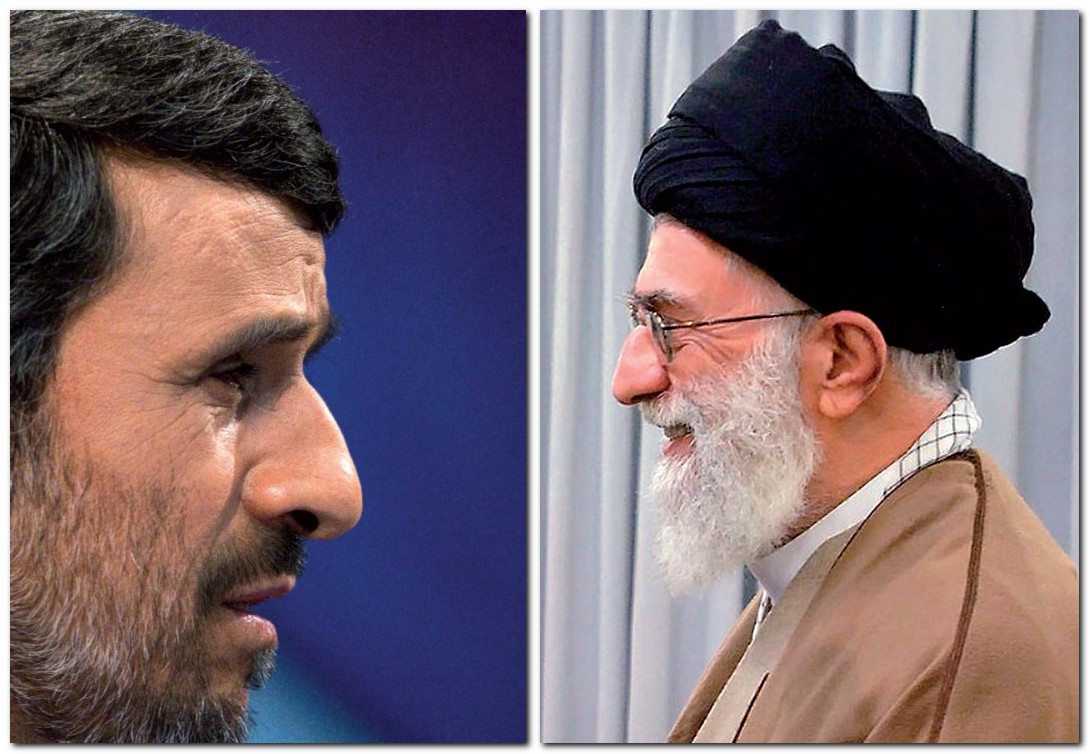
The Islamic Republic of Iran is experiencing dramatic times. As if it wasn't enough that the country is facing strong pressure from the West over its nuclear programme and that recent years have been marred by the ever intensifying stand-off between the authorities and the reformist opposition, real unrest is now unfolding within the ruling regime. The conflict between the supreme leader (rahbar) of the Islamic Republic, Ali Hoseyni Khamenei, and President Mahmoud Ahmadinejad has transformed into a personnel war where all thinkable and unthinkable means seem to be deployed - from arrests and resignations to a "witch hunt".
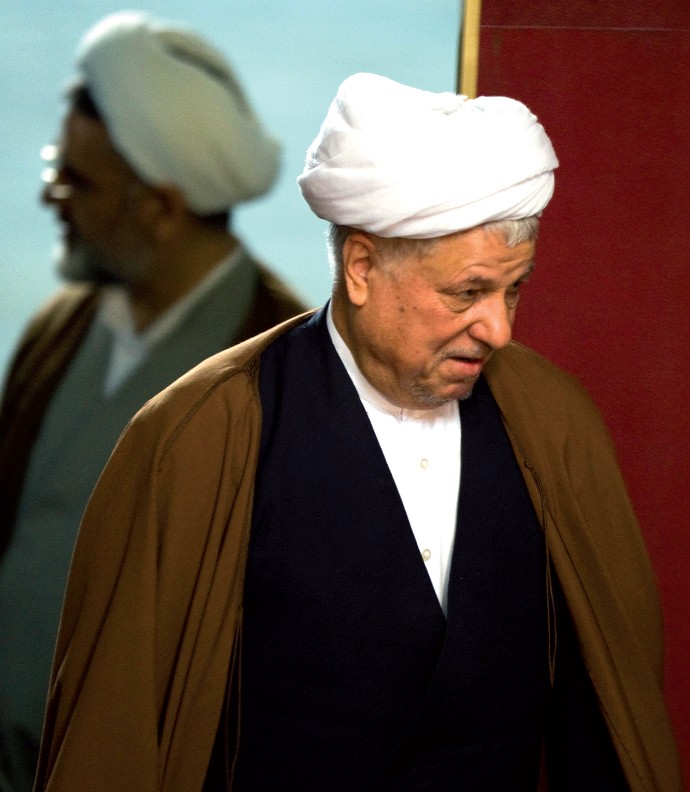
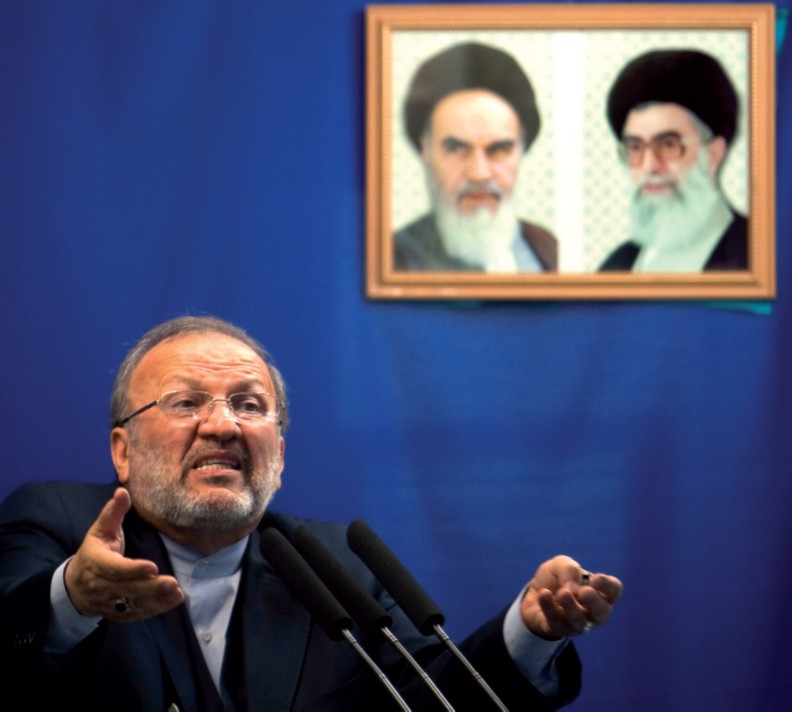
The stand-off within the Iranian authorities entered an open phase late last year when President Ahmadinejad decided that the services of Foreign Minister Manouchehr Mottaki were no longer necessary. Then the showdown in the Iranian administration focused on such an authoritative ayatollah as ex-President Ali Akbar Hashemi Rafsanjani, who has long been positioning himself as Ahmadinejad's main political opponent. As a result, Rafsanjani was dismissed from the post of chairman of the Assembly of Experts, one of the key bodies in the system of Iranian governance. Then the struggle within the Iranian establishment translated to developments that led to the resignation of the transport minister, Hamid Behbahani, one of Ahmadinejad's closest associates.
All these resignations took place without the disclosure of their main reason. Only the events surrounding the intelligence minister, Heydar Moslehi, revealed that the domestic showdown was triggered by the confrontation between Khamenei and Ahmadinejad, even though the former blessed the latter for another term in office by preferring him to the opposition's Mir-Hossein Mousavi.
After Ahmadinejad had sacked Moslehi, the latter was immediately reinstated in his post by a decision of the supreme leader. In fact, Khamenei sent a letter on returning Moslehi's portfolio not to Ahmadinejad, but to Moslehi proper. This made the president look bad and he made no secret of Khamenei's actions by failing to attend government and parliament meetings for some time. Meanwhile, Iran's legislature expressed full support for Khamenei's position and urged Ahmadinejad "to heed the voice" of the country's spiritual leader.
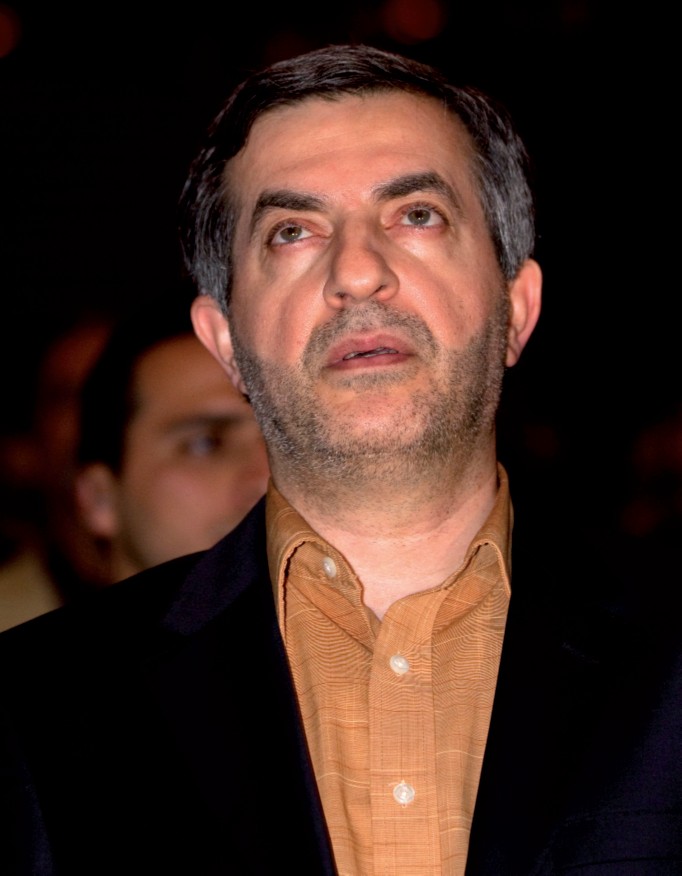
However, Khamenei's supporters decided not to confine themselves to words and launched an offensive on Ahmadinejad's team. The most serious blow was dealt to the presidential chief-of-staff, Esfandiar Rahim Mashaei. The Iranian newspaper Etedaal reported the arrest of Mashaei and 25 other employees of the presidential administration. They were all accused of nothing other than sorcery, which, according to Shari'ah law, is punishable by beheading. Those arrested include an Abbas Ghaffari who has been accused of possessing "special skill in metaphysics" and "contacts with ghosts".
The most curious thing in the sorcery story is that Mashaei was not just a presidential chief-of-staff, but is also Ahmadinejad's next of kin - his daughter is married to the president's son. But even that is not the most important thing. Mashaei is an outspoken opponent of the growing influence of Muslim clergy on state policies. Clerics are certain that despite Mashaei's defiant stance, Ahmadinejad sees him as the successor to his presidency. Hence the concerns that Mashaei is someone capable of changing the system of governance in the country.
It is also curious that Ahmadinejad's spiritual mentor, Ayatollah Mohammad-Taqi Mesbah Yazdi, has said that the president is under Mashaei's influence. It is therefore not a surprise that senior Muslim clerics in Iran have decided to remove Mashaei from the political arena and deal a blow to Ahmadinejad's position for venturing to defy spiritual leader Khamenei.
The entire situation has exposed a bitter fight for power in the IRI. On the one hand, greater influence is sought by activists describing themselves as "young nationalists" and trying to preserve the clergy as the main political force of the country. On the other, there is a Mullocratic elite mainly represented by elderly people who want to thwart the mature change in Iranian society. This clash of different trends in the Iranian administration has sparked off a personnel war, the key component of which is the attempt of the clergy, grouped around the spiritual leader, to prevent the power of the president and his successor from growing.
Therefore, Ahmadinejad's statement that there were no disagreements between him and Ayatollah Khamenei did not sound very sincere. In an interview with Iranian State Television, Ahmadinejad even called Khamenei "father". However, prior to this moving revelation he, under pressure from parliament, had sacked three cabinet members (as part of a programme put forward by legislators on reducing the government and merging several ministries). The president even appointed himself as interim minister of the oil industry which was left without a head after the dismissal. He was even going to lead an Iranian delegation at a meeting of the Organization of Petroleum Exporting Countries (OPEC) due in Vienna on 8 June. However, Khamenei's supporters saw this as an attempt to lay hands on the most strategically important and profitable sector of the Iranian economy.
The Council of Constitutional Guardians of the IRI, which determines the compliance of laws and other regulatory acts with Iranian law, threw itself in the president's way. The council, consisting of 12 people, six of whom are appointed by the spiritual leader and six by parliament, which is under the control of Khamenei and his closest comrade-in-arms, Parliament Speaker Ali Larijani. The Council of Constitutional Guardians repealed the president's decision, thus depriving him of the opportunity to be the sole head of the oil sector. Several days later, Ahmadinejad's position suffered yet another blow. Kazem Kiapasha, who was responsible for the personnel policies of the presidential administration and was seen as a right-hand assistant of Mashaei, was arrested.
More was to follow. The Iranian administrative court dismissed one of the country's eight vice-presidents, Hamid Baqaei, another of Ahmadinejad's associates. In fact, the president soon found himself in a hot seat too, after 12 MPs tabled the issue of presidential impeachment in the wake of allegations that the president had breached the constitution.
Finally, further speculation about a deepening stand-off between Khamenei and Ahmadinejad was sparked off by an explosion at an oil refinery in Abadan, which killed one and injured more than 20 people. The incident happened right when the president was visiting the enterprise. Ahmadinejad wasn't injured, while the refinery administration said that the incident had been caused by a gas leak. An investigation has been launched, but questions remain …
Apparently the personnel war in Iran is far from being over. Despite the unlimited power of the spiritual leader and the marked weakening of Ahmadinejad's position, it seems unlikely that the Iranian president will put up with the blows he has suffered of late.
An interesting opinion in this regard has been expressed by the US Daily Beast. "It is highly unlikely that Ahmadinejad, who is backed by billions of dollars of oil revenue, who can rely on religious and military forces and who has been ruthlessly suppressing those disagreeing with him for five years, will give up so easily. This is why the fight between the spiritual leader and Ahmadinejad and their supporters threatens to turn bloody in the coming weeks and months. The chances that the controversial Iranian president will leave are extremely slim."
However, regardless of the success of different components of the Iranian authorities, it is clear that this wrangling will not pass off without any consequences for the Iranian Mullocracy and the whole system of power in the IRI. It is quite possible though that the realization by those engaged in the personnel war of the fact that they are undermining the interests of the authorities as a whole will eventually lead to de-escalation. This order is likely to be issued by the same Khamenei and Ahmadinejad. They certainly understand that such developments are playing into the hands of opposition circles in Iran, not to mention the West, which is closely watching the domestic political strife in the Islamic Republic. At the same time, will just an order from top Iranian officials be enough to prevent what looks like inevitable changes in Iran's political life?
RECOMMEND:
 733
733

