

INDEFINITE NEGOTIATIONS
Can EU accession bring reconciliation to Pristina and Belgrade?
Author: Eldar PASAYEV Baku
Three years have passed since the Serbian province of Kosovo, with support from the leading Western nations, declared independence on 17 February 2008.
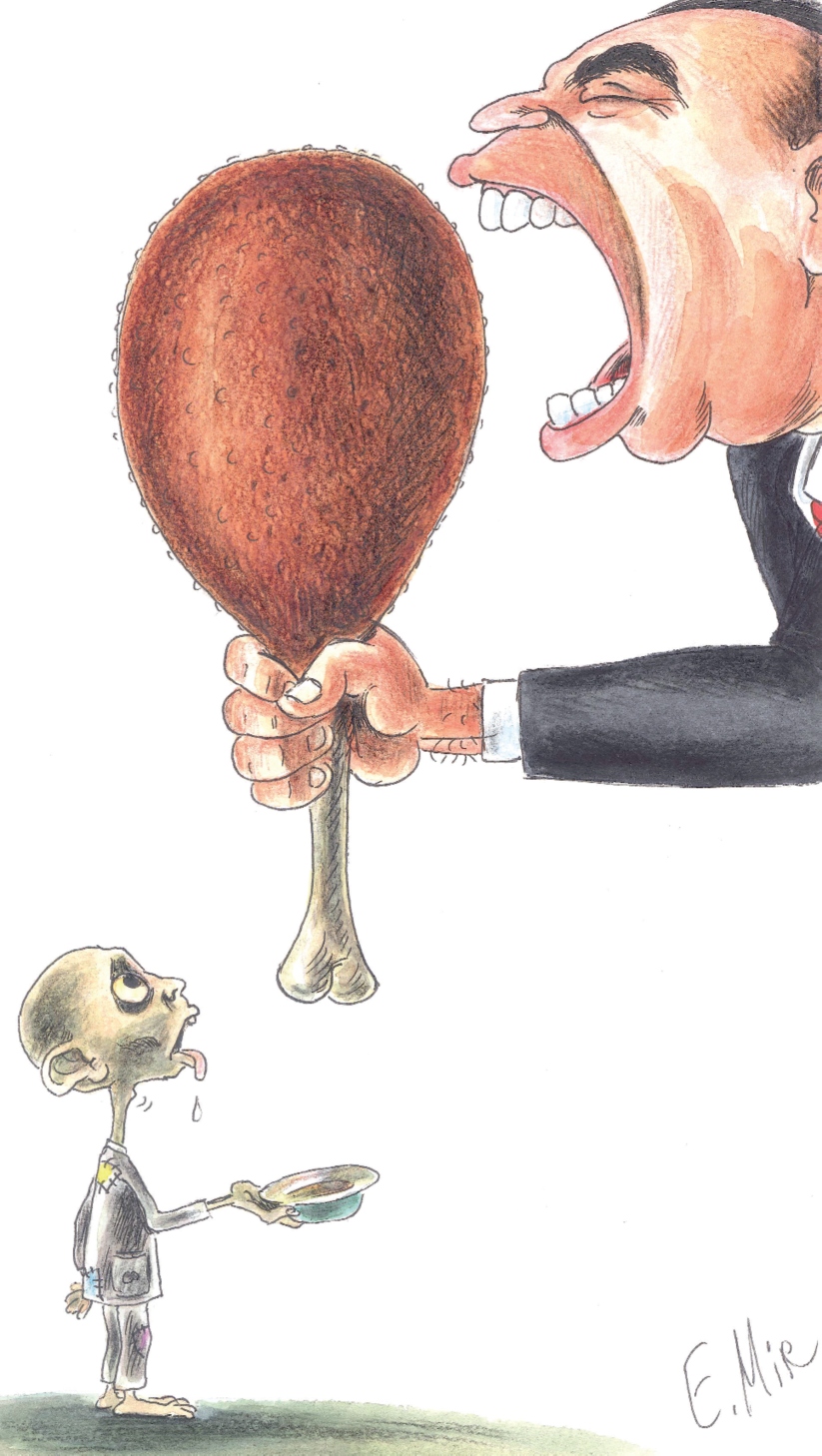
However, the latest 'birthday' of that quasi-state, whose independence was recognized at the time by only 75 UN member countries, was hardly a joyful occasion - not only because the process of recognition has clearly ground to a halt, but mainly due to the worrying economic situation in Kosovo. It is a fact that, as many of the European media report, the residents of the 'youngest European nation' themselves say that after the long-coveted 'divorce' from Serbia, life has become harder: unemployment stands at 40% and may reach 50%.
It seems that Kosovo, where large amounts of money flow without producing any great tangible results, is not a source of much joy for its European neighbours either. The image of the 'young nation' is badly tarnished by its notoriety as the main hub for drugs trafficked from Afghanistan to EU countries and a base for European crime. Some European politicians openly say that people now in power in Kosovo were effectively war criminals in the past.
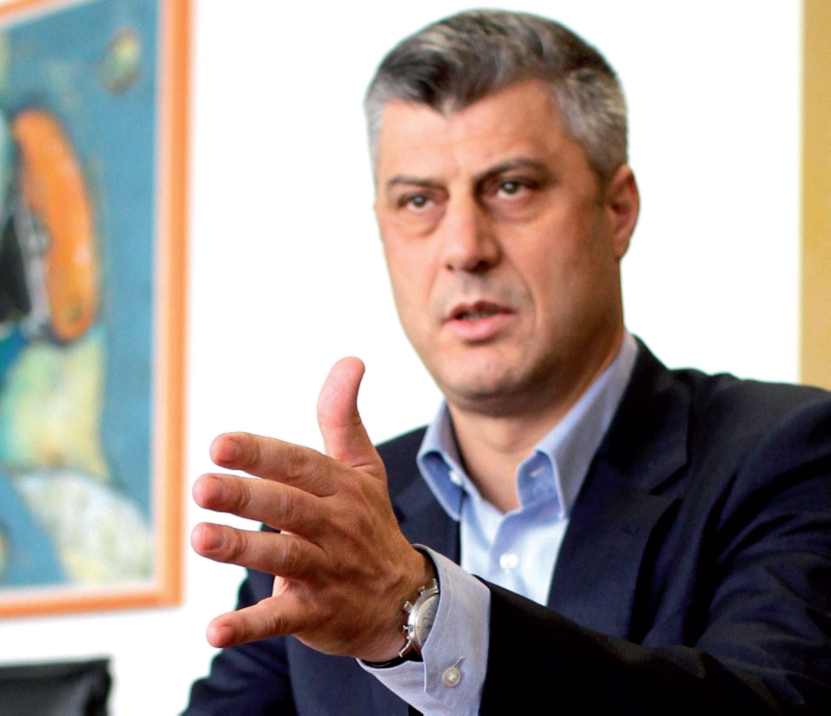
For example, Carla del Ponte, former prosecutor of the International Tribunal for the former Yugoslavia, suspects that Hashim Thaci, incumbent Kosovan prime minister, was implicated in trafficking human organs and organized criminal activities in Kosovo from 1998-1999.
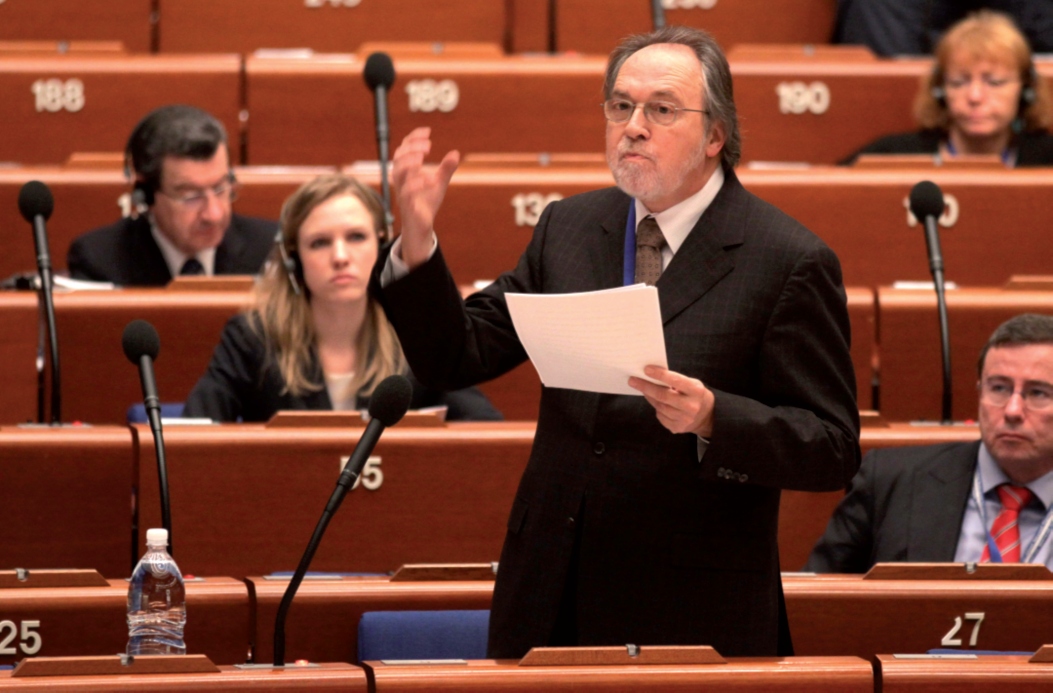
Dick Marty, Swiss member of parliament, human rights commissioner and special rapporteur of the Parliamentary Assembly of the Council of Europe, made the same accusations recently. In December 2010, at a meeting of the Human Rights Commission, he produced a report which stated that from 1999-2000 the Kosovo Liberation Army traded in human organs which had been taken from hundreds of Serbian prisoners who died as a result of the transplant 'black market'. The proceeds were used to buy arms and to enrich KLA field commanders, including Hashim Thaci. However, Marty has so far not presented any evidence.
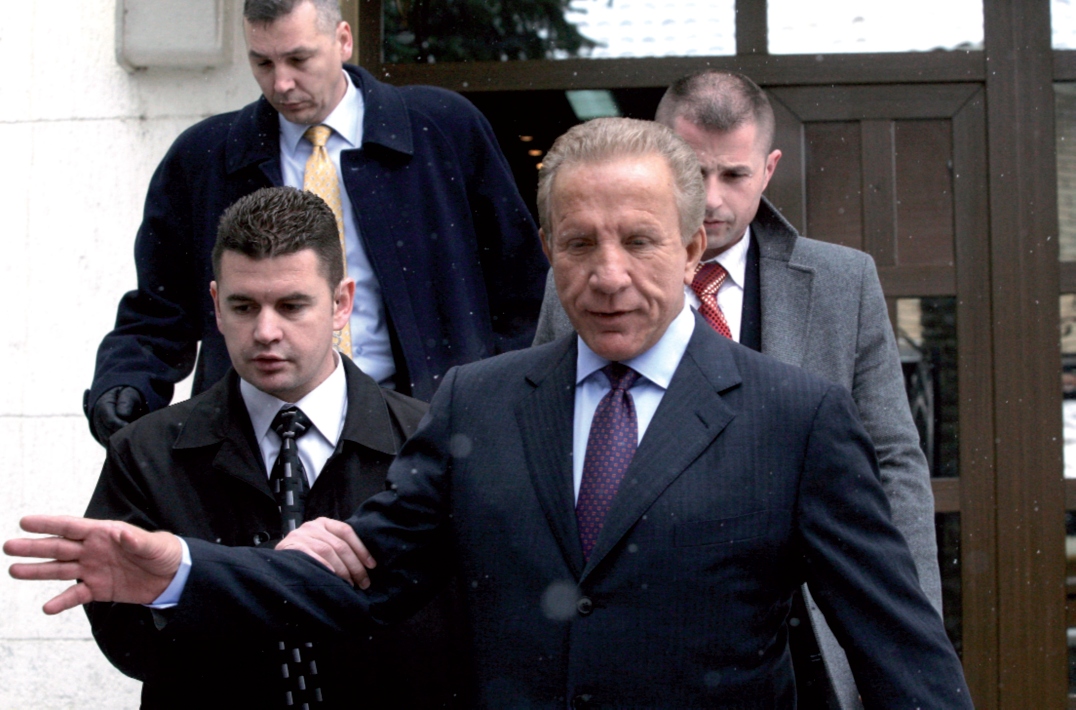
In addition, Behgjet Pacolli, a notorious person with dual Swiss and Kosovan citizenship, who is the world's richest ethnic Albanian, recently became the president of Kosovo.
People like Pacolli become the subject of whole books. Kosovo President Ibrahim Rugova used to say about him that he was "totally mysterious," and Corriere della Sera wrote that in the Balkans, he is called "our Berlusconi."
Born into a large but poor peasant family, Pacolli went to Germany at the age of 20, where he worked as a loader at a docks and a janitor for a restaurant, until he finally graduated with a university diploma in economics and trade.
Pacolli earned his fortune when he founded his construction company, Mabetex, which contracted work in the most 'problematic' countries and regions. The company operated on a global scale, with projects in Europe, Central America, the United States and former Soviet countries. Mabetex received many orders from Russia, the best known being the remodelling of the State Duma building in Moscow and more than 200 rooms in the Kremlin.
However, Pacolli gradually developed a keen interest in politics and in 2006 he founded the Alliance for a New Kosovo party, which won seats in Parliament in 2007. Pacolli's goal was to become president, and he succeeded. On 22 February 2011, Pacolli enlisted the support of 62 of the 120 members of parliament in a run-off election (although the main opposition parties boycotted the vote) and became head of state.
It is rumoured that collusion with Prime Minister Hashim Thaci helped Pacolli achieve presidential office. In December 2010, the Kosovan prime minister's party, the Democratic Party of Kosovo, won parliamentary elections, but did not have enough votes to form a new government. Three leading parties refused to take part in forming a cabinet headed by Thaci, so he finally reached agreement with Behgjet Pacolli, whose Alliance for a New Kosovo came fifth in the elections. The deal worked well for both. Hashim Thaci remains prime minister, his Democratic Party of Kosovo holds most ministerial portfolios, and Pacolli is president, while members of his Alliance for a New Kosovo are ministers of defence, economy and health.
However, analysts say that the outcome was a foregone conclusion. It is believed that it was Pacolli's party that led the drive to hold early elections by voting no confidence in the Thaci government. Thus Pacolli helped the prime minister to break the alliance with his then-partner President Fatmir Sejdiu and cleared the way to presidential office for himself. Neue Zuercher Zeitung reports that Pacolli "killed two birds with one stone: he helped Prime Minister Thaci regain ground and realised his own dream."
As a result, the opposition in Kosovo (53 seats in total) accuses the ruling duo of knowingly provoking the current political crisis in Kosovo and of bribing members of parliament and pressurising on them on the eve of the decisive round of the presidential election.
Indeed, in the first two rounds, Pacolli failed to attract a sufficient number of votes (54 and 58 votes instead of the required two thirds). And now it seems very strange to the opposition that on the eve of the third and decisive round of the presidential election, the Democratic Party of Kosovo asked for a five-minute break without delay. Parliamentary Speaker Jakup Krasniqi himself said that would be a violation of the rules because it would provide an opportunity to influence the decisions of members of parliament. The break lasted for a whole hour, after which Pacolli received enough votes to become president.
In addition, the opposition does not like the fact that the newly elected president has a long and tortuous record of relations with Russia and is married to a Russian woman.
As early as 1999 the future chief prosecutor of the Hague Tribunal for the former Yugoslavia, Carla del Ponte, accused Pacolli of corrupt dealings and money laundering - one charge was bribing then Russian President Boris Yeltsin. Incidentally, in June 2000 Behgjet Pacolli was also charged with money laundering and bribery in Switzerland.
It emerged that the Yeltsin family used Mabetex credit cards. The scandal was dubbed Russiagate. Carla del Ponte also investigated Pacolli's ties with Pavel Borodin, former head of the Kremlin Property Department. Borodin was eventually arrested in 2011 in New York at Switzerland's request and spent several months in US and Swiss prisons.
However, none of the participants in Russiagate subsequently encountered any major problems. Pacolli cited jealousy as the main reason for all the accusations. In December 2000, the Russia-related charges were dismissed and, in March 2002, Switzerland also dropped the charges.
However, political opponents of Pacolli in Kosovo still believe that the new president might be the 'long arm' of Moscow. He is also suspected of working with the Serbian security services.
These charges cannot be either proved or dismissed. Times changed in Russia a long time ago. And it is known that Pacolli is against the South Stream gas pipeline project which is so important for Moscow and which would cross Serbia. At the same time, the new Kosovan president is an ardent supporter of the alternative Western European Nabucco gas pipeline project. However, Pacolli is still seen as a man who could reach agreement with the Serbs. And it would seem that the new president will act in confirmation of this view. In his speech to Parliament, he said that he would "work with all Kosovars, regardless of their racial or ethnic origin."
The situation of the Serbian minority, about 5% of Kosovo's total population, remains difficult. The Serbs live mainly in a few small enclaves in the north of Kosovo, and small-scale ethnic clashes occur there regularly.
"I have achieved success by working hard. And I want to be as successful in Kosovo as I was in the West. The West is where Kosovo must head", Pacolli said. Of course, he is well-connected in the United States, too - Western European media report that he conceived and began to cultivate the idea of an 'independent Kosovo'. Incidentally, there are also plenty of shadowy stories about the Kosovan businessman in the West. There were rumours in the past that Behgjet Pacolli bribed Martti Ahtisaari, the UN Secretary General's special envoy to the talks on the status of Kosovo and Metohija. It was alleged that Ahtisaari received 42 million euro from leaders of the Kosovar Albanians for inclusion in the outcome report of provisions to help Kosovo secede from Serbia. A number of papers wrote that the German security services discovered this, but the information was not made public, so there was no follow-up. Ahtisaari himself reacted calmly to these charges. Or, to be more precise, he did not react at all. There were also rumours that some US politicians received financial awards from Pacolli for lobbying in Kosovo's interest. Be that as it may, this has never been proved and is already a matter of the past. As for the present-day ascent of the Kosovan businessman to his political Olympus, the USA and the EU welcomed the establishment of new governing bodies in Kosovo and promised to support reforms. No comments followed statements by the Kosovo opposition on the possible bribing of members of parliament by the White House.
At the same time, no one believes that the political friendship between Thaci and Pacolli will last. As for Belgrade, its position on its secessionist province has not changed over the last three years: Serbia will not recognize the unilateral declaration of Pristina's independence under any circumstances. For the majority of Serbs, Kosovo remains part of their national heritage.
At the same time, the Serbian authorities make no secret of the fact that their main objective now is to join the EU. At present, moves towards an agreement between the EU and Serbia on associated membership have slowed down. Brussels argues that Belgrade is not fully cooperating with the Hague Tribunal on Yugoslavia.
In an interview with the Berliner Zeitung, Serbian Deputy Prime Minister Bozidar Delic called on the International Tribunal for Yugoslavia to investigate war crimes against Serbia with the same consistency and charges as all other war crimes during the Kosovo war, but he also added that this problem "will not obstruct the talks between Belgrade and Pristina."
Delic said that the Serbian Government was ready to open dialogue with Kosovo immediately, first and foremost on routine issues such as transport, phone communication and energy supplies.
On 8 March, for the first time in the three years since the unilateral declaration of independence by Kosovo, high-level negotiations began between Belgrade and Pristina with mediation from Brussels. Observers note that the outcome of the dialogue will be crucial for Kosovo's and Serbia's prospects of accession to the EU. The economic issues are also important for Kosovo, and Serbia might take advantage of this. Can accession to the EU pave the way for some sort of compromise between Pristina and Belgrade? Only time can tell, for no deadline has been set for completion of the talks.
The chief negotiator on the Serbian side is Political Director of the Foreign Ministry Borko Stefanovic, on the Kosovan side - Deputy Prime Minister Edita Tahiri and from the EU, diplomat Robert Cooper, who is the special envoy of Catherine Ashton, the EU's High Representative for Foreign Affairs and Security Policy. If necessary, other parties - the UN, the USA, Russia - could also join the talks.
Stefanovic noted that the dialogue was to "discuss all the problems in relations between Belgrade and Pristina". It was reported that this was important for "improving the lives of the people of the region, strengthening cooperation in the Balkans in general and moving closer to common European standards". For now, the rule of law, regional cooperation and freedom of movement are the focus.
RECOMMEND:
 631
631

