

MULTIPLICATIVE EFFECT
Fallout from the Tunisian revolution already affecting neighbouring countries


Author: Natiq NAZIMOGLU Baku
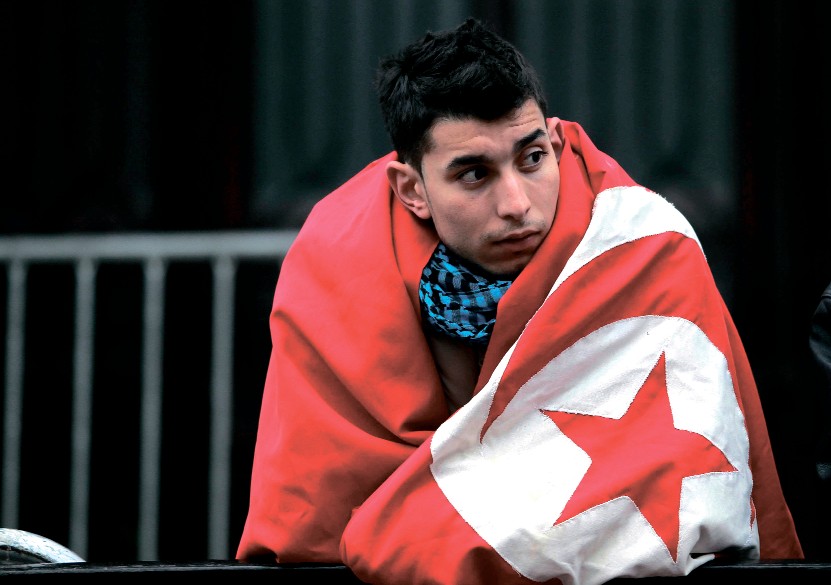
The coup in Tunisia, or the 'jasmine revolution', as recent developments in that Maghrib country have been dubbed by the world's media, might prove to be a landmark event in the history of the Near East. The toppling of a president who had occupied his post for many years has been adopted, to all appearances, by protesters in Tunisia's neighbouring countries, too.
The fall of Ben Ali
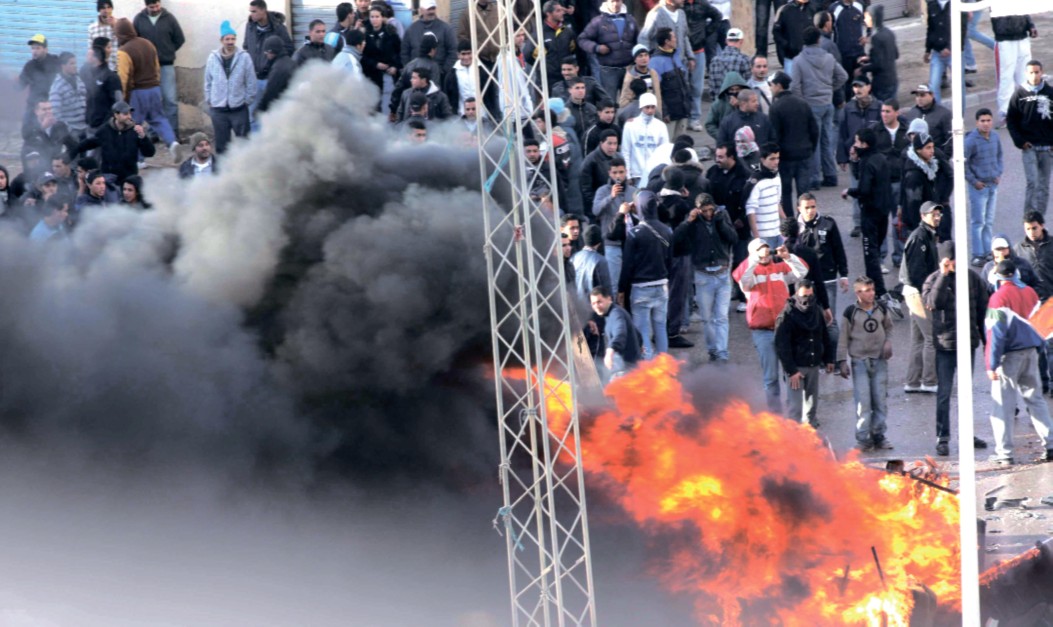
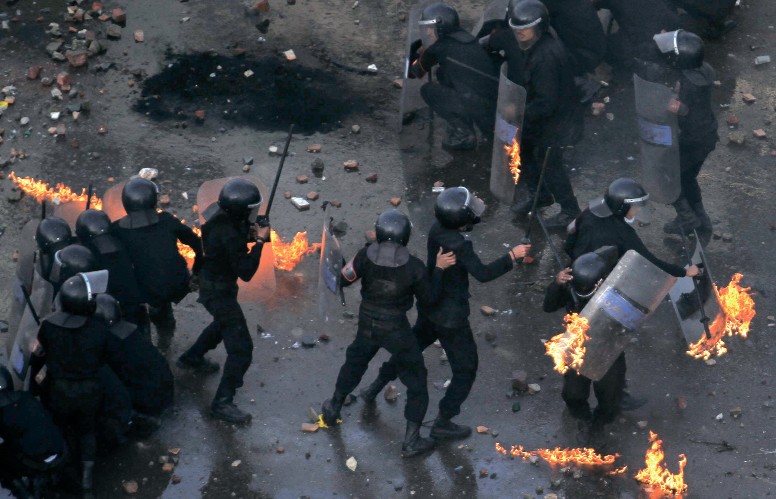
The disorders in Tunisia started back in December 2010 in the south of the country, and then spread towards the capital city of Tunis. The protesters' economic demands - that unemployment should be addressed and price rises on basic goods should be curbed - quickly transformed into political demands, and soon enough the main call during the protest demonstrations in Tunisia was for the resignation of 74-year-old President Zine El Abidine Ben Ali, who had been in power for 23 years, and reform of the system of government he had created. The Ben Ali regime sent police to disperse the protesters, which resulted in clashes and the deaths of 78 people.
However, the popular uprising in Tunis did not subside and Ben Ali had to flee to Saudi Arabia, which agreed to accept him (initially he had planned to fly to France, but Paris denied him asylum).
After the president's escape, Prime Minister Mohamed Ghannouchi became acting president, as he was the highest-level official in Tunis. However, one day later, Parliamentary Speaker Fouad Mebazaa was sworn in as the acting head of state, in accordance with the Tunisian Constitution.
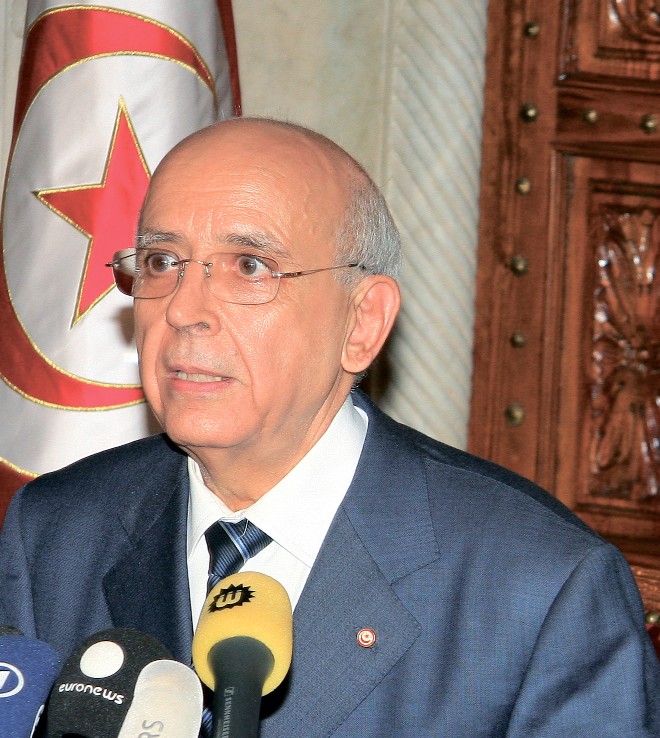
After consultations with representatives of different political parties, Mohamed Ghannouchi formed a provisional coalition government. It included six ministers from the previous government, including Ghannouchi himself (they all announced that had withdrawn from the Constitutional Democratic Rally, the party headed by the toppled president) and four members of the opposition.
The new cabinet announced the release of all political prisoners, the introduction of freedoms for the mass media and a lifting of the ban on the activities of the country's main human rights organization - the Tunisian League for Human Rights. Organizing early presidential and parliamentary elections was declared to be one of the government's priority objectives.
But the calm which seemed to have set in did not last long. The day after the government was formed, the opposition ministers resigned. They cited doubts about the ability of a cabinet which included former Ben Ali supporters. Immediately after the collapse of the newly created coalition government, thousands of demonstrators went out onto the streets of Tunisian cities. The people who had initially protested against rampant corruption, poverty and joblessness, were now angry with the fact that members of the former president's team remained in power; they believed that these officials were no less responsible for the country's problems than Ben Ali himself, or his clan.
So the "jasmine revolution" will probably continue to escalate because it is self-evident that toppling Ben Ali alone has not yet brought the Maghrib country close to resolving a serious political crisis. The Tunisian public was not appeased even by the arrests of more than 30 members of the former president's family clan, including Larbi Nasra, owner of Hannibal TV, and his son, who were relatives of Ben Ali's wife and had publicly called for violence to restore the old regime. In addition, Abdelaziz Ben Dhia, former defence minister and Ben Ali's main advisor, and Abdallah Kallel, former Senate speaker and minister of internal affairs, were put under house arrest. Finally, the Tunisian authorities issued an international arrest warrant for Ben Ali himself, his wife and other relatives who had fled the country.
The Tunisian police began to disperse the demonstrators who continued to organise protest actions in front of the prime ministerial residence. It was clear that the new cabinet did not have enough authority to persuade the protesters that the government was able to stabilize the situation and initiate serious democratic reforms. So, just a few days after the launch of a new wave of protest rallies, the ministers who had previously supported Ben Ali were forced to resign. The rallying masses were elated by the news. Now the question is how soon a new transitional government will be created, to take charge of organising early elections.
'Jasmine revolution' marches on?
In the mean time, fallout from the Tunisian revolution has affected neighbouring countries, too. The first to be 'infected' was Algeria, where, as some time ago in Tunisia, mass protests are under way demanding bread and jobs. And this is happening in a country which is an OPEC member and the largest oil supplier in Africa. Fearing that a Tunis scenario could unfold (especially as Tunisian flags are waved by protestors alongside Algerian ones), the Algerian authorities are taking tough measures to suppress the protests on the one hand and, on the other, to meet some of the demonstrators' demands (in particular, the government has reduced the prices of some basic goods). During clashes with Algerian police, five people have been killed and 800 wounded.
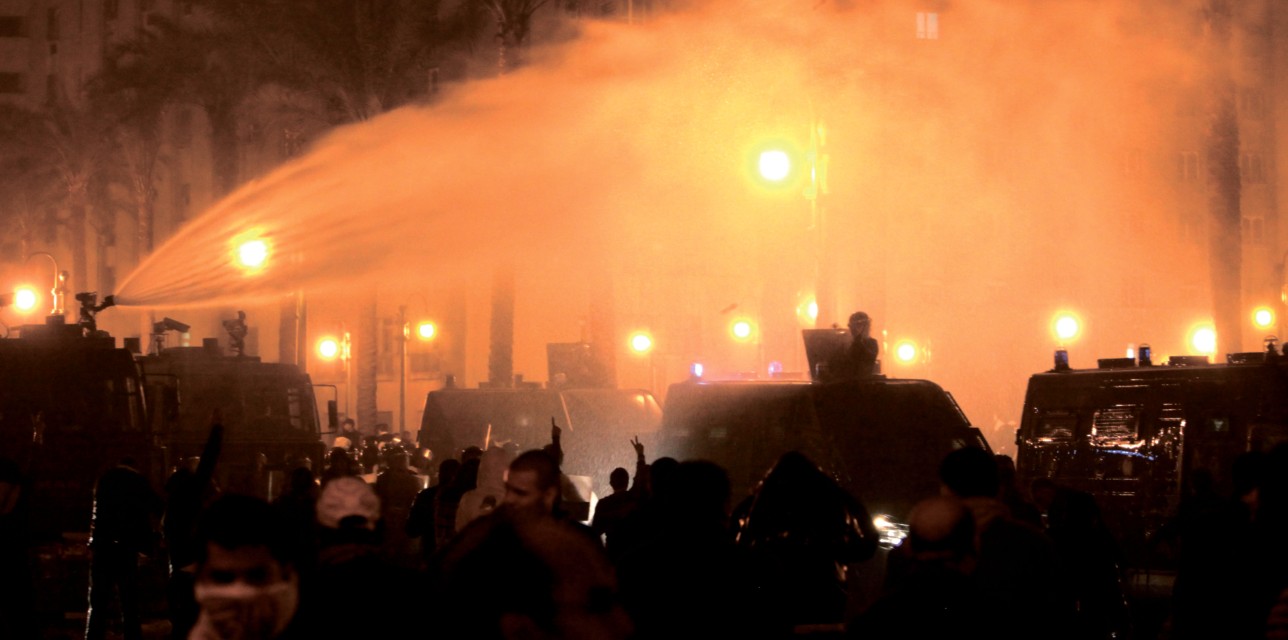
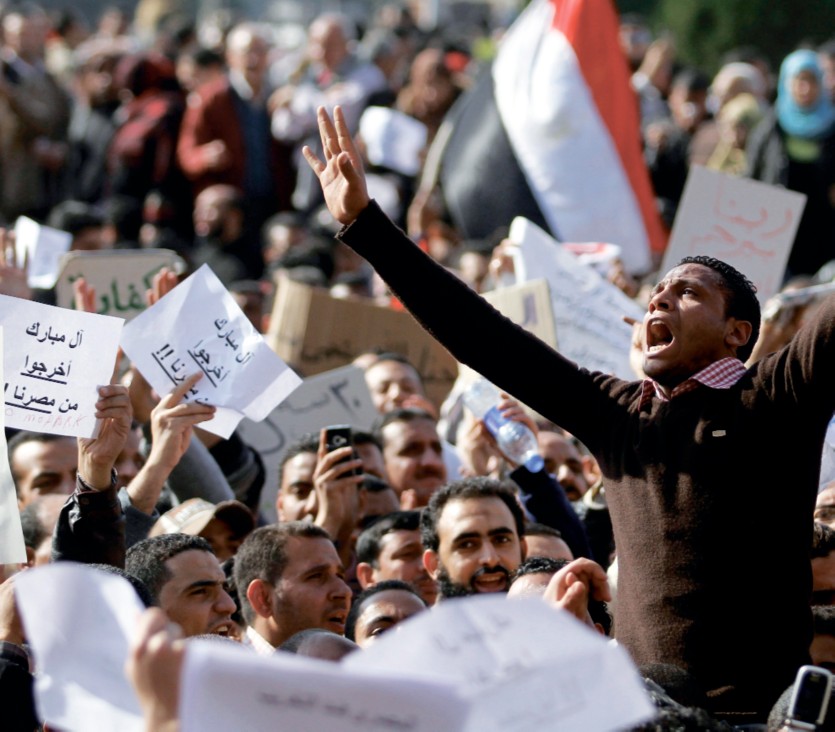
Powerful protest actions spread over to North Africa's most influential state, Egypt. The demonstrators voice their displeasure with the poor quality of life and joblessness, demanding an improvement in the economic situation, political freedoms and the resignation of 82-year-old President Hosni Mubarak, who has been in power for 30 years.
The organizers of the rallies in Cairo make no secret of the fact that they are inspired by the example of Tunisia and will keep going until the Mubarak regime is changed. The National Assembly for Change is also rallying its supporters. This was founded by Muhamed Elbaradei, former IAEA head and Nobel Prize winner, who is the main opposition presidential candidate. However, the Egyptian authorities have decisively curbed mass protests so far. During the protest actions by many thousands, five people have been killed and 800 demonstrators arrested.
In the mean time, antigovernment demonstrations were also organized in the Yemen capital Sana'a. The protesters there are also against the ruling regime and demand the resignation of Ali Abdullah Saleh, who has led the country for more than 30 years.
It is difficult to say now how all these processes will end in the Arab countries where protest actions have started. Only the motives behind the protests are clear, such as rule of an authoritarian leader for many decades, flourishing corruption and a worsening economic situation. But there are differences too: for example, while in Tunisia the irritating factor for the population was the persona of Ben Ali himself and his family, whom they accuse of appropriating most of the national product, in Egypt President Mubarak's power rests on the "top-echelon" military, among whom he shares out the country's considerable wealth. This is why in Tunisia, the army took the protesters' side at the decisive moment, while in Egypt the army is the main support base for the head of state and is taking decisive measures to disperse protestors.
The "chain" methodology
However, the processes currently under way in Arab countries and which the rebelling groups themselves categorise as nothing less than revolutionary, are similar in terms of the methodology of mass demonstrations and the risks likely to be faced if the authoritarian regimes in a number of Near Eastern Muslim countries fall. Obviously, the developments in Tunisia and neighbouring states were in large part made possible by a powerful virtual campaign by opposition activists: using social networks, they managed to literally awaken the potential of a dormant protest to topple the ruling political forces. The storm broke immediately after tens of thousands of people confirmed on Facebook and Twitter that they were ready to take part in protest actions.
Nonetheless, it is evident that interested external forces also took part in creating the "Maghrib chain." The theory that Tunisia is only the beginning is legitimate, if only because a revolutionary wave which has reached as far as the south of the Arabian Peninsula began in the region's most predictable country, which was most amenable to manipulation from abroad and in which the social contrasts were manifested to a much lower extent than, for example, in neighbouring Algeria and Egypt.
The statement by US State Secretary Hillary Clinton merits attention; she said immediately after the onset of disorder in Egypt that the developments in that country should signal reforms which came to a head long ago. Who knows, perhaps the methodology of transition to democracy used in the Maghrib countries is an attempt to resolve Near Eastern conflicts Obama-style?
However, with all the euphoria about the developments in a number of Muslim countries, even in the West many people warn of the danger that radical fundamentalist groups may come to the fore in the political arena if the restrictions imposed by the Ben Ali and, particularly, Mubarak regimes are lifted. Observers note with concern that activists from the Ennahda movement, which was banned under Ben Ali, played an important role in organizing protests against the already collapsing coalition government in Tunisia. And in Egypt, the banned Muslim Brothers, who have sentenced the Mubarak regime to death, have become noticeably more active. Hence the concerns being voiced with increasing clarity by political circles in the USA, Europe and Israel - apparently, these circles are about to start taking emergency measures to prevent changes to the Near East political configuration which might not be in the West's interests.
RECOMMEND:
 626
626

