

A MATTER OF HONOUR
In the matter of rescuing its citizens from the hands of Armenian separatists, Azerbaijan will have to rely only on itself
Author: Fuad HUSEYNZADA Baku
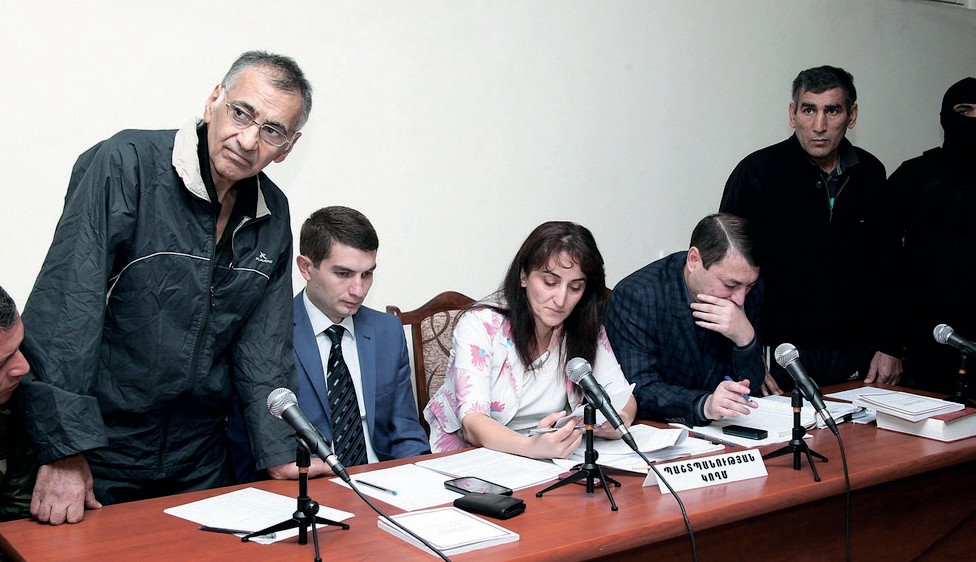
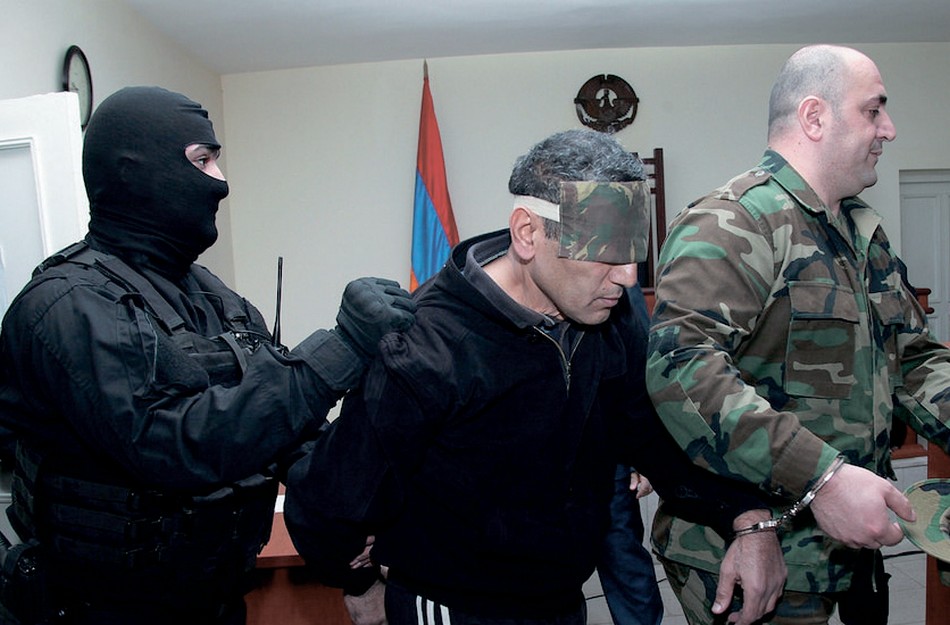
Just before the New Year, the Karabakh separatists prepared a "gift" for Azerbaijan. According to Armenian media reports, on 29 December, the so-called "court of first instance" of the separatist regime met the demand of "prosecutor" Karen Gabrielyan and passed a severe sentence on two Azerbaijani citizens held hostage since July last year. Dilqam Asgarov and Sahbaz Quliyev got a life sentence and 22 years in prison, respectively.
Let it be recalled that last July, Russian citizen Dilqam Asgarov and Azerbaijani citizen Sahbaz Quliyev were taken hostage by Armenian soldiers in Kalbacar when trying to visit the land of their ancestors. Another Azerbaijani citizen, Hasan Hasanov, was killed by them. Later on, a murder, sabotage and other deadly sins were pinned on the Azerbaijani civilians whose only "guilt" consisted in their attempt to visit their homeland being under occupation. As had probably been planned by the Armenian side, the theatrics under the high-sounding name of "trial" was accomplished in compliance with all legal rules and a convincing full stop was put in the epic of the Azerbaijani hostages. But no such luck.
It was clear from the outset that we could not reckon on support from the international community in our efforts to release the Azeri hostages. It looks like the major world players just do not see this problem. No attention to the blatant outrage against the peaceful Azeris has been displayed by Russia (despite the fact that Dilqam Asgarov is a Russian citizen) or by the USA, which is especially sad. The normally talkative representatives of the Department of State are giving the same reply to journalists' repeated requests for comments on the situation with the Azerbaijani hostages: "We are not in the know". Unusual indifference for a state which has granted itself status as the guardian of the global order, isn't it?
Meanwhile Azerbaijan itself at the level of its president has kept the issue of liberating the Azeri hostages in its focus of attention. "The president is permanently engaged with this matter. I am absolutely sure that the president who returned Ramil Safarov to this country will set them free as well," said Ali Hasanov, Azerbaijan's deputy prime minister and head of the state committee for refugees and displaced persons.
Of course, no-one has any doubts about Azerbaijan's intention to go to the bitter end to release their compatriots. But this hostage case is much different from that of Safarov. Indeed, unlike the army officer, Asgarov and Quliyev are not kept in a prison of a civilized European state but in a dungeon of a fictitious entity beyond the control of international laws.
The "Azerbaijani saboteurs" case trumped up by the self-proclaimed regime is too thin. Ridiculous is the very trial of the Azerbaijanis whose entire "guilt" consists in that they decided to visit their native lands. Of course, they did not violate any "state border" and the charges to this effect do not hold water. For the Armenian "charges" not to fall apart at the seams, the Azerbaijanis were charged with more serious crimes: sabotage and even murder. However, there are some problems when it comes to possible actions in the legal field. Armenia has deliberately denied any connection to what is happening in order to absolve itself from responsibility for failing to comply with international commitments on the return of civilians taken hostage. We have nothing to do with all that, they imply, so sort out these matters with the "Karabakh authorities".
But, as is known, the regime of the so-called NKR [Nagornyy Karabakh republic] has not been recognized by anyone. To avoid having to release the hostages, the Karabakh separatists, trumpeting at every corner available to them about their "viability as a state strictly following international standards", would rather benefit in this case from insisting on the contrary, namely, that they are not accountable on requirements of international instruments. In any event, according to Farhad Mehdiyev, head of the Department of Law at Caucasus University, if representatives of the Armenian side regard the Azerbaijanis who are natives of this land as foreigners, they should have been particularly careful to ensure their right to defence. Naturally enough, that was not done and the exercise of those rights was at zero level. Perhaps the fact that it was not the first time Asgarov and Quliyev had crossed the line of contact acted as a special irritant on the Armenians. They had successfully done it more than once before. This is certainly the reason why it was decided to punish them severely in order to teach a lesson to others wishing to follow suit.
One way or another, Farhad Mehdiyev believes that Azerbaijan has the right to lodge a complaint against Armenia with the European Court of Human Rights citing the resolution of the UN, the European Parliament and the Council of Europe laying it down that Nagornyy Karabakh is Azerbaijan's sovereign territory occupied by the Armenian armed forces. "But the problem is that the European Court has no precedent on this matter so far. Therefore, if we sue Armenia saying that it occupied and held Nagornyy Karabakh and, according to the Convention for the Protection of Human Rights and Fundamental Freedoms, violated the rights of Asgarov and Quliyev (Article 5 - Right to liberty and security, and Article 6 - Right to a fair trial), the case will drag on for years, said the international law expert.
However, the European Court of Human Rights had to deal with a similar case in the 1990s where charges of crossing the border of an unrecognized state were dropped. It was the sensational Loizidou versus Turkey case. It was about a Cypriot citizen born in the Turkish part of the island and arrested when trying to cross the border to the Greek side. The Turkish authorities let her go on that very day but we are talking here about the very fact of her arrest, even if it was temporary. That case lasted a very long time but eventually the plaintiff achieved what she sought and Turkey was accused of wrongdoing.
We can speak about analogy here. But our case is more serious because the Azerbaijanis not only failed to be released shortly after the arrest but also underwent a harsh punishment on trumped-up charges which is a very serious abuse of their rights to freedom.
There is one more option: to liberate Asgarov and Quliyev by holding a special operation. In case of success, nobody can rebuke Baku because it would be a matter of rescuing Azeris illegally held in a territory officially regarded as an inseparable part of Azerbaijan. But this option is unlikely because of the high risks involved: the number of likely casualties in the special operation might exceed the number of liberated hostages.
Mehdiyev sees the most viable option in exchanging Asgarov and Quliyev for Armenian saboteurs. Getting hold of some is a matter of technique, as they say. "There is the 1949 Convention of Geneva on protection of civilian population during hostilities which says that people taken hostage must be immediately returned. This provision applies to relations between Azerbaijan and Armenia but this convention will not work in case of the self-proclaimed NKR.
Unlike the Armenians, we did not put captured saboteurs to trial but exchanged them for our citizens held captive by the Armenians. In this case, exchange is also acceptable. If we have somebody in hand to exchange for our citizens, the Armenians will certainly declare: "We have civilians convicted for felonies rather than war crimes whereas the people held by you are military and you are obliged to return them". But we have our own arguments to reply even to this statement. Because we know who serve in the occupied Azerbaijani lands. Those are either Armenia's military servicemen or mercenaries. There are no "volunteers" there. As for mercenaries, they are not eligible, according to international law, for protection under the 1949 Convention, the expert explained.
In any case, however problematic the release of Asgarov and Quliyev may be, it is a matter of honour to do it. The most important thing is that they are alive. And the duty of Azerbaijan is to help them at all costs.
RECOMMEND:
 804
804

