

TERRORIST ATTACK
The terrorist attack on the magazine Charlie Hebdo has uncovered vulnerable spots in the European system of values
Author: Irina KHALTURINA Baku

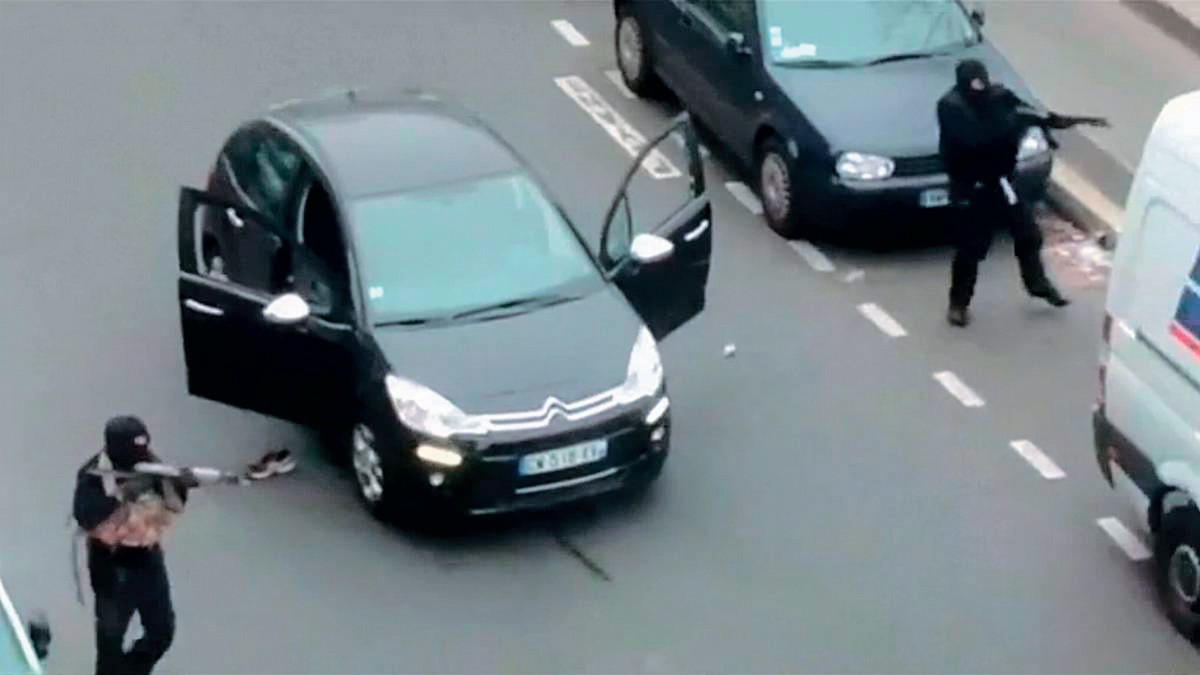
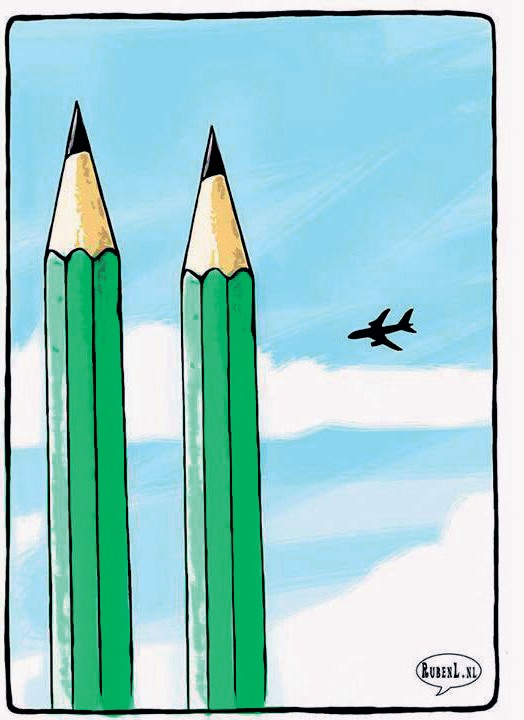
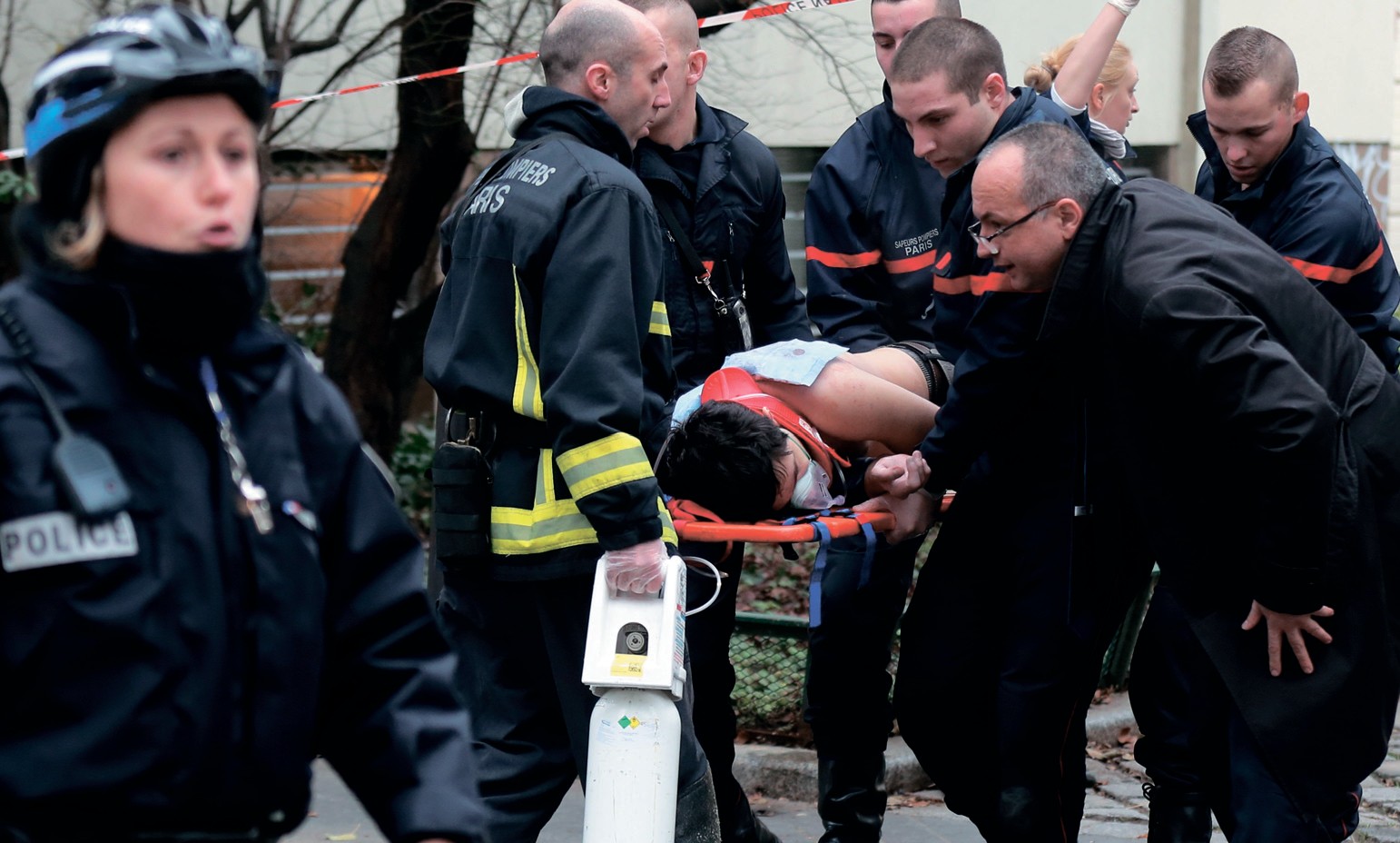
The outrage against the editorial staff of the satirical magazine Charlie Hebdo in Paris is, of course, a terrible but not entirely unexpected crime. This has happened before, albeit on a different scale, in September 2005 when the Danish conservative newspaper Jyllands-Posten published cartoons of the Prophet Mohammed. However, this time the French satirists received a much more shocking and well-planned response. On 7 January, unknown armed persons attacked the Charlie Hebdo office, killing 12 and injuring over 20 people. The attack is being linked with cartoons about Islam that were published in the newspaper - the gunmen shouted "Allah Akbar" and "We have avenged the Prophet". The criminals managed to get away in a hijacked car. The names of the criminals were later announced - French citizens of Arab origin the brothers Cherif and Said Kouashi, and Hamid Murad. Euronews reported that all the magazine's directors and its historical founders had been killed, including the cartoonists Stephane Charbonnier, Jean Cabut and Georges Wolinski, who were well known in France, and two policemen.
Charlie Hebdo regards it as its duty to react to the latest world events, and has more than once published cartoons of the Prophet Mohammed, both in 2006 in solidarity with Jyllands-Posten and in 2012 in the context of the disturbances over the film "The Innocence of Muslims". In its latest issue the paper also published a story about a new novel by the French writer Michelle Houellebecq, "Soumission", which tells of the Islamization of Europe. Charlie Hebdo has also satirized one of the leaders of the terrorist group ISIL (Islamic State of Iraq and the Levant), Abu Bakr al-Baghdadi. The radical group Islamic State has not claimed responsibility but said that the terrorist act was the first step on the path of the Islamists' struggle against the West European "crusaders".
The terrorist act against the journalists was condemned by politicians and public figures of most countries, including Muslim countries, various religious leaders of different faiths and representatives of regional and international organizations. The thrust of all their statements was that murder cannot be justified by any objectives, that terrorism cannot have a religious undertone and that violence and radicalism are "the main enemies of Islam". European leaders described the attack on Charlie Hebdo as an attack on European and democratic values. This is mentioned, among other things, in the statement of the Council of Europe. In the opinion of the former French president, Nicolas Sarkozy, the attack on Charlie Hebdo was tantamount to a war against the civilized world. The current French leader Francoise Hollande called on his citizens to close ranks. "No barbaric act will ever extinguish freedom of the press. We are a united country and we know how to react," Hollande said.
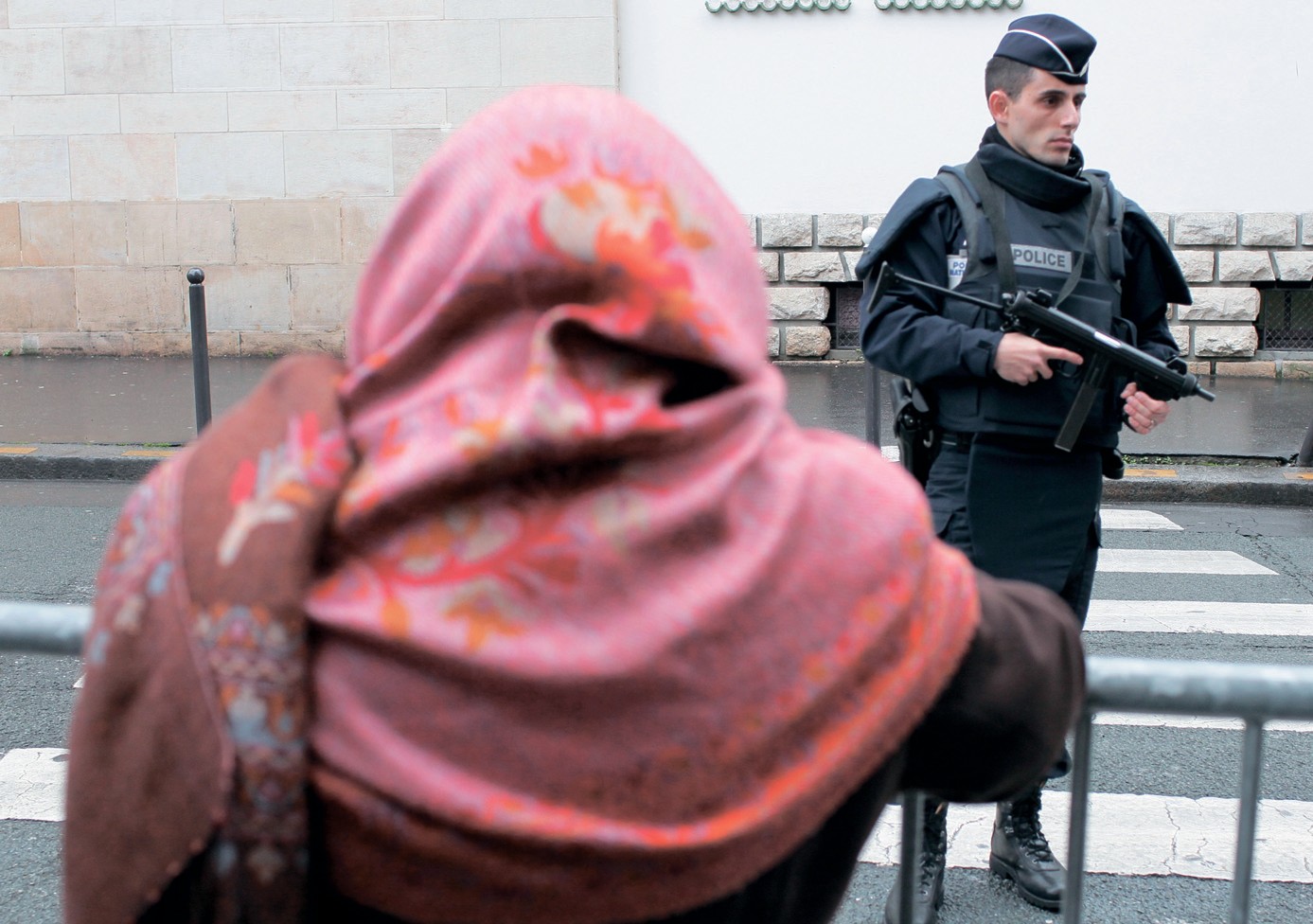
In fact, freedom of speech is one of the most important achievements of western civilization and one of the most vital liberal values, because it is linked with the existence of many other important rights and freedoms, as well as the very possibility of building a demo-cratic state. However, another sacred basis of the modern western or, to be more precise, European society is multiculturalism. In other words, Europe has not only decided to unite (although there is still very little in common between a Scotsman from Edinburgh and a Greek from Saloniki), but has already decided that it is capable of absorbing migrants who continue to settle in large numbers throughout the EU. Many of these "aliens" have inherited the colonial past of the "Old World" and the shores of Europe are now being stormed by refugees from the countries of North Africa and the Middle East that were unaffected by the "Arab Spring". The fact is that the EU really needs manpower and fresh blood. The problem is that masses of migrants are not being integrated and don't want to be turned into your average German or Frenchman but, instead, are living as separate communities. Consequently, there are migrant districts in all the large French cities where even the police dare not go unless they really have to. In other words, the ideal liberal formula - all are equal and tolerant - isn't working in Europe.
The question of what are the limits of the law on freedom of speech is a particularly acute one in multicultural societies. Because no-one has clearly explained what should be done if for some people their religious feelings are no less important than having the opportunity to freely express their thoughts. And it is not even a question of a specific religion because, for example, the cartoonists at Charlie Hebdo published satirical sketches not just of the Prophet Mohammed but also Jesus Christ. A performance of the Pussy Riots group, which was organized in front of the altar of one of the most important Orthodox churches [in Russia], was described by many people in Europe as freedom of speech. When there are no clear criteria, freedom of speech and self-expression can be interpreted in many ways. I suppose in some ways you could make a case for drawing a cartoon of the victims of a terrorist act. Or perhaps not? Where do you draw the line? Incidentally, the bloggers and users of social networks recalled that Charlie Hebdo published cartoons about the terrorist acts on the Moscow metro.
In any event, a great many questions remain to be asked. We are also not quite clear as to how freedom of speech gels with the celebrated western political correctness. Why must some people suffer insults about their religious feelings but risk being sent to prison for interpreting historical events in a different way than the parliament of a country? The users of social networks also recalled that in 2008 Charlie Hebdo sacked the well-known 79-year old French cartoonist [Maurice] Sinet for an anti-Semitic cartoon of President Nicolas Sarkozy's son. Freedom of speech is not an absolute right. Article 19 of the International Covenant on Civil and Political Rights says that the right to free expression of one's opinion may be subject to certain restrictions, such as respect for the rights and reputation of others or where there is a threat to state security, public order, health or morals. Article 20 of the same Covenant says that any propaganda of war, as well as national, racial or religious hatred that constitutes incitement to discrimination, hostility or violence shall be prohibited by law.
In the case with the cartoons, the argument that in a democratic society every citizen has a choice - to read or not to read, to watch or not to watch, to listen or not to listen - makes some sense. So, let's suppose that a cartoon cannot really be described as "a threat to national security" or "propaganda of religious hatred". Then some terrible people wearing masks come along and murder the staff of a newspaper that published a cartoon. In response to these actions all over the country mosques are blown up, hostages seized, police attacked, there are demonstrations and thousands of people in the streets and on the Internet start slinging mud at each other, using "arguments" based on their religious and ethnic affiliation. Should these bombs and acts of protest be regarded as a threat to national security or not? Should the "abusive debates" on blogs and social networks that followed the terrorist act be regarded as propaganda of religious hatred or is this simply a heated argument?
Both now and always the main aim of satire, a cartoon or a lampoon has been to provoke potent social, political and religious arguments, including those regarded as sacred or taboo. However, what is the political or social value of the cartoons published in Charlie Hebdo? Surely there is no way they are advancing European society or enlightening it? Or perhaps the authors hoped that al-Baghdadi would be offended and decide to mend his ways? The article based on solid journalistic research which fully exposed the sources of funding of the ISIL terrorists or how they are able to trade in oil from captured fields right under the noses of the whole civilised world could be described as freedom of speech. But what is the value of cartoons on a religious subject, especially bearing in mind the effect they might cause? Why exacerbate even more a situation which has been made white hot, bearing in mind that a section of ISIS mercenaries have EU passports, that dozens of refugees from the Maghrib are flocking to the shores of Italy every day and that demonstrations of the Pegida movement ("European patriots against the Islamization of the West") had been held in Germany over the New Year?
Built on the ideals of peaceful integration, tolerance, freedom of speech and openness, Europe presents itself as the ideal of freedom and democracy - the land of dreams for all the degraded and the abused of the world. Europe was united when, for example, certain peoples of the former USSR fell into a long series of territorial wars. Europe, it seemed, had done away once and for all with conflicts and religious battles. But something again is amiss.
The Suddeutsche Zeitung newspaper recently published the opinion of Olaf Rader, a cultural history teacher of the Humboldt University of Berlin, who believes the main problem of Europe today is a loss… of cultural identity. In his article he quotes the opinion of an expert on ancient history, David Engels, who draws parallels between the modern state of the European Union and the Roman Empire before its decline. At the same time, according to the New York Times, anti-Islam demonstrations in Germany also "provoked a revival of debate about a country's ethnic identity". The authors of the article are convinced that the reason for the discontent among German citizens is the prospect of the complete degeneration of the country in the sense of mentality and cultural values.
This raises the question: what values are important, for example, for Germany today (or the EU in general)? Is it a desire to preserve national identity - in other words that which separates the Germans from the French, the Japanese, the Russians or all the rest of the peoples on Earth? Is it a desire for absolute cultural and social neutrality based on liberal values? Is it tolerance and respect for the individual, but taking into account the fundamental values of other civilizations and peoples living in the country?
The attack on journalists in the centre of a European capital city is, in fact, a terrorist act against freedom of speech itself. There is no doubt that a lesson must be drawn from this shocking and cynical event. This tragedy is not, of course, just a pretext for decisive actions, but also a reason to pause for thought. It would be very desirable if Europe, having reached a high degree of cultural and moral development, was able to maintain its heights in the face of external threats and under the onslaught of internal challenges to its systems and values. Paris could in this sense become an example of real tolerance, even at times of crisis.
RECOMMEND:
 762
762

