

SUNSTROKE
Climate change on Earth could be catastrophic



Author: Zarifa BABAYEVA Baku
Back in May, NASA experts predicted that the summer of 2010 would go down in history as the hottest in 130 years of weather observations. And so it happened. In June, July and the first half of August 2010, the average temperature on the planet was 16.2 °C, which is 1.2 degrees higher than the average for the 20th century. The US Department of Defence's "Weather Report: 2010-2020" is not optimistic either. The report by professional meteorologists and futurologists and commissioned by the Pentagon, says that climate change on Earth could be catastrophic.
Heat: Europe
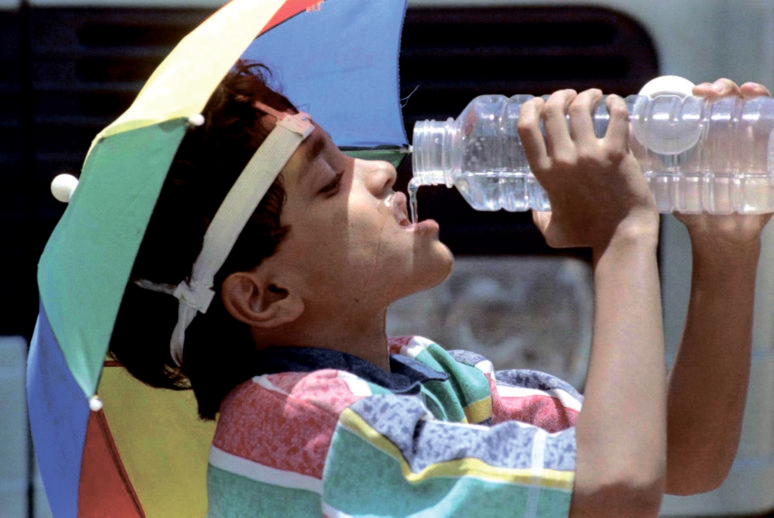
Europe and Russia are languishing in the heat, since such temperatures are not typical of these regions. Abnormally high temperatures are being observed in Austria. In some areas, the temperatures are as high as +35 °C. The heat has enveloped the whole country. The Viennese are queuing up to get into public swimming pools. The demand for ice cream and soft drinks has increased several times. Drivers are the most unlucky. Being stuck in traffic jams in this heat is just unbearable, they say.
In Athens, it is +43 °C, which is unusual for Greece. Local people and tourists cannot stand these temperatures. The Greek fire services are on high alert. Fires have been raging in some places.
In Italy, temperatures have broken records of many years' standing. The third level of danger was declared in 18 major Italian cities. The heat has caused dozens of fires, mainly in Sicily. Temperatures in the northern city of Turin reached +38 °C on 8 August. The unprecedented heat killed two elderly people on that day. If you believe the weather forecasters, this is only the beginning. According to pessimistic forecasts, the air will warm up to +45 °C in the Apennines in mid-August.
Latvia, like many European countries, was also affected by the heat wave for several weeks. The TV tower in Riga stretched by four centimetres because of the high temperatures, thus becoming the highest in the EU. According to technical consultant Uldis Rutks, specialists estimate that at a temperature of 32°C, the tower "shoots up" four centimetres.
The heat, the likes of which meteorological observations have not recorded in the Czech Republic, poses a threat to the lives of many Czech citizens. The chief physician in the cardiology department of the Na Homolce Hospital, one of Prague's biggest hospitals, reported that the incidence of heart attacks and strokes has increased dramatically in the country because of the 40-degree heat. Asphalt on the roads melts in these temperatures.
Today, as in the summer of 2003, the French are not in the mood for romance - they are also being laid low by unprecedented temperatures. Seven years ago, the national mortality rate for August exceeded projections by 60 per cent. After receiving the results of statistical studies, the French spent a long time searching for culprits, but all in vain. This year, to avoid the catastrophic consequences of the deadly summer of 2003, France launched a programme called "Heat 2010".
The programme includes, first, a free telephone line to provide first aid to victims of high temperatures. Second, hospitals and nursing homes have increased their staff, while the local Ministry of Health is keeping a more complete list of people in "poor health". Means of protection against heat are announced wherever possible: in the metro and buses, on receipts in stores and in wall newspapers at offices... Meanwhile, Paris is going mad in the heat. More and more people take to the streets in the evening and at night in search of coolness. People are waiting for autumn.
Temperatures in Belgium and France remained obstinately at around +35 °C for many days. The French Ministry of Health has allocated €26 million to purchase air conditioners and increase staffing in nursing homes. The Ministry of Agriculture is also in panic: rumours are circulating about an impending drought.
It is no secret that very hot weather leads not just to deaths within the population, but also major natural and manmade disasters. For example, after a few hot days, France was hit by an unprecedented downpour which caused floods and halted the metro. The heat in Spain led to a severe drought. The situation was so harsh that there were serious shortages of water. Not only private homes, but many hotels were "dehydrated". This caused irreparable damage to the tourism business. The heat also reached the Alps: in Switzerland, very warm and humid weather caused a two-hour breakdown on the railway.
Heat: CIS
The situation is no better in post-Soviet countries. Almost the entire territory of Belarus has been dominated by the heat, although there were a fewer anomalies. In Minsk, temperatures reached +30 °C in June 2010, which is equivalent to 35 degrees in more southern areas such as Ukraine. In early August, Belarus was blasted by hot air from neighbouring Russia. The temperatures immediately rose to unprecedented levels, and the national record heat, +38 °C recorded in August 1946, barely survived.
The air temperature in Georgia has already broken all records, with temperatures rising above +40 °C. Even at night, the temperature did not fall below 30 °C. Doctors advised people to stay at home during the day. On top of this, the heat caused forest fires in the southern regions of Georgia.
For Russia, the anomalous heat has been a disaster. In some regions of the Russian Federation, the air warmed up to 40 and even 43.5 °C. The heat created a fire and medical situation that the country had not experienced for a long time, and a drought, the like of which had not occurred for almost 40 years, and which destroyed at least 10 million hectares of sown areas. The abnormal heat in Russia caused a sharp rise in the sales of soft drinks, ice cream, fans and air conditioners. Scientists suggest that the heat, which is "abnormal" by today's standards, will soon become normal for Russia, as will "anomalous" cold and other "unusual" natural phenomena.
The current weather situation is similar to 1938, which broke many records, and especially 1972, which saw not only long-term heat but also a severe drought. However, while the anomaly in July 1972 (for Moscow) was only four degrees, in July 2010 it reached 6-7 °C.
Because of the unprecedented heat wave, the environmental situation has worsened in Moscow and surrounding regions. The levels of pollutants in the air have exceeded the norm. In St. Petersburg, the Tower of Peace, an architectural glass construction with interior and exterior lighting, cracked in the heat.
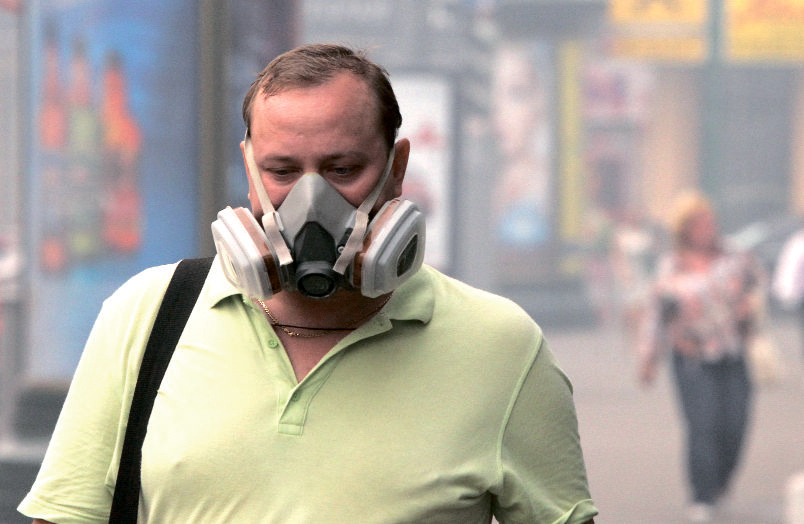
The hot weather caused fires in peat bogs near Moscow. The fresh summer air and forest aromas of the Moscow Region have been replaced by a smokescreen. Air conditioners in the Moscow metro are overstretched. Stations and passages are in a light haze. Passengers are wearing masks.
Peat bogs are also on fire in the suburbs of the Ukrainian capital, Kiev. The unusually hot weather in Ukraine also broke several temperature records. After a cold snap in early July, the heat came back with renewed vigour. In general, over the past 20 years the average summer temperature in this country has risen by 1.3-1.7 degrees and in winter - by 2-2.5 degrees.
Heat: Middle East, Asia, USA
Despite the fact that heat is normal in the Middle East, temperatures are also abnormal for this area of the planet. In the resort city of Eilat in southern Israel, 21 June was the hottest day for the last three years. The temperature levels exceeded +50 °C. The authorities asked residents and tourists not to go out in the sun and to wait in the shade with plenty of water.
Pakistan has also been affected by unprecedented heat. The hot weather has already claimed one hundred lives. In the middle of the day, passers-by faint in the streets. People are taken to hospital with heat strokes and dehydration. Most of the patients, as usual, are elderly and children. However, overheating and thirst are nothing compared to the epidemics threatening the country. Because of the high temperatures, the quality of drinking water has fallen dramatically, resulting in a significant increase in the incidence of intestinal infections. None of this is surprising - temperatures in the country reached +50 °C for the first time since 1994.
The situation is critical in East Asia as well. For example, in 13 provinces and regions of China, the temperature exceeded +35 °C in early July. Residents of big cities are trying to escape the summer heat in pools, rivers and ponds, while forest fires in some parts of the country are flaring with renewed vigour. The highest temperature in more than 50 years has been registered in the Chinese capital: the average temperature shot up to +40.3 °C. The authorities in Shanghai are seriously worried. If the heat does not recede in the near future, municipal services say, the city could be hit by a real energy crisis. Because of the stifling weather, the power grids are overloaded. To avoid power failures, some street lights have been turned off in Shanghai.
The temperature in Tokyo's financial centre, the Otemati District, surged to +35.9 °C on 21 July. Electricity bills in Japan, with delivery during peak hours, rose to their highest level for almost two years as air conditioners and fans are kept on constantly. Five people died on the same day from heat strokes in Japan. All the dead were elderly rural inhabitants. They suffered deadly heat stroke while working in the fields. The heat continues to kill people in India, Nepal and Bangladesh. The total number of deaths caused by the cruel vagaries of the weather is exceeds 300.
The United States is also affected. On the hottest days, the temperatures rose to +40 °C, with humidity reaching 90 per cent. On the Pacific coast and in Washington, forests caught fire because of the heat and dry winds. Hundreds of fire-fighters tried to contain the fires, but to no avail - the wind quickly spread the fire. The population was evacuated.
Heat: Azerbaijan
Weather forecasts are not comforting: the heat is not going to ease in Azerbaijan either. Many think with horror that half of August, September and October still lie ahead; last year, incidentally, they were also very hot and, apparently, the same will be the case in the coming summer-autumn season. The sun beats down relentlessly, while the traditional Baku wind has disappeared altogether. Roofs and asphalt are heated to the limit. Hot air, in which is difficult to breathe, penetrates rooms through the windows and doors. Such weather conditions ultimately affect people's health. The chief medical officer of Baku's central ambulance and emergency hospital, Mursal Hamidov, told Vesti.az that the ambulance and emergency hospital services receive about 1,400 calls a day. According to the hospital's deputy chief doctor, Rauf Nagiyev, ambulance workers are on duty at 12 beaches in Abseron, while 135 medical teams are ready for emergency calls. He says that in summer it is necessary to avoid staying in the sun for a long time and to avoid constant movement and hard physical work between 1100 and 1600.
Asphalt's tendency to absorb sunrays only exacerbates the harmful effects of the heat, turning the city into a thermal trap. As a result, according to experts, temperatures in the city in hot weather are always several degrees higher than in the suburbs. Moreover, in the heat, asphalt produces some hydrocarbons, creating the effect of melting air. A special regime has been declared in the army due to the hot weather, said Eldar Sabiroglu, spokesperson for the Ministry of Defence. "Because of the heat, soldiers in military units stay in their barracks from 1100 to 1700. The Ministry of Defence has signed an appropriate order." This has been done to protect the military from the consequences of being under the hot sun and, above all, from sunstroke, he said.
Scientists sound thealarm
According to scientists, the hot weather is a consequence of changes in the movement of warm Pacific Ocean currents that contribute to the climatic phenomenon known as El Ni?o. This year, the Pacific Ocean is providing much more heat than usual, which leads to the heating of the lower layers of the Earth's atmosphere. At the same time, according to forecasts, as a result of natural anomalies, the oceans will begin to operate by quite different rules and therefore, Europe, Asia and North America will be left without their usual warmth, while the southern hemisphere will become hotter. According to scientists, the Earth went through something like this 8,200 years ago, said Newsland. Scientists predict that if a catastrophic climate change occurs now, humanity will lack food, water and oil, and this will create the conditions for world wars. The population of Europe will starve and leave the continent en masse, and the climate in Europe will become dry and cold, resembling Russian Siberia. Cold winters and hot summers could trigger famine in China.
Scientific opinion, expressed by the UN Intergovernmental Panel on Climate Change (IPCC) and directly supported by the National Academies of Sciences of the G8 countries, is that the average temperature on Earth has risen by 0.7 degrees, compared to the time when the industrial revolution began (the second half of the 18th century) and that a large proportion of the warming observed over the past 50 years is due to human activity, primarily the emission of gases that cause the greenhouse effect.
In addition to raising ocean levels, the increase in global temperature will also lead to changes in the quantity and distribution of rainfall. The result may be that natural disasters such as floods, droughts, hurricanes and others will become more frequent and that harvests will decline, while many species will disappear. Global warming could, in all likelihood, increase the frequency and magnitude of these phenomena.
Some researchers believe that global warming is a myth, while some scientists reject the idea of human influence on this process. There are those who do not deny the fact of warming and acknowledge its man-made nature, but do not agree that industrial emissions of greenhouse gases are having the most dangerous impact on the climate. There is a scientific consensus that the current global warming is very likely due to human activity.
RECOMMEND:
 799
799