

CAN BAGHDAD BE CALM?
USA announces the completion of its "combat mission" in Iraq
Author: Natiq NAZIMOGLU Baku
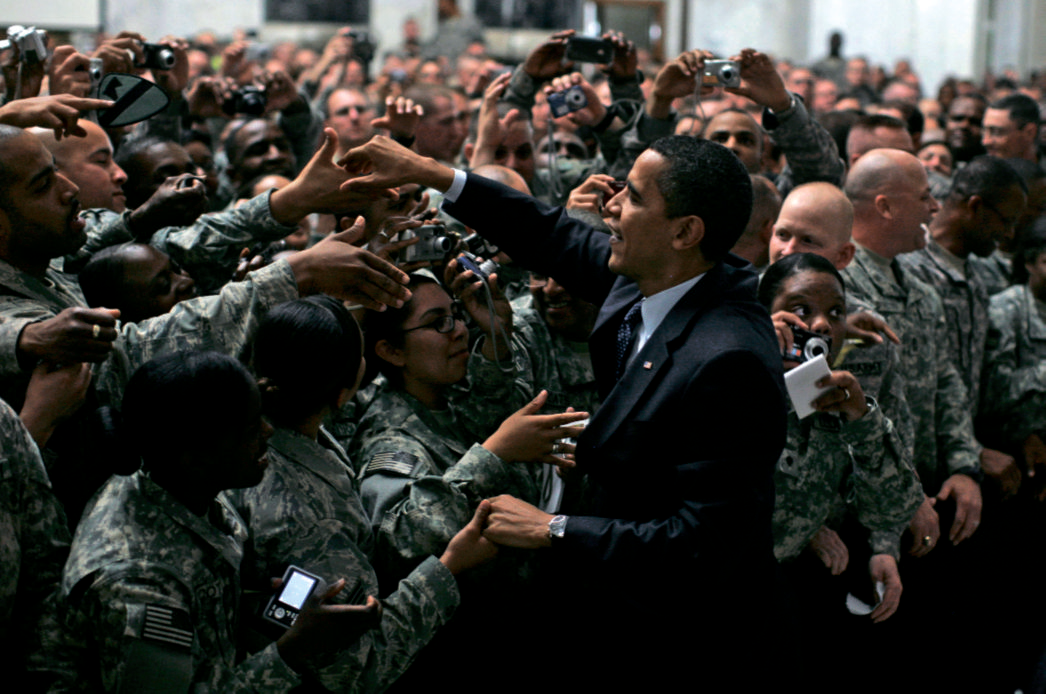
Iraq continues to be one of the world's most tense locations. President Barack Obama dedicated a speech in Atlanta to the current situation in a country which has been in a state of war for eight years now. He was speaking to American veterans wounded during the fighting. From now on, he said, the priorities of the Iraq campaign were moving from the military to the humanitarian.
The US president confirmed that the White House will, as planned, begin withdrawing combat units of the American army from Iraq in late August of this year and complete its military operation in the country. Thus, Obama again showed his commitment to fulfil a campaign promise on Iraq. In 2008, the future occupant of the White House campaigned on a policy of ending hostilities in Iraq and completing the withdrawal of American troops. Later, as leader of the United States, Obama initiated the signing of an agreement with the Iraqi authorities, providing for the complete withdrawal of American troops from Iraq by the end of 2011. In a speech to marines at the Camp Lejeune base on 27 February 2009, he reiterated his promise, saying that the US military mission in Iraq would be complete by the end of August 2010.
At the beginning of his presidency, there were 144,000 US troops in Iraq. The White House plan is for only 50,000 US troops to remain in the country at the end of August 2010; they will be engaged in training Iraq's security forces, assisting its army, carrying out anti-terrorism operations and ensuring the security of American diplomats.
The US president described his decision as a "dangerous task", adding: "There are still people who are armed with bombs and bullets and who are trying to halt progress in Iraq. We have to admit that there is still no end to American casualties in Iraq. But we must clearly understand that, from now on, military operations will be replaced by peaceful diplomatic efforts."
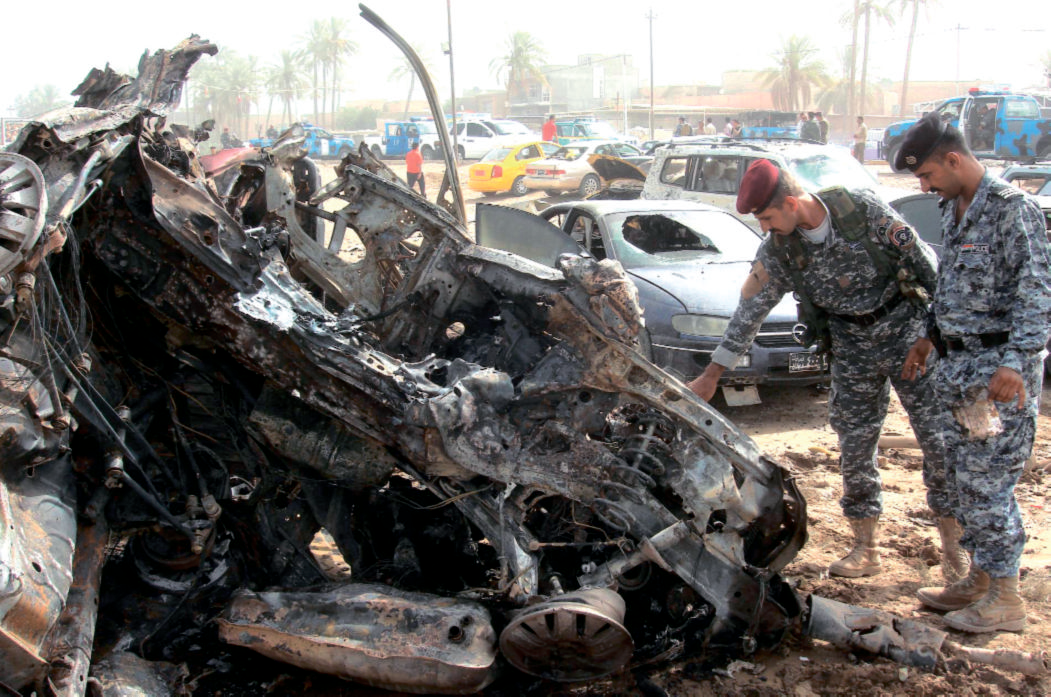
However, against this background of the upcoming withdrawal of US troops, the security situation in Iraq is deteriorating rapidly. Almost every day sees suicide bombings and attacks on the international coalition forces and Iraqi law enforcement agencies, while civilians continue to be killed. Iraq, moreover, is being shaken by a serious domestic political crisis. A new government has still not been formed since parliamentary elections on 7 March, because major political forces in Iraq have been unable to reach agreement. Hence the concern within the international community as to how the situation will develop after the withdrawal of American troops. It is no wonder that the UN Security Council called on the Iraqi political forces to form a new government as soon as possible. According to UN Special Representative Ad Melkert, Iraq is at a "critical point"; further delay could play into the hands of the opponents of democracy.
A number of influential world media also give a downbeat assessment of the situation in Iraq and its future prospects. In particular, the Spanish newspaper El Pais says: "Obama's statement that the violence on Iraqi streets has reached a historic low was refuted by the Iraqi government itself. Baghdad issued a report stating that the death toll among civilians and military reached its highest level for the past two years in July: 535 dead, including 396 civilians." Accordingly, the paper says that the US "order to finally terminate participation in military operations was issued at a time of serious political and institutional uncertainty in Iraq."
Nevertheless, it is clear that Obama decided to withdraw US troops from Iraq as the political elite in the United States is aware of one indisputable fact - the Iraq military campaign has failed. Washington has been unable to achieve unconditional victory and make Baghdad adopt a Western model of development. The situation in Iraq, torn by religious and ethnic tensions, is fraught with unpredictable consequences, which, in turn, poses a threat to the entire Middle East, a key focus of US strategic interests. In this sense, the "change in priorities" mentioned by Obama should be understood to be a necessary and inevitable transfer of control over Iraq to a peaceful body. The most important thing for Washington is to create conditions that will allow it to realize, without undue military stress, important goals like an economic presence in post-war Iraq and control of its energy resources. The latter is especially important, because more than a dozen 20-year contracts have already been signed on the development of Iraq's largest oilfields. By increasing Iraqi oil production, the United States can lower the cost of "black gold" and reduce OPEC's growing influence on the global energy situation.
There is another economic factor which the world has begun to discuss - the United States' intention to "privatize the occupation" of Iraq. According to Britain's Guardian, the occupying forces in Iraq employ about 100,000 private contractors, of whom more than 11,000 are armed mercenaries, mainly from "third countries". The White House administration is now seeking to increase their number. In particular, it is planned to increase just those military contractors working for the US State Department from 2,700 to 7,000 and to deploy them at five "positions of permanent presence" in various parts of Iraq. These positions will thus become centres of economic and financial control over the late Saddam's country.
Meanwhile, the Iraqis themselves are already tired of the endless war and strife between different sections of the population. During the eight years of bloodshed, hundreds of thousands of people have been killed on Iraqi soil, while four million have become refugees. Under the occupation, tens of thousands of people are still tortured and imprisoned without trial, while health and education have gone into decline. Nevertheless, Iraqi citizens are anxious about what will happen to their country once the foreign occupation ends. The dangers in a US withdrawal from Iraq were also mentioned by one of Saddam Hussein's closest associates, Tariq Aziz, who gave his first interview since being sent to prison after the American capture of Baghdad seven years ago. The ex-deputy head of the Iraqi government told The Guardian that Obama's plan for the speedy withdrawal of combat troops from Iraq means that the country will be thrown "to the wolves". He also noted that Iraq is now in a worse condition than before the American invasion: "Violence, famine and disease are widespread in the country."
It is obvious that by "wolves" Aziz meant Islamist radicals of all stripes. But there is another factor that threatens the future of Iraqi independence. It can be assumed that after the US withdraws from Iraq, Iran will take a more active position. Neighbouring countries, particularly Israel and Saudi Arabia, await the US withdrawal with special concern, as they fear that pro-Iranian forces might come to power in Baghdad. After all, Iran is already Iraq's leading trading partner and will undoubtedly seek to expand its influence further.
Meanwhile, the plan for resolving the Iraq crisis outlined by Obama, failed to overshadow another no less severe headache for the American administration. This is the situation in Afghanistan - another front where, as Obama reminded us, "the longest military conflict in US history is unfolding." Recently, the Afghan campaign has taken on a critical nature for the multinational forces, as indicated by the replacement of the American commander in chief, General Stanley McChrystal by General David Petraeus, whom former US President George Bush had put in charge of the military campaign in Iraq. Nonetheless, Obama said, the United States does not intend to abandon its goal of defeating terrorism to Afghanistan "despite the fact that efforts in this direction will be long and difficult".
In this context, it is pertinent to recall that Barack Obama began his presidency clearly adhering to the following vision: the withdrawal of troops from Iraq would lead to a strengthening of the fight against the main operating base of the international terrorist organization al-Qaeda, which is located in "the Afghan-Pakistani region". The strategy of attacking this base has already yielded some fruit, as a severe blow has been dealt to Al-Qaeda positions in Pakistan. However, for the Americans and the multinational forces in Afghanistan, the situation is deteriorating day by day. The foreign presence "attracts rebels like a magnet and justifies the Taleban's guerrilla warfare in the eyes of a population bewildered by three decades of war", says the French newspaper Le Monde, quite rightly. Therefore, ending the military mission in Iraq as soon as possible appears to be one of the White House's top priorities; it can then redirect all the superpower's energy towards getting out of the "Afghan" quagmire, into which the United States was dragged almost ten years ago. However, this strategic turn in Washington's policy will not answer the no less important question: will Baghdad become calmer by the end of 2011, when the last American soldier leaves long-suffering Iraq?
RECOMMEND:
 638
638

