

WAITING FOR AN OPPORTUNE MOMENT
Hopes for the Arab-Israeli conflict resolution could "drown" in a wave of violence again
Author: Eldar PASAYEV Baku
Tensions in the Middle East have almost reached a dangerous point where the situation could spiral out of control. For example, analysts of the authoritative International Crisis Group, according to Time, believe that "the absence of a full-fledged dialogue between all political actors" in the Middle East could lead to a new armed conflict, and it will be large-scale and devastating and will not spare either civilians or civilian objects...
It is obvious that the main problem in the region continues to be the Arab-Israeli conflict. Currently, a number of Middle Eastern states, as well as Western countries, especially the US, are trying to expedite its resolution. According to a number of statements, direct talks between Palestinians and Israelis supposedly could begin as early as mid-August.
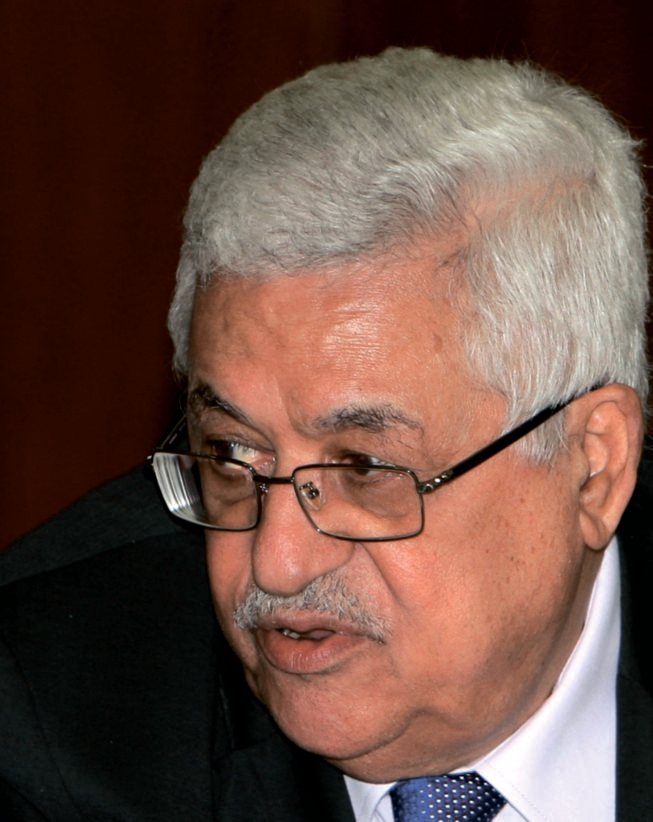
Thus, many foreign media write that US President Barack Obama has demanded that the head of the Palestinian National Authority (PNA), Mahmud Abbas, negotiate directly with Israel. The US president transparently hinted that refusal may have negative consequences and halt US support for the PNA. The spokesman for the US State Department, Philip Crowley, also said that the Palestinians may lose their chance, if they quit direct negotiations.
"Without direct talks, it will be impossible to end this conflict and no peace agreement will be signed, while no Palestinian state will be established. It is a fact. We have done everything possible to ensure that each party understands what the opposite side is trying to achieve. We firmly believe that it is the most opportune moment to begin direct talks. This is our argument for both sides," Crowley said, adding that the more time passes in doubt, the more trump cards radical forces in the region get, seeking to impede the peace process.
Direct negotiations and the implementation of the 2002 peace initiative aimed at reconciliation with Israel have been endorsed by the League of Arab States as well. The idea of negotiations is also supported by the European Union and Russia.
Meanwhile, the Palestinian Authority puts forward three conditions for resuming negotiations with Israel: return to the 1967 borders (i.e. the creation of an independent Palestinian state within the borders that existed before 1967), agreement to exchange territories and an end to the construction of settlements in Jerusalem and the West Bank (the moratorium on settlement activity, meanwhile, will expire on 25 September). Various sources here also add a requirement to lift the siege of the Gaza Strip. It is clear that Israel is unlikely to accept all these conditions.
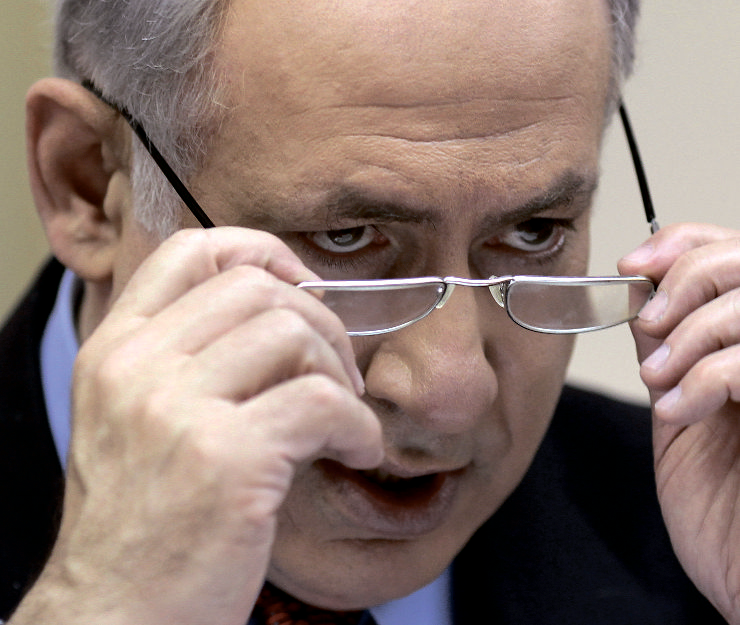
It is noteworthy that Abbas and Israeli Prime Minister Binyamin Netanyahu seem to be agreeing to talks, but fear internal forces who believe that their leaders are making unjustified concessions to the opposite side. Thus, many analysts say that Abbas may totally lose the confidence of the majority of his supporters, while Netanyahu can witness the collapse of the ruling coalition.
The fact is that direct talks are planned in a situation where it is difficult to organize even indirect talks and where there is absolutely no progress in the peace process. On the other hand, the most favourable moment can be expected for a few decades, but it is unlikely to occur.
Meanwhile, speaking about any format of the Arab-Israeli negotiations, all mediators prefer to forget that Abbas controls only part of the PA - the West Bank, while the Gaza Strip is controlled by Hamas, which does not recognize the Arab peace initiative and the State of Israel itself, not to mention the possibility of dialogue with it.
The positions of Fatah and Hamas finally differed in 2007 when supporters of Hamas took control of the Gaza Strip, ransacking the local branches of Fatah. All attempts to reconcile the two feuding Palestinian sides ended in failure. As a result, representatives of Hamas are now saying that Abbas and the League of Arab States "surrendered under pressure" from Israel and the United States and that this will have negative consequences for the Arab world and the Palestinian people.
Against this background, we cannot but note that Philip Crowley is right in his comments on the radical forces in the region seeking to derail the peace process, especially as this has already happened many times - the parties' hopes of positive changes in the negotiations were nullified by another surge in violence.
For example, Israel and the Gaza Strip recently exchanged a series of missile strikes. In the Deir al-Balah refugee camp in the Gaza Strip, the house of Alaa al-Danaf, one of the leaders of the Hamas armed wing - Izaddin al-Qassam Brigades, was blown up, leaving 24 Palestinians wounded. Earlier, a missile strike killed another field commander of Hamas - Issa Batran, alias Abu Bilal, while another 11 people were injured.
Israeli aircraft carried out air strikes on the Gaza Strip in response to renewed rocket attacks on Ashkelon and Western Negev, which is the first incident since the end of the Israeli military operation Cast Lead in the Gaza Strip in January 2009. A district in the resort town of Eilat also came under missile attack, which killed one person and wounded several others in the nearby Jordanian port of Aqaba. Against this backdrop, Islamic Jihad said that Israel must prepare for new suicide attacks.
By the way, the Israeli news agency DebkaFile quoted reliable military sources as saying that, ostensibly, a conflict is brewing in the Gaza Strip between Hamas and Iranian-controlled Islamic Jihad which believes that Hamas has become too moderate.
Meanwhile, in this context, it is also worth noting the recent meeting between the foreign policy adviser to Iran's supreme leader, Ali Akbar Velayati, and the head of the political bureau of the Islamic Resistance Movement of Palestine (Hamas), Khaled Mashal, and Velayati's separate meeting with the Secretary General of Islamic Jihad Ramadan Abdullah al-Shalah. The meeting was held at the Iranian embassy in Damascus. Velayati arrived in Syria after a visit to Lebanon, where he reportedly discussed with the leader of Hezbollah, Sheikh Hasan Nasrallah, "the current situation in Lebanon and the Middle East as a whole, as well as the recent serious incident on the Lebanon-Israel border", where a gunfight took place with the use of artillery.
Indeed, for the first time since the summer of 2006 when the second Lebanon war broke out, observers in the region spoke about a possible outbreak of hostilities. The Lebanese side said that three soldiers and a journalist had been killed, while the press service of the Israel Defence Army confirmed the death of a 45-year-old reservist colonel.
Both sides are blaming each other for the incident. Lebanese President Michel Suleiman, Prime Minister Sa'ad al-Hariri and Parliament Speaker Nabih Berri called the incident "Israeli aggression" and declared their intention to file an official complaint with the UN in order to make "every effort to prevent Israeli violations of Resolution 1701", which ended the Lebanese-Israeli war of 2006. The Israeli government also filed a complaint with the UN Security Council, which states that the staff of engineering units involved in the work previously agreed with the command of the United Nations Interim Force in Lebanon (UNIFIL) had come under attack. Members of the UN Security Council urgently called on all parties to show restraint, however, it is clear that appeals are not enough here.
Lebanon's Supreme Defence Council, chaired by Michel Suleiman, urged the Lebanese people and armed forces "to repel the treacherous Israeli attack, regardless of casualties". The leader of Hezbollah, Sheikh Hasan Nasrallah, declared his readiness to make "the full potential of the resistance" available to military commanders. Hezbollah is a kind of "a state within a state" in Lebanon - it has its own army and communication networks.
In this connection, it is worth remembering that although Israel did not lose the 2006 Lebanon war, it was not very successful either, because the Tsahal failed to achieve spectacular success and Sheikh Nasrallah, alive and well, still heads Hezbollah. Moreover, analysts vied with each other in saying that for the first time, the potential of the Israeli army was called into question.
Now, in the case of a new war with Lebanon, Tsahal, according to Michel Suleiman and Sheikh Nasrallah, will confront not only Hezbollah, but also the regular Lebanese army.
It is necessary to take into account that the patron and main sponsor of Hezbollah is Iran, which decided to "synchronize clocks" separately with the leaders of Hamas, Islamic Jihad and Hezbollah, as can be seen from the modest tour of Ali Akbar Velayati who also popped into Syria.
We can say a lot about Damascus and Tehran, but suffice it to mention that Syria is eager to return the Golan Heights taken over by Israel after the 1967 war, and this brings the positions of Syria and Iran closer to each other. By the way, Iranian Foreign Minister Manuchehr Mottaki said that Iran will give Lebanon and Syria comprehensive support if they are attacked by Israel. Similarly, there are opinions that if Iran is attacked by the United States, Hezbollah and Hamas are unlikely to remain indifferent.
Against this background, the situation on the Lebanese-Israeli border remains extremely dangerous. There are more and more statements that the "third Lebanese war" is not far off (the first Lebanese-Israeli war was in 1982 and the second - in 2006). Israelis have started military exercises in the north of the country, simulating large-scale military operations with maximum precision. As a result, hundreds of tanks, armoured personnel carriers and other military vehicles were moved into the area.
At the same time, the US administration decided to "suspend" arms supplies to Lebanon until all the details of the armed clash between Israeli and Lebanese forces and the possible involvement of Hezbollah in the border incident are completely clarified. The US fears that the annual supply to the Lebanese army of weapons and ammunition worth $100 million intended for the "war on terror" is in fact controlled by Sheikh Nasrallah's group. For example, many politicians and experts believe that, as mentioned above, the Lebanese army is becoming "pro-Hezbollah", in other words, falling under the influence of Tehran.
In addition, the Israeli media reports that Hezbollah has placed near the Israeli border Iranian rockets capable of reaching Jerusalem, Tel Aviv and Haifa, as well as the fact that a group of "subversive-intelligence officers of the Iranian Islamic Revolution Guards Corps" has been noticed on the Lebanese-Israeli border.
So it is possible that Tehran is provoking a new Lebanese-Israeli war to prevent a US attack on Iran, of which military and civilian experts have been actively talking of late.
Incidentally, in this situation, regional states and Western countries should once again take a closer look at the regional opportunities of Turkey, which, despite the incident with the "Freedom Flotilla", retains the possibility of dialogue with Israel and has the ability to build bridges with many countries of the region, including Iran.
It is necessary to use every opportunity to reduce the degree of tension in the Middle East, because full-scale military operations in the region can indeed lead to unpredictable catastrophic consequences, both in world politics and economy.
RECOMMEND:
 671
671

