

LITTLE LIFE
For the first time in 10 years, Slavyanka brings together not only students, but also journalists from post-Soviet states
Author: Sabira MUSTAFAYEVA Baku-Tuapse-Baku
Summer, the Black Sea and Olginka - a small resort town in the Tuapse District of Krasnodar and a Gamma health complex. This place is home to a students' camp which was established nine years ago. Officially, it is called an international exhibition and a presentation of youth projects and programmes "Students' Cooperation - Social Partnership - A Commonwealth State" and unofficially - Slavyanka.
What is it? According to the official reports, it is an event at which an active exchange of experience takes place, negotiations on mechanisms of cooperation are held and agreements on joint projects are concluded. Participants in the event are students from various universities in post-Soviet states, and they conduct negotiations on cooperation. During the event, delegates from each education centre talk about the contents of their projects and invite interested parties to cooperate. After the presentation each project is discussed by the participants, who outline the possibilities for further cooperation on the project and define ways of involving cooperating parties. The event is organised by the administration of the authorized representative of the President of Russia in the Central Federal District, the Russian Ministry of Sports, Tourism and Youth Policy, the educational committee of the Russian Orthodox Church and the Kursk Region Administration.
This was…
This year Slavyanka brought together about 500 students from the CIS - quite a large delegation. Moreover, the organizers also decided to invite journalists from CIS countries, so that everyone would hear about the "Slavic Commonwealth". This was the first such experience in nine years, according to the organizers of the event. Thus two journalists from Azerbaijan (R+ magazine and News Azerbaijan news agency) were also invited to Slavyanka 2010 by the Institute for Eurasian Studies. What came out of this? Initially, it was somehow comic to see journalists, who are no longer students, joining the youth movement. Since every group had a name, journalists decided not to go against the trend (or to be more precise, the organizers did not let them do so - writer) and called their team "Eurasians" with the slogan "We are together, we are a force and we are the world's team". We also participated in performances and concerts, although unlike the others, we did not have a pre-planned programme and prepared our presentation literally in the two or three hours before our performance. We also represented our countries and each of us did his best. Who were we? Journalists from Uzbekistan, Moldova, Ukraine, Tajikistan, Kyrgyzstan, Russia, Estonia, Azerbaijan and the North Caucasus. We were all so different, but we very soon found a common language and, by the end of "Shift 2010", we realized that we actually had nothing to fight over.
What is Slavyanka? Unofficially, we can answer this question in different ways. "It is an international camp for student activists," say those who are most responsible. "It is the sea and the beach," say the suntanned. "It is friends and new acquaintances," shout the most communicative ones. "Slavyanka is a little life," declare the wise, and they are right.
Why? Because one shift includes events that could last all month and so it is no surprise that within the "Slavic Commonwealth", almost everyone has the paranormal ability to be in different places at the same time. They also reveal so many skills and talents of which they were previously unaware. An example? It is easier to describe the normal day of an ordinary participant. After a short sleep (from two to six hours), students go out for breakfast. But food does not help everyone to wake up: many continue to droop with a spoon in their hands. Then the most conscientious ones trudge to the congress hall for the morning meeting. And there a team of nightingales and larks acts as a real alarm clock -the organizers and curators of groups. It works out very well - for those who come to the "wake-up meeting". Then the baton is picked up at the traditional hour by an expert, after which the students disperse in different directions. The main destinations are "round table discussions" on projects, a forum of young scientists and, of course, master classes and preparations for the evening concert as part of the "Slavic Constellation". Incidentally, master classes with Russian experts in the mass media were organized especially for journalists.
So, you don't even notice when it is time for dinner. After that, the smartest representatives of the groups, popularly known as "the brains", go to entertain themselves with intellectual games, the most athletic ones defend the honour of their groups in the Peacekeeping Sport tournament, the most responsible ones continue practising, while the most resourceful ones contrive to visit all these places at once and also drop in at the beach. Where do Slavyanka participants gather later? Of course, at supper. But even during the evening meals, the students do not waste their time and continue to prepare for upcoming events. Arguments about who managed to change the world before he turned 30, or how you can best edit a film made half an hour ago are an everyday occurrence at the "Slavic Commonwealth".
And then everyone assembles at an evening event, and it is not always a concert. It is a film festival resembling an Oscar awards ceremony, an intellectual show or the final of the Communication business game… How can you go quietly back to your room and to bed after all this without sharing your impressions?! That's why the students do not disperse; on the contrary, they gather at the traditional "Slavic Circle" where everyone can relate what he remembers from the day and say good night to the others. It is another thing that a quiet night is actually very rare at the "Slavic Commonwealth". No-one cancelled night-time parties on the beach with songs to the accompaniment of a guitar… Nor did anyone cancel preparations for the next day: someone is urgently embroidering a rushnik (an East Slavic towel with embroidered or woven patterns - writer), another is browsing the Internet for information and yet another is beavering away at an article at the press centre…
It is quite common at Slavyanka to lose track of events and not remember very well in the evening what had happened in the morning. That's how the camp falls asleep - with memories of past events and thoughts about forthcoming ones… What lies ahead is the next day full of affairs and discoveries, meetings and talks, positive things and entertainment. After all, there is no other kind of day at Slavyanka!
Exchange of information
So, we continued talking about our countries, traditions, languages, holidays and weekdays. We asked what we know about each other - apart from the fact that we were all born on one planet -and the fact that we are all ordinary people, equal before God. Borders. It seemed that there are no borders when people talk about friendship and share their food. It turned out that we know very little about each other, but we are happy to rejoice at a wonderful day. We realized that we, the generation of the 1970s and 1980s, are still united and, at the same time, separated by the Union of Soviet Socialist Republics. We realized that we lived well and still feel nostalgic for our common house. Students. They are different from us because they were not born in the
Soviet Union but, surprisingly, they know a lot about this country and the Soviet era. Do they know Azerbaijan and have they heard about our country? The R+ correspondent put this question to some of the young people.
Kristina Rudenko, a student from Moscow State Regional University, 21:
"I know a lot about Azerbaijan, as my grandfather was from there. My grandmother, my mother's mother, is a scientist, and she once had a duty trip to Baku. By that time, she was already a widow. She met Surxay Allahverdiyev there. She is now a professor of biology. They loved each other and, soon, she married him. Literally one year later, my grandmother's daughter, that is to say my mother, had me. And I didn't know any other grandfather but my Azerbaijani grandpa. We now have a very good and warm relationship, and he loves me very much like my own grandfather. I treat him as if he was my own grandpa. I visited him once in Baku. To be honest, I haven't been able to travel there over the past two years because my grandfather is working in Turkey now. I visited Baku in summer. I went to the Azerbaijan cinema and watched the film "War of the Worlds". I was 16 then. I adore the city, it's very beautiful. I have to honestly say that I've never seen such a sky-blue coast as in Baku, and so much sunlight. We walked along the Boulevard - greenery, fragrance and sea. It's an inexpressible feeling. In general, my own life and my parents' lives are somewhat mystically related to Azerbaijan. It turns out that they even spent their honeymoon in Baku in 1988. They told me that they stayed in a very beautiful hotel with moulding and high ceilings. I know almost nothing about the political situation and the Karabakh events. My grandpa told me something about them, but I didn't go into the detail - I don't want anything to darken my memories of your country. For me, Azerbaijan is Baku, sunlit sky, many children, sunlight, sea and esplanade. I love your capital very much and will definitely visit Baku again."
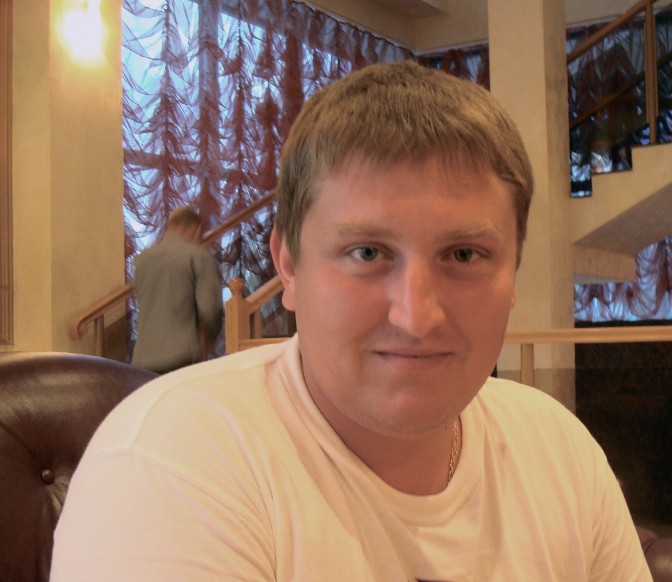
Sergey Mikhailov, the Estonian Public TV and Radio Corporation, editor, 28:
"I wouldn't like to judge a country without seeing it. I learn about a country in the country itself. Since we have a very difficult visa regime with Azerbaijan, I haven't visited your country yet. I think that it's time to eliminate the visa regime between Estonia and Azerbaijan, as you did with Russia. And I have a reason to visit Baku because I have Azerbaijani friends in Tallinn - very kind and open people. They are citizens of Azerbaijan and invited me to visit them. Secondly, I would like to do business in your country. What business? I don't want to go into detail yet. Another thing that interests me very much is Estonian footballers who play for Azerbaijani football clubs. I know that there are four Estonian footballers in your country right now, and they are all members of the Estonian national team - they are Dmitriy Kruglov, Taavi Rahn and Vladimir Voskoboynikov, who play for Neftci, and Tikhon Shishov who plays for Xazar-Lankaran. As far as I know, they are good players and I'd like to interview them. I'm very interested in sports, especially football. Another interesting fact is that quite recently, the Estonian press reported an accident that happened to an Estonian girl - she burnt 50 per cent of her skin. So her parents were told that she could recover only in Azerbaijan because there are good doctors at the burns centre in Baku. I remember she went to receive treatment in Baku and her condition improved. But she has to continue her treatment, visiting Baku from time to time.
"I can also say that Estonia's former population minister was an Azerbaijani called Eldar Afandiyev. He was also mayor of Narva - Estonia's third largest city. He is now a member of the Estonian parliament from the Estonian Centre Party. Incidentally, the Estonian parliament is called the Riigikoku. And you will probably be pleased to know that Azerbaijanis entered the Estonian parliament before Russians did. Estonia is home to a very large Azerbaijani diaspora that should be reckoned with. As for political issues, I known that Azerbaijan had a war in Karabakh, but I see it as the result of provocation and a consequence of the collapse of the Soviet Union. After all, almost all post-Soviet countries became 'hot spots' after the collapse of the Soviet Union.
"I identify with your President Ilham Aliyev - the son of the well-known politician Heydar Aliyev - and with Azerbaijan's first lady Mehriban Aliyeva. The Azerbaijani leader and his wife visited Estonia and, after that, many of our media outlets wrote about the unusual beauty of Azerbaijan's first lady. It would be interesting for me to visit Baku, so see you soon."
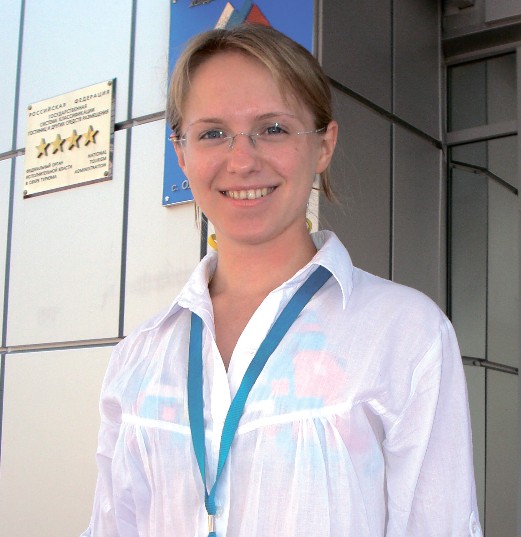
Svetlana Pantsa (Moldova, Chisinau), journalist, 24:
"I've heard very little about Azerbaijan. They say you are at war. The thing is that we in Moldova have almost no news about CIS countries unless there are high-level events, such as meetings or negotiations. I know that our countries have economic agreements in the field of agriculture. I think that on the whole, Moldova is under an information blockade about the CIS. The government which rules Moldova today is trying to get into Europe through Romania. We perceive Europe as a close neighbour. In general, we always stew in our own juice."
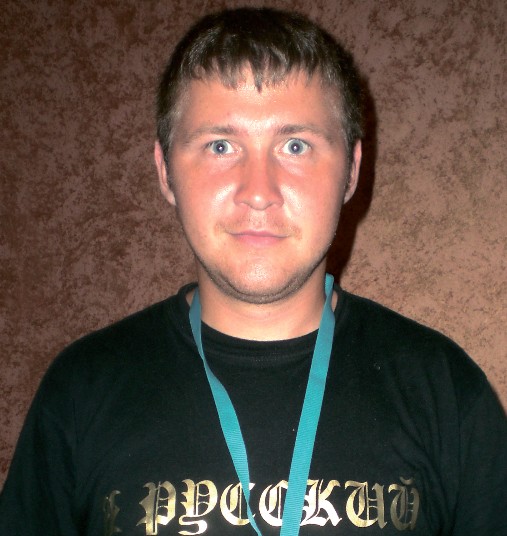
Artem Makarenko (Tajikistan), a specialist in youth affairs and leader of the republican youth organization Svetoch, 29:
"I'm well aware of the political situation in your country, and I've heard a lot about the Nagornyy Karabakh conflict. It's difficult to draw any conclusions, but I can say that Tajikistan was in a similar situation and our country was at war, too. I served and participated in the hostilities. I've seen many deaths and a lot of blood. I've lost many of my friends, which is why when I meet new people, I wish them a peaceful sky over their heads. I wish Azerbaijan the same. Your government has chosen the correct negotiating policy on the conflict, knowing that hostilities can always start, while it's very difficult to defend peace. You will probably be very pleased to hear that I had the opportunity to shake hands with Azerbaijani President Ilham Aliyev. He's a very pleasant person and it's interesting to talk to him. We prepared an event during a visit to Tajikistan by CIS presidents. The presidents, including the leader of Azerbaijan, were to meet young Tajiks and talk to them. I was one of the organizers of the event. That's how I managed to shake hands with Ilham Aliyev. I believe in your country, people are as kind as your president. The similarity between our peoples is that we are very hospitable people. I wish your country peace."
Yevgeniy Samoylenko (Ukraine, Kiev), an assistant and adviser to Ukrainian MP Vladimir Tolstenko, vice president of the public organization Free Europe Assistant Foundation, 29:
"Ukraine and Azerbaijan have very good friendly relations. Like Ukraine, Azerbaijan is a presidential country, although we have many more MPs than you do. In the Ukrainian parliament, there is a group for interparliamentary relations between Ukraine and Azerbaijan, of which Vladimir Tolstenko is a member. I also know that Azerbaijan is an economic leader in the Caucasus region, and our countries have signed significant agreements in the fields of business, education and culture. I have many Azerbaijani friends - they are hospitable and very trustworthy people. I wish your country a quick solution to the Nagornyy Karabakh conflict. I wish you peace and tranquillity.
P.S. An organizational meeting of members of the camp. One would think that an organizational meeting is not the most interesting event. Can we get something new from it? Experience shows that we can. At the first organizational meeting, members of the camp found that Olginka had brought together people from 54 regions of Russia, the CIS and foreign countries; 55 universities were represented. Apart from students, the Commonwealth also brought together 26 members of public organizations and 18 government representatives.
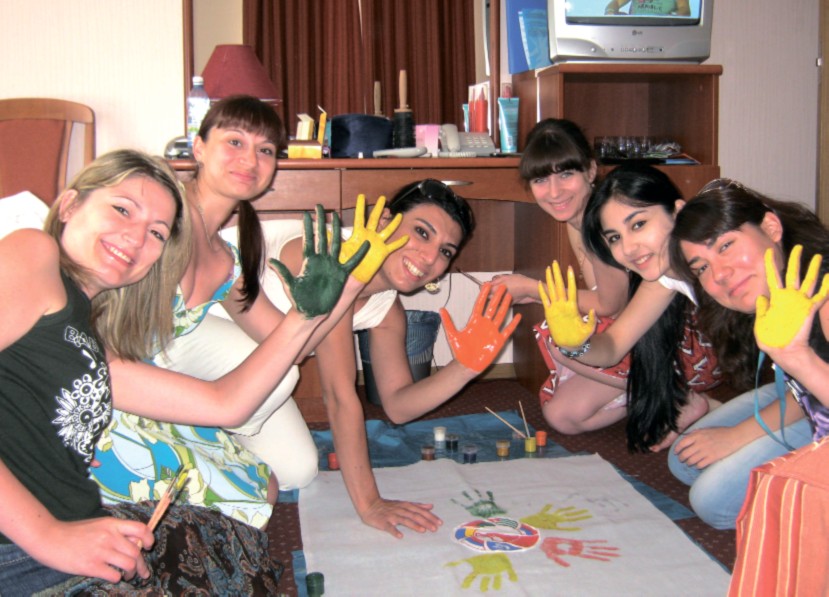
A site near the pool. The introduction of groups on a cool evening. Fourteen Slavic groups came together to introduce themselves, dispaly their talents and meet the others. The hits, as we had supposed, were all kinds of songs to the accompaniment of the guitar. However, not all students paid homage to traditional camping romanticism. It turned out that some participants in the Commonwealth could also play the accordion, dance Lezginka and even organize a fire show. The hubbub at the site continued until late. We could only guess what all the other inhabitants of Gamma thought about this show. Perhaps, they had to wipe their tears and reconcile themselves to the situation. There are still 11 days of Commonwealth ahead.
RECOMMEND:
 615
615

