
A KOMOROWSKI-TUSK TANDEM
The "train" of Polish reform continues its journey from the Civil Platform
Author: Irina KHALTURINA Baku
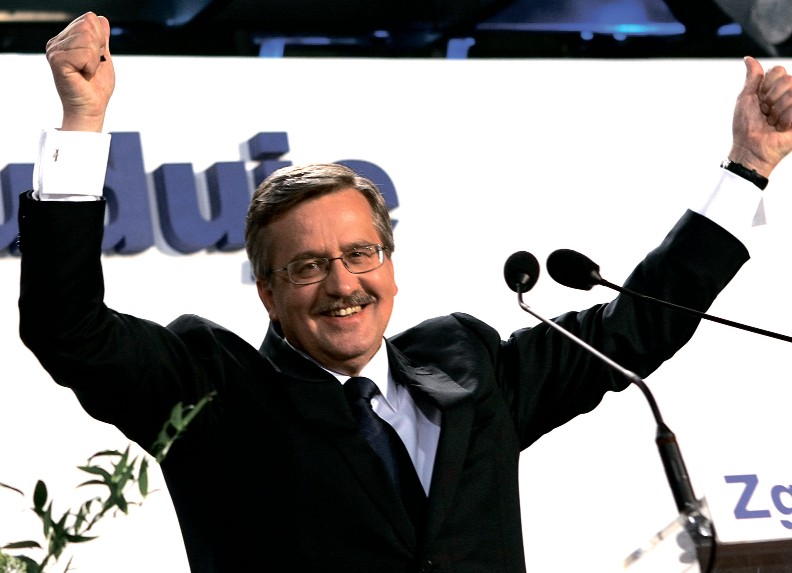
So, the speaker of the Polish Sejm and candidate of the ruling Civil Platform liberal party, Bronislaw Komorowski, has been elected the new president of Poland. The inauguration ceremony will take place in early August when the Supreme Court confirms the elections as valid.
"The people made their choice. They decided on the future of the state. I thank everyone for their participation in the elections and I also thank my opponents," said President-elect Komorowski. Earlier, at a festive soiree with his supporters, he said that "Polish democracy had won" and called for all "splits in society" to be eliminated in the cause of "building a united Poland based on national consensus rather than conflict".
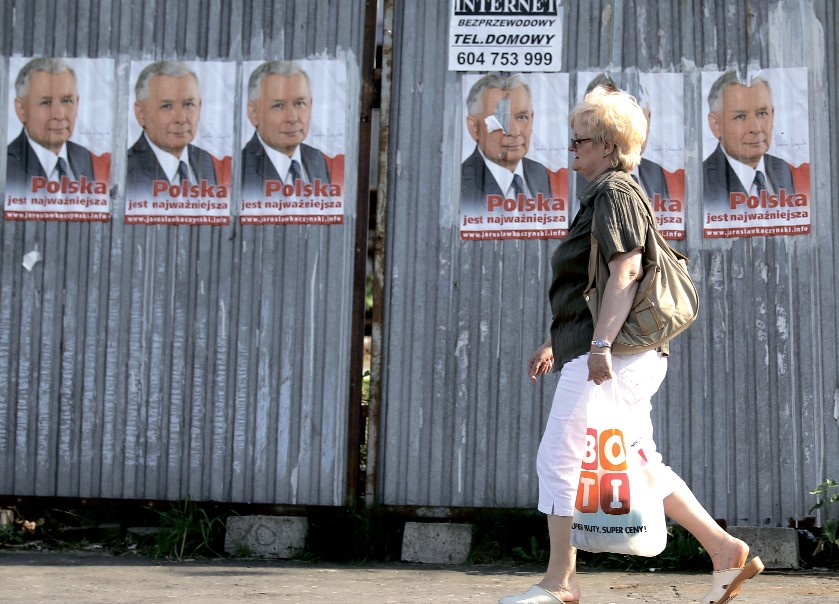
Analysts had predicted Komorowski's victory, although he had to endure uncomfortable moments during the counting of votes. The gap with his rival, leader of the Law and Justice Party Jaroslaw Kaczynski, was not so great. After the processing of 95 per cent of ballots, Komorowski was leading with 52.63 per cent of the vote, while Kaczynski had secured the support of 47.37 per cent of the electorate. After the processing of 50 per cent of ballots, Kaczynski had still been ahead. As a result, Komorowski won by a margin of 6 per cent, gaining 53.01 per cent of the vote. Jaroslaw Kaczynski took 46.99 per cent of the vote.
The first round took place on 20 June, but did not result in a winner, as all candidates failed to gain 50 per cent plus one vote. Komorowski gained about 41 per cent of the vote, while Kaczynski had 36 per cent.
These early elections in Poland were scheduled after Polish President Lech Kaczynski was killed in a plane crash near Smolensk on 10 April. He had been accompanied by a large group of Polish government and public figures, military officials and diplomats. The Polish delegation was heading for the Smolensk Region to participate in mourning ceremonies at the site of the deaths of Polish soldiers and officers executed in Katyn. The tragic death of the president and many members of the political and military elite was a great blow to the country, and we can say that the way Poland has emerged from this "upheaval" deserves at least respect.
Bronislaw Komorowski was born on 4 June 1952. He is the son of a Polish count with Lithuanian roots, Zygmunt Leon Komorowski. He is married with five children and a grandson. He is also an avid hunter and author of numerous ... rhymes. He graduated from the Faculty of History at the University of Warsaw. During the People's Republic of Poland, he was an active member of the opposition. In 1980, he joined Solidarity and in the crucial 1990s he worked in the government and the Sejm. In 2001, he was one of the founders of the liberal-conservative party Civil Platform. He has been chairman of the Sejm since 2007.
Komorowski is described as a pragmatic politician who does not make empty promises. He has repeatedly said that he sees the future of Poland as a law-governed state with a market economy, living in accordance with European and democratic values. Together with Prime Minister Donald Tusk, Komorowski plans to carry out economic reforms aimed at improving living standards and modernizing and privatizing various sectors of the economy.
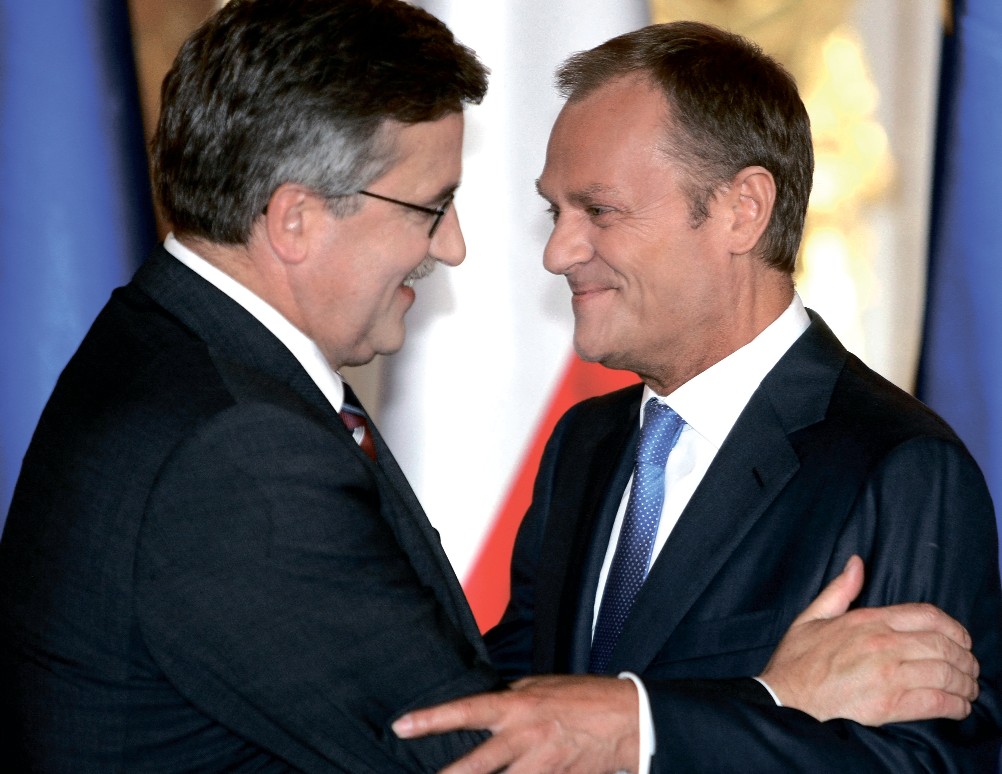
Experts point out that the "Komorowski-Tusk tandem" will have every chance to put its plans into practice. Now the ruling Civil Platform, which includes not only the president himself, but also the head of government, will have free rein without having to continually consult the opposition. Tusk had a strained relationship with the late Lech Kaczynski, which often hindered the taking of important decisions. Lech Kaczynski had vetoed 18 laws proposed by the prime minister.
On the other hand, experts point out that such consolidation of power could eventually do the president and the prime minister a disservice because, in case of failure, they will have to take full responsibility. Moreover, one cannot rule out there being some differences between two experienced and ambitious politicians like Komorowski and Tusk. Chances are especially high that Komorowski will want to assert himself further in the political arena. His political opponents have repeatedly called him "a puppet of Prime Minister Donald Tusk". This is while the head of government will have more free rein, because his field of activity is now much wider, and it is not yet known how the new president will react to this, especially as Poland is a parliamentary republic. "The election of the centrist Komorowski to the Polish presidency will probably strengthen the position of Tusk's centre-right government," says The New York Times, rightly in this context.
Incidentally, the new marshal of the Polish Sejm is now Grzegorz Schetyna who represents (secretary-general and head of the parliamentary faction) the same ruling party, Civil Platform.
Under Komorowski, no radical changes are expected in foreign policy on the one hand, but on the other, many expect that he will demonstrate a new approach, especially in relations with neighbours, and most especially with Germany. The president has already said he wants to strengthen the country's role in the EU and NATO, although, according to Polish analysts, the new president is more inclined towards the EU than the US. Komorowski is known for saying that Poland's goal is to be "at the heart of Europe, not in a corner" and, therefore, must make its voice louder in the EU. The new head of state is also in favour of a collective approach to solving problems, which actually meets Brussels' objectives.
It is noteworthy that just before the second round of presidential elections, US Secretary of State Hillary Clinton visited Poland as part of her extensive foreign tour. The US state secretary acted diplomatically and did not have a meeting with either Komorowski or Kaczynski, but stressed that "no matter which candidate the country chooses, the US will continue to be its friend and partner". Also, with the participation of Clinton and Polish Foreign Minister Radoslaw Sikorski, the sides signed an appendix to the US-Polish missile defence treaty, bringing it into line with the new architecture of the missile defence system previously announced by US President Barack Obama.
Meanwhile, Komorowski also intends to develop relations with Russia. Historically, the topic of Russia has been important and very painful for Poland. The latest period of tension peaked not so long ago and was related to the Russian-Georgian war in August 2008, as well as to the aforementioned plans of the administration of former US President George W. Bush to deploy elements of the missile defence system in Poland. The new US President Barack Obama, in contrast, started "resetting" relations with Moscow, which cannot but have a positive impact on Russian-Polish relations. The Russian media, incidentally, now actively recall that during the events of August 2008, Komorowski urged the Polish authorities "not to jump to conclusions and not to embroil the country in relations between other countries", although, of course, it is hardly possible to expect a sensation between Moscow and Warsaw. The shadows of a tragic past are likely to loom over the two countries for a long time to come. The present also leaves much to be desired.
As for Jaroslaw Kaczynski, he admitted defeat and congratulated his opponent on his victory, although he expressed hope that his party will take revenge and "win the upcoming parliamentary and local elections". The leader of the conservative Law and Justice Party will soon engage in "mobilizing" the party and, as shown by the presidential election, he has an excellent basis for a political assault on the parliament.
According to many observers, Jaroslaw Kaczynski, despite his defeat, still achieved a great success. "Bronislaw Komorowski won despite the Smolensk disaster and floods, despite his weak campaign and the support that most of the Catholic Church gave to Jaroslaw Kaczynski. He won, but the difference in votes was very small. In fact, it is not that Bronislaw Komorowski won the election, it is that Jaroslaw Kachinski lost it," wrote Gazeta Wyborcza.
So, indeed, in his campaign, was the national-conservative Jaroslaw Kaczynski able to depart significantly from the traditionalist, conservative attitudes typical of Law and Justice. He seems to have realized that the era in which he could count mainly on the final deliverance from the legacy of the communist past, has already passed. Poland is a state that should be looking to the future, not clinging to what it left in the 20th century. It is impossible to continue seeking enemies when you can try to find allies. Polish analysts were not speaking in vain when they delared that if Lech Kaczynski had not been killed near Smolensk, he would have been defeated in the presidential election due to be held in October.
As a result, on the one hand there are indications that the election results revealed strong polarization in Polish society. According to Le Monde, there is "a deep rift between liberalism and state interventionism, towns and villages, the east and the west of the country". This was in fact acknowledged by Komorowski himself when he spoke about the need to overcome all differences to "build a national consensus".
But, on the other hand, some analysts do not see anything alarming in the results of the second round of the presidential elections, noting that Komorowski's electorate was just more mobile. They are urban residents and young, active people with higher education, many of whom often do not go to the polls, especially in summer, because they are on holiday outside the country. But Kaczynski's supporters, by contrast, are more settled and responsible - they are villagers, elderly people living in the east of the country and faithful Catholics loyal to national traditions.
Regarding the response to Komorowski's victory by European countries - they accepted it with obvious enthusiasm. "The victory of centrist Bronislaw Komorowski was a step forward for him, for Poland and for Europe in general," said the Frankfurter Allgemeine Zeitung. "Europe itself gained from Komorowski's victory. The stabilization of Poland contributed to the success of the risky project for the expansion of Europe to the east. In Poland, courage overcame fear. It is of crucial importance for Europe, because Poland will no longer be a brake on it, but will intensify and be more constructively active in the EU," says Der Standard. It is also suggested that "the key to a stronger EU is in the hands of Warsaw, and the 'Weimar Triangle', which consists of three states, could become the locomotive for the EU, as France and Germany alone cannot give decisive impetus to the EU, as a result of the economic crisis, while Poland can have the final say in the EU's eastern policy".
Azerbaijani President Ilham Aliyev congratulated Bronislaw Komorowski on his election as Polish president. Ilham Aliyev noted that Baku attaches great importance to Azerbaijan-Poland relations.
"I am confident that our multilateral ties of friendship, interaction both bilaterally and within international institutions and projects, and cooperation as a strategic partnership will continue to evolve and expand in the interests of our peoples," said the President of Azerbaijan.
In this context, it is worth mentioning that Warsaw does indeed play a prominent role in EU policy on the former Soviet republics. Suffice to mention that Poland was one of the initiators of the Eastern Partnership programme. In addition, special attention should be paid to interaction between Baku and Warsaw in terms of building European energy security.
RECOMMEND:
 606
606