

THE OUTPOST CHANGES ITS MIND,
Or, what is behind Armenia's "flirting" with NATO?
Author: Sahil ISGANDER, political scientist Baku
It seems that "the locomotive of the CSTO", as Nikolay Bordyuzha, secretary general of the organization, called Armenia, is pulling in a different direction. Yerevan has declassified the Armenia - NATO Individual Partnership Action Plan (IPAP). The document has been officially published on the website of the Armenian Ministry of Defence. On the whole, the programme is a list of reforms to the Armenian army and steps to bring it in line with NATO standards, reports the Regnum news agency. Paragraph 1.2 (Relations with neighbours) is quite interesting, says the agency. Among other things, it notes that Armenia commits itself to working towards a peaceful solution of the Nagornyy Karabakh conflict in cooperation with the OSCE Minsk Group and to "keeping the alliance informed about developments" in the Karabakh process.
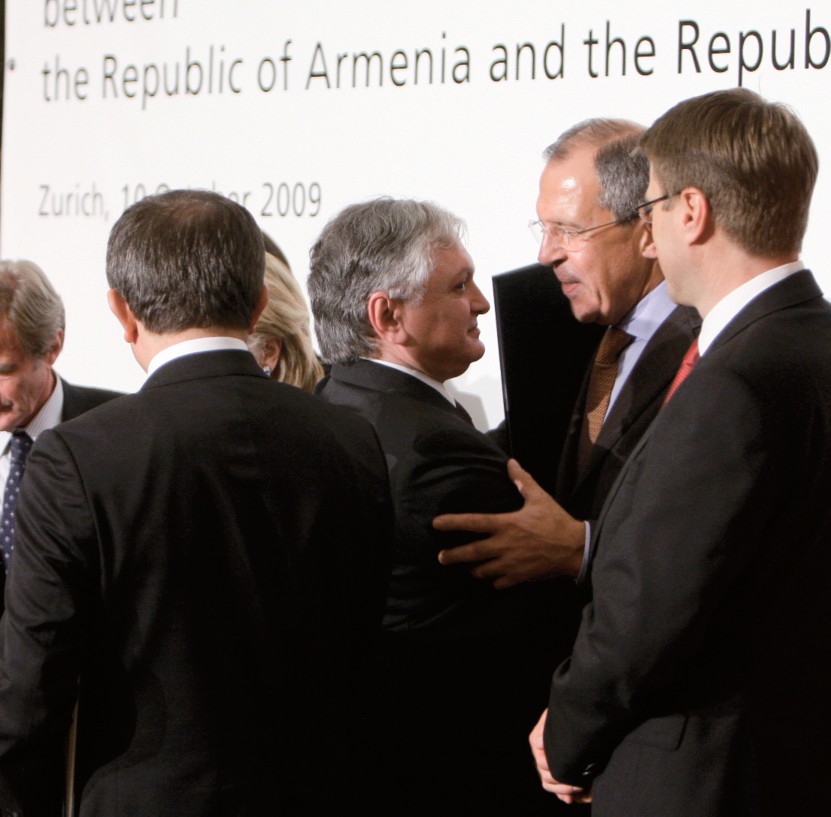
But a statement by Armenian leader Serzh Sargsyan, made during his latest visit to Brussels at the end of May this year, is even more remarkable. His statement, at a joint press conference with NATO Secretary General Anders Fogh Rasmussen, implies that Armenia is inviting the alliance to the South Caucasus, particularly to the Armenian-Azerbaijani conflict zone. Having made the reservation that his country is not seeking membership of NATO, the Armenian president said that he "had not heard, either now or before, that NATO does not have any role to play in the Nagornyy Karabakh conflict, especially if the situation suddenly escalates into war". And this is while the NATO secretary general himself does not see any possibility of NATO military intervention in the Nagornyy Karabakh conflict if hostilities resume in the region.
It is apparent that every country is free to build its own policy and choose its foreign partners, and there is nothing untoward in Serzh Sargsyan's actions. But such behaviour by Armenia - a member of the CSTO and the only country in the South Caucasus with a Russian military presence, could not but bring a negative response from Moscow. Perhaps the outpost was not reprimanded officially, but the advisory council of the Russian Conflict Forecasting Centre stated: "The statements by the Armenian side in Brussels are counterproductive and incorrect in terms of Armenia's membership of the Collective Security Treaty Organization."
It is clear that inviting the North Atlantic Council to the South Caucasus (SC), even as a peacekeeping force, is in direct contradiction with Russian interests and Yerevan, which calls itself a "strategic ally" of Moscow, is well aware of this. They know, but they invite. And it comes as no surprise, as the history of Armenian-Russian relations is literally replete with examples of erratic behaviour by the "outpost".
Some history
At every stage of history, Armenia and Armenians have merely manipulated their alliance with the northern neighbour to promote their own, mostly aggressive, interests. It is worth mentioning the appeal from the then Catholicos of all Armenians, Vazgen II, to the world's Armenians in the summer of 1988: "It's no secret that not all our lands belong to us yet, but the time will come when we have to conquer and populate them. Over the past 40 years, Armenians have occupied the land of their ancestors. They comprise 60 per cent there. Land in the territories of Krasnodar and Stavropol is gradually becoming free of Russian influence. In Armavir, North Armenia (as Armenians call the Rostov Region - writer) our land comprises 80 per cent... and if we act reasonably, we will populate the Rostov Region as well. There is no reason for anxiety as we are supported by the Russian Church and many of our supporters are in high places. I think that the 480,000 Armenians in Moscow already mean something. My children, buy up houses peacefully and quietly, try to persuade locals to leave and take root in your native land. The Soviet Union is now disintegrating and soon we will facilitate the collapse of Russia. It's time to launch a crusade against those who drove our long-suffering people out of their land!"
Given the unparalleled role and experience of the Armenian Church in inciting ethnic strife, Russia should not neglect such an open appeal. Examples of the true attitude of Armenia and the Armenians towards Russia are also reflected in the book "The Caucasus" by the Russian poet, publicist and public figure V. L. Velichko, testimony by the former first deputy chairman of the KGB, Army General F. Bobkov, and other prominent people. It would be useful for those who doubt that the Armenians have long claimed the southern expanses of Russia to read the book "Favourite" by V. Pikul, who cannot be suspected of being unfriendly to the Armenians. It turns out that, back in the 1870s, the Armenians dreamed of proclaiming Armavir the capital of their state, which did not then exist.
There are no friends - there are only interests
Diaspora ethnic groups, including Armenians, are never loyal citizens of the country in which they reside. All their aspirations and activities are subject to the goals and objectives of their ethnic group. Their states also refuse to take account of the interests of other countries, despite endless assurances of age-old "friendship" and "strategic allied relations". They do everything solely in their own interests.
For example, at an extraordinary session of the EurAsEC, of which Armenia is a member, an agreement was signed on the establishment of a regional anti-crisis investment fund of $10 billion, which is designed to simplify the process of allocating stabilization loans to Commonwealth countries to support their economies during the crisis. Only countries that contribute financially to the establishment of the fund can apply for loans. Armenia immediately confirmed its involvement and contributed only $100,000, applying for a loan of one billion dollars. Recently, it became known that Armenia will still receive a loan of $600 million from the fund. For many years, Russia has been selling gas to Armenia at the lowest prices in the CIS. But as soon as Moscow shyly mentions the need to bring gas prices in line with world standards, the pendulum of sentiment with regard to Russia suddenly tilts in a negative direction in Armenia. There immediately appear lengthy statements about a "betrayal" by the northern neighbour. They rain down accusations on Russia that it has seized 80 per cent of Armenian industry and deliberately refuses to invest in these companies, artificially creating unemployment in the country. Such "analytical" materials fall on "fertile ground" and whip up anti-Russian sentiment in Armenian society. Two years ago, the famous international Gallup poll released the results of a survey in the South Caucasus countries, which revealed the population's attitude towards Russian policy in the region. It is unlikely that the figures obtained in Armenia testified to the "age-old friendship" - 62 per cent of the respondents in Armenia described Russia's policy in the region as "unsatisfactory". Among the republics of the former Soviet Union, Armenia leads in the process of reducing the number of ethnic Russians. Currently, there are only seven thousand Russians in Armenia, and most of them are family members of servicemen at the Russian bases.
There is a similar situation with regard to the Russian language. Most recently, hysteria was whipped up in Armenia over the government's initiative to open foreign-language schools, including in Russian. The main initiators of this hysteria were Vazgen Manukyan, head of the Public Council of Armenia and former Education Minister Ashot Belyan. The process of globalization absolutely does not suit Armenia. It only seeks to create a "Greater Armenia" which professes the principle of ethno-fundamentalism.
Yerevan is building its relationships with Russia in the military sphere based on the same considerations. In 1997, Russia and Armenia signed a Treaty of Friendship, Cooperation and Mutual Assistance, which also provides for military aid. In this way, Armenia received strong support from Russia and essentially began to conduct a policy of obstruction. Thus, on the one hand, Armenia tried to "freeze" the Nagornyy Karabakh conflict for many years and, on the other, it turned the whole of the South Caucasus into a zone of political instability. In return, Yerevan agreed to deploy a Russian military base in Armenia to protect Russia's southern borders from some kind of threat. Sometimes, it even accuses Moscow of not paying a penny for this accommodation.
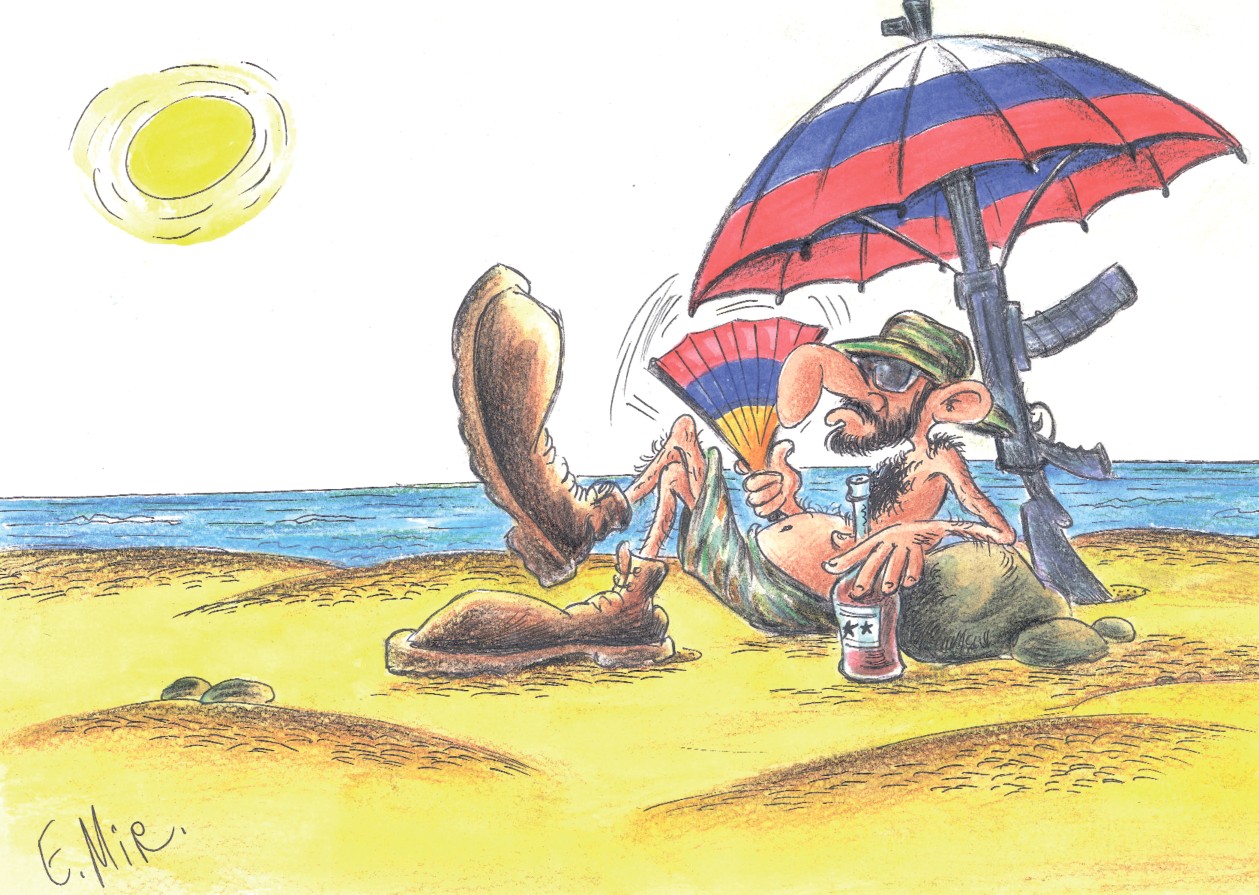
Today, as a member of the pro-Russian military-political alliance - the CSTO - Armenia is also "flirting" with NATO, reaffirming its volatility as an ally. It is curious that Moscow, which is normally irritated by other former Soviet countries' contacts with NATO, responds loyally to its outpost's approaches to the Western bloc.
For decades, the Armenians have exploited the myth of the "Turkish threat" to Russia's interests in the region, allowing them to use Russia for their own interests. But as soon as Russian-Turkish relations geared up to a more friendly level, the Armenians immediately began to accuse Moscow of betraying the interests of its "strategic ally" and to look for patrons in the West. Now the "outpost" is trying to set Russia and the US against each other in the region for its own benefit. In this context, it is appropriate to recall the interview given by current Armenian President Serzh Sargsyan (when he was prime minister) to Moskovskiye Novosti in 2007. Asked how Armenia would build its foreign policy towards Russia and the United States, he replied without batting an eyelid: "Let's be friends (be friends rather than cooperate - writer) with both Russia and the US."
RECOMMEND:
 512
512

