

TURKEY IS TROUBLED AGAIN
Who and what is behind the new wave of PKK terrorist attacks?
Author: Ramin ABDULLAYEV Baku
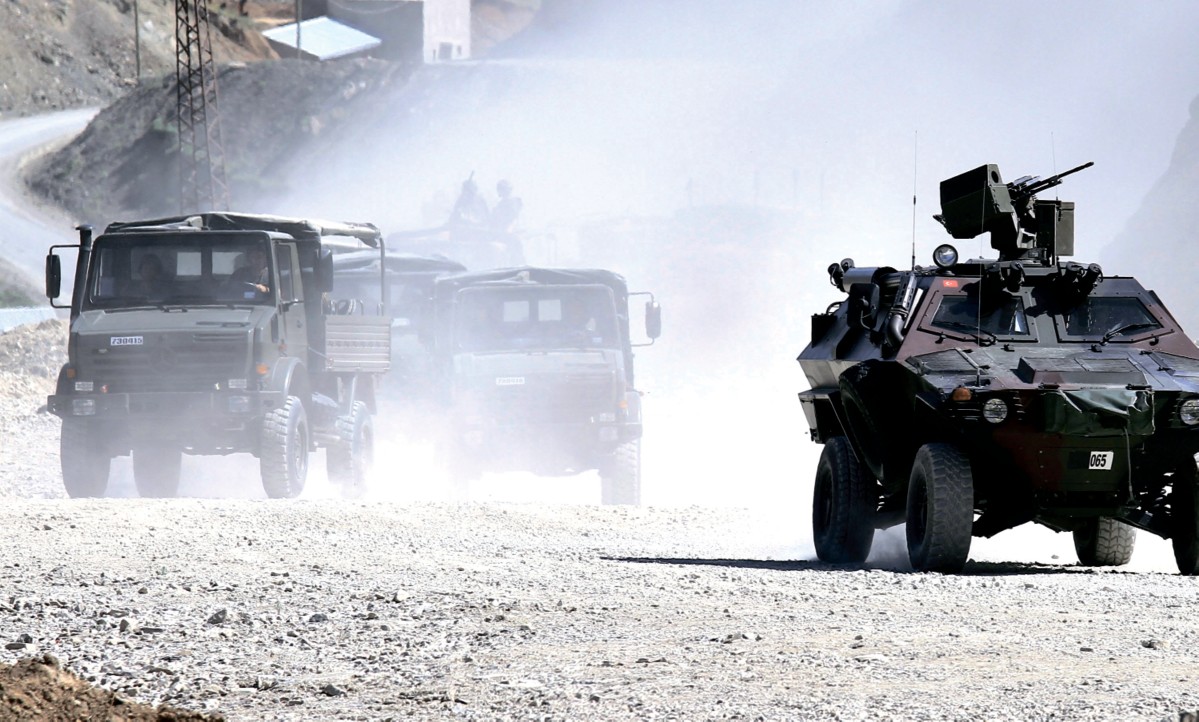
Turkey is once again gripped by terrorist attacks from the Kurdistan Workers' Party (PKK), which have claimed the lives of dozens of soldiers. The terrorist activity, as expected, resulted in large-scale mopping-up operations in the south-east of the country, which has also led to resentment among the local population.
The main objective of the Kurdistan Workers' Party (PKK) is to destabilize the situation in the country and secure the imposition of a state of emergency in the provinces populated by ethnic Kurds. If the government does take such a decision, the referendum on constitutional amendments involving the expansion of cultural rights for ethnic Kurds, scheduled for 12 September, will be meaningless. Indeed, any army operation, regardless of its purpose, ends in serious discontent within the civilian population.
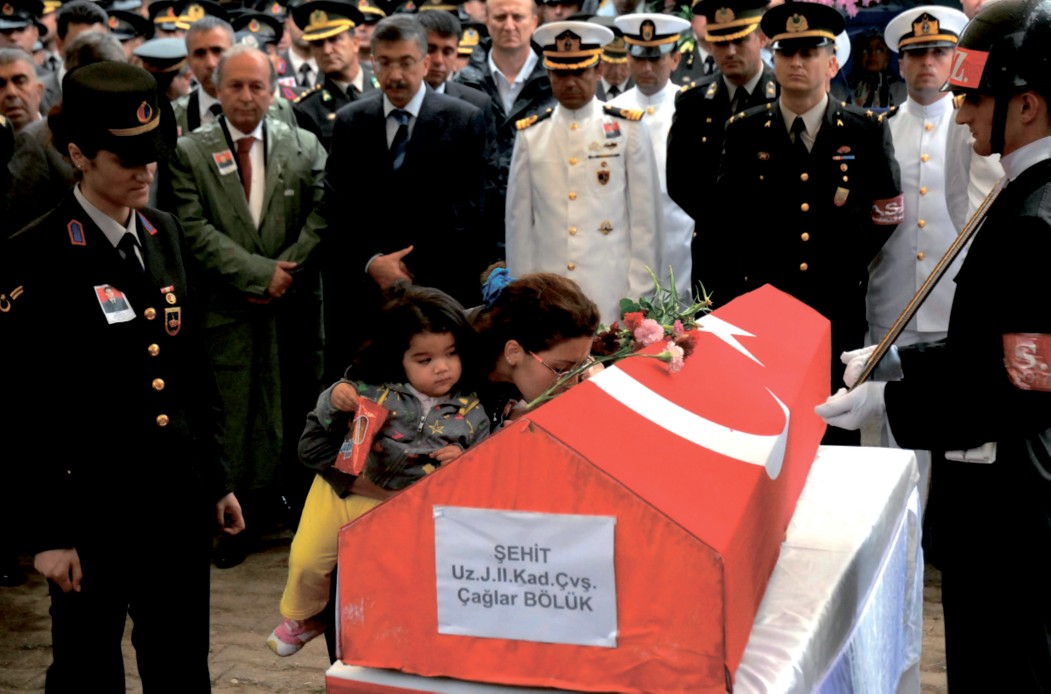
At the same time, the terrorists' new tactics have turned civilians into "potential targets". We should recall the circumstances in which 12 Turkish soldiers were killed in the province of Hakkari near the Iraqi border. On 19 June, a group of 27 terrorists approached a military post and did not respond to warning shots by the military. As a result, and in the dark the soldiers took the PKK members to be civilians and allowed them to approach the checkpoint. They paid for the error with their lives.
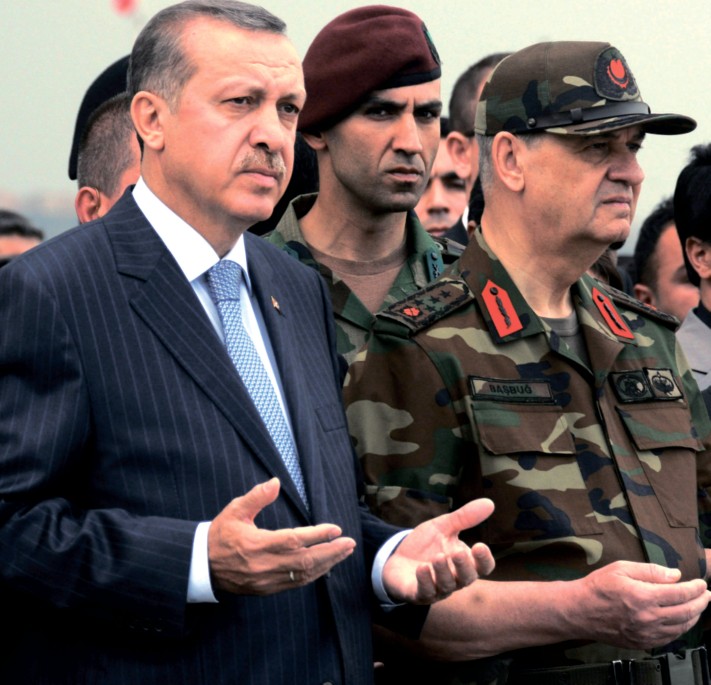
At the funeral of the deceased soldiers, Prime Minister Recep Tayyip Erdogan made unprecedented threats against the PKK: "Do not think that you will win. You will drown in your own blood. No-one can destroy the unity of the Turkish people." He stressed that the Turkish leadership "will not allow enemies to rejoice".
The soldiers' death provoked a storm of indignation from the public and the opposition demanded that the government tighten control over the south-eastern provinces, in particular, by restoring the state of emergency. According to the opposition parties, Ankara is unable to defeat terror.
Prime Minister Erdogan himself has been sharply criticized. On arrival at the checkpoint attacked by terrorists, he was photographed in a squatting position. This picture was instantly replicated in the media, while opponents of the government announced that it was unbecoming for the prime minister "to hide from terrorists in his own land".
Well-known Turkish journalists wrote on the issue as follows:
Yilmaz Ozdil from the Hurriyet newspaper noted that it was unbecoming for the prime minister and army chief of staff of a country that has suffered many wars to squat, especially as the entire area was guarded by hundreds of riot police and there were three military helicopters in the air. "This picture had a negative impact on the morale of the nation. We go into Iraqi territory upright, but we are forced to hide on our own territory," he said.
At the same time, Haber Turk TV presenter Fatih Altayli noted that even if the area was indeed dangerous, the prime minister could at least have avoided being photographed. "He should have looked terror in the eye. Judge for yourselves. Would Mustafa Kemal Ataturk have had his photo taken in this position, had he visited this place?" he said.
A commentator on the same channel, Balcicek Pamir, wrote that it would have been better for the prime minister to visit a military base in uniform: "Erdogan's posture reminded many of Turkish immigrants. The prime minister should have thoroughly weighed all the pros and cons and only then have his photograph taken. It is unbecoming of a prime minister to sit in such a position in his own land. If he had lain down, the effect would not have been so great."
In response, Recep Tayyip Erdogan said that the opposition and the media were exploiting the issue of PKK terrorist attacks. He said that his cabinet was not going to abandon the package of reforms put to the September referendum. He also stressed that there was no question of early parliamentary elections going on the agenda.
"Everything necessary to counter the PKK has already been done and, in this regard, the government is giving every possible assistance to the appropriate agencies," said the Turkish prime minister.
At the same time, Erdogan stressed that he was not going to impose a state of emergency on the south-eastern regions of the country.
Meanwhile, the Turkish intelligence service reported the execution of Kurds trying to quit the PKK or protesting against terrorist activity.
According to intelligence sources, last week alone PKK field commanders "executed" eight people. Letters are sent to the families of those executed alleging that their relatives were killed by Turkish soldiers.
It is also reported that the struggle for leading positions in the PKK, which is currently headed by Murat Karayilan, has become more intense.
The volatility of the situation is also proven by official statistics. Fahri Kir, representative of the General Staff, announced that in the last four months alone, the Turkish army had eliminated 130 members of the PKK, losing 43 soldiers.
In parallel, Minister of Energy and Natural Resources Taner Yildiz announced increased security measures for oil and gas pipelines.
He said that the government had examined the possibility of terrorist attacks on transit pipelines, and, therefore, had decided to declare the highest level of security on oil pipelines. "First of all, this concerns the Baku-Tbilisi-Ceyhan and Kirkuk-Yumurtalik pipelines, although, so far, no incidents have been reported," he said.
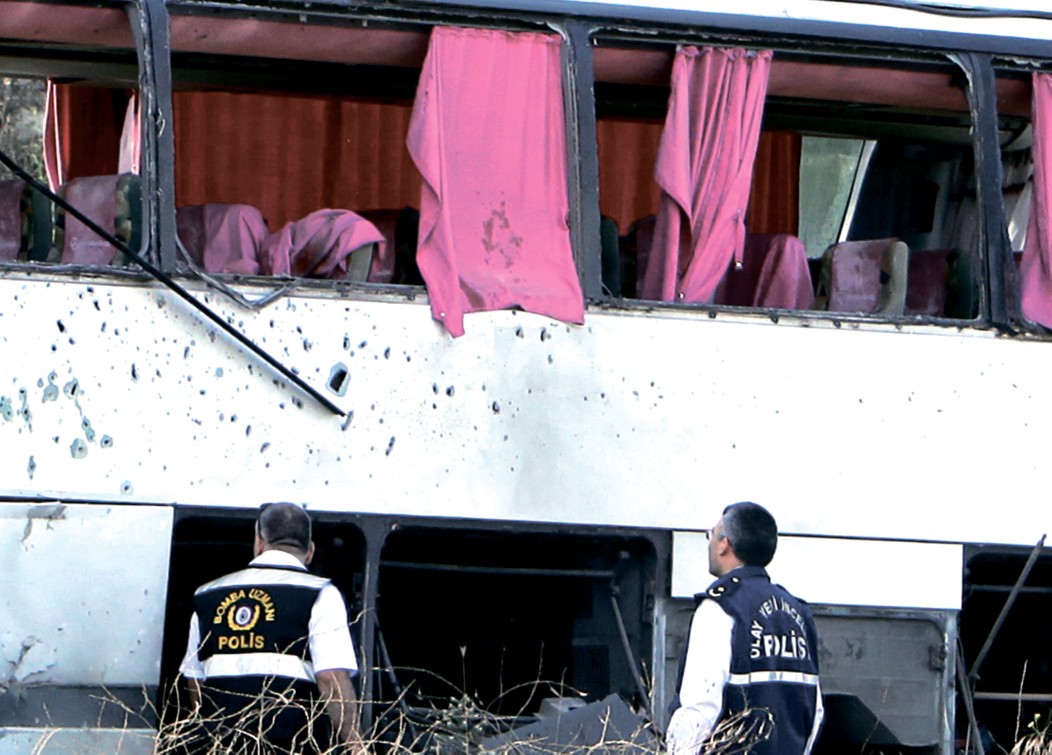
The authorities' fears, as it turned out, were not without basis. On 22 June, a powerful explosion rocked Istanbul's Halkali district, killing five people. The terrorists' target was an army bus, and the first results of the investigation confirmed a direct relationship with PKK members whose main bases are located in northern Iraq.
In recent months, Ankara has stepped up contacts with the Kurdish administration in Northern Iraq and any large-scale action in border areas would undermine cross-border cooperation. This is the aim of PKK members, who are doing everything possible to disrupt the situation.
Although the inaction and reluctance of the Northern Iraq administration to fight the PKK is obvious, the recent bloody terrorist attacks show that Ankara's diplomatic moves in this direction are having no positive effect at all.
Military experts also urge the Turkish army to be more active in Iraq, stressing that full control of the mountainous terrain of the Turkish-Iraqi border cannot be ensured. So, there is a need for an army cordon behind the mountains, but this is Iraqi territory. They say that a "buffer zone" 60 kilometres wide is the only way out of a military solution to the problem.
It should be noted that these initiatives are not new and have repeatedly received support from Turkey's leading opposition parties. However, sharp opposition from the US, Baghdad and other regional forces has not allowed Ankara to develop such an initiative.
At one time, Washington was able to soften Ankara's position, concluding an agreement on the exchange of intelligence, in particular, on the movement of groups in the cross-border area. However, the surprise attacks on the military in Hakkari Province show that Ankara was not given any advance warning. And this raises certain questions.
For example, the Turkish media believe that Washington refused to cooperate with Ankara because it did not support the US on tougher sanctions against Tehran. This gave free rein to the PKK in Iraq, and the Kurdish administration in Northern Iraq has never opposed the terrorists in principle. The importance of the problem is proved by the fact that this issue was the key topic at the meeting between Recep Tayyip Erdogan and the US president at the G20 summit in Toronto.
It is worth noting that some Turkish experts also hold the view that the PKK's activity was necessary for some outside forces seeking to minimize Ankara's regional clout and to tarnish the country's image. The most "likely players" in this context are the US and Israel, whose navy attacked the "Peace Flotilla", killing several Turkish citizens.
In this connection, we should mention that the Turkish army recently purchased a large number of Israeli drones run by Israeli experts. However, according to some reports, they have been expelled from the country and, as a result, the drones, which could effectively identify a group of militants on the border with Iraq, never took off.
All this leads to the conclusion that a further wave of terrorist attacks in Turkey resulted from both external factors and the internal situation, in particular, the Erdogan government's initiatives to expand the cultural rights of Kurds. And both of these components play an important role in the deaths of Turkish soldiers.
RECOMMEND:
 662
662