

JOURNEY TO THE PAST
The Qala state historical-ethnographic reserve hosts a festival, with the support of the Heydar Aliyev Foundation
Author: Narmina VALIYEVA Baku
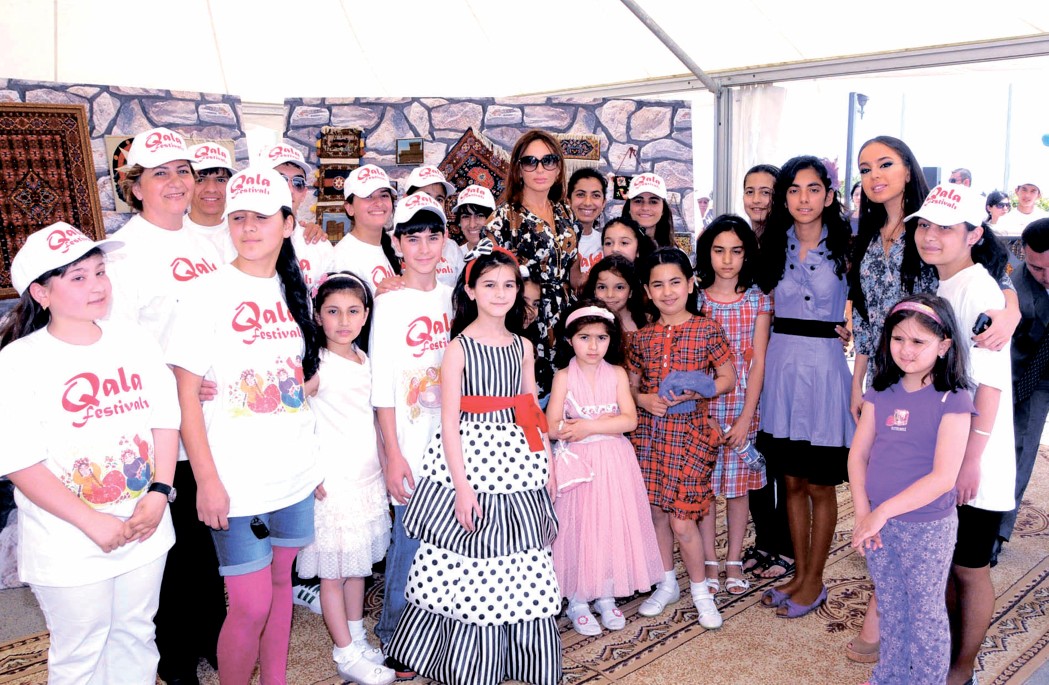
Carpets under the trees, fabulous white tents, black-maned horses, delicious pitta bread and children in colourful national costumes. These are my memories of the unique festival that took place in early June at the Qala state historical-ethnographic reserve with the support of the Heydar Aliyev Foundation. The festival opening was attended by Mehriban Aliyeva, President of the Foundation, goodwill ambassador of UNESCO and ISESCO and MP, and Leyla Aliyeva, head of the Foundation's Moscow office. The aim of the Qala festival is to familiarize the younger generation with the history of the country, its strong, ancient traditions, and to promote our people's rich historical past.
The village of Qala is one of the oldest settlements in Abseron, as evidenced by the ruins there of defensive installations similar to those in the villages of Mardakan and Ramana. The fact that its history goes back centuries is proven by the discoveries made by Azerbaijani archaeologists. Qala was located on a busy caravan route from the north-eastern port of Abseron to Baku and onwards. In 2008, a museum complex, which contains all the unique archaeological artefacts found in Abseron and which displays its ancient culture, was established at the reserve. To this end, a plot of land was allotted in the historical quarter of Qala - Balaverdi, immediately opposite the ruins of the fortress. This complex became the people's property upon the initiative of Azerbaijan's First Lady Mehriban Aliyeva.
In the 5,000-year-old village of Qala, there are burial mounds, tombs, dwellings, mausoleums, mosques, baths, the ruins of an ancient fortress and other monuments belonging to periods between the third millennium BC and the twentieth century. Alongside local historical and cultural monuments, the first archaeological ethnographic museum complex to be created in the open-air also contains other archaeological finds from the Abseron Peninsula. In the museum complex, houses and other architectural monuments from the 3rd-2nd millennia BC have been reproduced in their original form. Visitors to the museum, which occupies an area of two hectares, are acquainted with the rock drawings, musical stones, pottery, household utensils, ornaments, weapons and coins of that period and are shown ancient settlements and various workshops.
Festival guests were able to take a journey into the historical past of Qala, which is thought to be one of the most ancient human settlements in Abseron, and were informed about Qala's unique role as a bearer of historical mysteries. The ceremony was attended by 2,500 children from various schools and orphanages in Baku.
The young participants in the Qala festival were delighted by the work of craftsmen who continue the traditions of weaving, pottery and blacksmithing. The children watched attentively as they created real works of art - rugs, pots and etchings. By the way, many of the artefacts displayed in the museum complex appeared here thanks to local residents. Copper, pottery and other utensils or household items of historic and cultural value came here from their grandmothers' coffers.
The Qala festival was marked by one more milestone. During the event, two board games were presented - "Young Intellectual" and "Rise of the Shirvanshahs" - created with the support of the Heydar Aliyev Foundation. These games are sure to become popular with Azerbaijani youth.
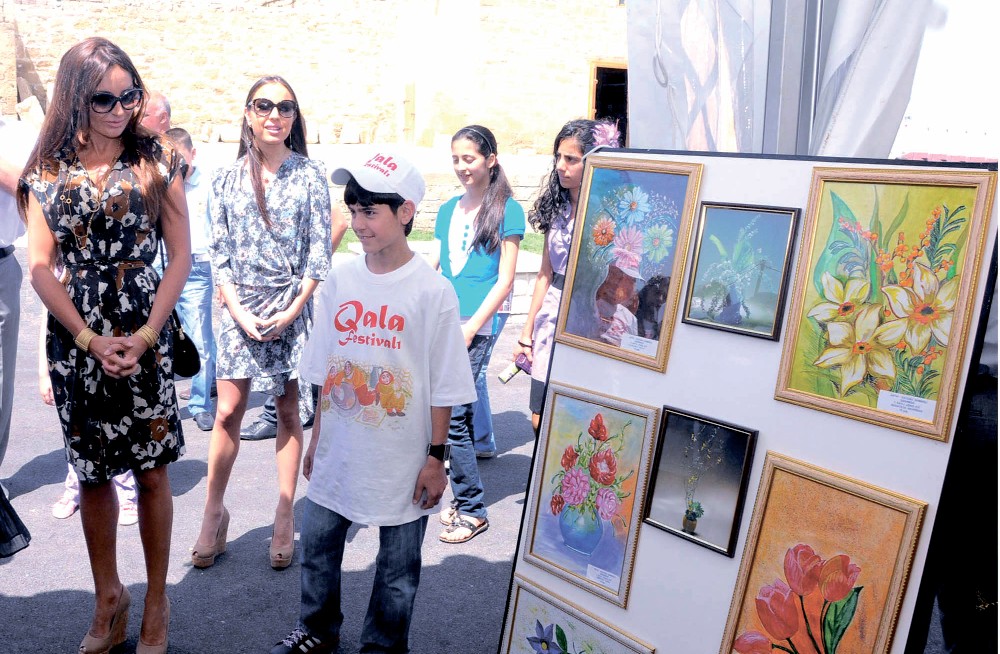
The youngest participants in the festival also exhibited their talents and skills. The audience was shown original works made of various materials.
The Origami public union of children and youth also contributed to the festival. Children with special needs are rehabilitated in a very unusual way by this society - learning the art of origami. The junior craftsmen gave one of their original compositions to the First Lady, Mehriban Aliyeva. She was also presented with a gift by the young weavers - a carpet woven with traditional ornamentation. The festival displayed a collection from the Latif Karimov Azerbaijani State Carpet and Folk Art Museum and gave information on the use of the khurjun and bag.
One of the highlights of the festival was the organization of Qala master classes for children. Guests were themselves given a chance to become masters in the ancient village: making small clay figures in the pottery studio and small rugs and ornaments from felt and wool thread for camels and horses in the carpet workshop. In the next tent, girls carried out primordial women's work - they rolled dough for cakes, combed wool and embroidered traditional patterns.
Watching the master classes, Mrs Aliyeva was shown one of our ancient customs - the drawing of traditional henna patterns on the palm of the hand. In the East, the art of henna painting originally had religious and mystical significance. It still remains basically the same. The process of the "mendi" art is so exciting and fascinating that the First Lady also expressed a desire to demonstrate her abilities and she drew intricate henna patterns on the palm of one of the festival participants.
The visitors, especially young people, spent a long time near the camels' pen - donated to the reserve by a local entrepreneur. Children who were particularly keen on the new-born colt decided to invent a name and held a competition to find the most beautiful name for the little "ship of the desert". As a result, it was decided to give him the affectionate name of Narbala. During the festival, the viewers could try sweets, honey and fruit and even visit a market offering vegetables, flowers and spices. In the tents, the guests were offered food and tea made according to ancient traditions.
RECOMMEND:
 706
706

