

THE RESOURCEFUL THREE AND INCREDULOUS SIX
The agreement between Turkey, Brazil and Iran might have removed the threat of new sanctions against Iran from the agenda, but it didn’t
Author: Mehman MIRZOYEV Baku
It seemed that a reassuring watershed had been reached on the Iran question as Turkey and Brazil reached agreement with the Iranian government on the exchange of nuclear fuel. This might have taken the issue of new sanctions against Tehran off the global agenda. But it didn't. Moreover, the superpowers dealing with the "Iranian issue" even brought their positions closer at a time when this was least expected.
Resourceful three
Turkey and Brazil offered to mediate in the talks on Iran's nuclear problem at a time when all means of diplomatic pressure on Tehran had been exhausted. The six international negotiators (USA, Russia, UK, France, China and Germany) had started considering tougher sanctions against Iran. The latest consultations on the issue revealed that the USA and its western allies were gradually persuading Russia and China of the necessity of introducing sanctions capable of affecting the Iranian economy. The initiatives by Brazil and Turkey were thus seen as the last opportunity to reach a reasonable and mutually acceptable solution to the Iran problem.
Russian President Dmitriy Medvedev said in a meeting with his Brazilian counterpart Luiz Ignacio Lula da Silva in Moscow, "The visit by the Brazilian president to Iran is the last opportunity to resolve Iran's nuclear problem without sanctions. I do hope that the Brazilian president's mission is crowned with success." According to Medvedev, if it proved impossible to convince Iran of the need for appropriate forms of cooperation, the international community would have to act upon the approaches being discussed by the Group of Six.
The Turkish-Brazilian proposals combined a recognition of Iran's right to enrich uranium, to place some reserves of Iranian uranium abroad and to arrange for international inspections of its nuclear facilities to confirm that the country's nuclear programme is of a peaceful nature. In other words, this initiative repeated in many respects the proposal made by the International Atomic Energy Agency (IAEA), which had envisaged an exchange of Iran's low-enriched uranium for nuclear fuel from Russia and France. However, Tehran did not accept the proposal at the time, demanding that uranium exchange be conducted only on its territory.
Tehran's reaction to the proposal from Turkey and Brazil was completely the opposite. Although Iran's demand for "a simultaneous exchange" remained in force, the Iranian foreign ministry described the new initiatives as "realistic". It appears that this reaction was largely preconditioned by the fact that the proposed exchange involved not Russia and France, but Turkey and Brazil - countries which unequivocally reject any sanctions against Iran and which act as its strategic partners.
As a result of talks between the Iranian and Brazilian presidents, Mahmud Ahmadinejad and Lula da Silva, which were joined by Turkish Prime Minister Recep Tayyip Erdogan, agreement was reached that uranium produced in the Islamic Republic would be exchanged for enriched uranium to be supplied by Turkey. Brazil's participation in the deal leads to the conclusion that the process of enrichment of the Iranian uranium would be carried out in this South American country and then the nuclear fuel would be transported to Iran via Turkey. According to an Iranian foreign ministry spokesman, Ramin Mehmanparast, Iran has agreed to send 1.2 tons of low-enriched uranium to Turkey for the further exchange of 120 kg of nuclear fuel enriched to 20-per-cent.
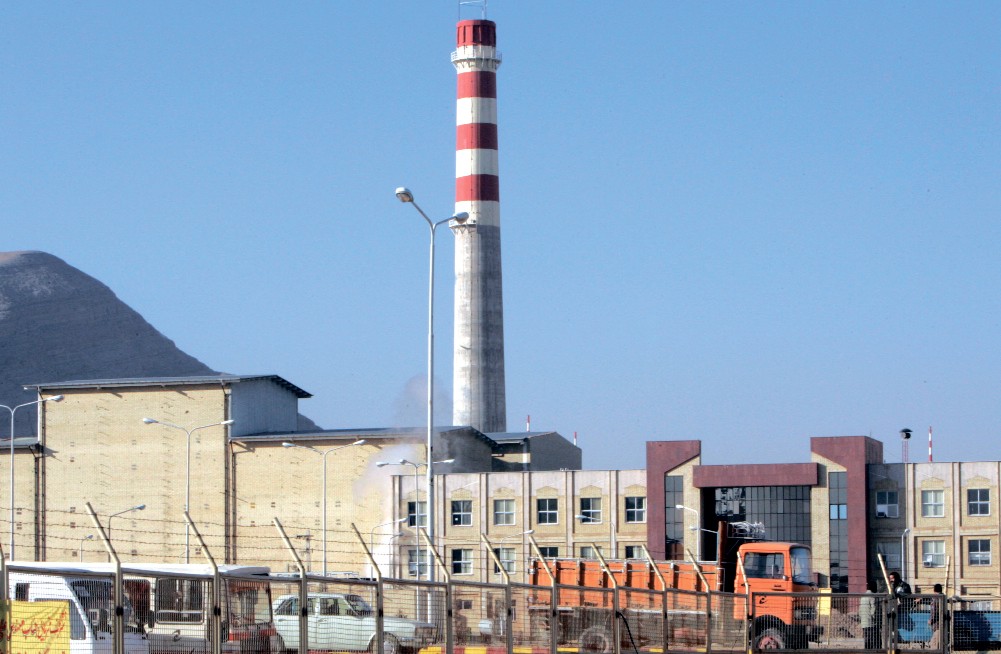
It is worthy of note that Iran's atomic energy organization started enriching uranium to the necessary level at its Natanz nuclear centre in February. The Iranian administration has stated that if agreement is reached on the exchange of nuclear fuel, this work will be stopped. Time will show whether Iran will remain true to its word. So far, it is a fact that what the IAEA and G6 could not achieve is being unexpectedly implemented by Turkey and Brazil. Therefore, it remains to be seen what will be the official response from the G6.
Incredulous six
Meanwhile, international negotiators are in no hurry to have their say on the Iranian-Turkish-Brazilian deal. However, the fact that, despite Iran's agreement not to enrich uranium on its territory, which is reflected in the trilateral agreement, the G6 continues to discuss a draft resolution on tougher anti-Iranian sanctions, speaks volumes. In fact, the US tabled the draft in the UN Security Council on the day after the Iranian-Turkish-Brazilian agreement. US President Barack Obama has stated that America would work towards tightening sanctions against Iran despite the latter's agreement with Turkey and Brazil on the exchange of nuclear fuel because, "the international community is still concerned about Iran's nuclear programme and Tehran's reluctance to honour its international obligations".
US State Secretary Hillary Clinton said that Washington, Moscow and Beijing had agreed a new UN SC resolution. The change in Russia's position is of particular interest in this context, as it appears likely to accept the US initiative on tougher anti-Iranian sanctions. To secure Russia's support on the issue, the White House has cancelled its own sanctions against Russia's military industrial establishment, imposed in the wake of accusations of supplying arms to Iran and Syria. Additionally, the US agreed that Moscow may supply Iran with S-300 anti-aircraft guns and complete the construction of a nuclear plant in Bushehr.
The new resolution envisages the introduction of a number of sanctions affecting both Iran's economy and its military establishment. If approved, the document will expand the list of Iranian citizens and companies which cannot engage in economic activity abroad. The document will also prohibit Tehran from financing the activities of companies engaged in the nuclear industry. One of the key provisions of the new resolution will be a ban on the supply of certain types of military hardware to Iran, such as tanks, armoured personnel carriers and war planes.
Israel's opinion is also quite interesting. Tel-Aviv believes that no measures other than large-scale sanctions against Iran's petrochemical industry can have the desired effect. And since such sanctions do not appear to be on the agenda, Israel is still considering a military blow against Iran. As for the Tehran agreement, the Jewish state has described it as an attempt to mislead the international community.
In the meantime, Turkey's role in these Iran-related developments is also significant. The Turkish government has confirmed its determination to step up Ankara's profile, not only in the region but also in the world. First, Prime Minister Erdogan had promised Iran that he would do everything in his power to get the world community's support for the Tehran agreement. He discussed the issue with leaders of the world's superpowers. In particular, he explained to the US president that the agreement "opens the door" to a negotiated settlement of Iran's nuclear problem. Erdogan also informed the new British Prime Minister, David Cameron, that the newly-signed deal "may not eliminate the international community's concerns, but is, nonetheless, an important step towards security."
But Erdogan made his most remarkable statement at Madrid University. Addressing countries sceptical of the agreement on Iran's nuclear programme, he described their position as unconvincing, because they themselves have nuclear weaponry. "I will be frank with you. When we touch upon those speaking about nuclear security, we see five permanent members of the UN Security Council. All of them have a nuclear weapon. When they say that others should not have it, it doesn't sound very convincing. We have to accept present-day reality. Do we want to have the law of rule or the rule of law? This is very important. If we exist in this world to form the law of rule, then we should be ashamed of ourselves. But if we live to form the rule of law, that means we justify our very existence," Erdogan stated. He completed his speech with the following remark: "We should not forget that we all need this rule of law. And we will never let mankind fall victim to imperialism."
As for Iran itself, it has called on Russia and USA to support the Tehran agreement. President Ahmadinejad described it as the "last chance" to narrow the differences between Iran and the world's superpowers. Iranian Parliament Speaker Ali Larijani has warned that Tehran will cancel the trilateral arrangement if even one UN SC member refuses to sign it. Thus Iran wants the G6 to give up any plans for sanctions.
However, the chances that the signatories of the Tehran agreement, which share a common "anti-imperialist position", will convince the superpowers of Iran's peaceful intentions are rather slim. This is explained not only by the hegemonic ambitions of modern "empires". On the day the Iranian-Turkish-Brazilian agreement was signed, Tehran announced that it had no intention of giving up its national uranium enrichment programme. It would therefore be na?ve to expect a significant softening in the position of the G6.
Furthermore, there is no clarity on the provisions of the Tehran agreement. It is not quite clear when Iran will pass its low-enriched uranium to Turkey, or when it will receive the enriched fuel back. Article 7 of the trilateral agreement says that Tehran agrees to supply 1,200 kg of low-enriched uranium to Turkey within a month of the signing of a relevant agreement between Iran and the G6, while the international negotiators agree to provide Iran with 120 kg of uranium enriched to a level of 20 per cent within one year. If uranium is to be enriched on Turkish territory, the deal cannot be implemented earlier than one year because it is technically impossible to produce this volume of high-enriched product in a shorter period of time. Therefore, the West and the world community as a whole have reason to suspect that Iran is simply trying to gain time, because there is no guarantee that Tehran will not use this year to go ahead with its nuclear programme.
If we assume that Brazil does have additionally enriched uranium and can exchange it for low-enriched Iranian uranium in the near future, then why didn't the G3 disclose this at the beginning? It could thus have eliminated all the suspicions and fears of those who continue to distrust the Iranian regime. Or another question: how much low-enriched uranium will remain in Iran after 1,200 kg is sent to Turkey?
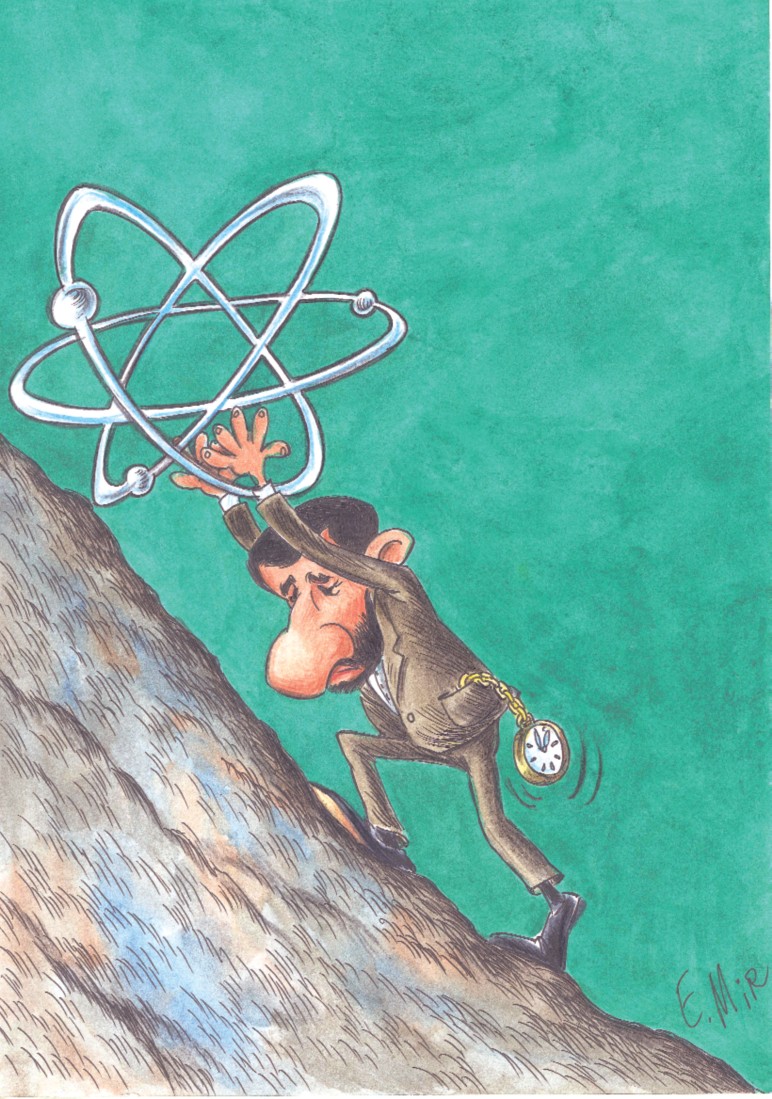
There are many questions. But unfortunately, there is very little time left to take measures to resolve the "Iranian crisis" peacefully.
RECOMMEND:
 615
615