

THE "MUNICH DEAL" AND ATTEMPTS TO APPEASE ARMENIA
History repeats itself
Author: Azer-Globe, Institute of social and political research
Hegel was right in saying that history repeats itself. But unlike the second part of his well-known maxim, a tragedy does not always return as farce.
When history repeats itself it is not history, but a universal scenario for enslavement, seizure and violence with a tragic ending, absurdity raised to logic and vandalism disguised as righteous anger. One should probably listen to the great Pushkin who said, "Don't entrust history and politics to professionals. They sell their services for money." We might add that those political managers sell not just their services, but also their principles, views and promises, both for money and for global interests seeking huge amounts of money. This usually happens under well-considered scenarios involving major geopolitical players, innocent victims, invented causes and hidden reasons that trigger events and manipulate crowds.
Today, when Armenians are trying to lay new extremist claims to Naxcivan, one recalls the old, but enduring, scenario that went down in history as the Munich deal.
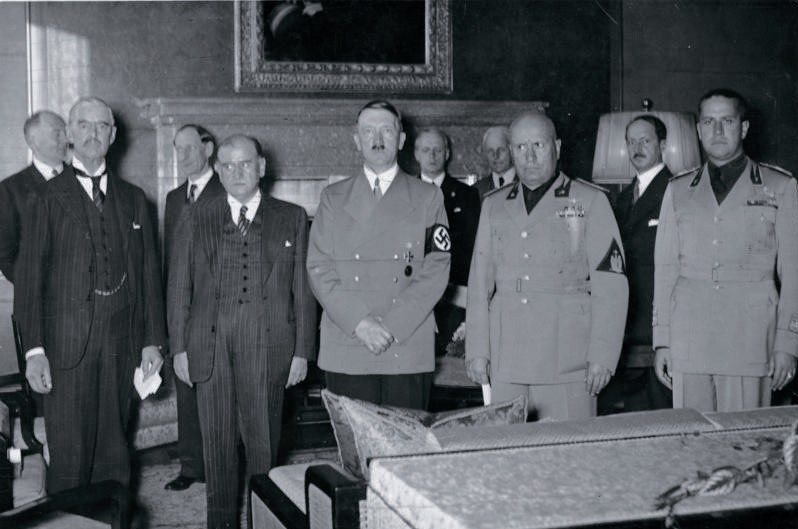
The Munich deal had a prelude from spring-autumn 1938:- Nazi Germany's campaign of blackmail and provocation against Czechoslovakia, its territorial claims on Sudeten, mainly inhabited by ethnic Germans, mass protests against the Czechoslovak government organized by the National Socialists and finally the Munich agreement, signed on 30 September 1938 by Adolf Hitler, Neville Chamberlain, Benito Mussolini and Edouard Daladier, permitting Nazi Germany to annex Sudeten. All of this, except the signed deal, bears a clear resemblance to the Nagornyy Karabakh scenario.
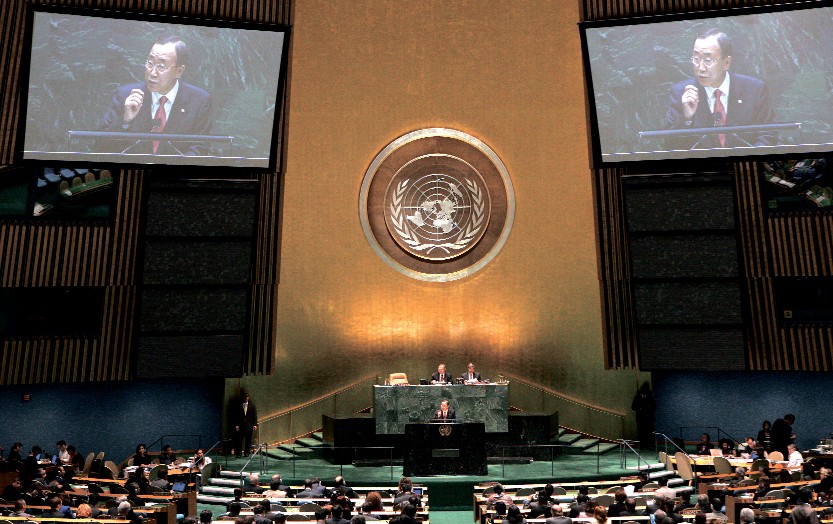
Thus, 50 years after the Munich agreement, a similar scenario was implemented - a classic example of history repeating itself. Even the Nazi leader's arguments and those of the militant nationalists led by the Dashnaktsutyun party are almost identical. Hitler argued that the borders between Czechoslovakia, Germany and Austria had not been defined correctly after WWI and thus should be changed to meet the ethnic Germans' desire to unite with Germany. Some 50 years later, in 1988, similar arguments were put forward by Armenian separatists in Nagornyy Karabakh: they alleged that the Caucasian Bureau of the Russian Communist Party had defined borders "incorrectly" in 1923, that they should be "corrected" and that Armenians in Nagornyy Karabakh wanted unification with Armenia. The insolence of those claims competed with the absurd bellicosity of those voicing them. Nevertheless, emotional language does not mean that the problem exists; otherwise the UN Security Council would not have passed four Resolutions between April and November 1993 demanding that Armenia withdraw its armed groups from the occupied territories of Azerbaijan.
With this in mind, let's look at President Ilham Aliyev's remarks about the Armenia nationalists' 200-year-long policy of genocide and aggression against Azerbaijanis. The president voiced fair discontent with the fact that Azerbaijan's territory had been reduced in favour of Soviet Armenia with the present-day borders. He, however, has decided upon correct priorities and looks forward, proceeding from existing realities. We do not have revanchist territorial claims and do not have groundless imperial ambitions like "Great Germany" or "Great Armenia". We want the territorial integrity of Azerbaijan to be assured and historical justice restored.
In this light, it was quite logical that the Azerbaijani president refused to take part in an informal CIS summit held in Moscow on 8 May, the date when Armenian troops seized the ancient Azerbaijani town of Shusha. Aliyev's stance was quite clear: it was unacceptable for Azerbaijan to attend an event on this tragic date for the nation when the leader of the occupying state was present.
Meanwhile, both in 1938, after the forced division of Czechoslovakia and Hitler's aggression against Poland, and in 1988, when the Armenian aggression against Azerbaijan began, the democratic countries of the West accepted the priorities of the apologists for Fascism and employed double standards. Several truisms emerged. First, the fate of Czechoslovakia and Poland clearly demonstrated the inequality of member states within the League of Nations, which failed to ensure proper security for its members. Second, Italy's aggression against Abyssinia in 1935, and European countries' unwillingness to impose oil sanctions, demonstrated that aggression was no longer punishable.
Democratic values were mimicked and replaced by cynicism in 1938, when it was an issue concerning Slavic Czechoslovakia and in 1988, when it concerned Muslim Azerbaijan. Evidence can be found in the memoirs of the then Czechoslovak envoy to London: "When I showed the map of Czechoslovakia to some senior officials, I had the impression that they were seeing it for the first time. They looked at the map pensively and said 'That is interesting. What a funny shape. It is like a big sausage!'" Goring was persuading the French envoy n Berlin: "Can you see the shape of Czechoslovakia on the map? Isn't it a challenge to common sense? This appendix is a rudimentary organ for Europe. It should be ablated."
France behaved, to put it mildly, inappropriately and in December 1938 signed a deal with Hitler, although it had an agreement with Czechoslovakia on mutual assistance in the event of German aggression.
By the way, Aganbekyan ignited the flame of the Karabakh war precisely in Paris in 1988, when he told l'Humanite about Armenia's claims to Azerbaijani lands. Submitting to new annexations by Nazi Germany, France and Britain soon became hostages to their policy of appeasing Germany at the expense of a young, independent state.
It is appropriate to mention here a line from Ambassador Neville Henderson's letter to British Foreign Secretary Lord Halifax: "By preserving peace, we will preserve Hitler and his regime." It turns out that, having known of Germany's aggressive militarism, the governments in Paris and London hoped that Hitler would not claim Alsace and Lorraine after getting Sudeten. But their clever plan did not work: very soon the Nazis started bombing London and seized Paris. Hitler used Britain to strengthen Germany and then seized almost the whole of continental Europe. Germany defeated France in 1940 and annexed Alsace and Lorraine. Many French people were killed in concentration camps. Only then did Hitler attack the USSR.
Some 100 years before the Munich deal, Honore de Balzac said: "There are two histories: lying official history… and secret history, where the true causes of events are seen." Parallels drawn between the Munich deal and the present day prove the correctness of this opinion. An economic crisis may be mentioned among the causes of the events of 72 years ago and those developing in the first decade of the 21st century.
The 1929-33 crisis had the greatest negative impact on the USA. Unemployment reached 10 million and President Roosevelt's new policy failed to lead the country out of the crisis. Only war boded well and a big war in Europe would be advantageous for US ruling circles. They needed to tip the existing balance in military production in their favour and it would be very opportune to annihilate Czechoslovakia's military industry, one of the most developed in Europe.
This interest explained the US' invisible but intensive involvement in efforts to convoke the Munich conference. That was the first step towards war in Europe. As Vladimir Putin said in an article in the Polish newspaper Gazeta Wyborcza in August 2009, the Munich deal had triggered WWII as, once the deal was signed, Hitler decided that anything was permitted and that France and Britain would do nothing to defend their allies. The deal signed in Munich had ruined "all hopes of a united front in the struggle against Fascism".
Seventy years later, we can see attempts - orchestrated by the USA, but with different actors involved - to repeat the Munich deal. And again there is an economic crisis and Washington is urging some countries to unite against others and again all this is done under slogans of peace.
Turkey was pressurized into signing the Turkish-Armenian protocols because Armenia is an element in the geopolitical struggle between Russian and the USA. In the past, the Western powers chose Germany as a tool of aggression against the USSR; now the USA is trying to set up a Turkish-Armenian alliance as a force in the South Caucasus that could also be used against Iran.
Today the USA and Europe are urging a peace process on Turkey and Armenia. This would not have caused anxiety if not for the lessons of the Munich deal. During the Nuremberg Trials, German Field Marshal Keitel was asked: "Would Germany have attacked Czechoslovakia in 1938 if the western powers had supported Prague?" He replied that "Germany was not strong enough and the Munich agreement was aimed at ousting Russia from Europe, gaining time and completing the arming of Germany".
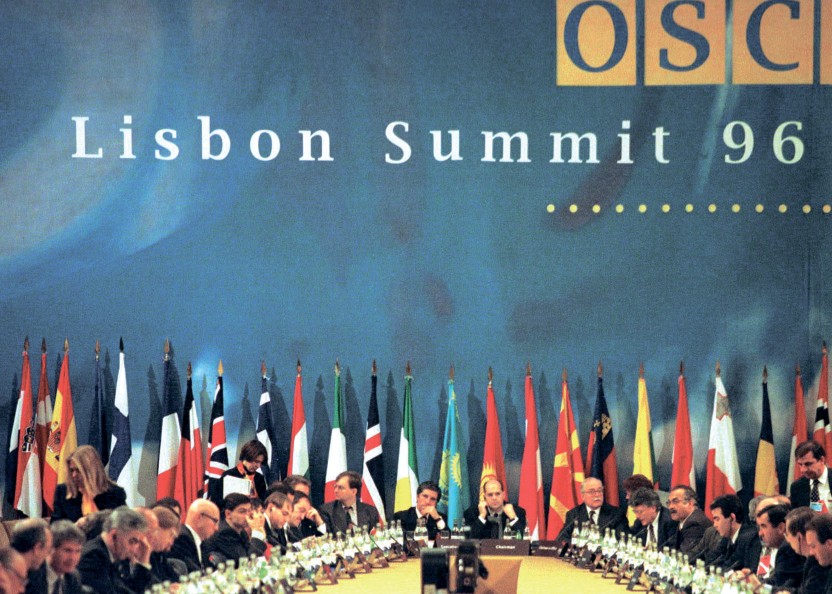
Bearing this in mind, one should not believe those historians who say that the European powers were indeed hoping to solve the conflict peacefully by making the deal. History showed that they did not prevent war, but simply postponed it. The fruitless activity of the OSCE Minsk Group is a present-day model of such peacemaking.
The Munich deal is still a warning of what the results might be of attempts to get a peaceful solution by appeasing an aggressor at the victim's expense. Permission to annex Sudeten simply fuelled Nazi Germany's appetite. If the world today does not recognise Armenia's aggression against Azerbaijan, tomorrow Armenia will wage war against Georgia for Javakhetia, against Turkey for eastern Anatolia, against Iran for Orumiyeh and Tabriz (as was the case from 1941-46) and against European countries (as was the case from the 1970s-1980s). Already today one can see in the Armenian media calls to start laying territorial claims. Churchill's phrase - "You were choosing between war and disgrace. You have chosen disgrace and now you will get war!"- still serves as a warning to pacifists about the results of collaboration with an aggressor.
Thus, parallels drawn with the present day show that factors identical to those that helped strengthen the Nazi regime in the late 1930s and fuelled WWII, are encouraging the impunity felt by militant Armenians in the early 2000s.
The aggressive nature of Armenian nationalism displays itself in the occupied territories and in countries which have Armenian communities, such as the USA. In early March 2010, the Armenian Youth Federation held a protest in Newport Beach against Azerbaijan's general consul Elin Suleymanov, who was addressing the Pacific Club. Meanwhile, on the same day the Armenian-language website armenia.az was launched in Baku to initiate a peace dialogue. It should be mentioned that California, France and other countries have witnessed Armenian nationalists' terror attacks against Turkish diplomats and companies.
It cannot be ruled out that radical youth brought up by the militant Dashnaktsutyun will tomorrow stage protests against foreign officials if the latter fail to indulge Armenia's separatist interests.
So why have the leaders of the world's leading powers not learned the lessons of the past? Under international law, an act of aggression is a grave crime against peace and the safety of mankind. Armenia's aggression was recorded by the world. However, strangely enough, pressure is being exerted, not on the aggressor, but on Turkey, to force it to open its borders with the aggressor state.
When the Karabakh conflict began in 1988, Azerbaijan warned that forcibly changing borders within the USSR could have a dangerous outcome. Alas, the then Soviet leadership, led by Mikhail Gorbachev, paid no heed to the warnings and did not take radical steps to curb manifestations of the first radical separatism in the USSR. As a result, Karabakh triggered separatism in Abkhazia, South Ossetia and the Dniester Region. The conflict had an impact on the Balkans - in Croatia, Bosnia and Kosovo. Unlike other countries, Azerbaijan does not have double standards. We do not recognize the independence of such states, irrespective of their political orientation.
But every example of this sort encourages others to copy and each time these conflicts bring disaster, hostility and ethnic cleansing. The current attempts to change borders by force are no less dangerous. Karabakh has not been recognized as an independent state, but as a dangerous precedent it has already made hundreds of thousands victims in the South Caucasus. It began under the slogan "Miatsum", a verbatim translation of the German word "Anschluss".
The current situation shows that the former Allies of WWII have not yet learned lessons from the past. However, it would be well to use that partnership experience and not to sacrifice it to momentary political advantage.
US Vice President Joe Biden made rather encouraging remarks in early May 2010: "We must affirm that security in Europe is indivisible, the importance of territorial integrity for all countries in Europe, and the right of states to choose their own security alliances." We hope that this was not said to serve momentary advantage.
|
Hitler’s arguments were that after World War One borders between Czechoslovakia, Austria and Germany were not established correctly and should be redrawn. |
Half a century later, in 1988, the same arguments were put forward by Armenian separatists in Upper Qarabag: in 1923 the Caucasus bureau allegedly drew the borders “incorrectly”, therefore, they should be “redrawn”. |
|
Another of Hitler’s arguments in 1938 was that Czechoslovakia’s ethnic Germans demanded unification with Germany. |
This is exactly what was behind plans to annex Qarabag in 1988: the Armenians living there allegedly demanded unification with Armenia. |
|
A gift in the form of Sudeten fomented the appetite of Hitler’s Reich and the whole world soon felt the effects. |
If the international community remains indifferent to Armenia’s aggression against Azerbaijan today, tomorrow Armenia may unleash a war on Georgia for Javakhetia, on Turkey for Eastern Anatolia, on Iran for Urmiya and Tebriz (1941-1946) and other European countries (Armenian acts of terror in the 1970-80s). |
|
"Anschluss!" This is how Hitler’s idea of joining Austria to Germany sounded in 1938. |
The exact translation of this word into Armenian, “Miatsum!” was the slogan of Armenian separatists in 1988 |
| |
|
RECOMMEND:
 765
765

