
ONCE MORE ABOUT LOVE
Dedicated to baku
Author: Valentina REZNIKOVA Baku
I love this city. I love it in spring when there is a sudden burst of bright greenery, in autumn - through the protracted and slanting rains, in winter - against the fierce winds that tear at your clothes and bowl you over and in summer - a time when the sun is so bright that it seems white hot and the northern Xazri wind blows... I always love it. When I return home from a trip, I even inhale the sweet aroma of the contagious, damp air, saturated with moisture, and the smell of oil and tar melting in the heat.
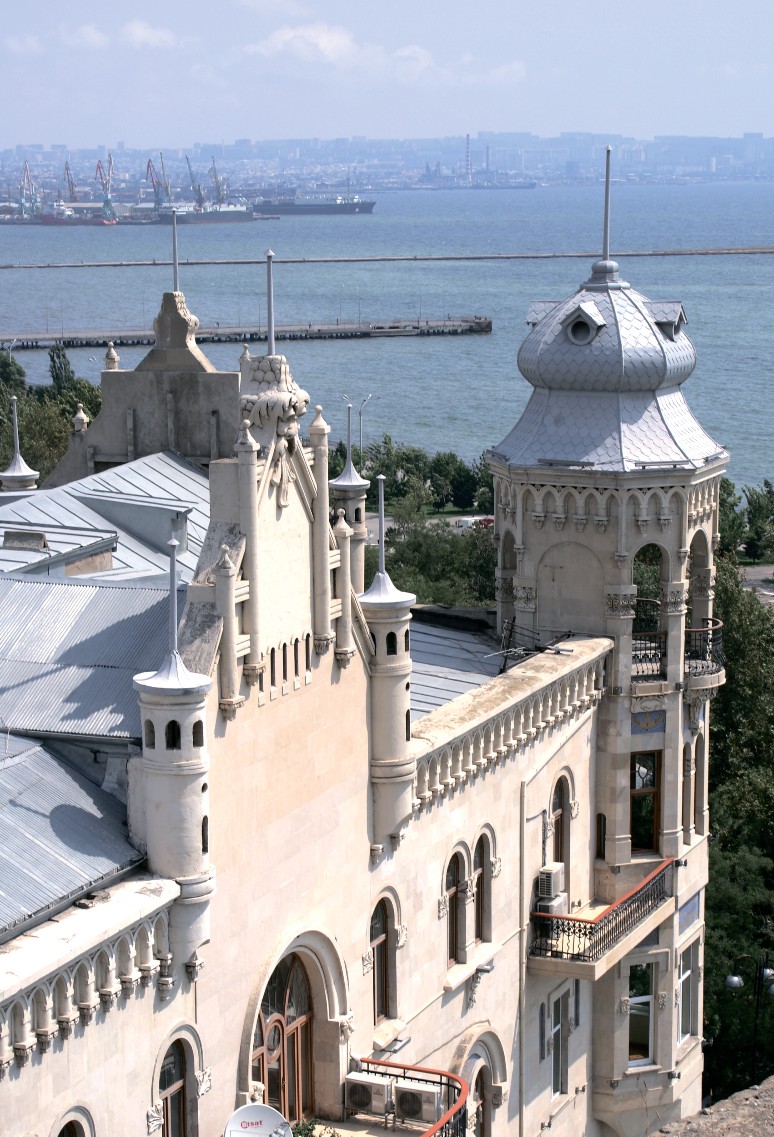
My city ... It is a magnet for those who have visited it even once. They return here again and again - the Abseron peninsula where, along the Caspian, Baku nestles comfortably - the city of winds and, in translation from ancient Persian - the white city. Or they dream about it. And it really is white! For most of the year the houses of grey natural stone fade under the scorching sun, and have done over the centuries, then they were polished by the wind, washed by rains and have turned quietly into "old-timers". But they are so beautiful, grand and stately! Each house has its own life and fate; just like its inhabitants. Here, every house is a separate story - of the country, clans, families and people. Here is Tagiyev's house. And here is Haciqasimski's. Here the Asadullayevs lived. Beautiful homes! They do not build houses like this any longer...
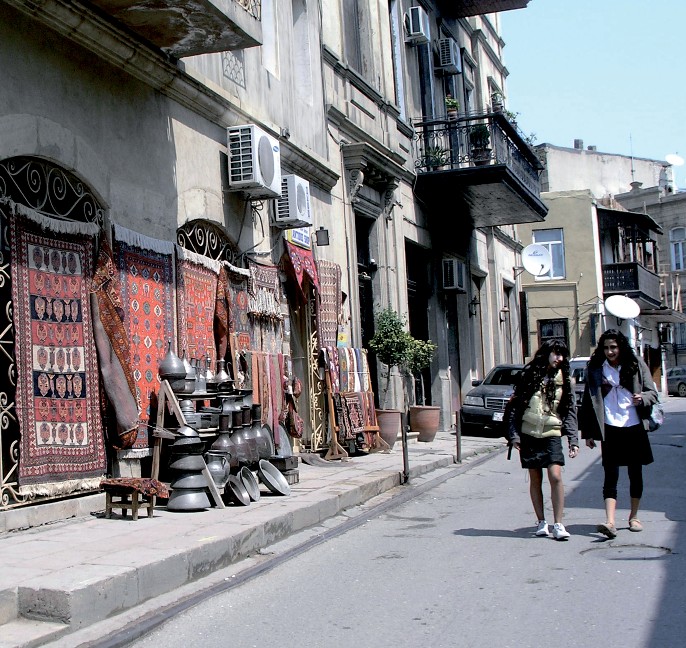
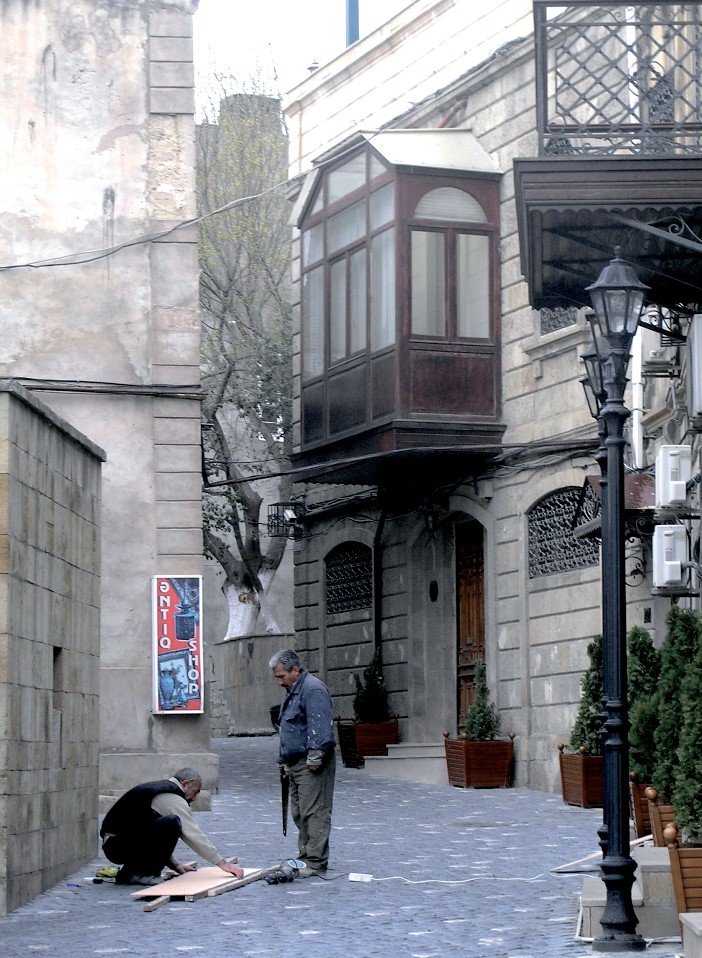
Let's walk through the old town - Icarisahar - and admire its narrow streets, the Sirvansah Palace, newly rebuilt mosque minarets, the Maiden's Tower, the caravanserai and the ancient commercial area, to which merchants from various countries brought their goods by camels... Trade was quite brisk here and the voices of a barker could hardly pierce the multilingual hubbub of the selling-buying crowd. So, gradually, from the 16th century onwards, Baku became a very profitable shopping centre on the caravan route. It was visited by merchants from both the East and West who made lucrative deals to buy silk, carpets and a black oily liquid, which was used for street lighting, spices and many other purposes. Zoroastrians from India arrived to build a fire temple and worship the supreme deity. There are only three such temples in the world. One is in Abseron. You know, if you take a bird's eye view of the peninsula, you can see that it is like an eagle with a long, sharp beak soaring in the air. But let's keep our feet on the ground and take a close look at the Zoroastrian temple. It is now a museum that tourists love to visit. Real fire flaring from below ground can be seen at Yanardag. It burns there all year round. Even during rain. Bakuvians love to come here for an hour or two, sit by the fire and admire it. This is also a wonder of nature, which, as a phenomenon, has long been explained, but we still live with the instincts of the heathen and happily and reverently look at this flammable gas spiralling out of the earth.
So, this land, which today we call Azerbaijan, has opened its borders to different people since pagan times, without attaching much importance to the language they spoke or who they worshipped: fire, wind or sun. This land has been inhabited by Molokans since the 17th century, expelled from Russia by Catherine for their divisive spirit and disobedience. Almost 400 years ago, 2,000 families appeared in one part of the Khan's land and unexpectedly found a mosque carved into the rock. The eldest of the Molokans asked the mullah to allow his people to rest, warm up and eat. The mullah invited them to stay in small caves carved in a rock, look around, and then decide what to do next. Exhausted by their long journey, the people gladly accepted the offer. And so they stayed in this warm and hospitable land. Thus there appeared a settlement called Maraza, which is still home to many of the descendants of those first Molokans who found refuge and salvation in this land. A few years ago, several dozen pilgrims from Stavropol arrived here under instruction from their elders to worship at this holy place and pay tribute to their ancestors buried here. And the first thing they did was to go to the mosque as a precious relic and, bowing to it, they prayed to the Almighty, asking him to bless the people and land which had so hospitably and kindly held out a helping hand to people of other faiths. The mullah went to pray with them. And the common prayer, offered in different languages to God, was certainly heard, because there was nothing but love and good, peaceful intentions in it. The story of my land knows many such examples. And we can talk about them for hours. But ... let's return to the city!
Its streets hold many memories. They are abraded by the soles of those who came to this land to extract oil in the middle of the 19th and then in the early 20th century. Russian, Belarusians, Ukrainians, Georgians, Armenians, Jews, Poles, Germans and Czechs! Engineers, workers, artisans, painters, poets and artists! Baku is a warm and hospitable city. Its peaceful population, tolerant of other faiths, was happy to share its culture with new arrivals and appropriated from them what was necessary and useful. The East and the West came together. They came together to merge and give the world a special cultural alloy called Baku.
I love my city - these houses, these roofs, the guttural morning call to prayer urging the faithful to pray, and the bells of Orthodox churches, those small spikes of Genoese towers on old houses and parents' memories of their youth during the thaw of the 1960's. But perhaps my fantasy would not be enough, had it not been for a film made to a script by Rustam Ibrahimbayov, "In This Southern City." I love to watch it. Not only because my favourite actors are in it, and they are so young! There is that wonderful atmosphere of a common multi-national home, which is so dear to us all. There the city is so dear, so recognizable, but quite different! It's like a huge open house.
Time goes by so quickly! My children are already growing up. But for them, stories about a pack of roasted chestnuts bought for 10 cents and eaten on the street are just stories from the past. This story does not have the aroma of the childhood I remember: open tea parties in the courtyards, the morning cries of the milkman delivering milk from house to house, common holidays and common problems. The multiethnic courtyards of Baku! The outgoing nature of oriental, or to be more correct, Soviet exoticism. So it turns out that the city, house and birthplace are not just buildings made of stone. This is something disproportionately greater. What? Our childhood memories, sensations, smells ... I remember the smell of baklava in March, when all the neighbours, regardless of nationality, prepared for Novruz. So many sweets! We children, already knew from the smell which neighbours were cooking which sweets! All this was done by the women of the whole family, and always manually! Now I buy these sweets for my children from shops, because there is no time to make them by myself...
And then came the days of the Jewish matzoh. Everything was strictly ascetic and even a little sad. Later came the time for Easter cakes. They were also accompanied by the smell of Vienna dough and vanilla, which my unforgettable Musya mixed with specially made cottage cheese with raisins, cream and something else, which turned into a kind of a hill known as "Easter". Musya ... Maria Vladimirovna Tolstaya - a Russian noblewoman and the wife of a commissar, who remained in this city forever. She always spoke Azerbaijani with a funny accent, rounding the sounds in a Russian manner and giving them strength. But her neighbours loved her.
But let's return to the central part of the city. Let's walk along the boulevard. Here you can ride on a phaeton and imagine that you're in the last century... You can ride on the Ferris wheel and have a view of the city no worse than from the roof of the Maiden's Tower. You can climb to the roof of any house in Icarisahar and see the roofs of other, different homes.
Let's take a look at this house. An oilman named Mirza Asadullayev once lived here. Here his youngest daughter, Umm al-Banu was born. As an 11-year-old girl, she would witness the revolutionary events in Baku, and many years later, after becoming a famous writer in France, she would describe them in her book "Caucasian Days".
She would also remember with humour how, as a little girl, she prayed to God, asking him to make her large family suddenly poor.
... Before leaving for Paris, she went to an estate - to say goodbye to the places she loved. A great house! It seemed orphaned and abandoned. "I visited my grandma's kitchen. Cold and empty, it provoked thoughts of a world of neglect. The whole house seemed to be a corpse with a stolen soul. I raced through the house from room to room; this impression of death increased with each step. On the terrace, I stopped and sat on the bench... The house, abandoned by people, was looking at me reproachfully. I went to the vineyard. I lay down on a boulder, where I met Andre... Around me there were my poplars: as straight as they were before the revolution, which failed to bend them. These poplars clamouring, now violently, now gently, this spacious house, which saw me return a little more grown up every summer, this sea with a bright blue background - everything I loved at the time when I believed that life could only be an endless succession of flowering tomorrows and when death was meaningless for me - all this will now die for me. I'm not coming back, and I will no longer hear and feel this world which was the only universe for me for many years, and a kind one. I realized that things, people and feelings are intended to disappear - one after another, that life is not just happiness, there will be everything - tears and regret; that every second a piece is broken off from us and falls overboard, being lost forever. And this would happen all my life. Such were the truths that the sea, the sky and the poplars told me at parting."
She left in 1924. She left in order never to return - even when she was invited. And just before her death in 1992, she admitted that she regretted this. She departed from this world in Paris, but never managed to stop loving the city that stretched on Abseron. A city that magnetically attracts hearts and makes them prisoners of love forever...
RECOMMEND:
 575
575