
"THERE IS LESS AND LESS DEMOCRACY IN AMERICA"
Because it is being exported (American joke) (Conclusion)
Author: Namiq MAYILOV Baku
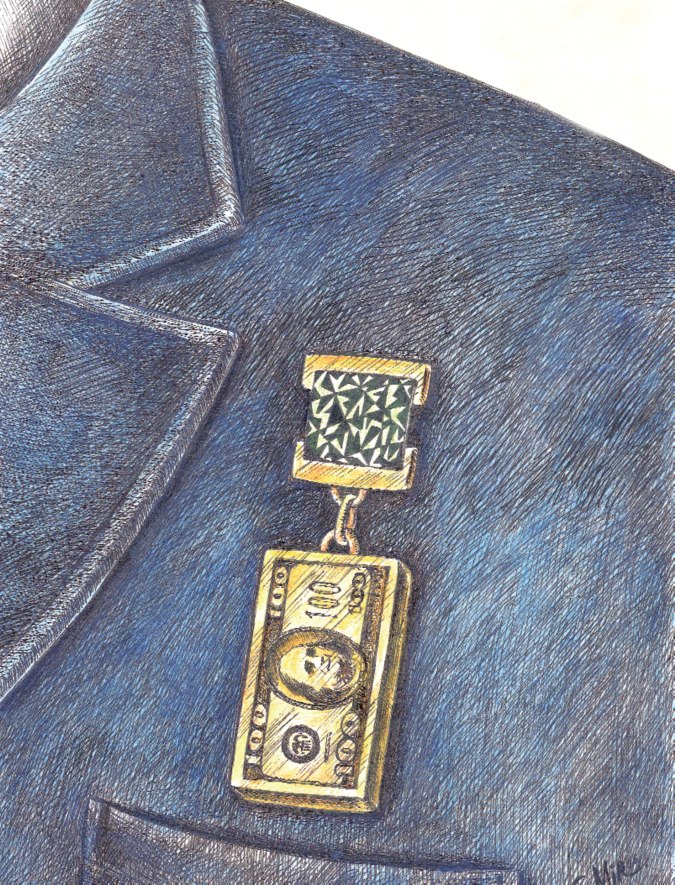
"Politicians who betray the trust of their constituents damage the integrity of our government. Executives who betray the trust of their employees and their shareholders damage the integrity of the marketplace. Left unchecked, corporate fraud and public corruption will tear the very fabric of our democracy." These words by FBI Director Robert Mueller served as an indictment in April 2008. He admitted: "Ultimately, democracy and corruption cannot co-exist." He stated that "this evil has always existed in the United States, and it may strike at the security of our communities."
Corruption in the US threatens the security of its citizens
Over 5 years from 2003, the number of investigations against American officials suspected of corruption increased by more than 50 per cent. From 2006-2008, the FBI successfully prosecuted more than 1,800 officials.
Political corruption in the United States is closely related to corporate corruption, in which the leaders of companies and firms betray the interests of their shareholders for pecuniary advantage. From 2003-2008, the number of FBI investigations in this field increased by 80 per cent.
The relative dynamic of corruption in America shows that, despite the efforts of the FBI, "the fabric of US democracy" is decaying from year to year. Let us turn to notes of the same speech made by Robert Mueller in December 2006. He said that over the previous two years, his department had identified more than 1,060 government officials implicated in corruption. In 2005, the number of cases increased by 25 per cent, compared to 2004. While in 2002 only 264 FBI agents were fighting corruption, in 2006 their number had risen to 622.
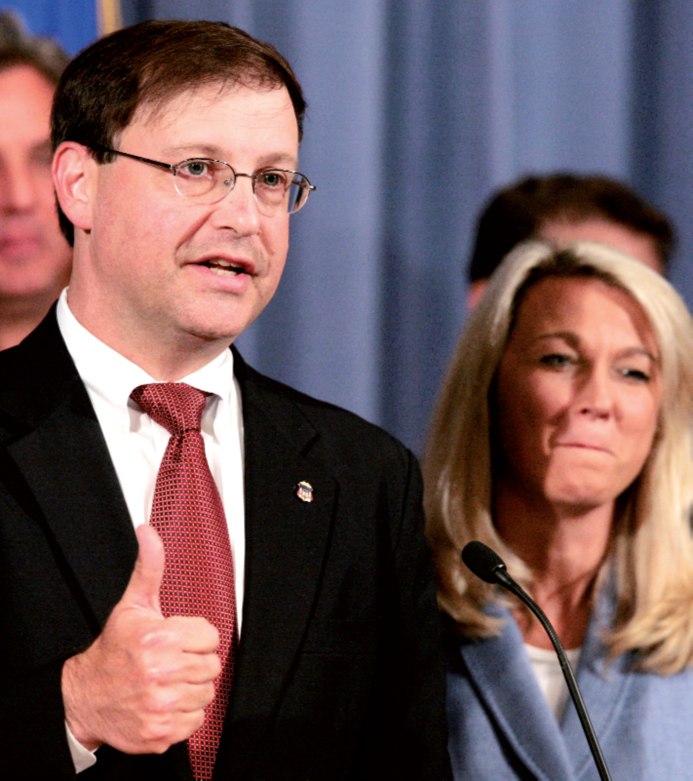
The weakest link in American democracy is the importance of money for candidates. Former US President George W. Bush spent 188 million dollars on his presidential campaign in 2000, while his opponent Al Gore spent 146 million dollars.
The origins of the huge sums that US congressmen spend on election campaigns are quite dubious. They receive the lion's share of these funds from "political action committees". In 1990, there were 4,681 of these committees in the US. Such methods of financing elections undermine the very idea of representative democracy, because congressmen, no matter how much they deny it, represent the interests of the corporate community, not of their voters.
The Americans have long since prudently replaced the sharp word "corruption" with the more palatable "lobbying". But the principle is the same.
For example, 728 million dollars were donated for election campaigning in 2002. In Washington alone, media tycoons spend about 125 million dollars a year lobbying against restrictions on ownership rights.
Former Malaysian Prime Minister Mahathir bin Mohamad admitted that he had to pay 1.2 million dollars for a meeting with US President George W. Bush in the White House in 2002. The current practice in the US is that if you want to meet the leader, you need to work through a lobbyist, who has to be paid. That is their system. This is not corruption, everything is done openly, but they do not reveal names.
As a rule, the US does not hold real debates on large-scale corruption at the very top of the corporate and financial world, nor on the intimate relationships between the Bush administration and those involved - from Kenneth Lay of Enron to Cheney of Halliburton - in acts of criminal fraud that destroyed the jobs and savings of hundreds of thousands of workers.
In this respect, it is worth mentioning Gore Vidal's interview to the Spanish newspaper La Vanguardia about the connections between top American officials and oil companies "Several Puzzling Aspects Which Require Clarification": "There is one odd fact that I mentioned recently on television. Look: Bush Sr. worked for the oil company Carlyle Group, Bush Jr. - Harkins Oil, Vice President Cheney - Halliburton Oil, Interior Secretary Gale Norton is also somehow connected with oil companies, while Condoleezza Rice has connections at Exxon and Texaco, and Pentagon chief Donald Rumsfeld was a members of the Occidental oil company. As I recounted these facts, I realized that my listeners underestimated them. And then I said: I will not argue that there is a conspiracy. I do not believe in them. But will you convince me that all these people lead the US by sheer chance, and that our plan to start a war for Iraqi oil was a coincidence, too?"...
In 1997, when Bush was governor of Texas, the BBC screened a report about Taliban leaders flying from Afghanistan to Houston to meet with the leaders of the oil company Unocal to discuss the possibility of constructing a gas pipeline through Afghanistan. Enron - the same corporation that was the main sponsor of Bush's election campaigns - was asked to collect information on the feasibility of such a project. It must be noted that in 2001 it was precisely financial fraud and false reports by this energy corporation that caused the stock market to crash, thus creating the prerequisites for the world economic crisis.
This pipeline was to be built by Halliburton. At that time, it was headed by Dick Cheney - the former vice-president of the United States. Why did the state of Texas receive those representatives of a terrorist government? What happened to the agreement on the construction of the pipeline? A series of scandals involving Halliburton revealed the depth of corruption in American foreign policy, its secrecy and lack of accountability. This company has monopolized real estate transactions in Iraq, including in the oil industry, in return for financing the election campaign of Bush and Cheney in 2000. In addition, it demanded that the US Department of Defence pay huge compensation, which it was forced to return after exposure.
In March 2003, the world's news agencies reported an unprecedented case. One of the largest Swiss banks - UBS - agreed to transfer Iraqi government money from its accounts to the US Treasury. The nearly $2 billion obtained in this way were placed in special savings accounts of the US Treasury, ostensibly to be used "for the benefit of the Iraqi people."
The most interesting thing is that this "benefit" was entrusted to Dick Cheney's company to service the oil fields - Halliburton.
At the end of that year, the Pentagon announced the termination of its contract with Halliburton. The corporation was in the midst of yet another international scandal. According to French law enforcement agencies, it is likely that the company received a contract to build a liquefied natural gas plant in Nigeria via banal bribery. This episode also occurred at a time when Halliburton was headed by US Vice President Dick Cheney. According to investigators, from 1995 to 2000 Cheney's company handled up to 180 million dollars to be used for bribery. The contract itself was estimated at 6 billion dollars.
In addition, the American media suspected that the company was using the connection with Cheney, who had received large bonuses for his work at Halliburton. US Department of Defence audit services checked and found out that in petrol supply bills provided by the corporation, 61 million dollars were unjustified, since the petrol had been purchased at a higher price in Kuwait, rather than at a lower price in Turkey. In other words, it is possible that the former US vice-president "cheated" US taxpayers out of 61 million dollars.
The most complete image of American corruption was first revealed by the Better Government Association, or BGA. It determined the BGA index - a comprehensive analysis of the five laws that play a direct role in guaranteeing the government's honesty and fight against corruption. A review of corruption in 50 states showed that if an official wants to violate the principle of honesty, the laws will not be an obstacle.
Experts emphasized that it was the first time in US history that the highest positions of President and Vice-President of the United States had been occupied by two businessmen from the same industry - oil and gas.
The Americans saw powerful corporate connections infiltrating government and politics, which was unprecedented in US history. Bush's adviser Wolfowitz once observed to a narrow circle that a military operation against Iraq was inevitable. That was before the 2000 elections.
Thus, a purely American phenomenon slowly began to form - legal corruption - which began to undermine the existing system. Gradually, the concept of "financial crime" became diffused. Enron deregulated itself in 25 states - securing changes in legislation and tax cuts in Texas under Governor Bush and trying to obtain most favoured company status under Clinton. Success was achieved on all fronts. When in the late 1980's and early 1990's a scandal erupted with the corporate network BCCI (all of its assets were taken offshore), the government took five years to notice that the banking sector in dozens of countries had plunged into chaos. The Federal Reserve System and other state institutions were very slow to react. The state was incompetent and unable to protect society.
George W. Bush regularly ended up at the centre of corruption scandals. According to Associated Press, in 1989 Bush was a member of the board of the Harken Energy Corporation which signed a deal that became the subject of an investigation initiated by the Securities and Exchange Commission (SEC).
In Connecticut, the administration of Governor John Rowland was involved in the most serious corruption scandal in the history of the state. Three mayors and the treasurer went to jail, while the deputy governor was found guilty of receiving gold coins in exchange for government contracts. The governor admitted that he had allowed private companies to restore his cottage in Lichfield. Earlier, he told the citizens of Connecticut that he had paid for the installation of a heated bath and cathedral-type ceilings, but later he admitted that he had lied. Democratic candidate Bill Curry, who opposed Rowland in 1994 and 2002, started to call Connecticut "the most corrupt state in the country."
In December 2005, The New York Times alerted Americans that, in 2002, George W. Bush allowed intelligence agencies to wiretap phone calls by US citizens without court authorization in order to combat terrorism. Everyone was struck by the degree of hypocrisy in a president who publicly stated in 2004 that in order to eavesdrop on terrorists' conversations it was necessary to obtain court authorization, although by that time it had already been carried out without any authorization for at least eighteen months.
By that time, Bush had already earned a very undesirable reputation as US president. It is no accident that in September 2003 he was leading the Washington Monthly rankings as one of the most deceitful presidents of America. The most striking thing was his lie that "the British government has learned that Saddam Hussein wanted to buy a large quantity of uranium in Africa", as well as his statement "we have found weapons of mass destruction" in May 2003, although US troops are still unable to find even traces.
In July of the same year, David Kelly, a former adviser to the British Ministry of Defence on weapons of mass destruction, who caught George W. Bush and Tony Blair lying, was killed.
It was he who fed the BBC information that the government report on the presence of weapons of mass destruction in Iraq had been fabricated.
The tragic fate of the unfortunate victim taught others a lesson - the lesson of silence. The Bush-Cheney-Rumsfeld families began to divide military "kickbacks" and to launder "dirty money" on the Iraq war with particular cynicism.
Hillary Clinton has always been reputed to be the queen of corruption. Back in the early 1990's, The New York Times reported on the Whitewater case for the first time. This concerned the financial machinations of the early 1980's in the state of Arkansas, which implicated the former governor of the state, Bill Clinton, and his wife. Hillary was accused of trying to falsify information and of concealing documents from the investigation. It is suspected that after the failure of an investment in land in Northern Arkansas, the Clintons tried to get an illegal tax rebate and then denied it, hampering the investigation. Mrs Clinton said that her husband had lost 69,000 dollars on the transaction. Subsequently, she changed her testimony and said that they had both lost "a lot of money." When she was told about inconsistencies in her explanations of the Whitewater case, she agreed "of course, I made a mistake."
However, years later, in 2000, she answered evasively that this did not happen, because it could not have happened.
In the spring of 1992, it became known that Hillary Clinton, participating in transactions at a trade exchange in Chicago, invested $1,000 over ten months, from September 1978 to July 1979, and made a profit of 99,537 dollars. Such record profits are rather suspicious. This story created a reputation for the first lady of America which was not very respectable.
In addition, in March 1997, for example, it was established that one of Hillary's closest associates in the White House had received a cheque for 50,000 dollars in donations to the election campaign from businessman John Chiang, of California. Hillary's office in the White House was visited by Chiang 21 times.
No wonder that the American NGO Judicial Watch (JW) gave "honorary" first and second places to Bill and Hillary on its list of the 12 most corrupt US politicians. According to JW, Hillary is not only involved in the many financial scams of her husband, but is also very active on her own account. For example, she illegally accepted two million dollars for her election campaign from one of JW's clients, Peter Paul. The president of Judicial Watch also raised the issue of Clinton's involvement in a false report on a soiree to raise funds for Hillary Clinton's election campaign. The accusation was that, with her knowledge, the financier David Rosen had understated the expenses of the charity evening in August 2000. Twisting facts, the investigators argue, allowed the senator to spend more on the election race.
In 2000, the independent prosecutor Robert Ray concluded that Hillary Clinton had been guilty of perjury again. It was found that in 1993, she directly contributed to the dismissal of several officials from one of the services of the White House administration. This contradicts the statements made by Hillary in the US Congress that she had nothing to do with these dismissals.
In January 2001, the focus of American media was on Hillary Clinton's brother - Hugh Rodham. He had received 200,000 dollars for the inclusion of two people on the list of those pardoned by Clinton on the last day of his presidency.
But the scandalous stories surrounding the Clintons did not end here. Shortly before the start of the presidential campaign, it was found that Senator Clinton did not mention in her annual senator's report the income of the family charitable foundation. She heads it together with former President Bill Clinton. Thanks to this foundation, the Clintons deducted more than $5 million from their taxable income in 2001. Although the foundation was founded in 2001, she never reported it in her financial reports as required by parliamentary rules.
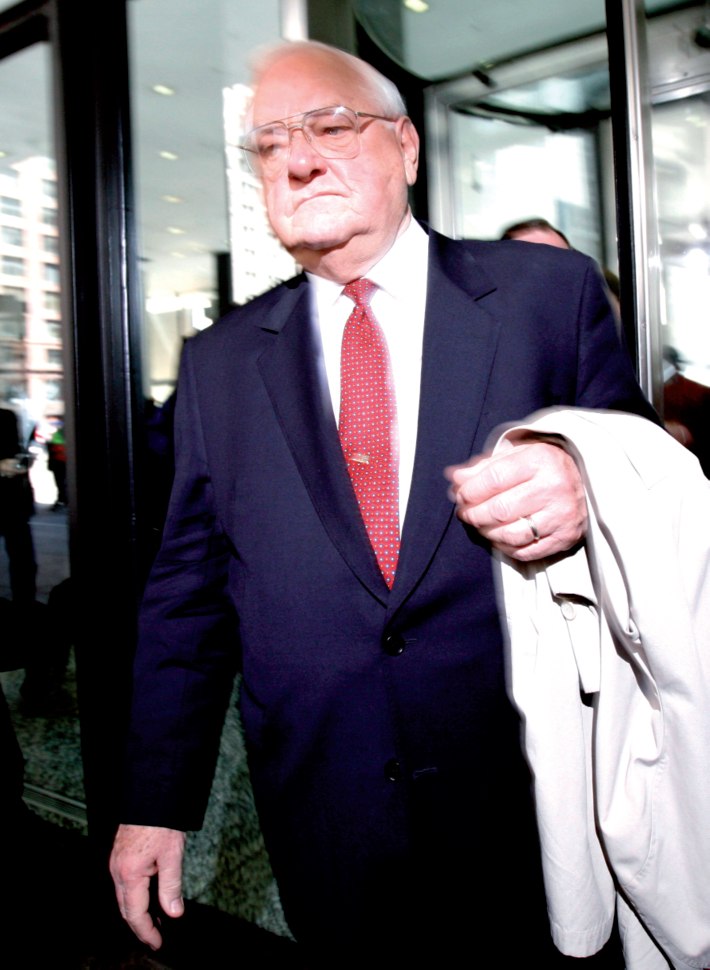
Corruption scandals have also accompanied America since the beginning of Barack Obama's presidency. Before he could settle in to the presidency, the governor of Illinois, Democrat Rod Blagojevich, was accused of trying to sell his seat in the US Senate and was arrested. According to the FBI, Blagojevich wanted to sell the Senate seat in exchange for a high salary in a non-profit organization or in an organization working with trade unions. He also wanted his wife's earnings to reach 150,000 dollars a year. He also expressed his desire to get money out of election funds, or, if possible, an appointment to the presidential team, or an ambassadorial post when he left the governor's office.
It was as a result of the development of a subtle system of corruption that such financial adventurers as Bernard Madoff were able to build pyramids in the air, plunging the global financial system into deep crisis. We still remember the scandal involving the largest US bank - the Bank of New York, which was heavily involved in the laundering of questionable assets. But the main problem is that the US is trying to infect other countries with this virus. It uses the old proven techniques: political and economic blackmail.
Now it also turns out that the accusations against the automobile giant Toyota that pedals allegedly did not work on its cars were a fiction. In this way, Washington was trying to prevent Toyota's further progress on the US market. It is in the spirit of the American "Grand Bargain" during the Cold War with respect to West Germany and Japan: "The exchange of markets for military bases." That is to say, in return for giving up an independent foreign policy in favour of their "protector" (the USA), citizens of West Germany and Japan were granted access to American markets.
The scenario did not work
Today, experts in the Obama administration's think tank realize that globalization did not take place following the scenario predicted by the American establishment in the 1990's. Not only did it lead to the worldwide expansion of American capital, assets and military power, it also promoted the relocation of major industrial facilities outside the United States, the emergence of new competitor countries (China, India), the diffusion of American identity by immigrants and the growth of terrorist networks.
The Centre for American Progress (CAP) suggests that Washington abandons the practice of domination by force, the concept of preventive war and regime change, the aggressive imposition of its own order and takes the path of soft US leadership by consensus. This is due to the fact that in recent times, speeches by the leaders of different states such as France, Turkey and Azerbaijan have been dominated by indignant rhetoric against intrusive US pressure. Let us recall how in March of this year the press attach? of the US State Department, J. Crowley, apologized to Libya for a jibe about Qaddafi who had called on his people for a jihad against Switzerland.
Too much was expected of the leader of the American Democrats, however; as noted by the prominent Russian journalist Vladimir Pozner, the US president is "a little Narcissus, he flaunts himself and talks too much". In October 2009, a group of Avaaz activists staged a massive PR campaign to close Guantanamo at metro stations near the White House, in order to remind the political leadership that Guantanamo is a symbol of the era of torture under former President George Bush, torture is illegal and unethical, and is the best tool for recruiting new radicals.
The world does not see any leadership from Obama on the situation in the Middle East. The Americans are concerned about huge public spending and the growing federal budget deficit. Ten months after Obama's election, his popularity rating had fallen to 49 per cent.
The behaviour of members of the Obama team often seems inappropriate, while some PR campaigns are faulty and defective. For example, Obama's cabinet appeared quite confused when the Democratic US Congressman from New York, Eric Massa, said in March 2010 that the White House chief of staff Rahm Emanuel had intimidated him in the shower of House members for failing to vote for the health reform.
An overview of the US political landscape for March 2010 shows that one year into his presidency, Barack Obama has increasingly become the target of criticism from progressive and liberal organizations which contributed to his election. This may seriously affect the chances of the Democratic Party in the midterm elections in November.
The Wall Street Journal has called Obama's foreign policy paradoxical and disturbing. According to the newspaper, the results of the foreign policy programme which Obama has been trying to implement - a dialogue with enemies, uniting friends and a new image for America - are not at all impressive.
The leaders of Western Europe refuse to increase their contingent in Afghanistan, while Brazil, India and South Africa are uniting against the USA again. Turkey is distancing itself from the Western camp. Some negative factors of the recent period, associated with the United States initiative on the signing of Turkish-Armenian protocols, weaken the pace of development of Azerbaijani-American cooperation. Meanwhile, on 15 January 2010, the popular US Internet newspaper Huffington Post published an article entitled "A Game Played Smarter" by the well-known American political scientist and expert of the Californian analytical centre Tool Shed Group LLC, Jason Katz, which states that Azerbaijan is a very pragmatic country that proceeds from its national interests. The author emphasizes that the loss of a friend like Azerbaijan could cause great damage to US foreign policy and interests. And that advice, it seems, is worth considering.
RECOMMEND:
 601
601