

ALL SIXES AND SEVENS
Despite their similar positions, the USA, Russia and China fail again to agree on Iran
Author: Natiq NAZIMOGLU Baku
The more time passes, the further the Iran situation moves towards impasse. While the leading countries from the "group of six" international negotiators (the USA, Russia, Britain, France, China and Germany) have been unable to agree on the possible imposition of sanctions against the Islamic Republic of Iran, Iran has issued more statements about its achievements in its nuclear programme.
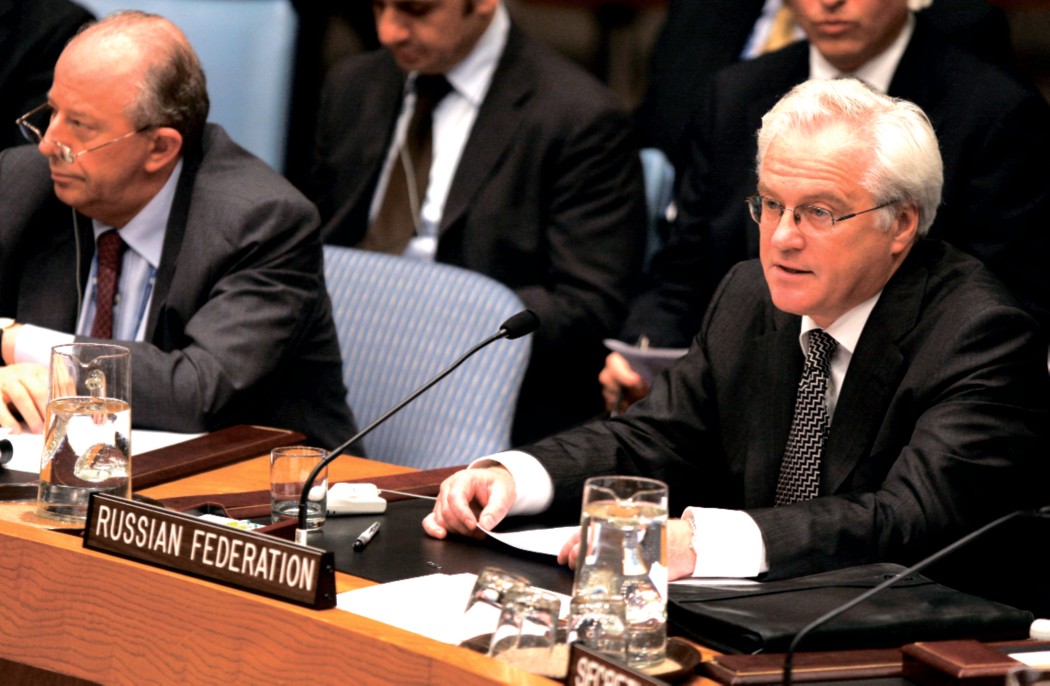
At the latest meeting of the "six" in New York on 8 April, the need to find a diplomatic solution to the nuclear problem was stated, as always. But the negotiators never manage to agree on how strict the sanctions should be against an Iran which refuses to stop uranium enrichment.
The USA and its Western allies insist on strict sanctions, which could result in Iran's total isolation and economic paralysis. US President Barack Obama believes that a "regime of far-reaching sanctions" against Tehran must be the unanimous response of the international community to Tehran's decision to continue its nuclear programme. However, Russia and China disagree, for now.
In the mean time, China's agreement to take part in the latest meeting of the "six" inspired hopes that the discussions might reach a break through. This agreement was reached during a phone conference involving high-level representatives of the "six," after which the US permanent representative at the United Nations, Susan Rice, said that China had agreed to start talks in New York with the remaining five countries as a first step towards discussion of strict sanctions against Iran at the Security Council.
It was suggested afterwards that Beijing's consent to discuss a package of sanctions against Iran was received after Washington had softened its initial position and abandoned the idea of imposing limitations on Iranian oil exports. This is indeed an important factor for the Chinese, who are one of the largest purchasers of Iranian energy resources.
However, Russia creates just as many problems for the West in discussions about tightening sanctions, despite its openly stated objections to development of the Iranian nuclear programme. Nonetheless, it can be assumed that at the decisive moment, when the Iranian issue reaches a critical point, as it were, and requires immediate coordination, Russia will not hinder the proponents of tough talking with Iran.
The signing by the USA and Russia of a new agreement to reduce and limit strategic offensive weapons was a good omen. The agreement is relevant, not only in the context of bilateral US-Russian relations, but also to global processes in the fields of strategic security and nuclear non-proliferation. The two largest nuclear powers agreed to more than halve their nuclear arsenals. At the same time, the US and Russian presidents, Barack Obama and Dmitriy Medvedev, noted that the agreement maintains the balance between the countries' interests and the main point now was to involve other countries with nuclear weapons in the process of reducing armaments. Both leaders voiced their profound concern about Iran's nuclear programme.
However, Dmitriy Medvedev again demonstrated Russia's cautious position on Iran. He agreed that the world cannot turn a blind eye to the continuation of its nuclear programme, but he made it clear that Russia's support for sanctions would be limited to measures which could change Iran's behaviour, and would not agree to measures which would punish the people of Iran. "Let me be straight," Medvedev said in his conversation with Obama during the meeting in Prague. "I can see limits to these sanctions." Essentially, he rejected the expediency of measures which might cause deep economic crisis in Iran and result in the toppling of the ruling regime.
Despite the differences between Moscow's and Washington's positions, there is an obvious similarity in their visions of the global strategic threats, which are especially manifest in the Iran problem.
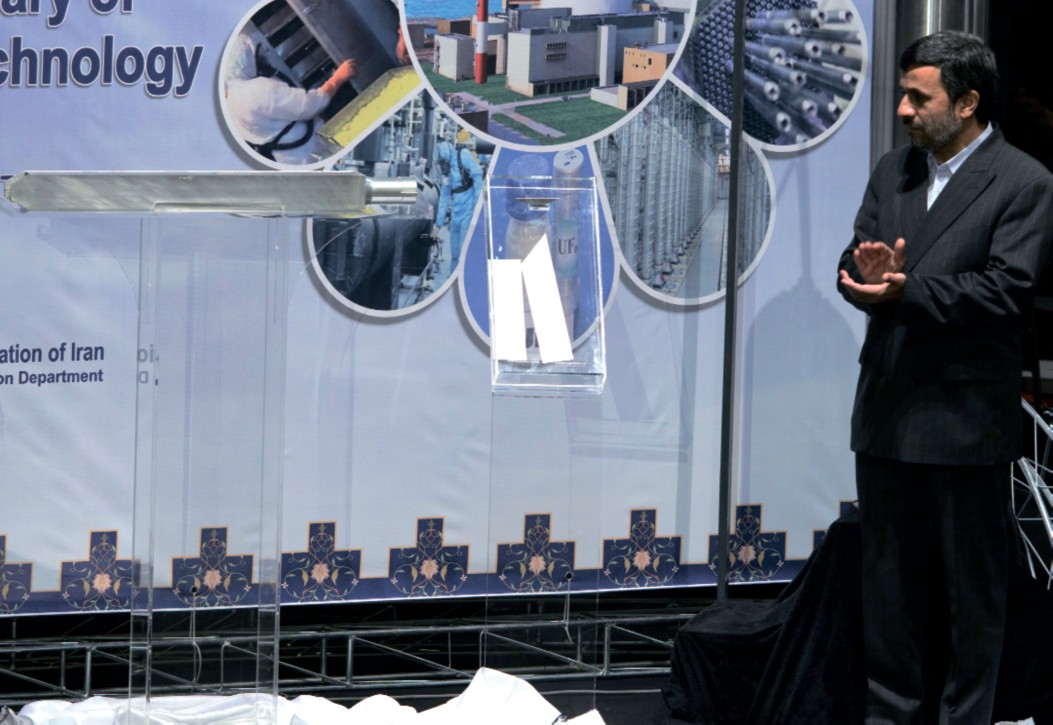
The Iranian leadership's reaction to the latest US-Russian action is, therefore, not surprising. Iranian President Mahmoud Ahmadinejad called the new strategic offensive weapons treaty, signed by Obama and Medvedev, a "masquerade which disguises the true intentions of the two sides." But most interestingly, this statement was made against the backdrop of news that Iran had acquired powerful new centrifuges for uranium enrichment whose capacity is 6 times greater than that of first-generation centrifuges. Iranians report that the new centrifuges were tested successfully and that they will be into operation by March 2011. "Iran's nuclear technology has already reached such a high level that no international power can hinder its further development and employment for peaceful purposes," Ahmadinejad declared confidently.
The latest Iranian surprise was presented to the international community immediately after the meeting of the "six" and the signing of the new US-Russian treaty, and on the eve of an international summit in Washington on security and nuclear non-proliferation. Western powers rushed to strongly condemn Iran's action. The British Foreign Office said that Tehran's recent steps again brought into question the peaceful nature of its nuclear programme, because five UN Security Council resolutions ban the use of this kind of technology. And US President Barack Obama said that the launch of a new series of centrifuges leaves no room to believe that the Iranian nuclear programme is peaceful, that there is no need to develop new generation centrifuges for peaceful purposes, because they are only used for military purposes.
So, in a matter of days, the Iranian crisis produced quite a number of twists which make it even less predictable. The only certainty is that Iran is playing with fire and can only provoke the proponents of tough talk further into taking action, which they might one day carry out after deciding that the consent of not only the group of six, but that of the entire international community, is redundant.
RECOMMEND:
 742
742

