

HISTORY REPEATS ITSELF
No sooner had the ‘tulip’ revolution withered in Kyrgyzstan, than the new authorities were ousted
Author: Ramin ABDULLAYEV Baku
A president was toppled again in Kyrgyzstan, five years after the 'tulip' revolution. And again, as with five years ago, it all started in the town of Talas, whence disorders spread across the south of the country in 2005. As before, result rigging in parliamentary elections caused discontent. Then, the opposition had demanded that the results be annulled and President Askar Akayev step down, accusing him of corruption, authoritarianism and selling Kyrgyzstan land to China. After the official election results were published, riots started in Bishkek, and the Government House and Parliament Building were seized on 24 March 2005; already, by the next day, Parliament had appointed former Prime Minister and opposition leader Kurmanbek Bakiyev to be acting president.
And now the same thing has happened again. Yet another wave of protests removed Bakiyev himself, who was also accused of corruption, incompetence and who seemed to lack completely any contact with his nation. The opposition had long planned to organize nationwide protests against the "preponderance" of Bakiyev's relatives in high positions. The opposition was irritated by the fact that when Bakiyev began reforming state governance, his relatives were appointed to key posts. Bakiyev's younger son, Maksim, became the "grey eminence."
In early April, there was nothing extreme about the opposition's plans. Simply, people's assemblies - kurultays - were organized. Bolot Sherniyazov, the leader of the opposition Fatherland Party, arrived in Talas to organize one of these assemblies; he was detained there and then released soon afterwards. However, that was enough for thousands of people gathered in front of the local administration building. The slogan, "Bakiyev ketsin!" ("Bakiyev must resign!") was first heard there.
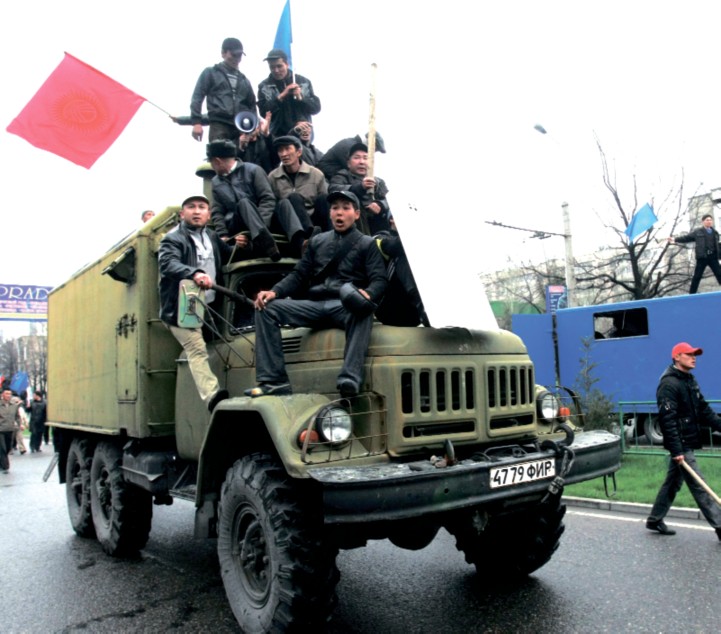
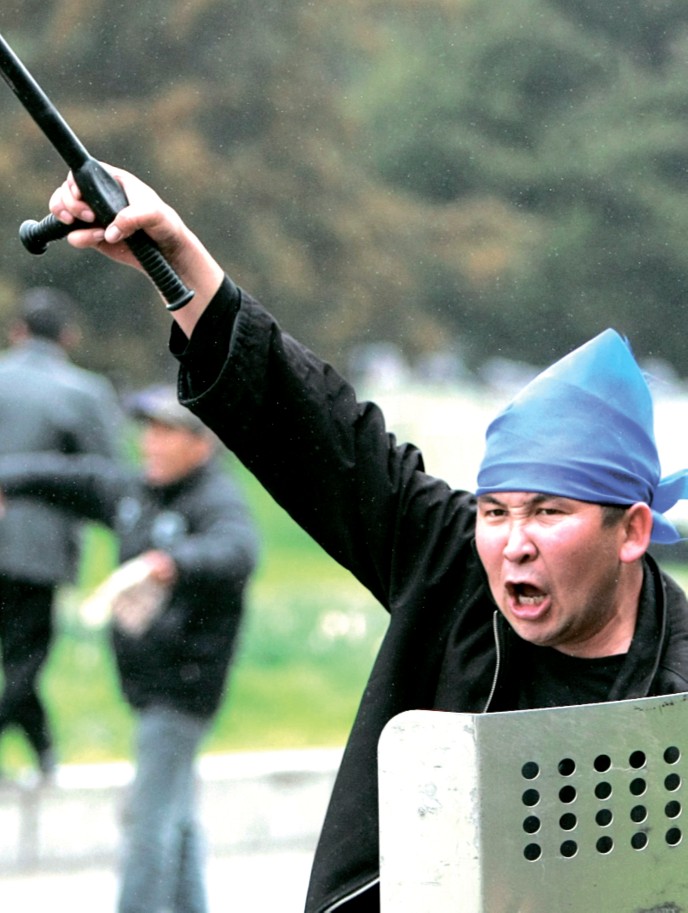
Internal Affairs Minister General Moldomus Kongantiyev was sent to quell the protests in Talas, with 100 military personnel. But the demonstrators threw the general out of town. In retaliation, the authorities in Bishkek put other opposition leaders in preventive detention, which, in turn, sparked mass protest actions across the country. On the morning of 7 April, thousands of people went out onto the streets. There were attempts to disperse them using gas and rubber bullets. However, the demonstrators stormed all the administrative buildings in the centre of Bishkek - Parliament, the General Prosecutor's Office and the State Security Ministry. The opposition leaders were released in an attempt to pacify the people, but this could no longer stop the riots. President Bakiyev declared a state of emergency and the special services were given permission to open fire. Dozens of people were killed.
Later, it emerged that 81 had died, 523 were wounded, and these were only the people who made it to hospitals. Altogether, more than 1,000 were injured. The dead were buried as national heroes, to the sound of the national anthem and salutes. On the evening of 7 April, after overcoming resistance from the presidential guard, the demonstrators seized Government House, but the head of state was no longer there. There were rumours that his airplane had left the country but, literally one hour later, he appeared before cameras and made his first comments on the situation in the country.
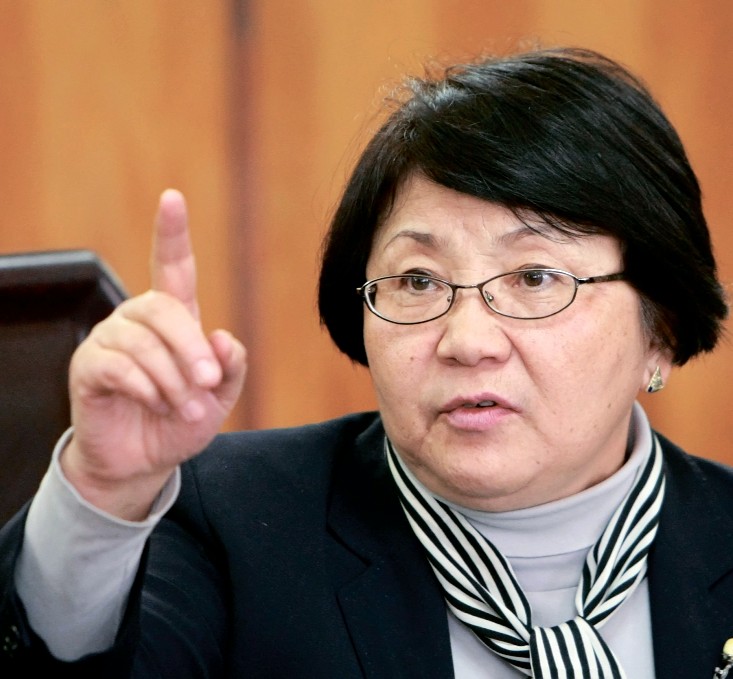
In the mean time, television was already in opposition hands, and the president's opponents announced on air that they had formed a provisional government, headed by former Foreign Minister Roza Otumbayeva, to somehow maintain order in the riot-stricken republic.
It is interesting that Kurmanbek Bakiyev's opponents had been his allies during the revolution: - former Prime Minister Almazbek Atambayev, former General Prosecutor Azimbek Beknazarov, Roza Otunbayeva, and former Parliament Speaker Omurbek Tekebayev, who accused the president of "betraying the ideals of the people's revolution and restoring the criminal system of nepotism in government."
Like five years ago, revolutionary moves gave rise to a wave of marauding. First, government buildings, and the residences of the president and prime minister were looted, then the marauders began to break into private properties. The first night without the old government was marked by mass looting. On 8 April, another round of looting and marauding started. No organization worked in the city. And, like ripples on water, violence began to shift towards the suburbs.
However, simultaneously with the gangs of marauders, people's militia detachments began to appear in the city - students, businessmen, sportsmen and veterans of the Afghan war started to patrol the streets. The army and the police, who took the side of the provisional government, also set about restoring order on the streets. And the new internal affairs minister even issued orders to fire at marauders.
Bakiyev at a crossroads
The provisional Kyrgyzstani government hoped that Kurmanbek Bakiyev would step down by himself. However, the toppled head of state announced that he was not going to give up.
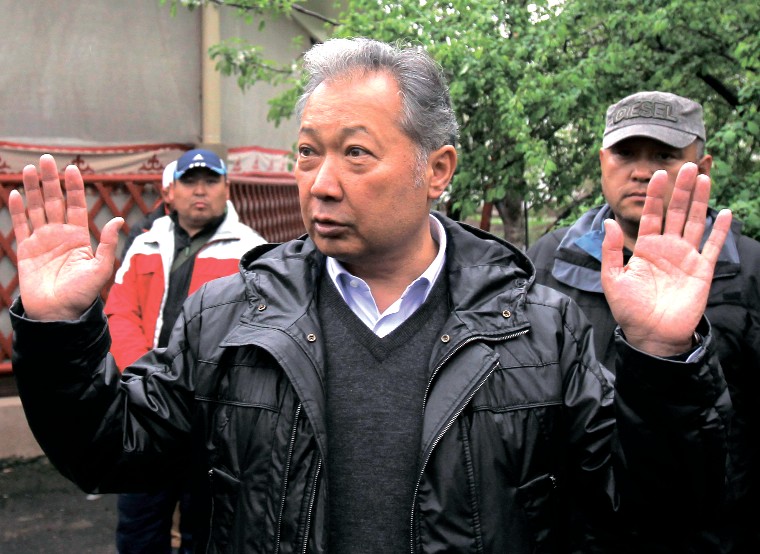
In his native village of Teyit, in the Dzhalabad Region, Bakiyev said that he was innocent and warned that if attempts were made to arrest him, there would be bloodshed. He said this in the yard of his ancestral home in the presence of 2,000 fellow villagers, relatives and three of his brothers, all of whom were on the wanted list, including Zhanysh Bakiyev, head of the Presidential Guard Service who, according to unconfirmed reports, had ordered the opening of fire on demonstrators. In an interview with foreign media, Bakiyev said that, worried about the possibility of being lynched by relatives of the people killed, he was not going to go back to Bishkek. Furthermore, he accused "external forces" of involvement in the coup in the country, although he refused to "name any individual country."
Hardly a week had passed after his escape from the capital when Bakiyev assembled his supporters in the central square of his native Dzhalalabad (there were about 3,000 of them) and appeared before them, accompanied by guards. He urged them not to take any action against the regional administration to which opposition representatives had been appointed. "We do not need that," he said, stressing that he was ready for talks with his opponents. Kurmanbek Bakiyev even did not rule out the possibility of transferring the capital to the south of the country, to Dzhalalabad or Osh, because he knows that Kyrgyzstan is most afraid of a civil war between the north and the south. Experts in the south argue that to make the incumbent president resign, the participation of mediators from Kyrgyzstan's partner countries might well be necessary. In the analysts' opinions, this mission could be carried out by member states of the CIS, Collective Security Treaty Organization or Shanghai Cooperation Organization.
Kyrgyzstani observers argue that the longer Bakiyev remains in isolation in the south of the republic, the more sympathizers he will acquire among people of the south of Kyrgyzstan and the more difficult it will be for the provisional government to force the president to resign and to hold his closest relatives accountable.
While Bakiyev rallied his supporters, the provisional government decided to strip the president of immunity. The former president received an ultimatum: he must either return to Bishkek or face arrest. The likelihood of arrest is quite realistic. In addition, the new Kyrgyzstani authorities are ready to detain President Bakiyev if he urges the people to start a civil war.
It is already known that the provisional Kyrgyzstani government intends to hold a referendum on a new constitution to transform the country into a parliamentary republic. In addition, Beknazarov said that the work of the Kyrgyzstan Constitutional Court had been suspended. "In recent years, the Constitutional Court has grossly violated the constitution and issued decisions which consolidated President Bakiyev's authority," he explained.
In the mean time, former Kyrgyzstani President Askar Akayev, who was toppled by Bakiyev, said in Moscow that by ordering troops to open fire, Bakiyev had signed his own sentence. "No country in the world will accept him. His future is unenviable... He pins his hopes on criminal forces in the south and, perhaps, he has not had his final say yet," Akayev said.
The world voices no support for Bakiyev
Indeed, neither Russia nor the USA voiced support for Bakiyev. Washington made it clear through its diplomatic mission in Bishkek that it was not going to afford political asylum to the "toppled president" because the recent developments in Kyrgyzstan were the "internal affair of the people of Kyrgyzstan."
At the same time, the US Central Command decided to discontinue using the Manas Air Base in Kyrgyzstan for the delivery of troops to Afghanistan. To deploy additional forces in Afghanistan, other routes will be used for now. However, the base will still be used to deliver cargo and to refuel airplanes.
The New York Times published an article in which the struggle between rival clannish business groups for the monopoly to deliver fuel to the Manas US Air Base was cited as the cause of the disorders in Kyrgyzstan. "Back in 2005, the last time angry crowds toppled the government of Kyrgyzstan, the United States found itself in an awkward position: among the rallying cries was an allegation that the ruling family had benefited handsomely from Pentagon contracts," the paper reported. "Now, substantially the same thing appears to be happening again. Companies controlled by the president's 32-year-old son, Maksim, who became a hate figure during the uprising, skimmed as much as $8 million a month from fuel sales to the base, according to senior leaders in the new government, relying on monopoly and favourable taxation," the article reads.
Apparently, Russia is also not particularly sorry about the ousting of Kurmanbek Bakiyev, and it is ready to work with the country's new authorities. Moscow had accumulated a long list of complaints about Bishkek. In addition, there are no serious reasons to view the current revolution in Bishkek as "orange."
In June 2009, Kurmanbek Bakiyev made a decision to keep the US Air Base at Manas airport, which the Kremlin has been trying to close down. Further, the Kyrgyzstani authorities recently launched an offensive against Russian-language web sites, limiting or blocking access to them.
Russian Prime Minister Vladimir Putin publicly stated that Moscow had "nothing to do" with developments in the country. But he immediately went on to criticize Kurmanbek Bakiyev: "When President Bakiyev came to power, he strongly criticized the toppled President Akayev for nepotism and for appointing his relatives to the key economic posts in Kyrgyzstan. I get the impression that Mr Bakiyev is doing the same."
And a highly placed source at the Russian Foreign Ministry told the Kommersant newspaper that the developments in Kyrgyzstan did not come as a complete surprise to the Kremlin: "It was going in that direction, the only surprise was the speed," he admitted.
In the meantime, some analysts discerned support for the new Kyrgyzstani revolution in Moscow's actions. The Western media note that, to prevent changes to the country's foreign policy, Putin phoned Otunbayeva and promised unqualified support immediately after Bakiyev was ousted.
The US-based Heritage Foundation expert, Ariel Cohen, wrote in The Wall Street Journal that, as soon as Otunbayeva came to power, she immediately sent an envoy to the Kremlin and publicly thanked Moscow for its "help." "Despite Russia's antipathy towards the 'colour revolutions', it does support this 'Rosa's Revolution'," Cohen wrote. In his opinion, the Obama administration did not react to the coup in Kyrgyzstan quickly enough. Russia, on the contrary, moved "at lightning speed and with the agility of a judo wrestler," which is why the USA might now develop problems with the Manas Air Base.
The US expert stressed that, in recent years, Russia has excelled at "closing down" George W. Bush's initiatives in Eurasia. "After the August war, Georgia's chances of accession to NATO were made purely hypothetical, after Yanukovich's election, Ukraine's pro-Western orientation was switched to neutral. Now the US presence in Central Asia is at stake," Cohen argues.
In this situation, the USA must first distance itself from Bakiyev, for which purpose the Obama administration could, for example, offer its help to the provisional government in organizing a trial of the ousted president and give Otunbayeva the chance to visit Washington. "The State Department must make it clear that assistance to Kyrgyzstan will be generous," the article reads. And the long-term goal of the USA, according to Cohen, is to keep its air base in Manas "even if Moscow raises objections and proposes an alternative route (of supply) which would be better controlled by Russia.
As for Europe's position, the EU was also among the first to offer open support for Bakiyev's opponents. EU special envoy to Kyrgyzstan Pierre Morel said that the EU is ready to help the country in changing its constitution.
In the situation that has taken shape, it is difficult to predict further developments. But some experts even consider the possibility of civil war, with unpredictable consequences. "The only country in the world hosting both Russian and US military bases is again on the verge of bloody civil strife," wrote Time magazine.
But Paul Quinn-Judge, International Crisis Group director and former Time Moscow bureau chief, believes that civil war is a "very unlikely" scenario. "Maybe Bakiyev is bluffing... But if he wants to create problems, his main weapon is not the sympathy of the people (this is quite a limited resource), but the very large sums of money he has stashed away somewhere."
From Quinn-Judge's point of view, one of the most serious threats to Kyrgyzstan's stability today is a rift within the provisional government, which lacks a charismatic leader. The expert hopes that the hawks will not prevail in the opposition camp and the new authorities will not declare war on Bakiyev.
One way or another, it is too early to speak about stabilization of the situation in Kyrgyzstan.
RECOMMEND:
 615
615

