

A DOUBLE-EDGED "SWORD OF DAMOCLES"
Who did the US house committee on foreign affairs harm more by adopting a resolution on the fictional "armenian genocide"?

Author: Rasim MUSABAYOV, political scientist Baku
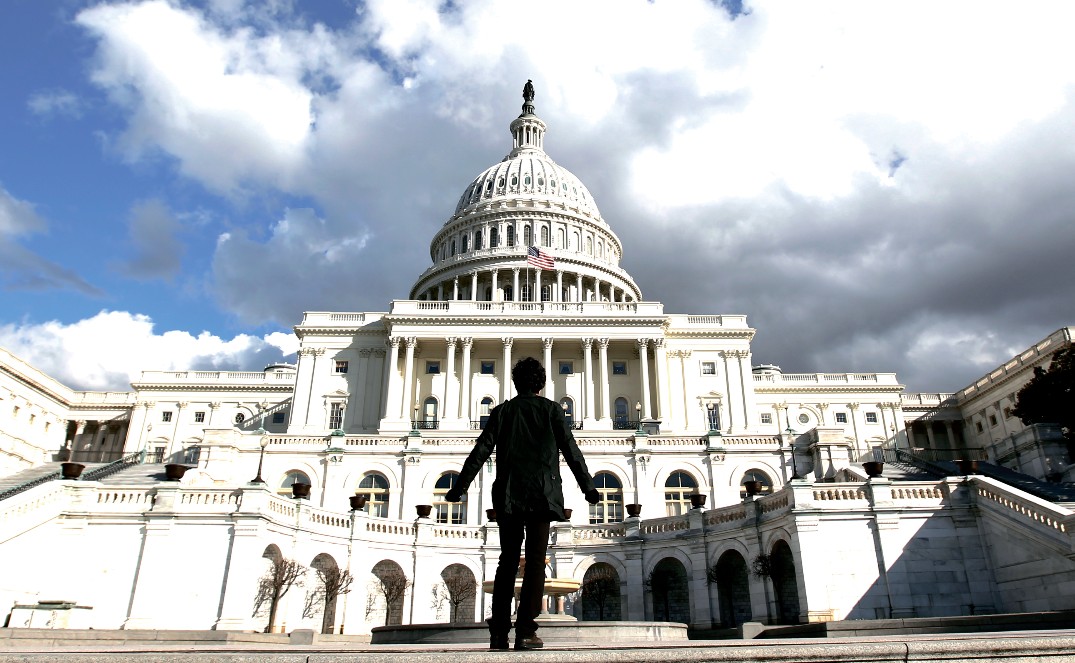
The US House Committee on Foreign Relations, by the minimum margin of one vote (23 in favour and 22 against), adopted a resolution recognizing the so-called "Armenian genocide" on 5 March. Moreover, in order to gain the required majority, the debate, in violation of normal procedures, was extended for over an hour. Many congressmen, while agreeing that the events of 1915 could be considered "genocide", said that the US Congress should not assume the role of judge and jeopardize relations with Turkey.
"That period of history was marked by the suffering of the people, atrocities and tragedies. That is beyond question. But we live in the 21st century and we must proceed from today's realities. We risk losing our military base in Turkey, which plays a key role in security in the Middle East and in the security of the US and Israel," Congressman Dan Burton warned.
However, the voices of sober-minded politicians were not heard. Many of those who watched the live debate and vote in the committee, as well as Turkish MPs present in the meeting hall, called the events "a bad comedy". A majority of the congressmen who spoke so zealously in favour of the resolution have no idea of the circumstances of the tragic events of nearly a century ago - they are unable to show the borders of the Ottoman Empire or the location on the map where all this took place. Manipulating the whole process, committee chairman Howard Berman said after the meeting that "now it is time for Turkey to recognize the Armenian genocide". But I think he's wrong not only about Turkey, but also about the fate of the document approved by the committee.
The White House says that despite the adoption of the resolution by the House of Representatives Committee on Foreign Relations, the bill will not be adopted at subsequent stages. "We do not believe that Congress will or should take action on this resolution, and we have made it clear to all parties involved," said US Secretary of State Hillary Clinton. She added that the Obama administration is concerned that the resolution could harm the negotiations between Turkey and Armenia.
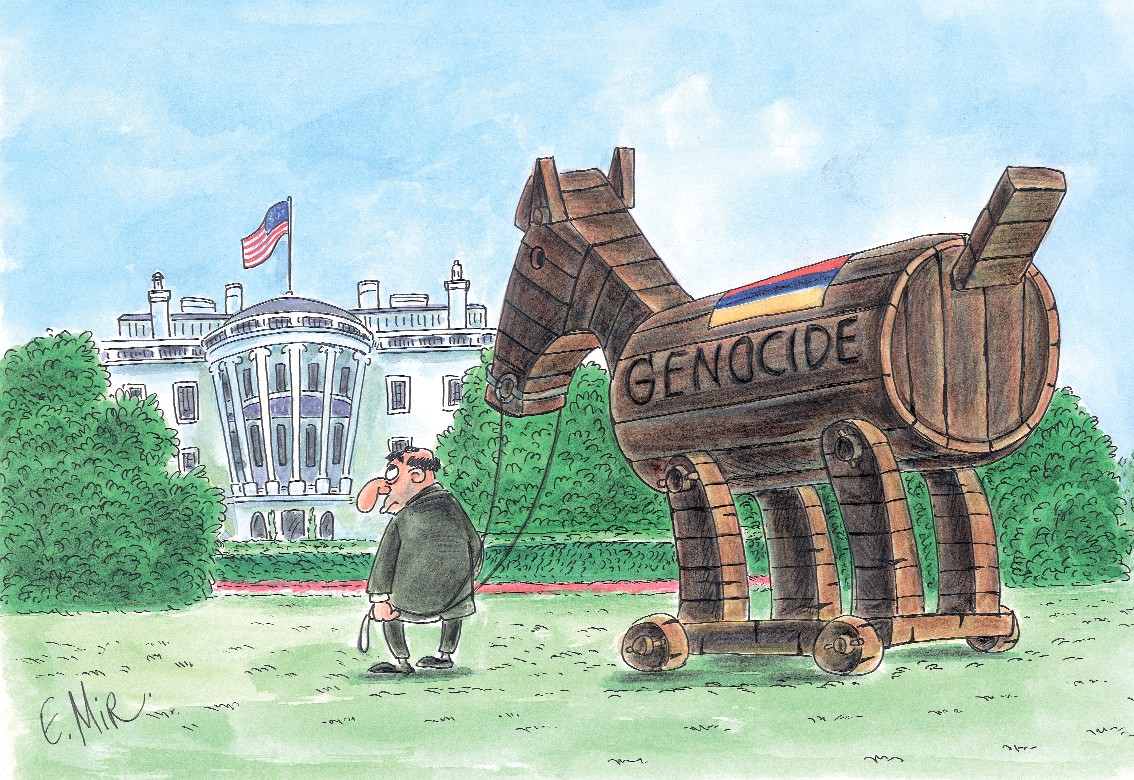
The resolution, like the Sword of Damocles, has been hung over Turkey in order to make it more compliant in matters crucial to the US (Iraq, Afghanistan and Iran) and Israel. At the same time, the document is being used to put pressure on Ankara for an Armenian-Turkish settlement. In addition, it is clear that the congressmen who receive donations and votes from the Armenian community, as they say, have now "worked off" the advances they received and, therefore, can expect renewed support in the elections due this autumn.
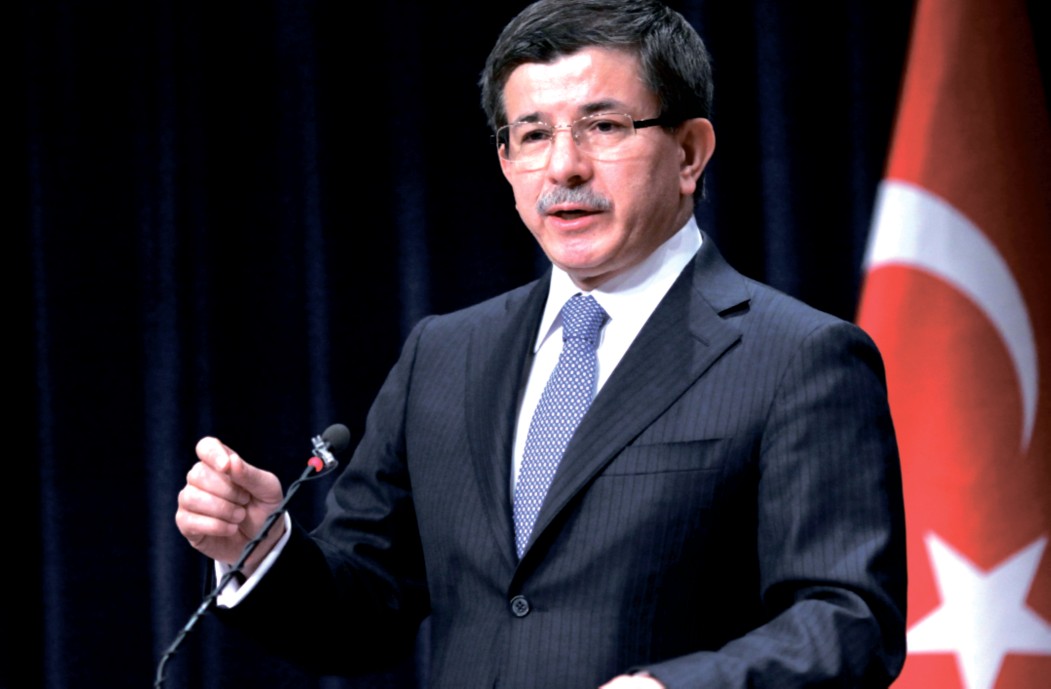
However, the impact of the initiative is far from exhausted. In Turkey and Azerbaijan, the consideration and approval of the resolution even at the level of a congressional committee irritated the governments and outraged the general public. President Abdullah Gul said immediately after the vote: "I do not think this decision is wise and view it with regret. It has nothing to do with the Turkish people. It was taken on the basis of political interests, and it is unfair to history. This event will damage the foundations of stability in the South Caucasus and efforts to establish friendly relations between peoples." In turn, Prime Minister Recep Tayyip Erdogan stressed that it damaged both Turkish-American relations and the efforts of the Turks and Armenians to overcome nearly a century of hostility.
In a telephone conversation with his counterpart Abdullah Gul, Azerbaijani President Ilham Aliyev expressed his full solidarity with Turkey. The Azerbaijani parliament also issued a protest statement.
Not only did Turkey express its negative attitude verbally, it also recalled Ambassador Namik Tan, who had only recently embarked on his diplomatic mission in Washington, to Ankara for consultations. "We expect the American side to respond appropriately to the resolution on the so-called Armenian genocide. Our ambassador will not return there until we receive a reply. Of course, what has been undertaken against us will receive an adequate response," Turkish officials confirmed. Turkish Minister of Trade Zafer Caglayan's visit to the US, scheduled for 19 March, was also cancelled.
Commentators and analysts have warned that an already strong anti-American sentiment will inevitably strengthen in Turkey. According to an opinion poll conducted late last year, 37.5 per cent of respondents described the United States as Turkey's main foreign policy adversary, 10.9 per cent - Armenia, 10.6 per cent - Israel, 6.1 per cent - Greece and 5.1 per cent - France. Paradoxically, it is a fact that all these countries, except for Armenia, are formally allies of Ankara. Thus the Turkish newspaper Vatan published a symptomatic headline "Yankees - Go Home!" In the article, commentator Gungor
Meng warned the Americans directly: "Let the US not forget that they have a base in Incirlik, not in Armenia, and their interests in the Islamic world and the Middle East are linked with Turkey. However, if Washington does not pay due attention to this, the day is not far off when hundreds of thousands of Turks will stage demonstrations like those in Latin America and the Middle East and chant Yankee - Go Home!."
Obviously, the process of normalizing relations between Armenia and Turkey, as well as progress in the Karabakh settlement, will freeze until at least late April. As long as Armenian radicals retain their hopes of pressurizing Turkey and Azerbaijan by mobilizing support in the United States and other countries, using the so-called "genocide of 1915", they will not retreat from their annexationist ambitions with regard to Karabakh.
In raising the dubious 100-year-old question and trying to "push it through" the US Congress, the Armenians are seeking to establish a base for territorial and financial claims against Turkey, as well as to cover the crimes they committed against the civilian Azerbaijani population during the occupation of Karabakh. Just the extremely cruel murder of over 600 civilians in Xocali in 1992 is enough to characterize the Armenians' actions as genocide against the Azerbaijanis. The Armenians also need to adopt the image of victim to protect themselves from accusations of the ethnic cleansing of nearly a million Azerbaijanis.
The Armenians' behaviour and desire are understandable.
Obviously, the United States is using the so-called "genocide" to express dissatisfaction with Ankara, which Washington believes has become overly independent. But it is also impossible not to notice the role of Israel and the Jewish lobby in all this.
They have traditionally supported Turkey. But relations between the parties were damaged after Ankara's strong criticism of Israeli actions in Gaza and Turkey's rapprochement with Iran, and this directly affected the mood in the US Congress. According to the Israeli newspaper Haaretz, the resolution on the "genocide" of Armenians in Ottoman Turkey was adopted in the US House Committee on Foreign Relations with the assistance of the Jewish lobby. Evidence of this is in the open. Suffice to say that the chairman of this committee, Howard Berman, is one of the leaders of the Jewish community in the United States. His and other Jewish congressmen's position did not go unnoticed in Turkey. "The Jewish lobby in the United States supported this resolution," Erdogan told journalists during his recent visit to Saudi Arabia.
Against this backdrop, leading American and Turkish media confidently predict that Resolution 252 "On the Armenian genocide" has little chance of being adopted by Congress and is likely to get stuck in the Committee on Foreign Affairs. This was the case in 2007. Turkey, however, has no intention of retreating or relaxing. In order to block the resolution in the House of Representatives, Ankara has enlisted support from its leading military-technical partners, such as Boeing, Lockheed Martin and United Technologies.
According to the Sabah newspaper, Turkey has prepared 1 political, 2 economic, 3 military and 4 strategic responses to the United States. The publication claims that Ankara is beginning a political dialogue with Moscow in various directions, including in the military sector. To discuss these issues, Turkey's Deputy Foreign Ministers Firudin Sinirlioglu and Ahmet Unal Cevikoz are visiting Russia. In addition, Ankara is preparing a surprise for Washington in Afghanistan. In particular, Turkey could reduce its military presence there and consider further the fate of the US air base in Incirlik.
"In the present geopolitical situation, the US needs Turkey more than Turkey needs the United States," Geybulla Ramazanoglu, adviser to Prime Minister Erdogan, told the Trend news agency in an interview. Let me remind you that Turkey is a non-permanent member of the UN Security Council and will take over the presidency of this important international body in the summer.
The resolution on the "genocide" may have poured oil on the wounded consciousness of the Armenians, but it will be of little benefit to them. Turkey may not confine itself to freezing the ratification of the Zurich protocols and may, for example, interrupt flights to Yerevan, toughen the visa procedure for Armenians, restrict remittances and deport illegal Armenian guest workers. All these opportunities have been granted to the Armenians despite the absence of official relations with Yerevan.
Thus, we can conclude that the "attack" on Turkey has failed. Techniques applicable to small dependent countries do not work when it comes to a major regional power, especially as without the support of Ankara, it is virtually impossible for American policy to emerge from the swamp into which it has fallen in the Islamic world.
RECOMMEND:
 643
643

