

POLITICAL PARADOX
Ukraine cannot be truly neutral between Russia and the West. But it has no other choice...
Author: Eldar PASAYEV Baku
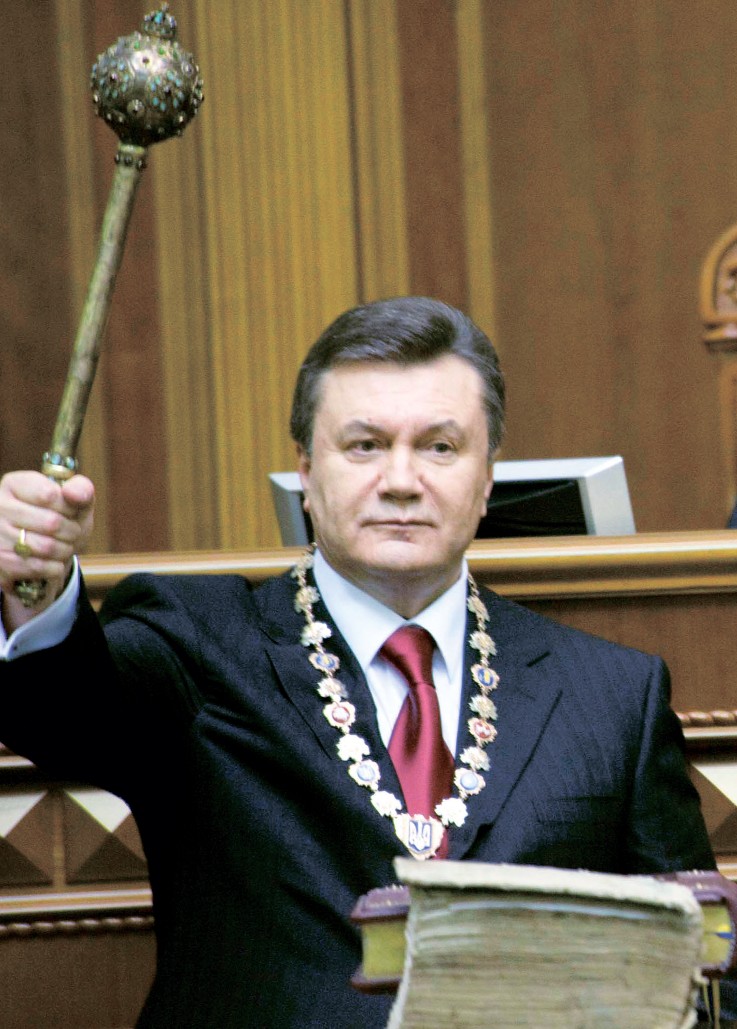
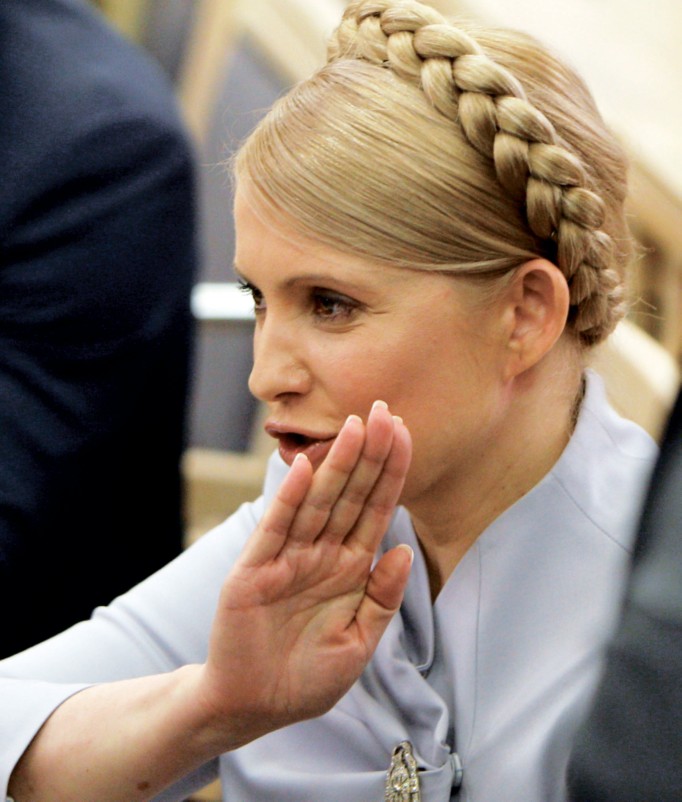
The new president of Ukraine and head of the Party of Regions, Viktor Yanukovych, was sworn in on 25 February and assumed his duties. His rival, Prime Minister Yuliya Tymoshenko, who garnered 45.47 per cent of the vote (against Yanukovych's 48.95 per cent), did not recognize her opponent's victory at first and even decided to appeal against the result to the Supreme Administrative Court. However, on 20 February, Tymoshenko recalled her appeal. She explained her decision by the fact that ... she would not be able to attain the truth anyway. Yanukovych's supporters, who staged a rally outside the courthouse under the slogan "Yuliya, stop your tantrums, respect the will of the people" were pleased. However, Tymoshenko said that she still did not regard the election as honest and intended to struggle on... If a repeat of the "Orange" events is ruled out and given that Yanukovych's victory was recognized by all Western countries, Lady Yu now has only one way - opposition.
Many observers believe that Tymoshenko was unable to contain her emotions and, consequently, messed everything up, while she was supposed to be doing everything possible to stay on as prime minister. The Independent commented poignantly that "unfortunately, Tymoshenko does not understand that leading a responsible opposition in a democracy is also a noble and necessary thing to do." Especially as someone like her should know how to fight the president...
However, Tymoshenko will remain in her post until a new coalition is formed in the Ukrainian parliament. Apparently, however, the days are numbered for the coalition of the Yuliya Tymoshenko Bloc (153 deputies), Our Ukraine - People's Self-Defence (NUNS, 71) and the Lytvyn Bloc (20). In any case, it has never worked effectively and it will most probably cease to exist before the publication of this edition of our magazine.
Meanwhile, the Ukrainian parliament currently has five factions - the Party of Regions (172 seats), the Yuliya Tymoshenko Bloc (153), Our Ukraine - People's Self-Defence (71), the Communist Party (27), the Lytvyn Bloc (20) and seven independent deputies. Even if the YTB is excluded beyond this bloc, it will still remain very mixed, but it is from these fractions that a new coalition has to be formed in varying configurations. By the way, according to the Ukrainian media, it has long been termed a "Coalition of Stability and Reform." According to Yanukovych, the new coalition will sign a depoliticized agreement. If the new president is unable to form his own coalition and thus form a new government, he will certainly dissolve the parliament and hold early parliamentary elections.
In the meantime, Tymoshenko's resignation would be of no benefit to Yanukovych. After all, if Lady Yu remained in her post for some time, she and her cabinet could be blamed for at least some unpopular decisions which any politician responsible for the situation in Ukraine will have to take after the electoral wave subsides. The point is that it is difficult to envy Yanukovych, even though he won the elections. The country he leads is up to its eyes in problems in every aspect of public life - from national security to culture.
Against this background, everyone is waiting for the first moves in foreign policy from Yanukovych and his team with special interest. Will they be directed towards Russia or the West?
For example, Yanukovych's first foreign visit as president was scheduled not to Moscow, as stated initially, but to Brussels. And this was announced just three days after his inauguration. Russian President Dmitriy Medvedev, referring to "other matters", did not go to Kiev for Yanukovych's inauguration - many observers immediately agreed that this was a highly indicative "message" from the Kremlin. Although, of course, Medvedev congratulated Yanukovych not just on his "success", but on his "full, final, legal and internationally recognized victory". It is known that Yanukovych is also going to visit Moscow in the first ten days of March.
Many experts, analysts, politicians and political scientists like to talk about the fact that Ukraine is divided into two parts - East and West, Ukrainian-speaking and Russian-speaking, those who support integration with the EU and membership of NATO and those who yearn for rapprochement with Russia. And if Yuliya Tymoshenko was considered the candidate for pro-Western Ukrainian voters in the recent presidential elections, everyone believed Viktor Yanukovych to be clearly the pro-Russian candidate.
In fact, it is not so simple. As prime minister, Tymoshenko showed recently that she was ready to engage in quite fruitful dialogue with the Kremlin, while Yanukovych said in an interview with Western media that he was not "a Kremlin puppet". In this sense, the era of the Orange Revolution, when everything was painted in clear, bright colours in Ukraine, has come to an end, and an era of muted colours and halftones is now settling in. Future policy decisions should be in the same vein - no sudden movements, but real compromises.
First, you need to forget all talk of a possible split in the country, once and for all. First, because independence is important to the people of both Western and Eastern Ukraine. Whatever they say, there is no clear line between them. It is impossible to say pro-Russian Ukraine ends here and pro-Western Ukraine begins there. Speculation about a possible civil war in the country, or even a Russian invasion, is even more terrible and harmful. This scenario is so unpromising and stupid that it should not even be considered seriously.
Yes, in his campaign speeches, Yanukovych promised to improve relations with Moscow, to extend the presence of the Russian Black Sea Fleet in Crimea, to grant the Russian language official status, to ensure closer cooperation between the Ukrainian and Russian economies etc. In addition, Moscow and Kiev have yet to finally settle their energy relations, and the main issue here will be the price of Russian gas and, accordingly, what the Kremlin will get from Ukraine in return for concessions.
At the same time, it is obvious that all is not going to be easy in relations between Russia and Ukraine. For example, The Times says it is only at first sight that the Kremlin's "Orange nightmare" seems to be ending and that Russia has achieved its goal, restoring its sphere of privileged interests in the region". The newspaper believes that Putin still has a strangely nervous approach to the case of Ukraine. However, "where he sees chaos, others see democracy and a balance of political forces, correctly reflecting the differences between public opinion in different areas of the country." And the more Russia cooperates with Ukraine, the stronger the contrast between political freedoms in Moscow and Kiev...
It is clear that there will not be too demonstrative a rapprochement between Moscow and Kiev after the inauguration of Yanukovych. But they can't escape each other and even the West understands this clearly. Russia and Ukraine have so much in common that you are unlikely to find anything so similar between two other nations in the world - a very similar language, similar mentality, common culture and history. And this means something. If Kiev's policy becomes more mature, balanced and weighted, it will benefit not only Ukraine, but also Moscow.
As for Europe, it will also have to change its approach to Kiev. It's necessary to find a new form of dialogue here. This point was accurately noted by the former US ambassador to Ukraine, Steven Pifer, in an interview with Radio Liberty: "Many political forces - Our Ukraine, the Yuliya Tymoshenko Bloc and even part of the Party of Regions - want Ukraine to be closer, not to NATO, but to the European Union." Pifer believes that "Ukraine has made significant progress in this direction in recent years."
But what really happened is that the West got tired of Ukraine... The United States and Europe have the impression that Kiev politicians are simply looking for someone to deal with their problems. This was especially clear during the gas dispute with Russia. Maybe someone will say that this is what Russia was striving for. But that is another question.
It is clear that integration into Europe will not be opposed even by voters who live in eastern Ukraine, speak only Russian and voted for Yanukovych. By the way, explaining that without changes Brussels will remain beyond their reach, the new president would have to convince his voters of measures which they will certainly not like, but which he will be forced to take during his presidency. Negotiations on accession to the EU can drag on for years and then you can respond, depending on the situation. Incidentally, in relation to the EU, Kiev almost miscalculated in terms of gas - Moscow is vigorously trying to ensure that Ukraine's gas transportation system remains inactive.
It is clear that Ukraine cannot be truly neutral between Russia and the West, at least in the near future. But it has no other choice... It is a kind of political paradox.
In order to strengthen and become truly stable, Ukraine, above all, should define the powers of the president, the heads of government and parliament and finally deal with its economy. As for the tensions in the country's political life, they will continue - Yuliya Tymoshenko has every opportunity to show what she is capable of in future municipal and parliamentary elections. Under Yanukovych, supporters of Yushchenko and Tigipko will probably also find their niche. The main thing is to achieve a workable balance between the authorities and the opposition.
RECOMMEND:
 570
570

