

3.48 PER CENT WHICH CHANGED UKRAINE
The presidential elections in Ukraine are over, but the country is still split into two camps
Author: Eldar PASAYEV Baku
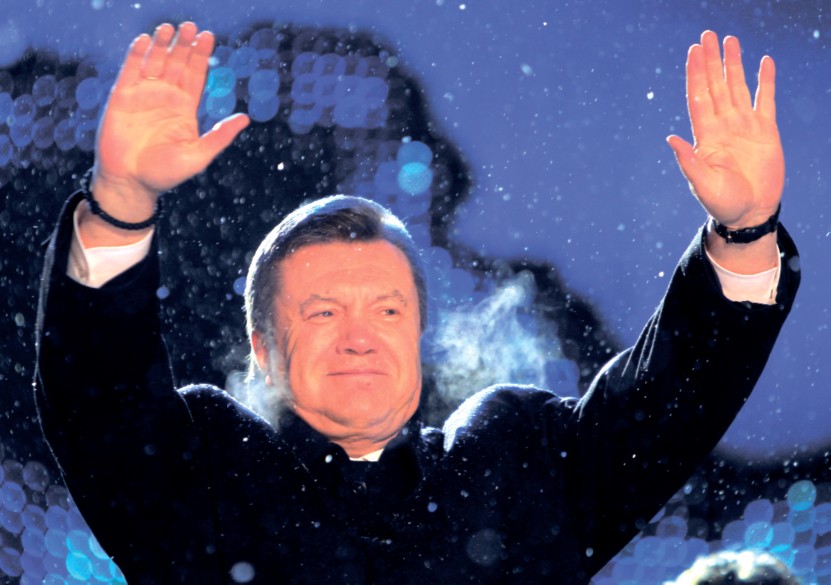
"In this election, we have taken the first step towards uniting the country, which is very important and necessary," said Viktor Yanukovych, leader of the Party of Regions. And he said this in Russian. Of course, the headquarters of the other presidential candidate, Prime Minister Yuliya Tymoshenko, did not let this fact go unnoticed.
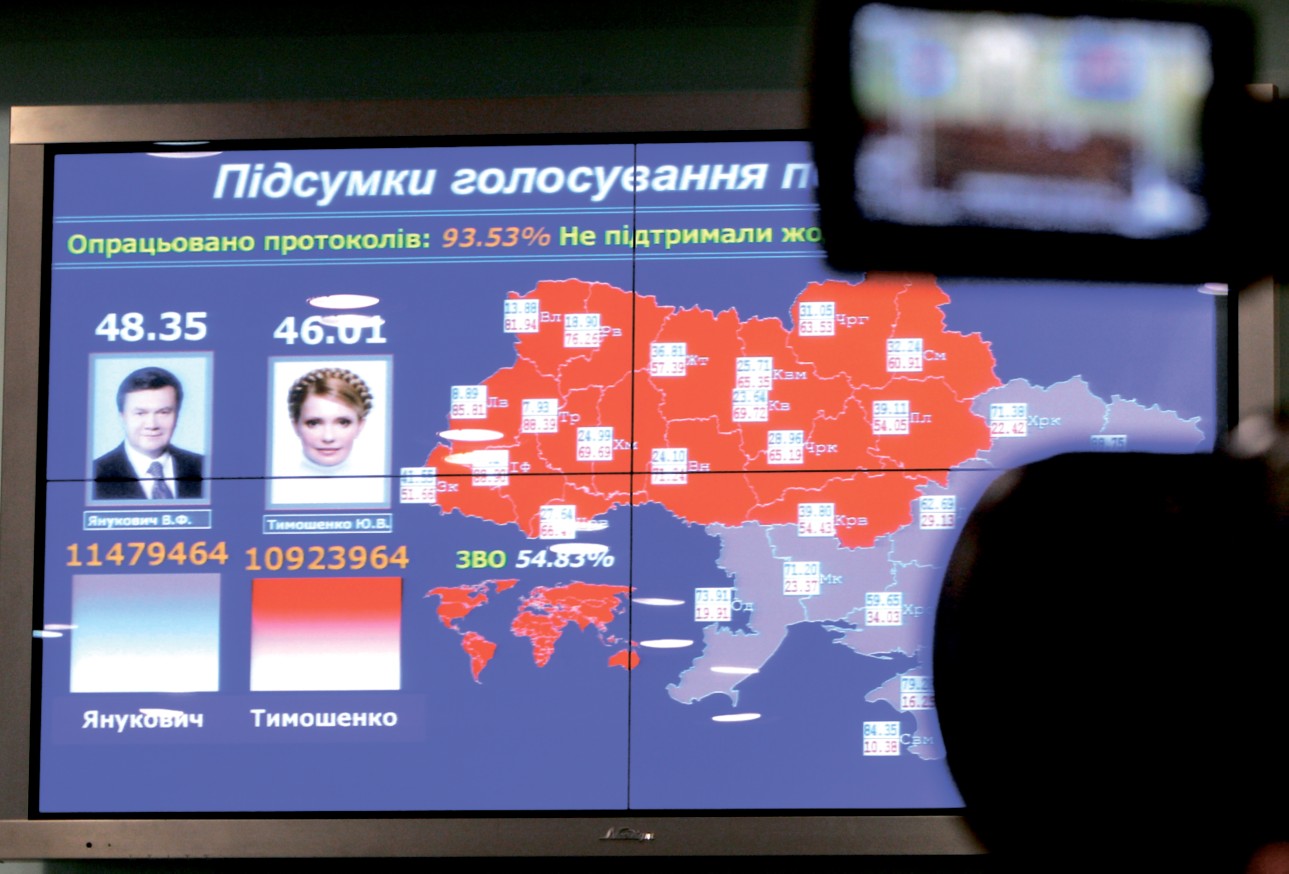
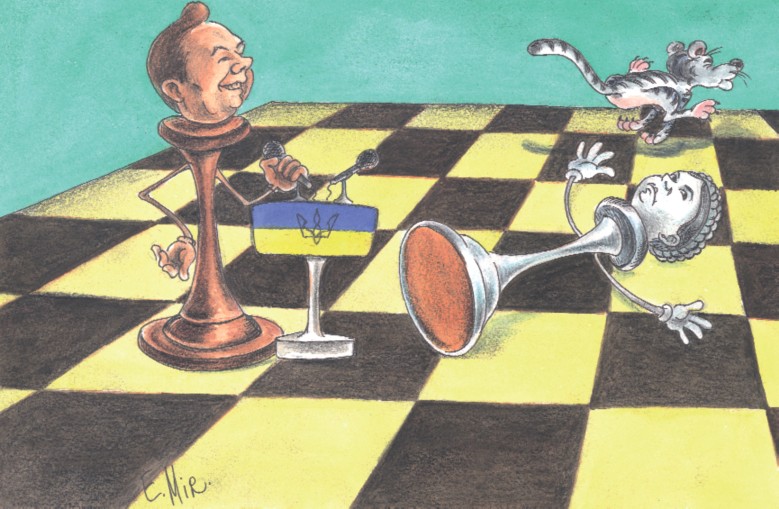
In any case, Ukraine is still split into two camps. This sad fact is, perhaps, best illustrated by the results of the second round of presidential elections in which Viktor Yanukovich, who gained 48.95 per cent of the vote, did not really win, while Prime Minister Yuliya Tymoshenko, who was supported by 45.47 per cent of voters, did not really lose...
Of course, modern history has seen candidates for a country's highest office winning with even smaller margins. But for Ukraine, which has been engulfed by various conflicts in recent years, the 3.47 per cent who brought "success" to Viktor Yanukovych, mean a lot - as Russian President Dmitriy Medvedev diplomatically put it, two days after the vote.
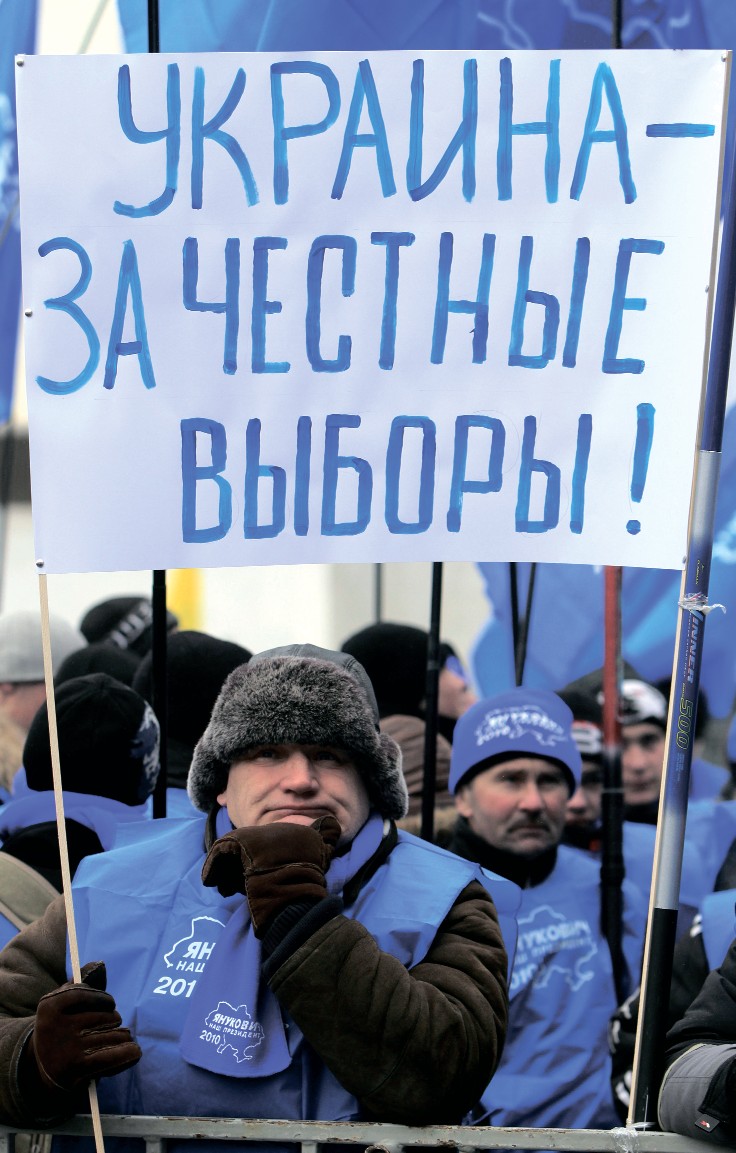
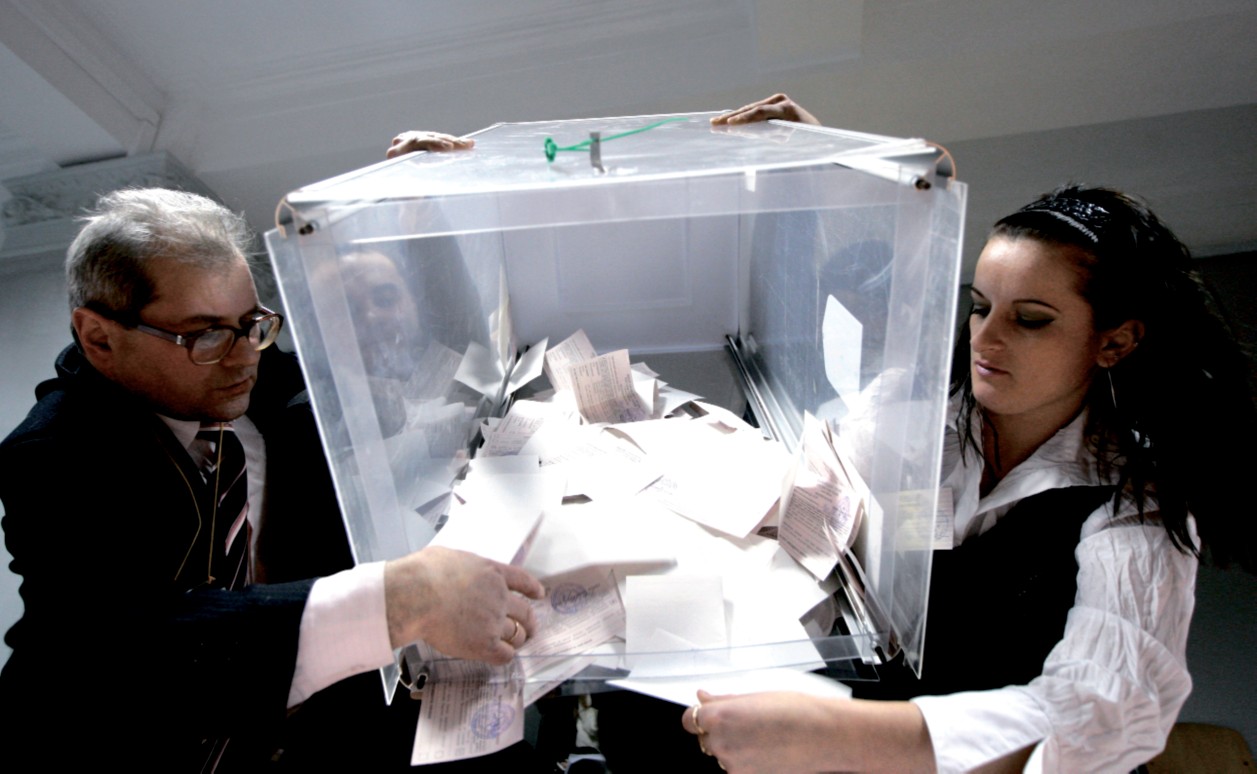
Tensions in the second round of the presidential elections in Ukraine exceeded all expectations. And they continue to intensify, which is understandable - the real fun begins after voting day. When vote-counting began, reports from the Ukrainian Central Election Commission were awaited like news from the front. To secure victory in the second round, a candidate had only to get a simple majority of votes.
February 7 passed off quite peacefully and without major incident. Minor violations did occur, of course, but the voting results were not affected. Perhaps only the mood of voters and observers was affected... For example, all the male reporters at the polling station where Yanukovych cast his vote probably enjoyed a "protest" by women's movement activists from FEMEN, who stripped to the waist and started chanting slogans: "A war will begin today" and "Stop raping the country." The Party of Regions leader was "out of luck" - he encountered "patriotic girls", who had been detained and taken to a police station.
But despite even this, Viktor Yanukovych should not complain. The most important point is that international observers unanimously recognized the second round of the presidential elections in Ukraine as complying with international standards, and some even gave enthusiastic assessments, saying that the "free and transparent" elections in Ukraine are the principal proof that the "Orange Revolution" was not in vain and that the country rests on a strong "democratic foundation." Thus, OSCE Parliamentary Assembly President Joao Soares called the voting in Ukraine "an impressive example of democratic elections." Similar positive assessments were made by observers from the CIS Interparliamentary Assembly, the European Parliament, PACE and the NATO Parliamentary Assembly. Even the current president of Ukraine, Viktor Yushchenko, who voted in Kiev's Shevchenko district, said gloomily: "I think that Ukrainians will be ashamed of their choice, but this is democracy, too."
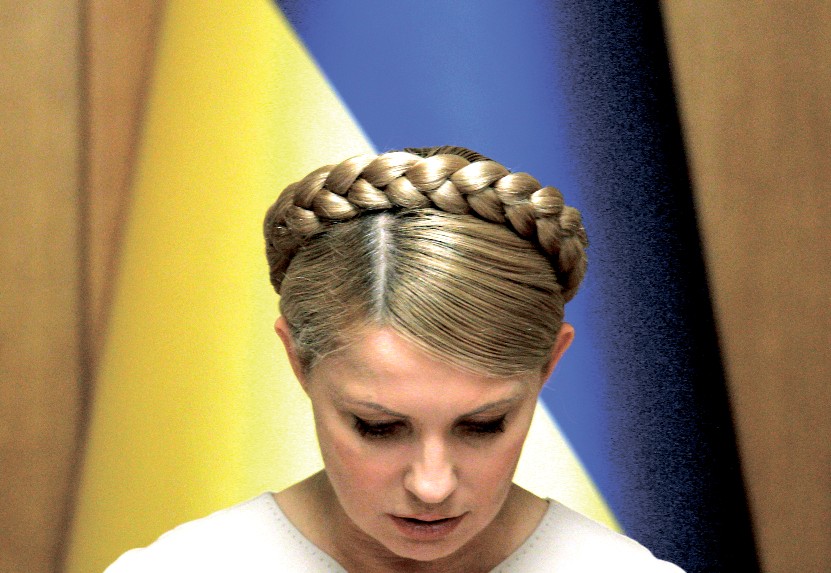
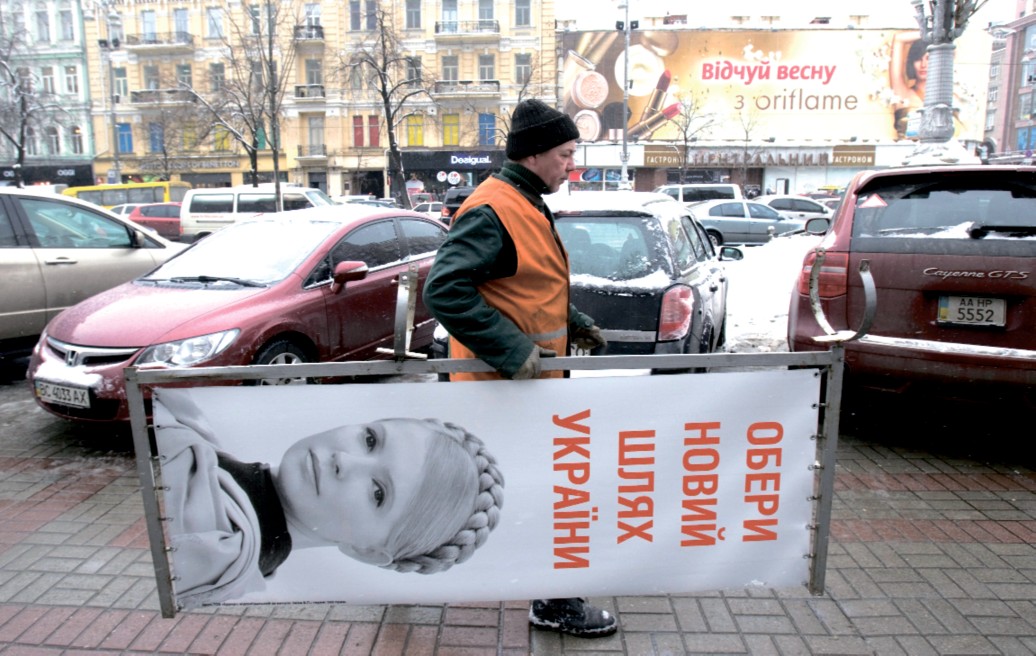
The only person who clearly did not benefit from democracy in this case is Yuliya Tymoshenko, who said shortly after the voting that she would not recognize her defeat in the second round of presidential elections and urged her supporters to fight for "every protocol." Also, one day after the election, the BYT leader signalled that she was ready to challenge the results in court. Another day later, Tymoshenko promised to make a televised address to the Ukrainian people, which, however, did not take place at the appointed time. It was clear that Lady Y agonized over what she should do next: continue the struggle at a time when international observers had recognized the legitimacy of the election, try to bargain with the Yanukovych team or retreat proudly into opposition?
Although Yanukovych openly advised Tymoshenko to prepare for resignation, there are still suggestions that, in return for the victory of the Party of Regions leader, the BYT may demand that the "regionals" forge a coalition in parliament, which would allow Tymoshenko to retain the post of prime minister. At the same time, news came in about an impending split within the BYT; some deputies, headed by deputy speaker Mykola Tomenko, advocated recognition of Yanukovych's victory and urged Tymoshenko to retreat into opposition, while others tried to persuade Lady Y to continue the resistance.
It does not seem likely that Tymoshenko and Yanukovych will agree. It is unlikely that supporters of the Party of Regions will want to share their long-awaited victory, and they do not really trust the BYT leader. Most probably, the next president will try to "sound out" other political forces who do not want to lose their deputy status, to work out how the prime minister can be quickly and effectively "neutralized". For example, a former member of the Party of Regions faction, MP Taras Chornovil, suggested that if Our Ukraine is included in a new coalition in parliament, the first deputy head of the Presidential Secretariat, Yuriy Yekhanurov, may become prime minister, as he is already familiar with this work. But, according to Ukrainskaya Pravda, the NUNS faction in the Ukrainian parliament have found their own candidate for the post of prime minister - former presidential candidate and leader of the Front of Change party, Arseniy Yatsenyuk.
Thus, most observers agree that Yanukovych will still have to hold early parliamentary elections, the result of which, incidentally, is not guaranteed. As for reasons to dissolve parliament, one of them could be achieved, for example, if 150 MPs from the Party of Regions faction gave up their mandates.
Tymoshenko, "entrenched" in opposition, will be able to cause a lot of trouble for Yanukovych. First, even with the most unfavourable scenario for the current prime minister, her government will remain in power for some time. Moreover, BYT supporters are expected to see fairly good results in the upcoming local government elections.
Against this backdrop, Yanukovych is trying to demonstrate self-confidence and, before the final counting of the ballots, he congratulated the people on his victory. According to the head of the Party of Regions, who should become leader of Ukraine, changes await the country. It is worth noting that Yanukovych also pledged to win the trust of those who supported Tymoshenko.
However, Yanukovych has no time to celebrate his victory. "I think that the most important task for any president of Ukraine is to unite the country - the East and the West, the North and the South - and unite our citizens in a single nation. This is my main goal," said the winner. But overcoming the split in society is not the most difficult task facing Yanukovych as president. First of all, it's not a matter of just one year and, second, I think that all differences will iron themselves out as soon as apparent political stability prevails in the country and the economic situation is straightened out.
If this does not happen, Yanukovych may share the fate of outgoing president, Viktor Yushchenko. It is worth recalling that many Ukrainians who voted for the leader of the Party of Regions in the second round do not even like Yanukovych. It is just that they like Tymoshenko even less. Also, some Ukrainian political analysts correctly point out that the political fate of the Party of Regions leader would have been uncertain had Tymoshenko and Yushchenko been able to find a common language.
But this, as they say, is history and there is nothing you can do about it. It is necessary to think about the future. And here, the majority of Ukrainian politicians understand that one way or another, they must learn to make compromises and even sacrifices, because the alternative is an aggravation of the political and economic crisis in the country, which, in turn, may have unpredictable consequences, leading, for example, to a real, rather than "orange", revolution.
Meanwhile, there are suggestions that Yanukovych is unlikely to abandon the policy of Ukrainian integration into the European Union. According to The Washington Post, "Yanukovych has learned a lesson from the events of 2004 and now identifies with major Ukrainian industrialists rather than with Putin." "Russia did not interfere in the process," The Guardian reports, and this view is echoed by many other Western media. This time, the Kremlin really did keep aloof from the political "battles" in Kiev. And this looks like a pre-planned move.
Yanukovych as president is unlikely to go for confrontation with the West. But he will do so with the blessing of Russia, which cannot but understand what open "revenge" for the "orange" revolution of 2004 could turn into. A cloudless future for Ukraine can only be secured by a multi-faceted foreign policy to satisfy both the Kremlin, which will get its reasonable reward (the transit of Russian hydrocarbons to the West, the status of the Russian language in Ukraine etc.) and will hide its "fist of gas", and the West, which recently began to take a careful look at a Kiev gripped by various problems and squabbles. "The main principle of my policy will be the national interests of Ukraine. I will try to build a balanced relationship between Russia and Europe," Yanukovych told CNN. The future president also said that Ukraine will continue its policy of rapprochement with NATO, but that the question of joining the alliance should be resolved in a nationwide referendum.
Of course, there will be open overtures towards Moscow. For example, Yanukovych has already declared the activities of GUAM to be irrelevant. It must be noted that this international organization which unites Georgia, Ukraine, Azerbaijan and Moldova has always been seen by Russia as an assault on its influence in the post-Soviet area.
As for cooperation between Kiev and Baku, I think that the election of a new president in Ukraine will not affect it at all - relations between the two countries will continue to develop at the same pace. Moreover, Yanukovych himself has told the Azerbaijani TV channel ANS in an interview that he is interested in developing cooperation with Azerbaijan.
P.S. Perhaps, and we very much hope, Yanukovych's presidency will be a kind of transition, clearing the way for Ukrainian politicians with a new way of thinking, who are not burdened by a cartload of the contradictions of recent years and who are guided by purely national interests. They will also be supported by citizens who voted against all this time and by those who, while voting for Tymoshenko and Yanukovich, were "choosing the lesser of two evils". The chairman of Strong Ukraine, Sergey Tigipko, is often mentioned among these politicians. He took third place in the first round with 13.06 per cent of votes.
Tigipko has already made it clear that his party expects to get a good result in possible early parliamentary elections and that he himself would not mind taking the post of prime minister in that case. Tigipko even talked about his plans for the post of prime minister - administrative reform, "tough decisions" in the social sphere, the definition of a fair market value for gas for everyone, including for the people, creating a consortium to manage the country's gas transportation system (selling stakes to Russia and the EU, while retaining control in Kiev) etc.
RECOMMEND:
 530
530

