

A GARDEN IN BLOOM
This is the impression Ordubad makes on visitors

Author: Aynur TALIBOVA Ordubad
Ordubad is the second largest town in the Naxcivan Auto-nomous Republic of Azerbaijan. It is on the left bank of the River Araz, 75 km south-west of the city of Naxcivan at the foot of the Zangezur mountain range. It is 850 m above sea level, covers an area of 864 sq.km and borders Armenia and Iran. The town is divided into two by the River Ordubadcay. The river is 24 km long and rises in the Zangezur mountain range of the Lesser Caucasus, 3,200 m above sea level. It has a harsh continental climate: in the summer Ordubad is the coolest part of the Naxcivan Autonomous Republic. It is famed for its plane trees. Ordubad was declared a historic reserve in 1977 because of its unique architecture and its more than 100 sites of historical and archaeological interest.
History
Historians date the first settlement in Ordubad to the 5th-6th centuries AD.
The name Ordubad first appears in written sources in the 7th century. It is said that Arab troops passed through Ordubad on their way to Ararat. In the 15th and 16th centuries Ordubad was in succession part of the Qaraqoyunlu, Ag-qoyunlu and Safavid states. In the 16th and 17th centuries it was destroyed, as it was at the centre of battles between the Safavid and Ottoman states. In the 17th century the Iranian Shah Abbas thought Ordubad especially important as its residents proved themselves loyal to the shah during the war with the Ottoman Empire. In 1588 when Ottoman forces led by Jafar Pasha captured Ordubad, Shah Abbas I (who ruled from 1587 to 1629) retook the town and freed the local people from taxes as a reward for their staunch resistance to the Ottoman troops. The Iranian shah's vizier, Xatem bay, who was from Ordubad, also played a part in this. The exemption from taxes allowed the town to be rebuilt and trade and crafts to develop. The decree by Shah Abbas, which consisted of just five clauses, was carved in stone and to this day can be seen in the walls of Ordubad mosque.
Town's main mosque
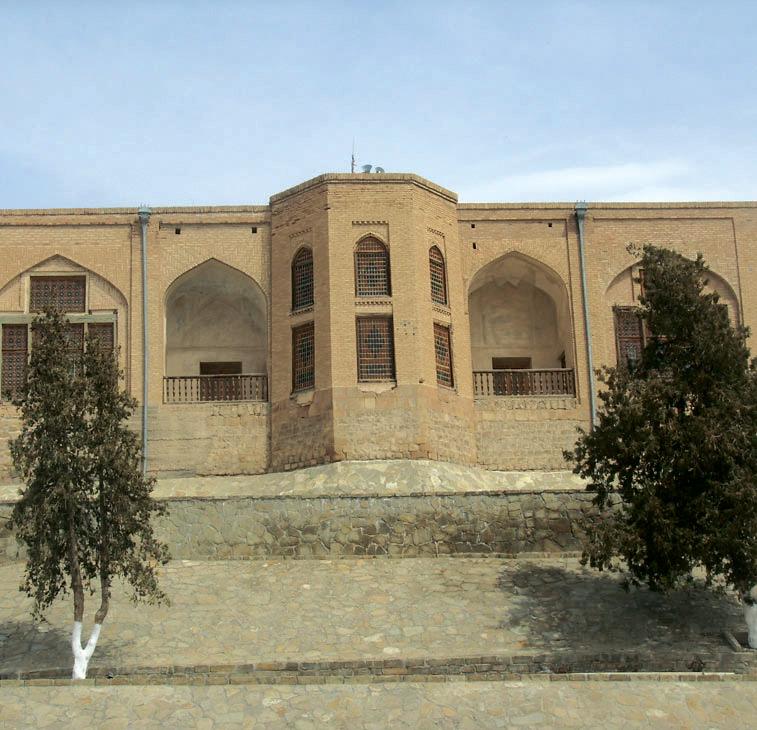
The Cuma Mosque dates back to the 17th-18th centuries and is of architectural interest. It is built at the highest point of the city's central square. Some elements in the medieval construction hint at an earlier period - the 12th and 13th centuries. The mosque is said to have acquired its current appearance after restoration in the 17th century. The last time it was restored was in our own day, in 1987. The mosque also has a madrasah, or religious school, on its territory.
In the mid-19th century Ordubad was a major town. In 1854 it had more than 800 houses, 63 mosques, more than 300 gardens and many different buildings. One of those buildings next door to the Cuma mosque today houses the local museum.
Geyseriyye and zorxana
This 18th century structure consists of a large cupola with eight smaller cupolas attached to it. It was once home to the covered Eastern Bazaar which sold jewellery, precious stones and ornaments. It was then used as a zorxana, a place for wrestling. The word "zor" means "strength" and "zorxana" is a place to show off one's strength. During the rule of the Safavid dynasty, the displays of strength turned into real spectacles with musical accompaniment. Traditional wrestling contests were held here. Khans and nobles came to watch the strongest men of the surrounding districts compete. Unfortunately, the contests declined in popularity in the 19th century.
Ordubad houses
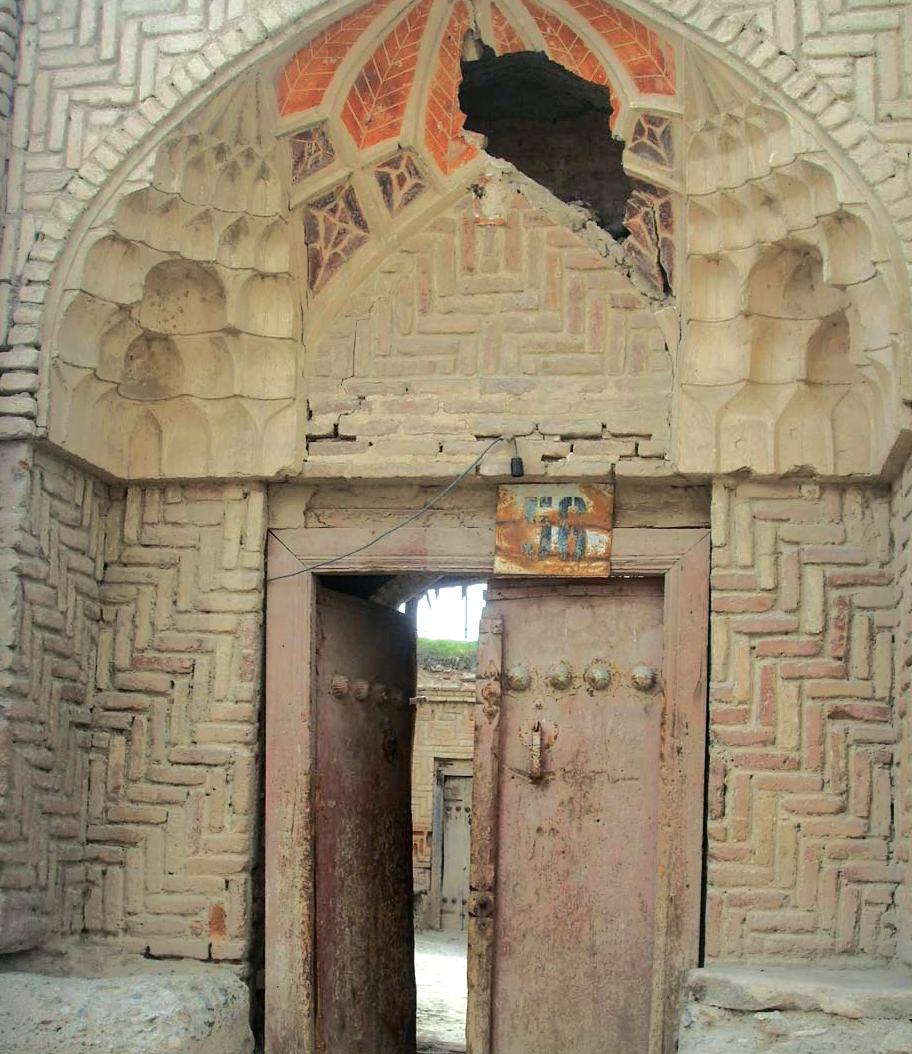
Ordubad homes are built in a medieval style. These houses are considered some of the most interesting types of Azerbaijani dwellings. Great attention in their construction was paid to the microclimate. The courtyard of every house has a pool and well while the high fences have special apertures for ventilation. The lay-out of the yards resembles a caravansarai. The main doors are made of wood while there is a place next to the fence in the yard for luggage and a stall for guests' livestock. These outbuildings are called "xana". The xana usually consists of two storeys, the second floor of which serves as a lookout post. Usually there is one window here, through which you can see who is knocking at the gate. After the visitor has left his luggage and livestock here, the householder accompanies him down a narrow, cobbled path to the house, which is at the other end of the yard. Houses in Ordubad are built from a compound of ordinary earth. It keeps the houses cool in summer and warm in winter.
Ordubad people
They are kind and hospitable and have a lovely accent. Guests are not asked "Who are you?" or "Where have you come from?" People are so trusting that they do not lock their doors when they go out. You will hardly see any locks on the doors in Ordubad. When the conversation turns to the characteristics of the local people, they like to joke: "We are not Naxcivanis." Ordubad is different in terms of its fertile landscape, unique way of life and traditions and its people. When you first set foot here, you feel you have entered a city of the medieval East. Ordubad has been compared to a large garden in bloom and is called the pearl of Naxcivan.
In the Middle Ages flowers were sent from Ordubad to Tabriz and other cities in Southern Azerbaijan. And today the city is one of the centres of the flower business in Azerbaijan. Ordubad carnations, painstakingly grown in greenhouses when the outside temperature drops to minus 40, are the major competitors to Baku flowers. The Ordubad accent is similar to the Tabriz and Saki dialects of Azerbaijani. These three towns are linked by their architecture, crafts and silk weaving, as well as accent. They were all once major staging posts on the Great Silk Road.
Ordubad people say that the work of the great scholar Nasraddin Tusi is continued here. The local museum has a display dedicated to 450 sons and daughters of the district who became famous in science, culture and politics. Eighteen of them are academicians. The house of Yusif Mammadaliyev (1905-61) has been opened as a museum with support from UNESCO. This outstanding scholar was the most important researcher into Azerbaijan's oil deposits. During World War II his inventions in the catalytic refining of oil and oil gases led to the production of high-octane aviation fuel. There is a beautiful view of Mount Kamki from the museum balcony.
Mount Kamki
Legend has it that this is the first mountain that Noah's Ark struck during the Great Flood. Then Noah's Ark hit Mount Ilandag (Snake Mountain) and Gemiqaya (Boat Mountain) which is also on the territory of modern-day Ordubad. After that the ark sprung a leak and the prophet ordered everyone to leave the vessel. Naxcivan is also known as the cradle of civilization as a result of this legend. But more on this later.
Ordubad silk
Ordubad's location on the Great Silk Road created the right conditions for the development of trade and crafts in the area, in particular silk weaving. In the 16th century Ordubad silk was exported to Europe. In 1875 just one silk mill functioned here, powered by a steam engine, but in 1886 there were already four mills. In the second half of the 19th century and beginning of the 20th century, Ordubad became a major centre supplying silk to Russia. From 1870 European-style mills began to be built here and in 1928 12 small enterprises were brought together in the Ordubad Silk Combine. Ordubad silk, which had been renowned for centuries, received international recognition and awards from many international festivals and exhibitions. However, silk weaving in Ordubad and many other types of production ground to a halt in 1988 because of the Armenian blockade of the Naxcivan Autonomous Republic.
Ordubad fruits
Medieval Iranian sources report that Ordubad was surrounded by orchards, vineyards and fields of grain. And Ordubad retains its status as a fruit paradise today. Despite its abundance, local fruit is highly valued and does not fall in price. Lemons are the most expensive here. The price of one Ordubad lemon at the market varies from 10 to 20 manats ($12.5-$25). The secret of the superiority of the Ordubad lemon lies in its fine peel and indescribable aroma and flavour. Many people eat it peel and all. It is a real miracle - a citrus fruit used to a temperate subtropical climate grows in dry, harsh climatic conditions. Maybe that is why it is so highly valued.
The blooming, fragrant gardens of Ordubad, its mountains and springs, have always attracted travellers. In his work on the history of the Caucasus, including the Irevan and Naxcivan khanates, French ethnographer I.I. Chopin (1798-1870) noted the reputation of the Ordubad orchards not only in the Caucasus but throughout the East. He did not hide his admiration for the local climate and the flavour of the grapes, peaches, apricots, plums and quince that grew here.
The peach is the most famous of the Ordubad fruit. This large, juicy, tasty fruit has a distinctive bright colour and "red cheeks". If you want to pick a ripe peach yourself, then you need to come here in July. Though not necessarily. Ordubad peaches are just as popular dried. Dried peaches are considered very good for the digestive tract. They are mainly used in sauce for pilaff. In winter dried peaches and other dried fruit are also served with tea. In summer you can marvel at all the different fruit drying on the roofs of Ordubad.
Ordubad is also renowned for its nuts. The word "nut" in Azerbaijani sounds like "goz". But it has a more colourful name in Naxcivan, "jeviz". Naxcivan nuts are distinctively oily and do not crumble when they are shelled but emerge whole. Many types of nut are grown in Ordubad. Their sizes and flavours are different depending on the village where they are grown. Tea is never drunk in these parts without nut jam.
What's life without a tea house
You really cannot imagine life in the East without a tea house. Ordubad is no exception - it is a typical town of the medieval East. Apart from the coldest days in winter, the tea houses here are bursting with life all year round. In this town they are all to be found under enormous, ancient plane trees. Men gather here to drink tea, play backgammon and domino tournaments, meet their friends and discuss domestic and foreign policy.
Tea drinking in Ordubad is a compulsory part of every meal. Even when guests are invited to dinner or supper, in Ordubad they say, "Come and drink tea."
According to local tradition, any meal begins with tea and then moves smoothly to the food. Different types of jam, dried fruit and of course fragrant lemon are served with tea. Not everyone has an appetite after this. But Ordubad cuisine has such delicious dishes that it would be a sin not to try them. Tea drinking is a whole culture. All important issues are decided over tea, including marriages.
According to tradition, successful matchmaking ends with tea. If sweet tea is served during the matchmaking, this means that the girl's parents are in agreement and the wedding will take place. Although in modern-day Azerbai-jan young people decide their own future, parents still "negotiate" and drink tea after matchmaking. This is a mark of respect for national traditions.
RECOMMEND:
 743
743

