
"TARTUFFE AGAYEVIC", THE HERALD OF TIME
Another premiere at Ibrus Theatre by People’s Writer, dramatist and film director, Rustam Ibrahimbayov.
Author: Valentina REZNIKOVA Baku
The first ten days of February passed under the influence of Aquarius, giving people a memorable period to enjoy the creative work of Rustam Ibrahimbayov. It was timed to coincide with the birthday of the People's Writer. For several evenings, the Ibrus Theatre audience were happy to welcome the premiere of the play "Tartuffe Agayevic" and watch the movie "Goodbye, Southern City". Two new books by Rustam Ibrahim-bayov were also presented - "Prose" (the Amfora publishing house, St Petersburg) and "Selected Plays" in Azerbaijani and Russian (Azarnasr, Baku). "Tartuffe Agayevic" is one of the latest of his dramas to be included in the collection. Staged by the author, it was a stunning success with the audience.
The power of weakness
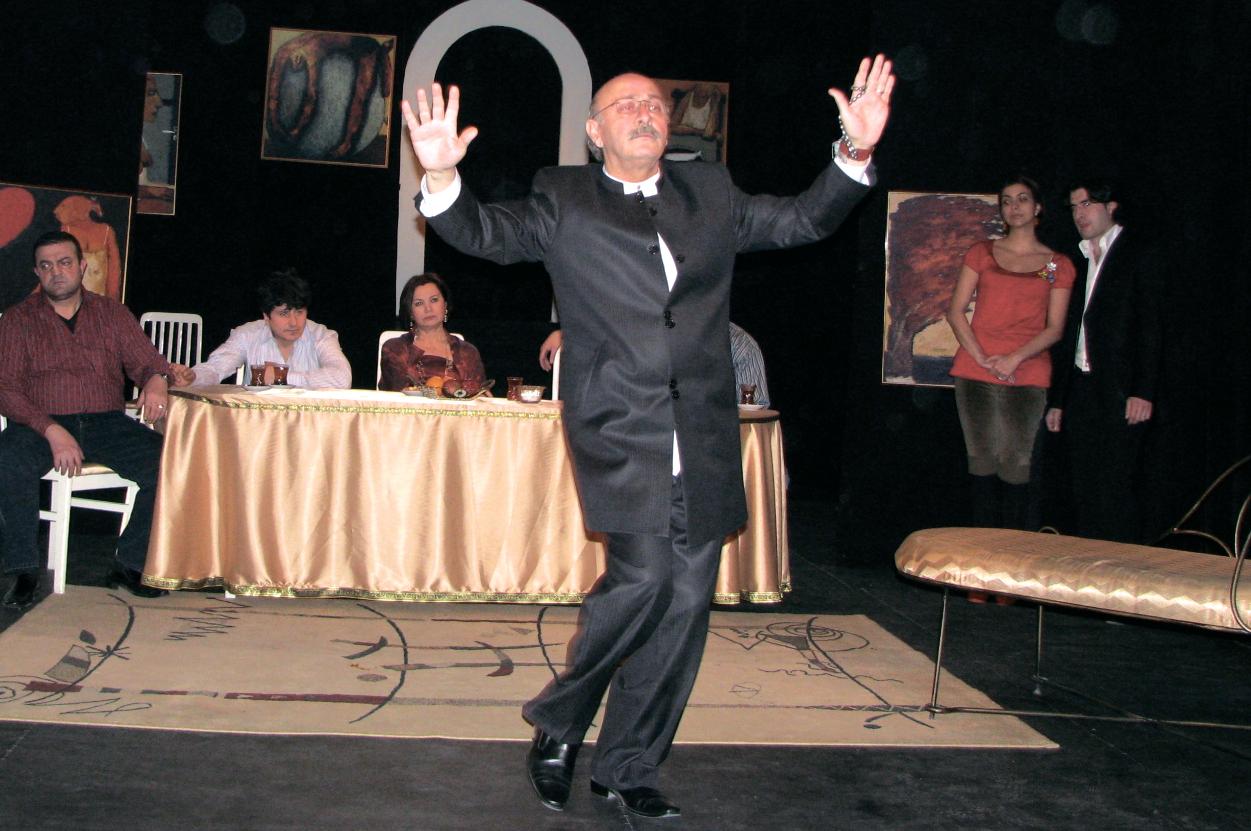
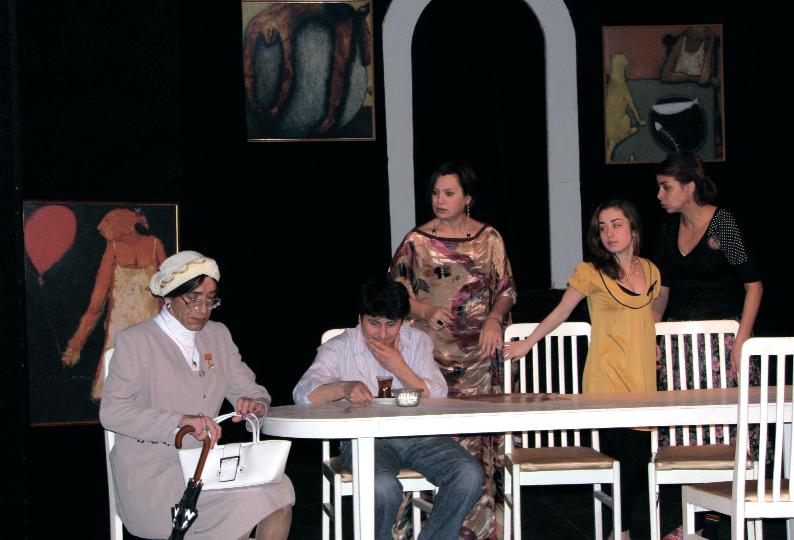
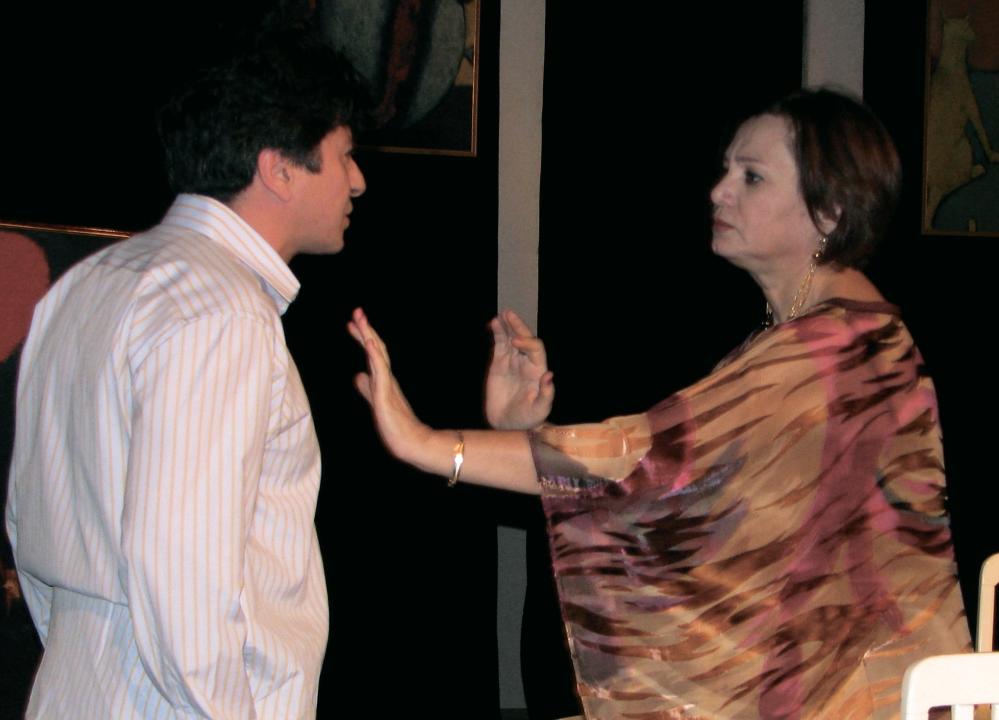
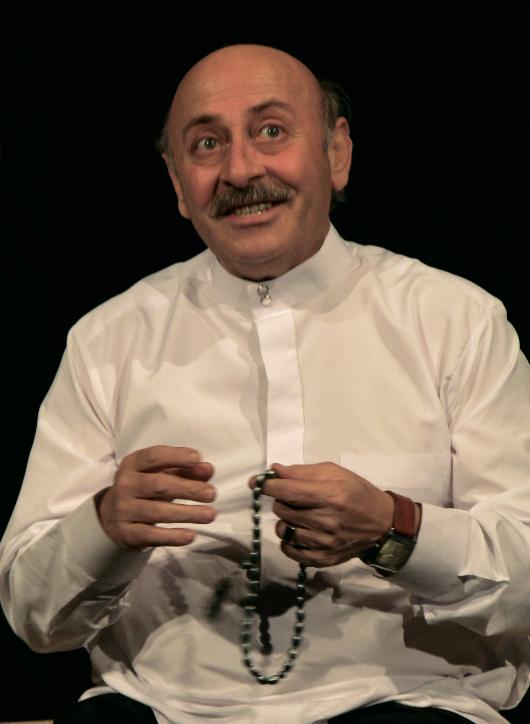
All three premieres held at the theatre early this month were accompanied by shouts of "Bravo!" The actors Sukufa Yusifova, Rafiq Aliyev, Mabud Maharramov and Malak Abbaszada revived a simple plot which has been around since Moliere's time and they received not only flowers and applause, but also recognition for their skilled craftsmanship. When the angry Pari xanim joins the family busying itself with only one question - is it true that the head of the family, Orxan (Sadiq Ahmadov), is marrying his daughter Maryam (Ulviya Axundova's debut) to old Tartuffe Agayevic (people's artist Rafiq Aliyev)? the audience did not immediately recognize People's Artist Mabud Maharramov in the role of the eternally angry and mentoring party worker. With her tough manner and low voice, his Pari xanim still has some "refinement", which does not manifest itself externally, but at the level of some internal melancholy related to pleasant memories of the past. Her past is a legendary Soviet past. She cannot forget her days of fame when she was a celebrated cotton-grower and deputy and spoke from the high rostrums at party congresses. In any event, this lady still has a great desire to "boss everyone around", despite her advanced years. She is not easily frightened and has seen much, but she cannot tolerate betrayal by her "true friend" Tartuffe Agayevic and gives him a slap in the face, earning herself an approving murmur from the audience. However, this does not disturb Tartuffe Agayevic. He puts his hand to his cheek, strokes the smarting skin and says: "It hurts!" But he is not upset. Rafiq Aliyev acts out a person who is concerned with larger issues than an ordinary slap in the face from a woman of his past. He even seems happy about it: this is an excuse for revenge! "You will pay for this. You will all pay…" he says, exiting with a victorious stride and leaving the homely house of Pari xanim's son - Orxan. But… only for the time being. He will be back to take over the luxurious house and the greenhouses. Rafiq Aliyev has not created his character as some stereotypical crook, but much more delicately and the scoundrel is, therefore, more dangerous. The mask of charming false saint hides a sly, calculating villain and voluptuary who will stoop to anything… He enthusiastically initiates Orxan into his extravagant plans to build an international graveyard outside Moscow. Fervently, with a fanatical gleam in the eye, Rafiq Aliyev's Tartuffe Agayevic reveals his "grandiose" plans so convincingly and eloquently that, inspired by this high-minded fever, Orxan is almost mesmerized by Tartuffe's effusive pressure. An expression close to dementia appears on the face of the householder and owner of the greenhouses. Orxan, as if hypnotised, assures Tartuffe in stately manner that he will give him the deeds to the house and the greenhouses. Elmira - people's artist Sukufa Yusifova -tries in vain to open his eyes to the true essence of the sly villain: Orxan goes deaf and blind in the matter of an hour. In any case, he was always much closer to his small business than to the problems of his own family. Sukufa Yusifova's Elmira is a woman of refined manners, different ideas and notions about what a home and a family should be. Her views clearly do not coincide with those of Pari xanim. The actress does not present Elmira as an effusive and extravagant rebel, annoying her mother-in-law with her ultra-modern views. On the contrary, Sukufa Yusifova creates a soft and womanlike character who does not rebel but who also bears the beneficent character of her mother-in-law, expressing some emotional twists and turns in her artistry. Loved by her children and pressurized by her mother-in-law, she has managed to create a loving atmosphere in the home which helps the family to feel absolutely safe there. And someone called Tartuffe, arriving in their home at the whim of her mother-in-law, suddenly disrupts a world which has been settled for years. Yusifova's Elmira feels the danger and, as the real protector of the hearth, she makes every effort to protect it. "You are blind!" she says to her husband, trying to enlist his support in her attempts to expose the villain posing as a mullah. But when her husband remains firm in his trust in Tartuffe, Yusifova's character becomes so quietly aggrieved that Orxan again has to demonstrate his "excessive complaisance" in order to avoid a tiff with his wife. Shakespeare was right: a woman can achieve much more by her weakness than by force. Ibrahimbayov is right, reminding us that the charm and wisdom of a woman is her weakness. Zarina is also quite interesting. A housemaid by definition but, in essence, a long-time member of the family, she is brilliantly delineated by actress Malak Abbaszada. Although this character has no refined manners, she still has a womanly charm. Zarina's whole life is dedicated to this home. As someone without a personal life, she totally dedicates herself to the concerns and problems of the inhabitants of the house. Malak Abbaszada plays her role, meticulously building a system of mutual relationships with each character, because each of them is dear to her in their own way - even Pari xanim. Zarina sees the danger from Tartuffe, as does Elmira, and does everything possible to help her scuttle the "devious plan of the saint". Malak Abbaszada's Zarina is totally honest: she dislikes Tartuffe and his effusive ways, is concerned about the landlady, worries sincerely about Mariam and the explosive Ramiz (Salman Bayramov) and fights polemical battles with the inexorable landlord. Behind all this is unspent love, which spills over into affection for the family.
Malak plays a young woman from an ordinary environment: she is not very well educated, but has some worldly wisdom. Her character dresses simply - only for house work. But, apparently, fate rewards her for her years of love and devotion by sending a young lawyer to the house who, quite possibly, will become a happy extension to her personal fate…
Bravo, applause and flowers
The performance, just like the play, touches on many problems, both moral-ethical and social. The author, hailed as a champion of moral ideals in Soviet times and who spoke courageously about the social problems of society (Literaturnaya Gazeta, Kino, Sovetskiy Ekran, Vyshka, Bakinskiy Rabochiy, Molodezh Azerbaydzhana and so on), continues to show in his work that he is a man inseparably linked to his time. As we know, every epoch brings forward its own ideals and creates its own idols, and, therefore, chooses its own heralds. Rustam Ibrahimbayov is a person with a distinct position in civil society. He is someone for whom life is not a means to increase his fame, but to increase the fame of the homeland. Some may see excessive emotionalism in this assertion, but it is no lie. This is also proved by his numerous "child-characters" who march across the pages of his works, across the screens and stages of the world - not only those of Azerbaijan and the CIS countries. His child-characters are scattered around the world, confirming the author's ability to rise to a level of creative generalization at which you become equally familiar and understood not just in your home country, but also far beyond its borders. This is why the language of the arts is the most effective and convincing of all forms invented by man for mutual cooperation. Heydar Aliyev said so 10 years ago while congratulating Rustam Ibrahimbayov on his 60th birthday. We remember this now, looking back on the past. Such simple and clear points should always be remembered, in order not to lose the experience we have gained over the years…
RECOMMEND:
 695
695