
THE BALKANS UNDER THREAT ONCE AGAIN
Macedonia may become another victim of the confrontation between Russia and the West
Author: Eldar PASHAYEV Baku
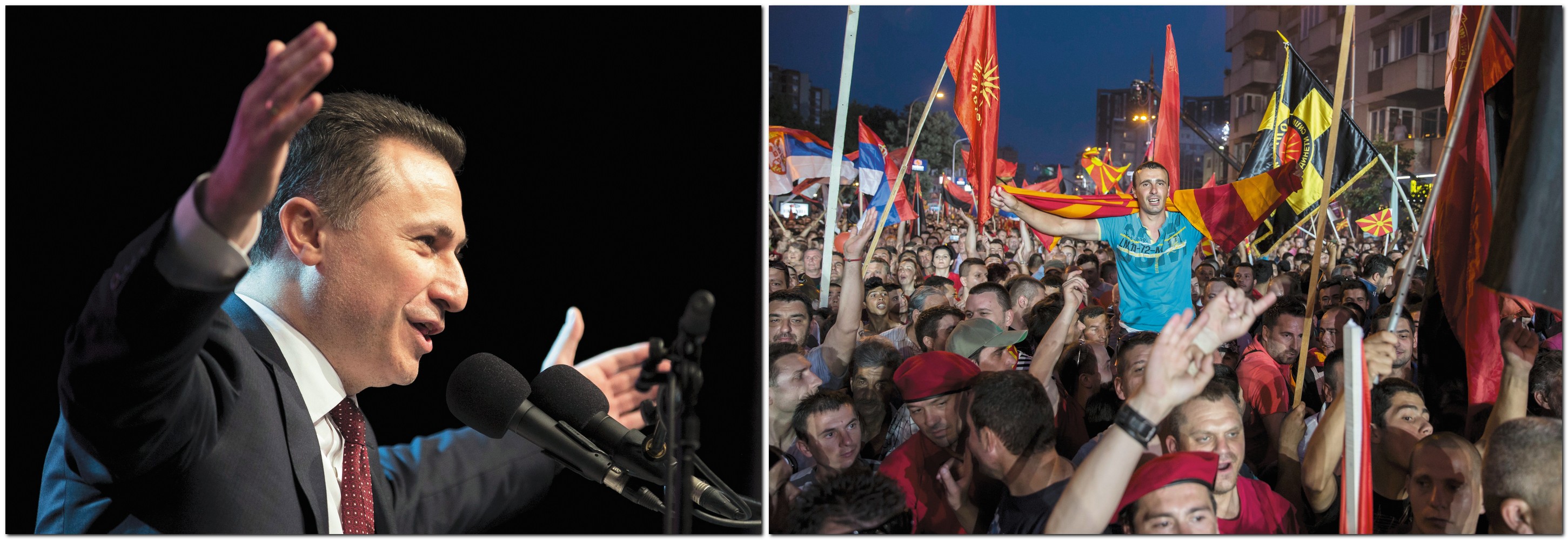
Any incident in the Balkans, which have always been considered the "powder keg of Europe", where the infamous "Sarajevo murder" once served as the formal reason for the beginning of the First World War and where the lengthy bloody separation of the republics of the former Yugoslavia took place, is causing concern which is no joking matter. At the present time, attention is focused on the domestic political crisis in Macedonia which is developing against the backdrop of demands by the local social democrats for a change in the government elected in early elections in April 2014. For the moment nothing substantial has come out of either the meetings in Strasbourg between Prime Minister Nikola Gruevski, who has been in his post for nine years now, and the opposition leader, Zoran Zaev, or the meeting in Skopje, observed by the US envoy and the head of the European Union [EU] mission.
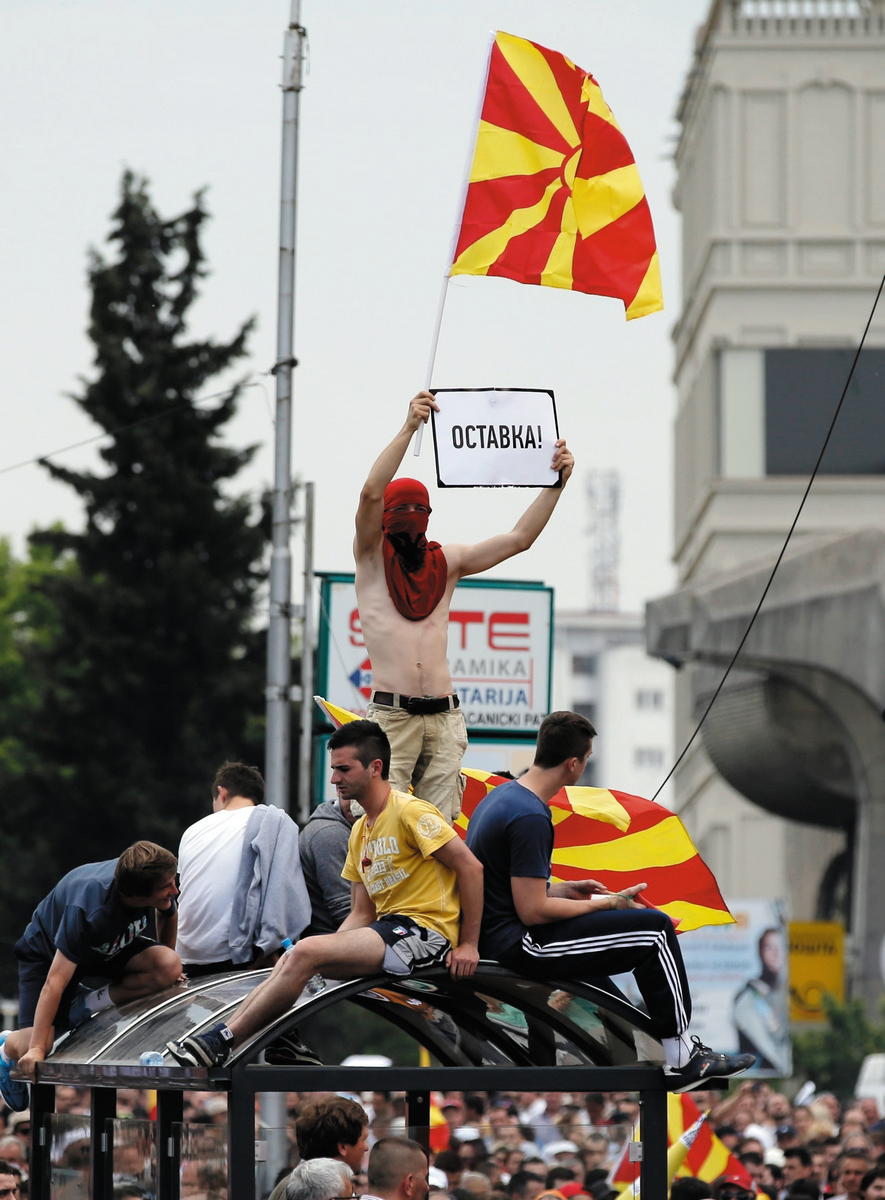
Those opposed to authority are boycotting the work in parliament and calling for large-scale rallies in the centre of the Macedonian capital. One of these rallies was held outside Government House in the centre on the Macedonian capital on 17 May. According to various reports, as many as 70,000 people came out into the streets, carrying banners bearing the words "Farewell, Nikola", as well as Macedonian, Serbian, Turkish, Romany and Albanian
banners. Soon after the protest had ended, some of the protesters set up a tent camp, which was efficiently provided with a water supply and food deliveries. The opposition members stated that they would not go anywhere until the government resigned, in particular the prime minister and Foreign Minister Nikola Poposki, since he "is to blame for Macedonia drifting away from the Euro-Atlantic path". The protesters were backed by MEP [member of the European parliament] Richard Howitt, deputy chairman of the social democrat faction in the European Parliament Knut Fleckenstein, former Bulgarian Prime Minister Sergei Stanishev, and representatives of the intelligentsia. Howitt stressed his standpoint by saying that Europe could not remain on the side-lines, but should "listen, see and take part".
Macedonia's Social Democratic Union (SDSM) (the "Democratic opposition") headed by Zaev has long attempted to achieve its aims, stepping up its level of confrontation with the authorities in January this year, when they allegedly got hold of compromising materials on the highest officials in the state. The officials were accused of falsifications, interfering in the judicial process, illegal monitoring of thousands of people, as well as plans to use force against the opposition. According to some information, audio recordings may have come to light due to the intervention of "foreign special services".
In response, the Macedonian bodies of law and order carried out a special operation code-named "Putsch", referring to it as preventing a coup d'?tat, aided by illegal means of surveillance and monitoring, as well as a threat to high-ranking officials. Criminal charges were instituted against the former director of the Security and Counter-Intelligence Directorate of the Macedonian Republic's Interior Ministry, Zoran Verusevski, his wife Sonja, the leader of the SDSM and the head of Strumica Municipality local government, Branko Palifrov. Zoran Zaev himself was not touched.
Later on, on this wave, Interior Minister Gordana Jankulovska, Sasho Mijalkov, director of Administration and Counter-intelligence, and the head of the Ministry of Transport and Communication, Mile Janakievski resigned. Gruevski himself stated that he had no intention of leaving his post, and his supporters also held wide-scale rallies in support of the authorities. The media reported that approximately 100,000 Macedonians joined these protests, shouting slogans relating to unity and independence, as well as against foreign intervention in the affairs of the country.
Official Skopje links the external intervention with neighbouring Albania and the countries of the West. On 9 May large-scale clashes between police and a terrorist grouping, advancing in armoured vehicles and brandishing explosives and automatic rifles, took place in the Northern Macedonian city of Kumanovo which is not far from the Serbian border and is regarded as the centre of the Albanian enclave. It is reported that the fighters whose targets were state institutions were connected with the "Kosovo Liberation Army".
Rumours had previously been going round about the existence of an underground Albanian group which had been attempting to bring about the secession of the Albanian-populated north-western regions from Macedonia by force. As a result of the real many-hour-long fighting, eight members of the bodies of law and order and several civilians perished and many people were injured. According to various reports, from 10 to 15 fighters were killed and approximately 20 of the attackers surrendered to the police.
Once again, the authorities and the opposition blamed each other for what happened. According to the authorities, the attack occurred at a time when the leadership were out of the country and when the opposition's protest actions had started to die down, i.e. an attempt to destabilise the situation in the republic can obviously be traced. The opposition accused the government of a set-up aimed at distracting attention from the domestic political crisis and the problems that had been accumulating during Gruevski's term in office. Thus, the reason for the heads of the Interior Ministry and the secret police resigning was allegedly that Western diplomats presented them with proof of secret talks with the Albanian fighters who carried out the attack on Kumanovo. At the same time, the Serbian newspaper "Vecernje novosti Srbija", quoting a source in the local special services, reported the arrest in Macedonia of a citizen from Montenegro suspected "of rendering assistance to the Kosovo Albanian fighters and informing them of Serbia's potential aims". The arrested person was for some reason handed over to American representatives who took him to the embassy in Skopje.
A citizen of Montenegro who had assisted the Kosovo Albanians was arrested in Macedonia and handed over to the US embassy, and information on Serbia's potential aims were reported. Who can say how genuine the Belgrade publication's sources are, but the report in itself shows all the complexity of the different interwoven interests in the Balkans and how closely interlinked the problems of the former Yugoslavian republics are. It is impossible to ignore the clear hint of a "foreign footprint". The Russian Foreign Ministry did incidentally immediately react to this.
"The impression is created that there is a link between the exacerbation of the situation in Macedonia and its pro-Russian policy," Russian Foreign Minister Sergey Lavrov stated after a meeting with First Deputy Prime Minister and Serbian Foreign Minister and incumbent president of the OSCE [Organisation for Security and Cooperation in Europe] Ivica Dacic. At the Russian Foreign Ministry they expressed the conviction that the situation in Macedonia is being caused to fall apart from outside in an attempt to push the country "into the abyss of a coloured revolution". In Smolenskiy Square [where the Russian Foreign Ministry is located - tr] they say that these actions are being triggered by the West, that "Western organizers of similar catastrophic scenarios" who use the "hands of others" to implement their plans, are behind the events in Macedonia.
In the view of the Russian side, the events in Macedonia are connected with the Macedonian government's refusal to join in the sanctions against Russia. Skopje has backed the latter in building the high-speed railway from the Greek port of Piraeus to [the Hungarian capital of] Budapest within the framework of the Chinese "Silk Road", as well as the construction of the "Turkish Stream" gas pipeline which may transit Macedonia. The new US ambassador to Macedonia, Jess L. Baily, who had previously been working in the US embassy in Turkey during the protests and riots in Taksim Square [Istanbul] has sparked certain suspicions in the Russian media. In their turn, the ambassadors and representatives of the USA, the EU, the OSCE [Organisation for Security and Cooperation in Europe] and NATO [North Atlantic Treaty Organisation] have released a joint statement on the events in Macedonia, in which it says that they hope that what has happened will be an incentive to the Macedonian leaders to unite and join in the dialogue on all the issues relating to that country, including the ongoing political crisis.
Against the backdrop of everything that has happened - as if there really is an exclusively domestic political crisis in Macedonia, or, as some people assert, the beginning of a spat between Russia and the USA to gain influence in this Balkan country now, the most alarming factor is the obvious attempts to rekindle the extinguished conflagration of inter-ethnic clashes between the Macedo-nians and the Albanians which previously occurred, especially in 2001, and formally ended in the signing of the Ohrid Agreement.
In the 1990s the Albanian minority spoke out against the independence of Macedonia and in favour of the autonomy of the Albanian regions, and the idea of creating a "Greater Albania" was floating around at the time. Major carnage was avoided. In compliance with the Ohrid agreements, the Albanian fighters disarmed, but the Macedonian government made a commitment to extend the rights of the Albanian population. Conflicts did
however occur in 2001, and a tense situation persisted after the secession of Kosovo from Serbia as well. Protests took place in Skopje in 2013 which developed into riots, against the appointment of the Albanian Talat Dzhaferi as defence minister.
The Macedonian population expressed their dissatisfaction that Dzhaferi had been involved in the inter-ethnic conflict in 2001. Now, in the event of a threat to their own side, the leaders of the Albanian community, proceeding from the Ohrid agreements, is threatening to block the work of Macedonia's bodies of power. Recently, Albania came out against Macedonia's plans to obtain NATO candidate status. The head of the Albanian government, Edi Rama, said that "Macedonia cannot be a member of NATO, if it does not comply with the Ohrid agreements and observe human rights".
Some information has come out that the Macedonian opposition may publish materials that are allegedly evidence of the Macedonian authorities' oppression of the Albanians. It would be naive to think that the inter-ethnic contradictions in what are for the moment the seemingly long peaceful Balkans would gradually fade away into the past. Those forces for whom the existence of them is advantageous in achieving current aims can always drag them up. Moreover, as mentioned above, in Macedonia itself the advantage of the "inter-ethnic map" is also obvious both to the authorities (distracting attention from their own mistakes and problems) and to the opposition (for whipping up a situation in which it is easier to provoke riots, regime change and attempts to come to power).
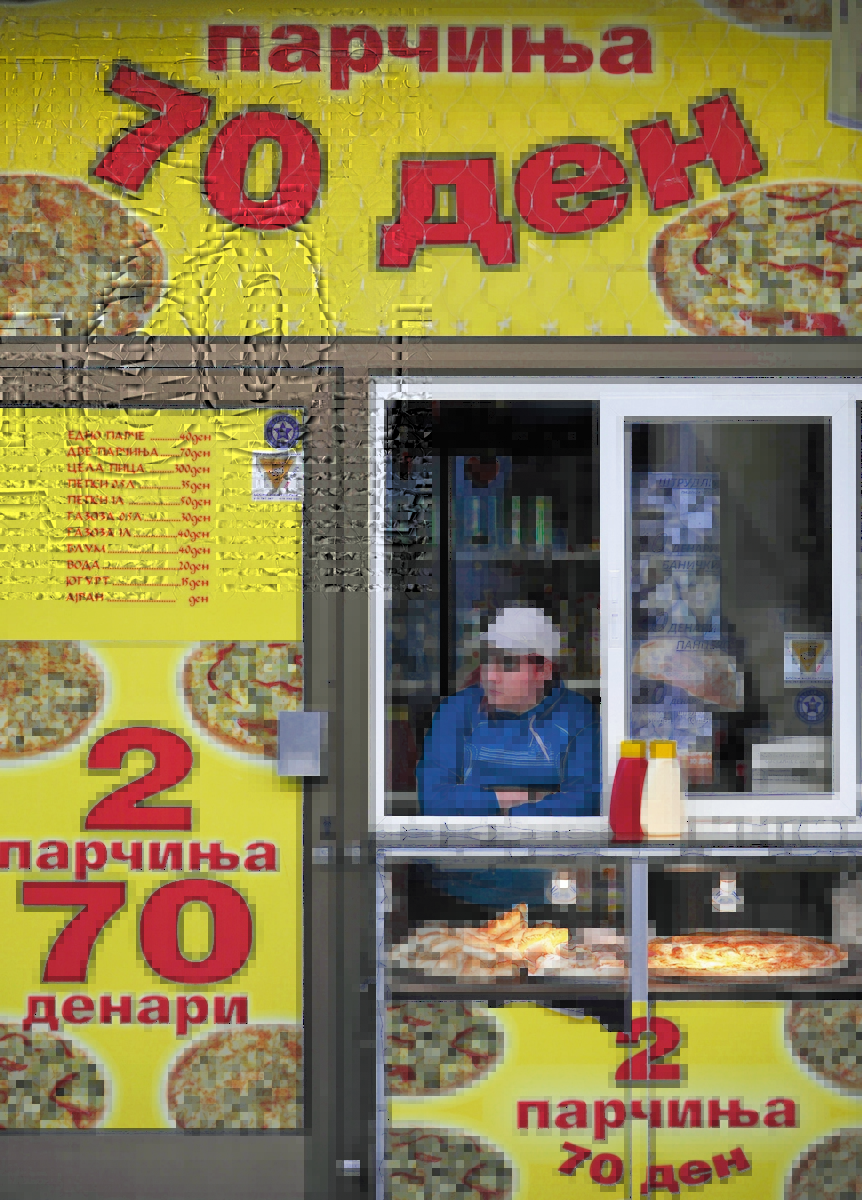
This is happening to a greater extent since Macedonia may be a small country, but it is unfortunately a troubled one, counting as one of the poorest in Europe (only in neighbouring Albania are things even worse). Unemployment stands at 30 per cent; approximately 450,000 citizens (i.e. one fifth) have left the country in search of a better life in the other countries of Europe.
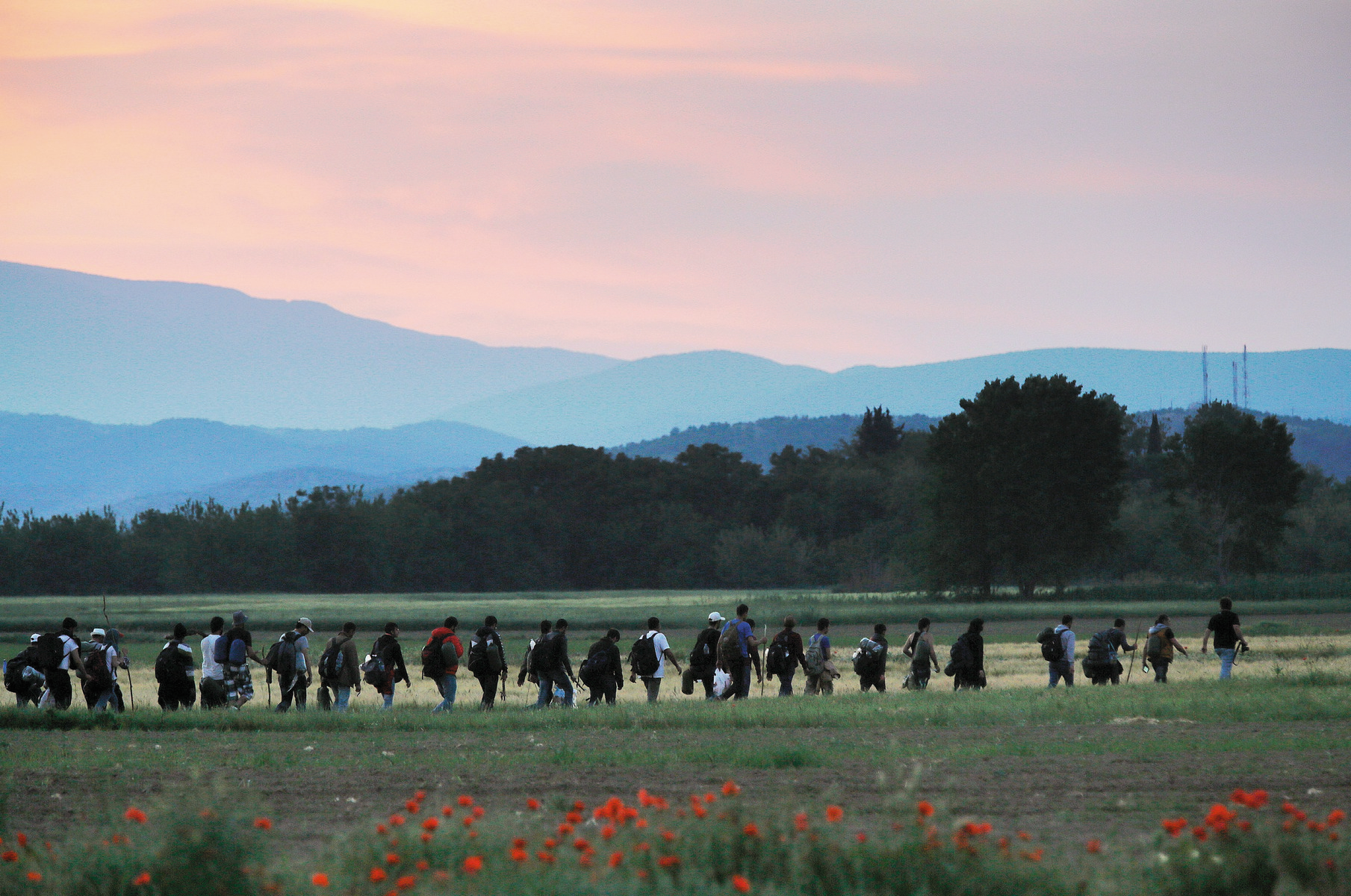
The situation is seriously being complicated by the fact that numerous illegal migrants from African and Middle Eastern countries are constantly flooding into Macedonia in an attempt to enter the EU, mainly Germany and Italy, via Greece and other Balkan countries.
Macedonia has remained in Europe's backyard for a long time now, because it simply cannot manage to become an EU member owing to Greece's veto. Whereas this Balkan country, which is in principle defenceless in the face of all the major world forces, is once again the victim of the geopolitical and economic confrontation between Russia and the West. If its territorial integrity will once again be threatened, there will without any exaggeration be a fatal breach in the present system of international relations.
RECOMMEND:
 875
875