

THE DISTURBING CASE OF NARDARAN
Attempts to destabilise the situation in Azerbaijan need genuine analysis and fitting conclusions to be drawn


Author: Chingiz MAMMADOV Baku
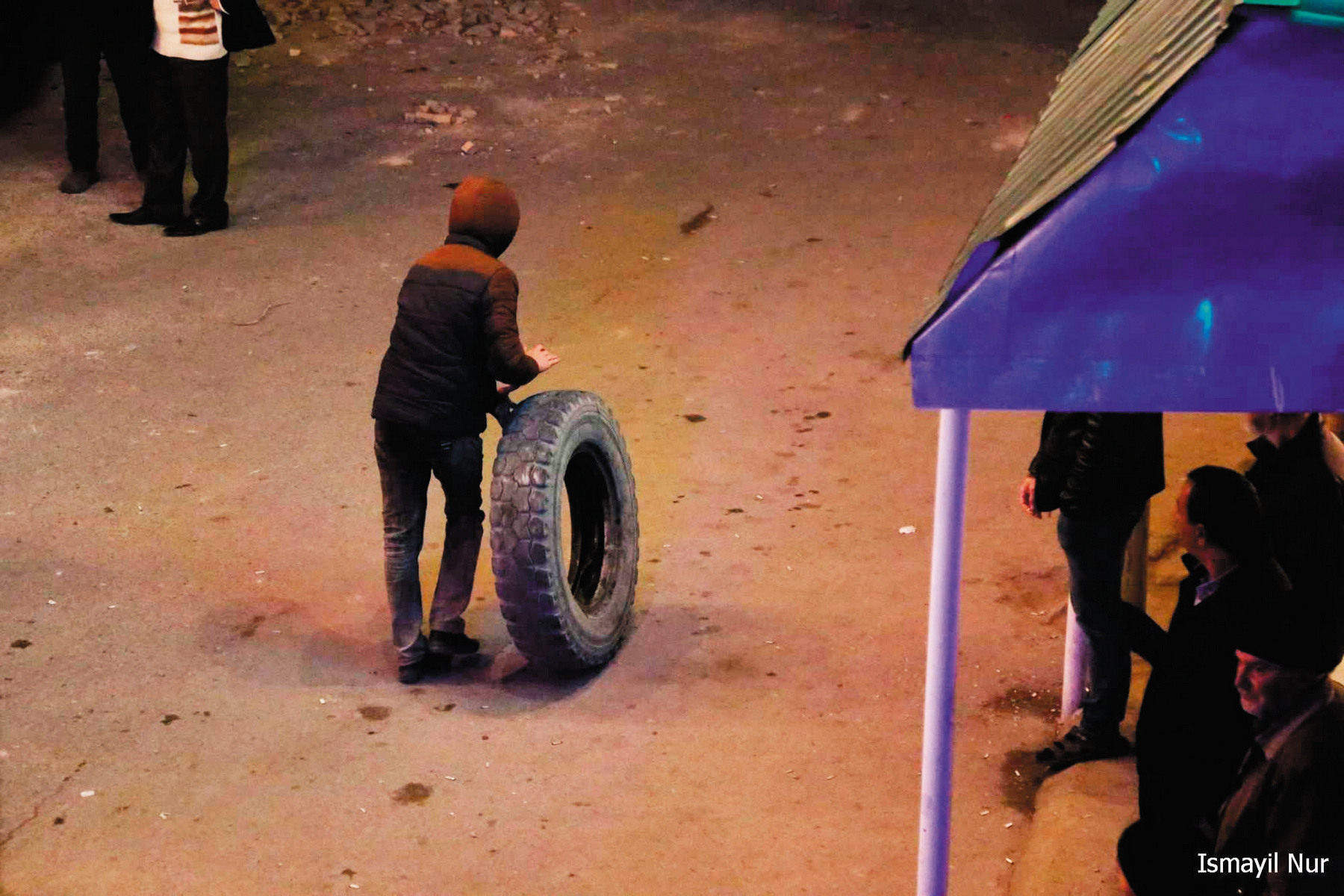
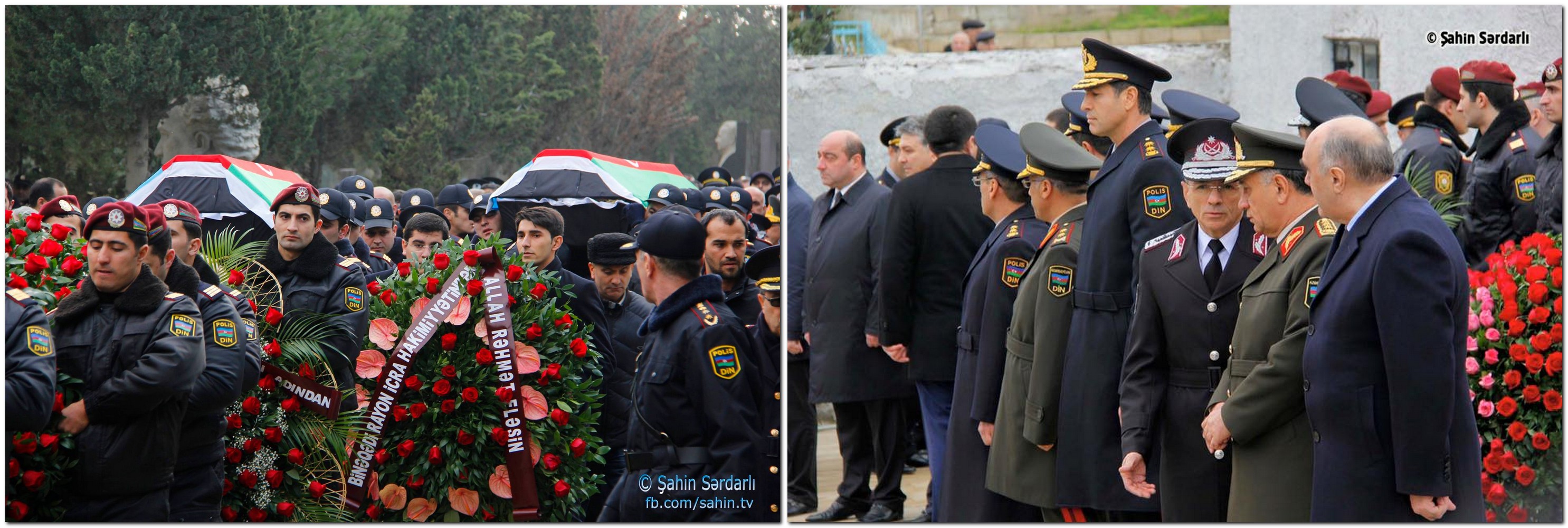
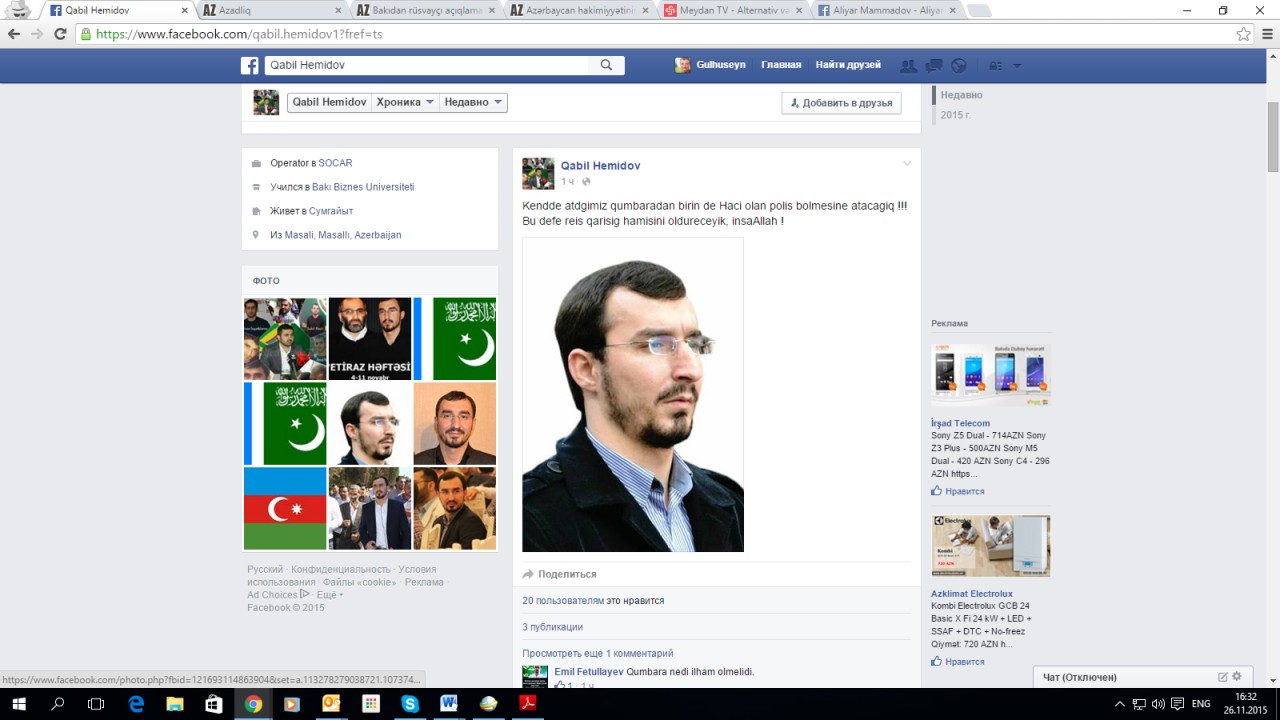
On 26 November the Azerbaijani law-enfor-cement bodies carried out a large-scale special operation in the Baku township of Nardaran, as a result of which members of an extremist group led by Tale Bagirov, acting under the guise of religion, were detained. During the operation members of the group put up armed resistance, as a consequence of which four members of the gang were killed. Two police officers were also killed while carrying out their duties. By a decree of Azerbaijani President Ilham Aliyev, they were presented with the supreme award - the order of the Azerbaijani Banner and buried with all honours in the second Avenue of Honorary Burial. Later, by a decision of the court, the 14 members of the gang who were detained, headed by Bagirov, were arrested.
Azerbaijan is trying to isolate itself from the dangerous trend of the use of religion as a guise for carrying out terrorist acts and other attempts to destabilize the socio-political situation which have today gripped a vast region of North Africa and the Middle and Near East. Unlike other countries, by taking preventive measures Azerbaijan has nipped attempts by such pseudo-religious groups to destabilize the situation and carry out their criminal designs in the bud. This is what happened in Nardaran. Nevertheless, what happened here on 26 November, like any other event in this area in recent years, was an isolated incident.
A slight digression: Nardaran is a township in Baku's Sabuncu District, 25 kilometres north of the Azerbaijani capital's centre. The population of this township is well known for its commitment to religion. An ordinary tourist visiting here for the first time, especially from Baku's glitzy centre, is amazed at the sight of the town's houses and fences covered with verses from the Koran, black and green flags with religious content and women in traditional Muslim dress. There is a feeling one has suddenly entered a suburb of Damascus, Beirut or some other Middle Eastern city, not the capital of a secular republic. However, in Soviet times Nardaran was famed for its horticulture and the output from its dairy and vegetable-growing state farm. Bakuvians would come here to the beach and for its fresh fish. However, in recent years this township has gained notoriety: riots of religiously minded groups, mass unrest, stand-offs with the police ending in violence, cars set on fire and even the use of fire arms that the local inhabitants somehow managed to obtain. There have been a number of such events in the township in the last 15 years or so.
There are various reasons for this - from political events in neighbouring Muslim countries to daily domestic issues - and all of this under the banners of religion. However, the authorities always try not to enflame the situation and intervene only when the protests become dangerous.
Many experts say that this is why Nardaran is the most convenient place for those within and outside the country who are trying to destabilize the situation in Azerbaijan, especially using the factor of religion.
This digression is important in order to understand the specific nature of the events of last week.
The name Nardaran first comes to mind when there are reports that "somewhere in Baku" there has been a confrontation with a religious undertone. However, there are many reasons to believe that what happened last Thursday had nothing to do with religion and the peaceful inhabitants of this township.
According to the authorities, the Muslim Alliance, which takes in members of a gang that has become inactive in Nardaran, has no registration either as a religious association or as a non-government organization. Incidentally, the State Committee for Work with Religious Organizations stresses the fact that the leader of an inactive group, Tale Bagirov, is not from Nardaran. He is known to have graduated from the Azerbaijani State Economic University and in 2005-2010 he received a religious education in the Iranian city of Qom. From 2010 to May 2011 he continued his religious education in the Iraqi city of Najaf. Bagirov offended several times in his youth (he was born in 1984). In particular, he was arrested for taking part in an illegal protest on 6 May 2011 and sent to prison for 18 months on a charge of hooliganism and showing resistance to the police while carrying out their duties. Bagirov was arrested for a second time in November 2013 and given two years in prison for possessing and selling drugs. In August 2014, after being charged with possessing banned substances at a detention centre, his term was extended by four months. Bagirov managed to spend only a few months in freedom before his latest arrest - he was released from prison on 30 July this year.
Immediately after this the Caucasian Muslims Board (CMB) described the events in Nardaran as an attempt to seize power and flatly rejected attempts to link them with religion. The State Committee for Work with Religious Organizations, other power bodies and the public, too, made similar statements. At the same time, none of them discount a foreign trace in these events. "These events were organized by exterior and interior forces with definite political objectives," the CMB's statement says.
However, these "definite objectives" are quite obvious. The events in Nardaran occurred at a time when an important event - the 12th session of the general conference of the Islamic organization for questions of education, science and culture (ISESCO) - was being held in Baku. Therefore, it is difficult to regard as a simple coincidence the attempt by Muslim Alliance to destabilize the situation in the country by using the religious factor precisely at a time when senior representatives of dozens of countries in the Muslim world were discussing measures to strengthen Islamic solidarity, as well as the fallacy of the opinion in the West of the link between Islam and violence and terrorism. In international public opinion Azerbaijan portrays itself as an initiator of a dialogue between civilizations and an island of stability in a world exposed to political, economic and religious cataclysms, and this has long since angered many people. Specifically, this is clearly not to the liking of extremist organizations operating under religious banners, including the rampant terrorists of Islamic State in neighbouring regions, who make no secret of their intentions to include Azerbaijan in their "cali-phate". At the same time, stability in Azerbaijan and its independent policy is not to the liking not just of IS but also many recognized states, and not just in the Muslim world, but in the Christian West, too. This has been mentioned more than once, and this factor should not be discounted. Incidentally, the support Azerbaijan has received from outside at this difficult time is of some importance. The foreign minister of neighbouring Turkey, Mevlut Cavusoglu, who was also in Azerbaijan at the time of the events in Nardaran, said these events were clearly a "terrorist act".
In any event, Azerbaijan is not accustomed to attempts to destabilize the situation under any pretexts and many more large-scale attempts of this nature have been successfully thwarted on many occasions, especially in the early years of the republic's independence. The authorities maintain that attempts to undermine religious stability in Azerbaijan are pointless, because those who harbour such destructive ideas do not have the broad support of the population. Nevertheless, while the situation in the country may be generally favourable, certain steps are needed to strengthen state control over the situation in secular Azerbaijan where, according to the Constitution, the state is separate from religion.
The true circumstances and motives behind what happened in Nardaran are up to the investigation to explain and these events need to be properly analyzed and the correct conclusions made. Incidentally, in the light of recent events, important steps are already being planned in this direction. Specifically, the State Committee for Work with Religious Organizations plans to initiate a tightening of the law on freedom of religion. It is a question of introducing a regulation whereby religious activity in Azerbaijan may be carried out only by one who has received the appropriate basic education in the country, but not abroad, and has not picked up harmful ideas. According to the head of the state committee, Mubariz Qurbanli, a package of proposals on this score will be sent to the Milli Maclis very soon.
RECOMMEND:
 749
749

