

A KNOT OF CONTRADICTIONS
Will the cease-fire agreement in Syria help to achieve a political settlement of the conflict?


Author: Eldar PASAYEV Baku
All immediate parties to the conflict and the entire world community have fervently welcomed the ceasefire agreement on Syria. However, this did not prevent many experts from casting doubt on the viability of the treaty. There are certainly quite a lot of reasons for that. The main reason is that major forces having their interests in the region, such as Russia, the USA, Turkey, Iran and Saudi Arabia, pursue absolutely different goals and their coincidences are only occasional and, most often, purely declarative. So, what impelled the world leaders to meet each other halfway?
The Russian-US joint statement dated 22 February and declaring that the ceasefire regime will take effect at 00:00 Damask time on 27 February, was transformed into a UN Security Council resolution within just a few days and was supported by all 15 member states of the organization. The document points out that the Syrian government troops and opposition groups "have accepted and committed to abide by the Terms of the Cessation of Hostilities, and as such are now parties to it". However, as was pointed out earlier, the High Committee for Negotiations, the core organization of the Syrian opposition, has supported the truce for two weeks, saying that the other side will have the opportunity to confirm the seriousness of their commitments during this period. For its part, speaking at a meeting of the UN Security Council, Bashar Jaafari, Syria's permanent representative to the UN, emphasized that official Damascus reserved the right to respond to violation of the truce with force. The resolution also urges all member states, especially members of the International Syria Support Group (ISSG), to use their influence to support ceasefire and to create conditions for a lasting armistice. Negotiations between representatives of the Syrian government and the opposition must be resumed on 7 March. In addition, the document says it is necessary urgently to ensure the unimpeded and safe access for the delivery of aid to all those who need it in Syria. According to UN estimates, more than 13.5 million residents of the country need humanitarian aid as of today and more than 480,000 Syrians are in besieged areas.
A special coordinating centre for reconciliation of opposing sides has been set up at the Russian airbase Hmeymim in Latakia. According to Russian military, requests instantly began to come in to the centre from forces wishing to take part in the ceasefire in Syria. According to reports, a telephone hotline has been set up between Moscow and Washington to enforce the treaty terms and settle operational problems. Russia and the USA expressed preparedness "to work together to exchange pertinent information" in order to delineate areas held by different groups and to guarantee that no groups or areas designated in the agreement come under bombardment. This is just the point where the most problematic part of the Security Council resolution begins because, according to the parties' decision, the ceasefire will not apply to the terrorist groups of Islamic State (IS) and Jabhat al-Nusra. Meanwhile there are no effective mechanisms to distinguish between rebels and terrorists.
This is most pronounced in the situation around Aleppo where opposition forces, Jabhat al-Nusra rebels, IS rebels, al-Assad's troops and Kurdish forces are closely intermixed on a small area. So this town blockaded from all sides by opposing forces can serve as a graphic example of what is going on in the country as a whole.
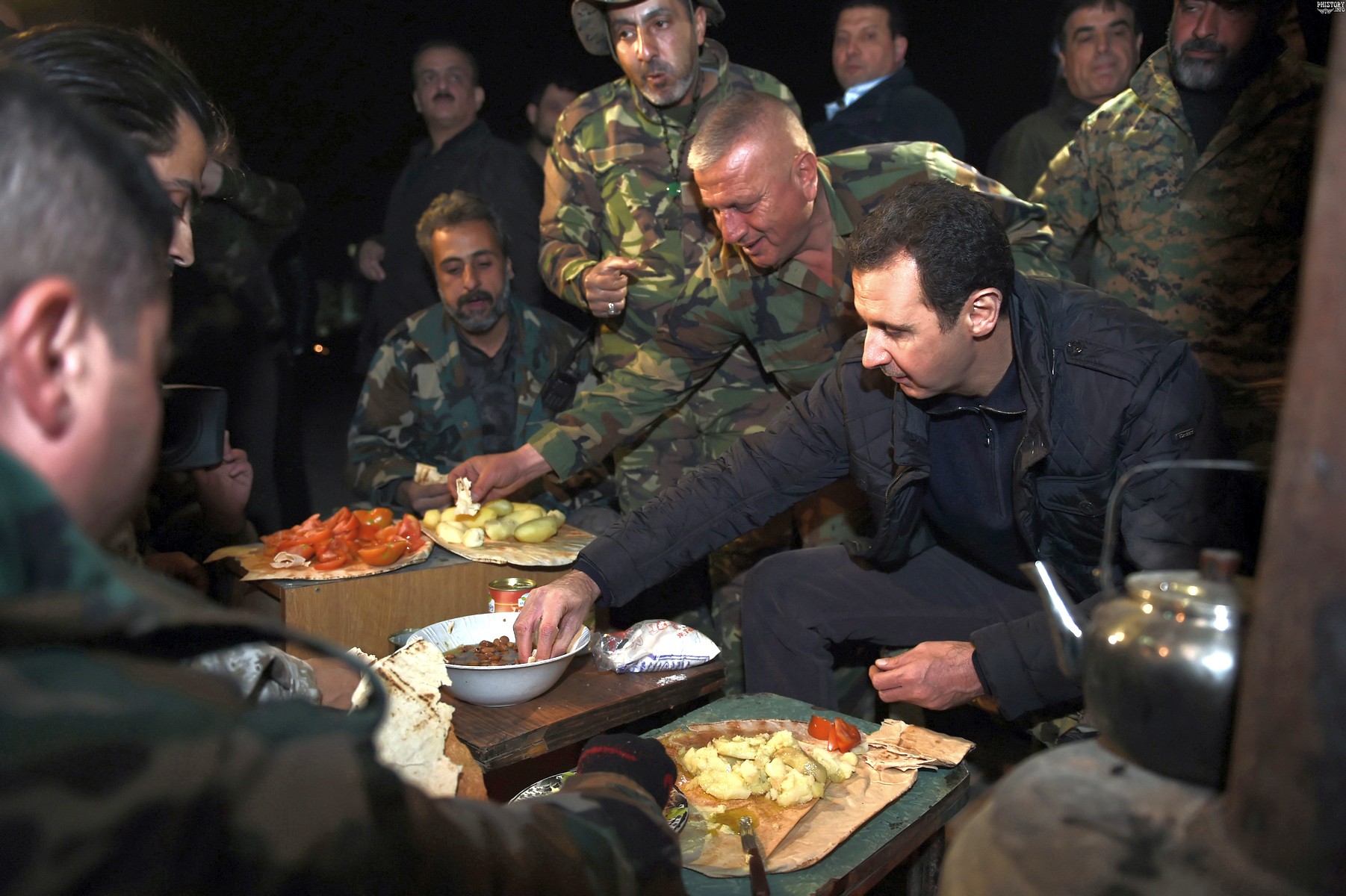
According to incoming news, government troops supported by Russian aviation and assisted by Iran, achieved significant successes at Aleppo in early February. Reportedly, al-Assad's troops cut off the last road used to supply provisions to rebels in Aleppo. By the way, western critics pointed out that Russia was dragging its feet in the Munich and Geneva talks for the Syrian government's troops to expand the areas under their control. Now that ceasefire has been concluded, Russia has made it clear that it will continue to bomb Jabhat al-Nusra and therefore Russian and Western analysts have concluded that it is very likely to hit opposition troops. According to US Department of State spokesman Mark Toner, the Russian authorities have promised not to deliver strikes in future on Syrian rebels regarded by Washington as moderate opposition. It has been reported that, as part of efforts to implement the agreement, a map of the current situation in the Syrian Arab Republic has been handed to a staff member of the defence attache at the embassy in Moscow.
In this situation, the USA will try to prevent the destruction of key rebel groups. So it is no surprise that, a few days before 27 February, US media ran publications that Washington had prepared a "plan B" in case the truce failed. With a reference to contacts at the US Presidential Administration, The Wall Street Journal announced that Pentagon chief Ash Carter, Joseph Dunford, the chairman of the Joint Chiefs of Staff, and CIA Director John Brennan had suggested that President Barack Obama should prepare an emergency escape for a difficult situation. According to The Guardian, US Secretary of State John Kerry has announced that the plan may be used if Syria fails to form a transitional government in the coming months.
It looks like opinions are divided in Washington and among the US general public. One can hear voices calling to put more pressure on al-Assad. Options are being discussed, such as providing intelligence data for rebels and creating a "safe zone" in northern Syria. The WSJ suggests more funding for rebels and supplying advanced weapons to "groups like Kurdish forces fighting Islamic State in northern Syria and the Jordanian-backed Southern Front, which fights both the regime and Islamic extremists". The newspaper also holds that "the U.S. should also provide training and funding to rebel training camps in neighboring countries like Jordan and Turkey". On the other hand, in his article for the Politico magazine, journalist and writer Robert Kennedy Jr., the son of Robert Kennedy, the younger brother of US President John Kennedy, says that the USA is responsible for strengthening radical groups in Syria, calls the war going on there "a war over control of resources" and argues that "The million refugees now flooding into Europe are refugees of a pipeline war and CIA blundering". Kennedy Jr. believes that America should radically reduce its military presence in the Middle East and let the Arabs run the Arab world on their own. It is noteworthy that, speaking about creating a "safe zone", Kerry did not show himself as an ardent supporter of this idea and pointed out the need for ground support which would require some 15,000 to 30,000 soldiers, according to the Pentagon's calculations. All that can certainly lead to open confrontation with Russia. Although, it need not necessarily involve US forces. It may involve military from Turkey or Saudi Arabia and the media have actively discussed this for a long time. By the way, the first aircraft of the Saudi Arabian air force have already landed at the Turkish airbase Incirlik.
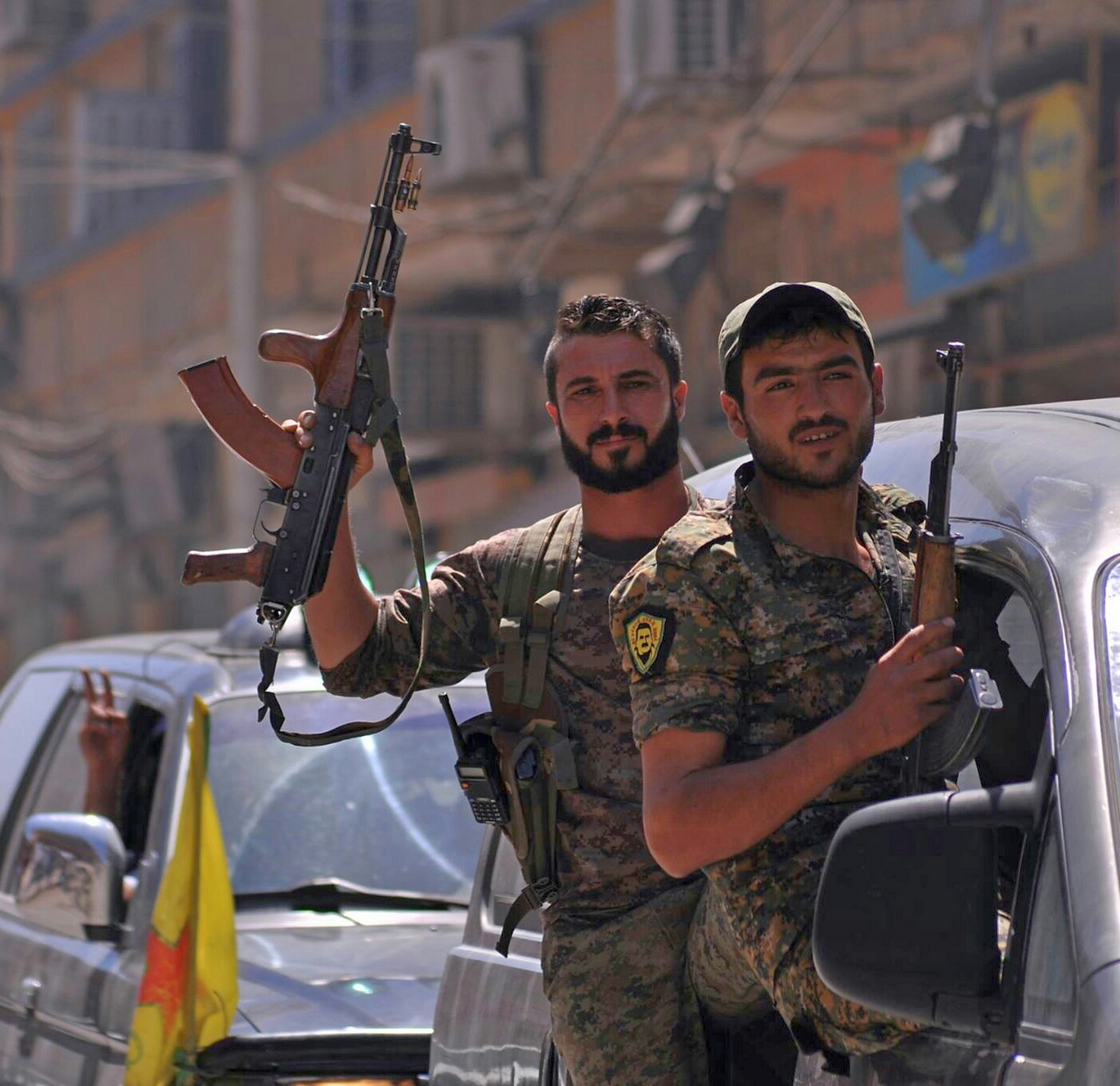
If the main cause of the conflict is indeed energy supplies or, as Robert Kennedy writes, a project rejected by al-Assad to build a pipeline from Qatar, then countries of the region can get what they desire only after Bashar al-Assad has stepped down. But Russia and Iran will resist it in every way possible because otherwise they may lose a lot, economically and politically. Unlike the USA, Russia has no guarantee that, if al-Assad steps down, a person loyal to Moscow will come to power in Syria. Once the Kremlin failed to uphold its interests in neighbouring Ukraine, what can be said about faraway Syria? So the way out for Russia is to help al-Assad stay in power as long as possible. Or guarantee control for itself over a territory in Syria from which Russia can keep its finger on the pulse. But that would lead directly to a partition of Syria. By all appearances, the USA does not rule out this possibility. At least Kerry, the media say, let fall a word about it. It could be okay but there are two more factors complicating the situation in Aleppo and throughout Syria. It is the huge IS forces and their idea to create their own state, which has already been materialized, in a sense. There are also Kurdish positions located quite close to the al-Assad-opposition confrontation zone. On the one hand, the Kurds are pressing the enemy to clear the area for themselves. On the other hand, they are fighting against IS and Jabhat al-Nusra. The Kurds - their Democratic Union Party (PYD) and People's Protection Units (YPG) - have backed the truce but the thing is they are responsible for deadly terrorist acts in Turkey, and Ankara has already made it clear that it views the armistice agreement as not applying to them. "The agreement on the cessation of hostilities in Syria has no reference to YPG as a terrorist organization. But it should. They did not include it. The agreement on the cessation of hostilities applies to Syria but decisions concerning security measures in Turkey are taken only in Ankara. If any party tries to create a threat to Turkey's security, that agreement will cease to be binding on Turkey," Davutoglu emphasized.
As a matter of fact, it turns out that, despite the resolution approved by the UN Security Council, the Syria conflict does not even have a clear-cut definition. If we take into account only the confrontation between the opposition and the government, this is a civil war in pure form. Considering IS, Jabhat al-Nusra and other radical groups, as well as reasons for Russian and US interference, it is an international war against terrorism. Viewing solely the Middle East countries, it is a fight for influence in the region. Robert Kennedy speaks about a pipeline war. As for Turkey, the conflict in Syria poses a threat to its national security and territorial integrity. It is unclear how this knot of contradictions could be solved through a shaky ceasefire. But when a ceasefire is concluded, it means that someone needs it. Possibly the parties are trying to get as many civilians as possible out of the war zone. After all, whatever the reasons behind the conflict, accusations of deaths among civilian population will not enhance any party's position.
RECOMMEND:
 657
657

