

KEY COMPONENT
Azerbaijan and Kazakhstan initiated a project to lay a deep-sea fibre-optic communication line in the Caspian.
Author: Aghasaf NAJAFOV
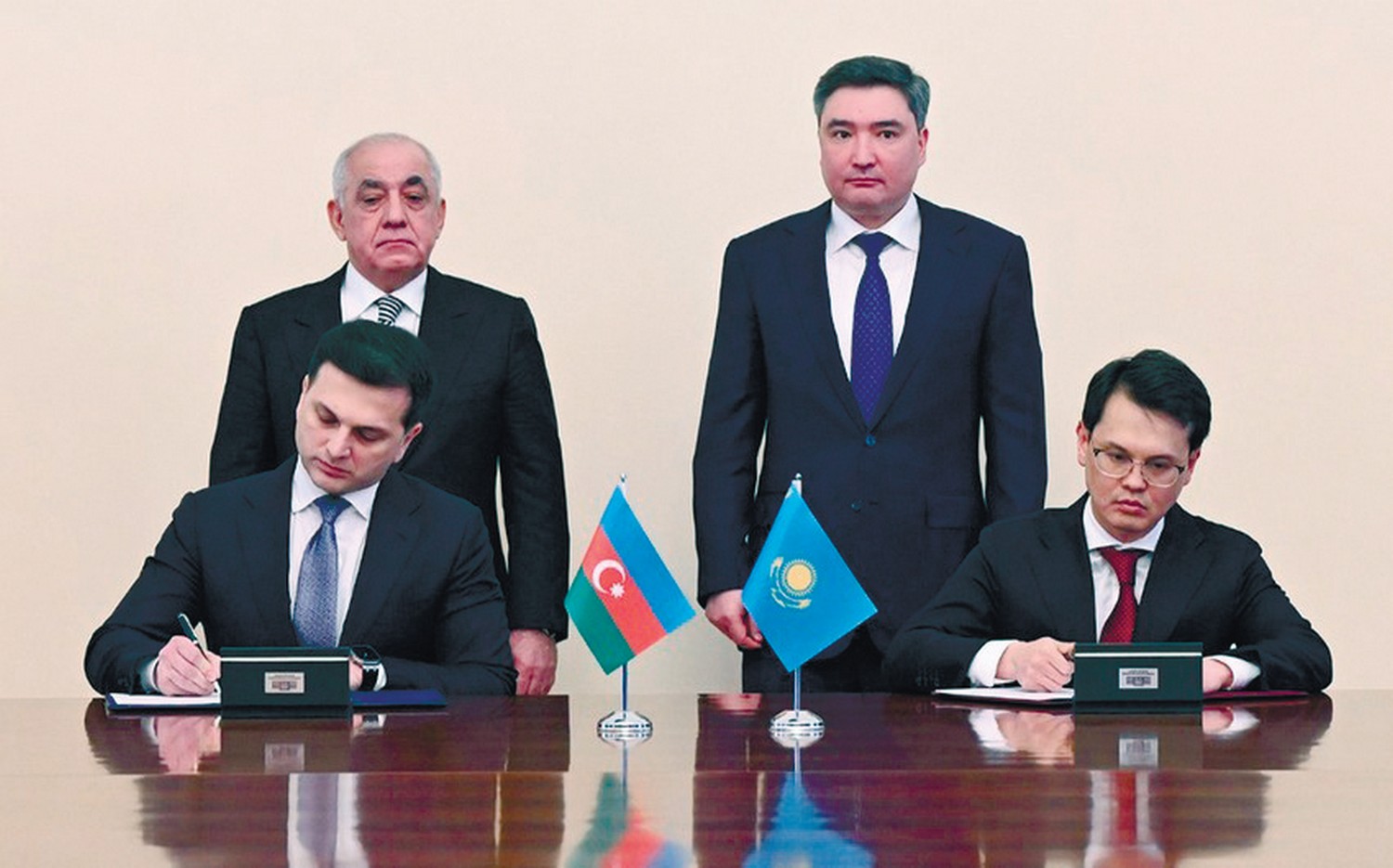
The concept of establishing a connection between the western and eastern shores of the Caspian Sea via an optical internet cable, first proposed twenty-five years ago, is now becoming a reality. The Prime Ministers of Azerbaijan and Kazakhstan, Ali Asadov and Olzhas Bektenov, have signed an agreement to commence work on the underwater TransCaspian Fibre Optic (TCFO) line. This initiative is set to play a pivotal role in the "Digital Silk Way" project, which aims to establish a digital corridor between Europe and Asia. The underwater line is also critically important for our country in strengthening the network infrastructure as part of the "Concept of Digital Development in Azerbaijan."
This project represents the culmination of 25 years of planning and collaboration between our country and its partners. The concept of establishing an internet cable connecting the western and eastern shores of the Caspian Sea has been under consideration since the late 20th century. Specifically, in 1999, the Trans-Asia-Europe (TAE) project was initiated by the European Union, which included this option in its plans. However, due to a number of external factors, this initiative was implemented without the underwater component, with the result that the fibre-optic communication line connected Southern Caucasus with Central Asia overland via Iran. A decade later, in 2008, Azerbaijan initiated a project called the Trans-Eurasian Super Information Highway (TASIM), which was supported at the UN level and by several EU countries. This led to the commencement of work on the marine segment of the fibre-optic line. Subsequent partial implementation of TASIM has enabled the expansion of backbone internet cables linking Azerbaijan with Western countries. However, the component involving the TransCaspian optical line could not be realised.
Further negotiations regarding the laying of a marine optical segment between Baku and Astana are ongoing. The telecommunications companies from both countries, AzerTelecom and Kazakhtelecom, agreed to form a consortium and a joint working group. A bilateral intergovernmental agreement was ratified, and in November 2019, a ceremonial event was held to announce the project's commencement. However, the project encountered delays due to the impact of the pandemic, global economic challenges, and geopolitical changes in the post-Soviet region. Nevertheless, during that challenging period, it was possible to increase the number of future partners. In 2021, the project entered a new phase with the signing of memoranda of cooperation with telecommunications operators LLC ElKat and LLC Telegraph 42 Management Gmbh, representing Kyrgyzstan and Uzbekistan, respectively. In December of that year, another partner joined the project—an agreement was signed with Turkish Türk Telekom International.
In the past two years, a renewed impetus has emerged: AzerTelecom and Kazakhtelecom signed a cooperation agreement regarding TCFO, and the telecommunications operators from both countries agreed to invest over $50 million on a parity basis. By this time, the final high-level design (HLD) for the project had been adopted, final research on upcoming works had been completed, and a detailed roadmap had been approved. A joint venture, Caspinet B.V., has also been established, with equal shares held by all participants.
Final Document
The logical continuation of this process was the agreements reached during Kazakh Prime Minister Olzhas Bektenov's official visit to Baku on March 3. The final document was signed, confirming the contract for laying the fibre-optic communication line along the bottom of the Caspian Sea. The TCFO project, which is of strategic importance to the entire Caspian region, involves the construction of an underwater optical line extending 380 km, connecting Azerbaijan's Sumgayit with Kazakhstan's Aktau. This line will provide high-speed internet connectivity of approximately 400 terabits per second. The work will be carried out in several stages, including the assessment of coastal areas and the seabed, the design, supply and transportation of high-quality and environmentally resistant cable, and its subsequent laying. AzerTelecom and KazakhTelecom aim to complete these works by the end of 2026.
The project will unify the digital network infrastructure across the region, ensuring the most efficient and shortest route with high data transfer speeds and minimal latency. The project will also facilitate the sustainable transit of digital traffic from China and other Asian countries towards internet hubs in EU states.
Azerbaijan and Kazakhstan stand to benefit significantly from this initiative. The enhancement of network capacity and the increase in cross-border data transit flows will enable Caspian neighbours to accelerate their digital infrastructure development for data storage and processing along the IP corridor. The project will also accelerate the process of laying new telecommunications networks within each country, the implementation of plans for constructing new powerful data centres to service international orders, and the adoption of global cybersecurity standards. Finally, this project will enhance the competencies of local IT specialists engaged in servicing the expanded digital space.
Azerbaijan has openly expressed its intentions to become a digital hub in the region by hosting substantial cache servers in our country's data centres for storing and delivering content to neighbouring states across the vast Eurasian region—spanning Central Asia, Georgia, Iran, Iraq, Afghanistan, and potentially extending to the Middle East.
It is of paramount importance to note that approximately four years ago, work commenced on developing the western vector of the Digital Silk Way optical highway. The initiative was led by an international group of companies, NEQSOL Holding, which acquired one of Georgia's largest telecommunications companies, Caucasus Online. This company owns an optical fibre cable line laid along the bottom of the Black Sea that facilitates internet traffic transit from Europe to Southern Caucasus. Following the commissioning of the TransCaspian fibre-optic line in 2026, it is anticipated that this will connect with the cable infrastructure of the Black Sea optical line.
Participation in servicing transit IP traffic and database storage services at an international level promises clear technological advantages as well as significant financial returns. In this context, regional projects of this magnitude are valuable for their long-term sustainability and stability.
The implementation of all components of the Digital Silk Way is essential for initiatives outlined in Azerbaijan's "Concept of Digital Development," approved by President Ilham Aliyev in January 2025. The document aims to accelerate digitalisation in public administration and stimulate transition towards a digital society while outlining steps to expand technologies such as Smart City, Internet of Things (IoT), and artificial intelligence (AI). The concept also considers accelerating processes of digital transformation in the economy involving elements of the Fourth Industrial Revolution.
The introduction of modern IT technologies requires appropriate communication means to be ready and available. Depending on the services employed, various software packages may necessitate multifunctional types of communication (5G, LoRa, high-speed fibre-optic lines etc.) according to their purpose. A crucial direction outlined in Azerbaijan's "Concept of Digital Development" is the expansion of internet infrastructure and the enhancement of speed characteristics and network resilience within the country. This is vital for implementing projects under the Smart City programme in Baku, Ganja, Sumgayit, as well as in the revitalised Garabagh region where digital management systems for "smart cities and villages" are being introduced while digitising production and utility sectors.
Azerbaijan's network capabilities, following the laying of the marine segment of fibre-optic lines and work related to Digital Silk Way, will contribute significantly to strengthening the country's digital foundation.
RECOMMEND:
 237
237

