

HOT DEBATES
European countries confirmed their interest in Azerbaijani gas, EU have yet to provide clear guarantees
Author: Nigar ABBASOVA
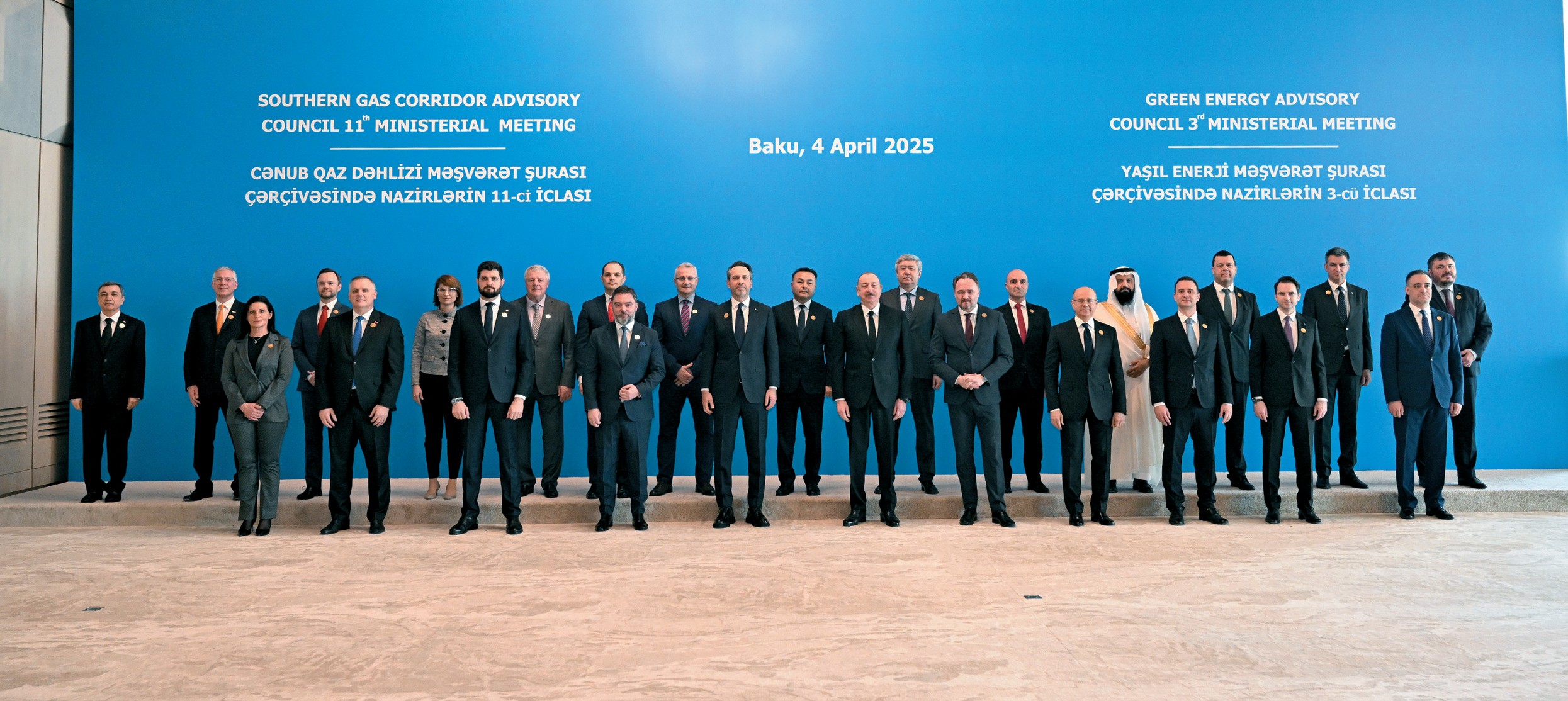
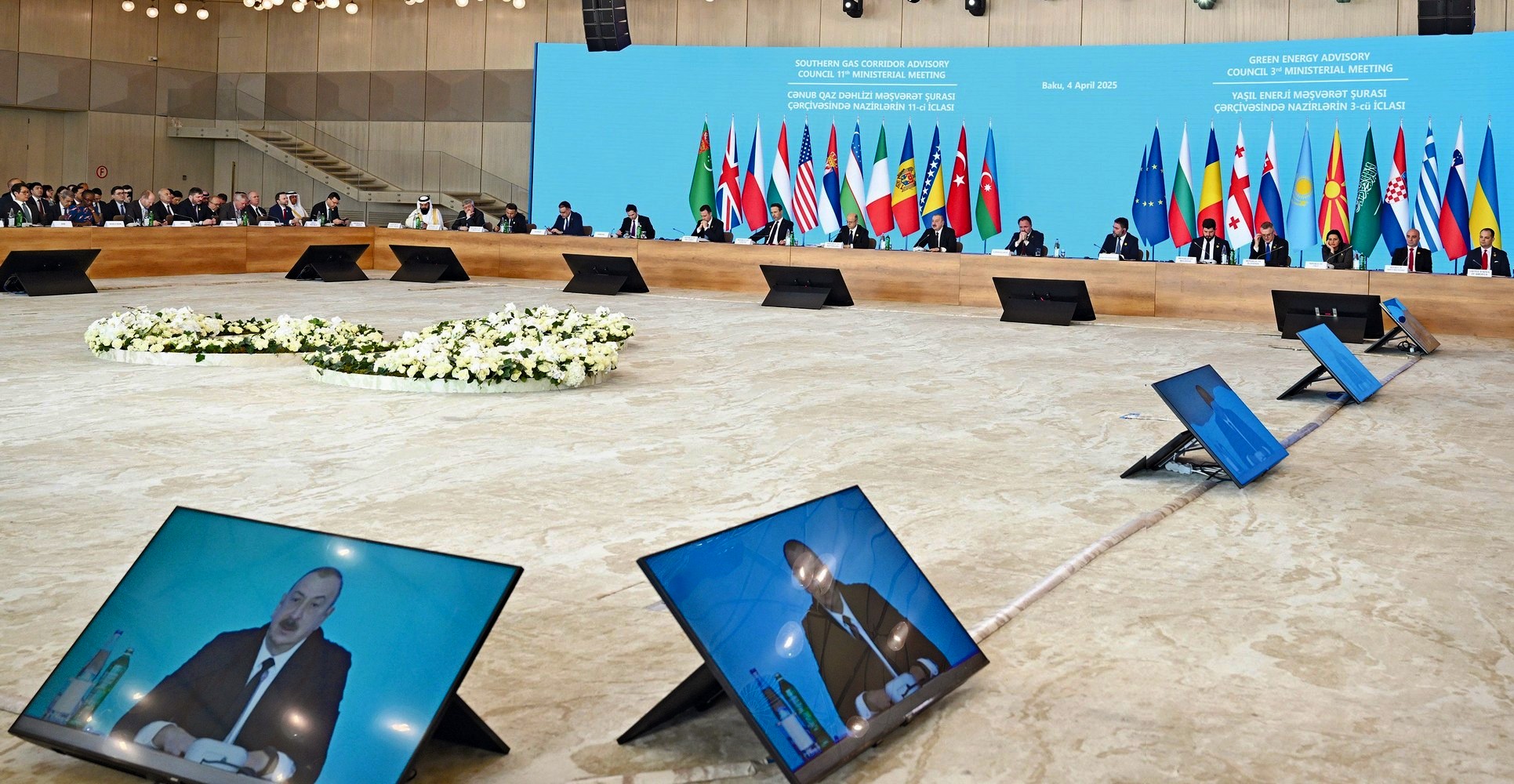
The issues of energy security and sustainable gas supply remain relevant at all times. Further discussions on this delicate issue took place in Baku as part of the 11th ministerial meeting of the Southern Gas Corridor (SGC) Advisory Council (CC) and the 3rd meeting of the CC on green energy. The two key events brought together representatives from 23 countries, six international organisations and 44 companies.
Azerbaijan has restated its commitment to increasing natural gas exports and to concurrently developing the renewable energy sector (RES). During the meetings, new agreements were signed to promote the green energy direction.
The European Union, for its part, reaffirmed its commitment to the policy of rejecting Russian gas, emphasising the diversification of supplies, including through imports from Azerbaijan.
Finance is of paramount importance
In Baku, it was reaffirmed that the goals of increasing Azerbaijani gas supplies by 2027 remain valid. In this regard, it remains important to double the capacity of the key elements of the South Gas Complex – the Trans Adriatic Pipeline (TAP) to 20 billion and TANAP to 31 billion cubic metres per year. However, Azerbaijan recognises the importance of aligning the solution to this challenge with the needs of Europe and the evolving position of the continent's countries, which are progressively opting out of long-term gas purchase and sale contracts exceeding 15 years.
President Ilham Aliyev commenced his address by providing a summary of the results achieved by the SAGC since its establishment on 31 December 2020. Following the formalisation of the Memorandum on Strategic Partnership between Baku and Brussels in July 2022, there has been a notable increase in the supply of Azerbaijani gas to Europe. The energy sector has seen a substantial rise in gas supply, with a 60% increase from 8 billion cubic metres in 2021 to almost 13 billion cubic metres in 2024. Europe is already the recipient of more than half of all Azerbaijani gas exports, totalling approximately 25 billion cubic metres, and this figure is set to increase.
"Today, this is already a significant volume. With plans to develop new fields and increase production at existing ones, consumers can expect even more gas. The implementation of the green agenda will allow significant volumes to be saved, thereby strengthening the export potential. This will consolidate Azerbaijan's role in ensuring the energy security of our partners," the Azerbaijani leader stated.
Azerbaijan currently exports natural gas to 12 countries, eight of which are EU members.
"And the geography of our gas supplies to Europe will certainly expand, as today we are already participating in the creation of the gas distribution network of a number of European countries. Some of them are not in possession of it, and some of them need to expand it. Azerbaijan, as an investor, is planning to implement this strategy. Consequently, the geography of our gas supplies will be expanded through various means, including interconnectors," Ilham Aliyev added.
The head of state also noted the need to expand the South Gas Complex, which is now operating at full capacity. He stated that this would require substantial financial investment. In this regard, he once again called on international financial institutions, which had previously refused to support fossil fuel projects, to reconsider their policies. "This is particularly relevant in light of the significant geopolitical shifts we are currently observing. Without this, any further investment in transport infrastructure and even in extraction will be very problematic."
The President explained that Azerbaijan has accumulated considerable experience in combining corporate financing and borrowed funds, which has allowed it to successfully implement large-scale projects in the field of hydrocarbon production and transportation. "Therefore, when a policy of ceasing to finance fossil fuel projects is introduced, it communicates a clear signal to investors, companies and countries. This is not a positive signal... We hope that despite the ambitious "green" agenda in Europe, fossil fuel producers and fossil fuels, as an important factor of energy security, will not be forgotten, and that there will be no prejudice against them," Aliyev emphasised.
The President of Azerbaijan also addressed the issue of concluding long-term contracts. What is the rationale behind this approach? As Ilham Aliyev explained, the investments made by Azerbaijan in the construction of the South Gas Complex have not yet paid off – the project has not yet reached "zero balance". In this regard, it is essential to have confidence in the long-term demand for Azerbaijani gas in the European market. "It is imperative that we ensure the ongoing demand for our gas in Europe, our primary market, for the foreseeable future. Absent such a guarantee, investors and countries alike will be reluctant to invest. Consequently, there will be a significant shortage of natural gas," he stated.
European Commissioner Dan Jergensen's speech did not provide direct answers to questions about plans to double the capacity of the South Gas Complex from the current 10 bcm per year. However, he praised the energy partnership between Brussels and Baku. He emphasised that this collaboration has been instrumental in ensuring Europe's energy security and diversifying gas supplies in the face of global geopolitical shifts triggered by the Russia-Ukraine conflict. "The partnership with Azerbaijan and co-operation on the SGC has played an important role in our efforts to diversify gas supplies and reduce our dependence on Russian gas. In the coming years, we expect pipeline gas from Azerbaijan to play an important role in the EU energy system as part of the transition to zero emissions," the European Commissioner is confident.
The EU representative also welcomed the efforts "aimed at expanding the capacity of the gas transport infrastructure". In his opinion, this mechanism is important for the sustainable operation of the SGC itself, as well as for addressing challenges such as combating methane emissions from the oil and gas sector, energy efficiency, RES development and modernisation of the electricity grid.
Plans for the SCC
Statements by the energy ministers of the Balkan region and South-Eastern Europe showed their great interest in the expansion of the South Gas Complex and the purchase of Azerbaijani gas.
The Bulgarian Energy Minister, Zhecho Stankov, has stated that his country is committed to developing its own gas infrastructure in a consistent manner. The purpose of this policy is to achieve the objectives of national and European priorities. These include the creation of an interconnected and unified pan-European gas market and the assurance of reliable and diversified supplies. "We would like to reaffirm our commitment to developing partnership relations within the framework of the South Gas Centre," he said.
Romanian Energy Minister Sebastian-Ioan Burduja has expressed Bucharest's commitment to the expansion of the SSC, stating that it is of strategic importance for Europe's energy security. "The expansion of the corridor towards Southeastern Europe and the Balkans is an important step to provide the region with reliable, predictable and competitive energy supplies," he emphasised.
Slovenia's Minister of Environment, Climate and Energy, Bojan Kumer, described the SSC as a vital energy route, saying that it "provides a stable and strategic link between the Caspian region and European markets."
Italy's Deputy Minister of Environment and Energy Security, Vannia Cava, has stated that the TAP project will contribute to Italy's emergence as a pivotal energy hub, connecting Europe to the Caspian region and North Africa. She has also confirmed that the process of augmenting the pipeline's capacity is already underway.
The representatives of Greece, Serbia, Croatia, North Macedonia and Croatia also expressed views that were broadly similar.
Moldova's serious interest in long-term Azerbaijani gas
Remarkably, Moldova has expressed a significant interest in acquiring Azerbaijani gas on a long-term basis. Firstly, the Energy Minister, Dorin Dzungietu, stated at the SC meeting on SCC that the diversification of gas supply sources, including imports from Azerbaijan, is crucial in ensuring Moldova's energy security.
"We see the Vertical Gas Corridor (a project to create a supply route for non-Russian gas from terminals in the Eastern Mediterranean to Moldova and Ukraine, R+) an essential component of our future energy strategy. Continued diversification of supply sources, including imports from Azerbaijan, will be key to meeting our needs," the minister said.
The importance of this subject for Moldova was also underlined by Deputy Prime Minister, Infrastructure and Regional Development Minister Vladimir Bolia, who met Azerbaijani Energy Minister Perviz Shahbazov and the president of SOCAR during a visit to Baku. He confirmed that the country is actively negotiating long-term gas supplies and attaches great importance to the consolidation of energy security and diversification of energy supply sources.
"Moldova is already connected to the EU gas transport system, which gives us direct access to the gas passing through the South Gas Company. As part of this strategy, we are actively negotiating the supply of Azerbaijani gas," Bolia told the Report agency.
The country's demand for gas is approximately 1 billion cubic metres per year, and Azerbaijan is well placed to meet a proportion of this demand.
The countries of South-Eastern Europe have once again confirmed in Baku their readiness to expand cooperation with Azerbaijan in the field of gas supplies and to develop the South Gas Complex. The latter is expressed not only in words, but also in the implementation of significant energy initiatives on their part. For example, the construction of new interconnecting gas pipelines and the modernisation of existing networks in European countries.
It is vital that the EU takes concrete action to secure funding and procurement contracts, in order to successfully implement these initiatives.
It is hoped that Brussels will shift from declarative support for the South Gas Complex's expansion to substantive steps for long-term supply stability by proposing real solutions to the issues raised at the Baku ministerial meeting. It is particularly important to note that natural gas remains the only viable alternative as a transition fuel.
RECOMMEND:
 261
261

