

FROM AZERBAIJAN TO EUROPE WITH WIND
Azerbaijan strengthens its role as one of the key suppliers of green energy to Europe
Author: Nigar ABBASOVA
The International Energy Agency forecasts that by 2030, the capacity of all green energy facilities worldwide will increase by 5,500GW. Solar and wind power plants will constitute 95 per cent of all new renewable energy sources (RES) capacity.
RES accounted for 47.4 per cent of total electricity generation in the European Union in 2024, up 2.6 percentage points from the previous year. In 2025, the community plans to commission 89GW of new renewable energy capacity—an all-time high for green capacity expansion in the European Union.
Alongside the construction of new energy facilities in the RES sector, European officials are also focusing on the possibilities of importing "clean" energy from other regions. In this context, Azerbaijan, which possesses significant potential, is regarded as one of the promising partners.
Co-operation
Over the past five years, EU lawmakers have finalised new measures to implement the Green Pact and the REPowerEU (divestment from Russian fossil fuels) plan, including setting more ambitious targets for energy efficiency and renewable energy development by 2030. With a new European Commission in place, the emphasis will be on the practical implementation of these measures.
As previously reported by EU Energy Commissioner Dan Jorgensen, the Clean Industrial Deal and Affordable Energy Action Plan was presented in March this year, aimed at providing cheap, safe and sustainable energy for households and businesses. The plan is expected to accelerate the transition to clean energy, create a more interconnected energy union and make gas markets more competitive.
"We want to succeed not only for Europe but for the entire world. As we build momentum towards the 2030 goals, it is not just about climate action. It is about economic opportunity, energy security and affordability," he concluded.
Meanwhile, Azerbaijani President Ilham Aliyev has stated that thanks to contracts already signed with investors, 6GW of RES capacity will be created in the country by 2030 through solar and wind power plants. Taking into account new hydroelectric power plants, this figure will rise to 6.5GW. "At the expense of our own investments, we are developing hydropower potential in the East Zangezur and Garabagh regions liberated from Armenian occupation. We have already installed hydropower plants with a capacity of 270MW. More than 30 small hydropower plants have already been commissioned, and with an additional 30 small hydropower plants, this capacity will increase to 500MW within the next five years at most. Thus, by 2030, an energy potential of 6.5GW will be created," Aliyev said.
Overall, the installed capacity of Azerbaijan's energy system currently exceeds 8 GW. Consequently, the country will nearly double its renewable energy generation potential in the coming years.
The President also said that the project to lay an energy cable across the Black Sea to Europe (Black Sea Energy) is at its final stage: "...Certainly, practical negotiations on financing will resume shortly. We can hope that there will be no restrictions regarding financing this green energy project. However, I believe it is important to classify these projects within European institutions as projects of common interest, because that is how it should be," Aliyev added.
New corridor to Europe
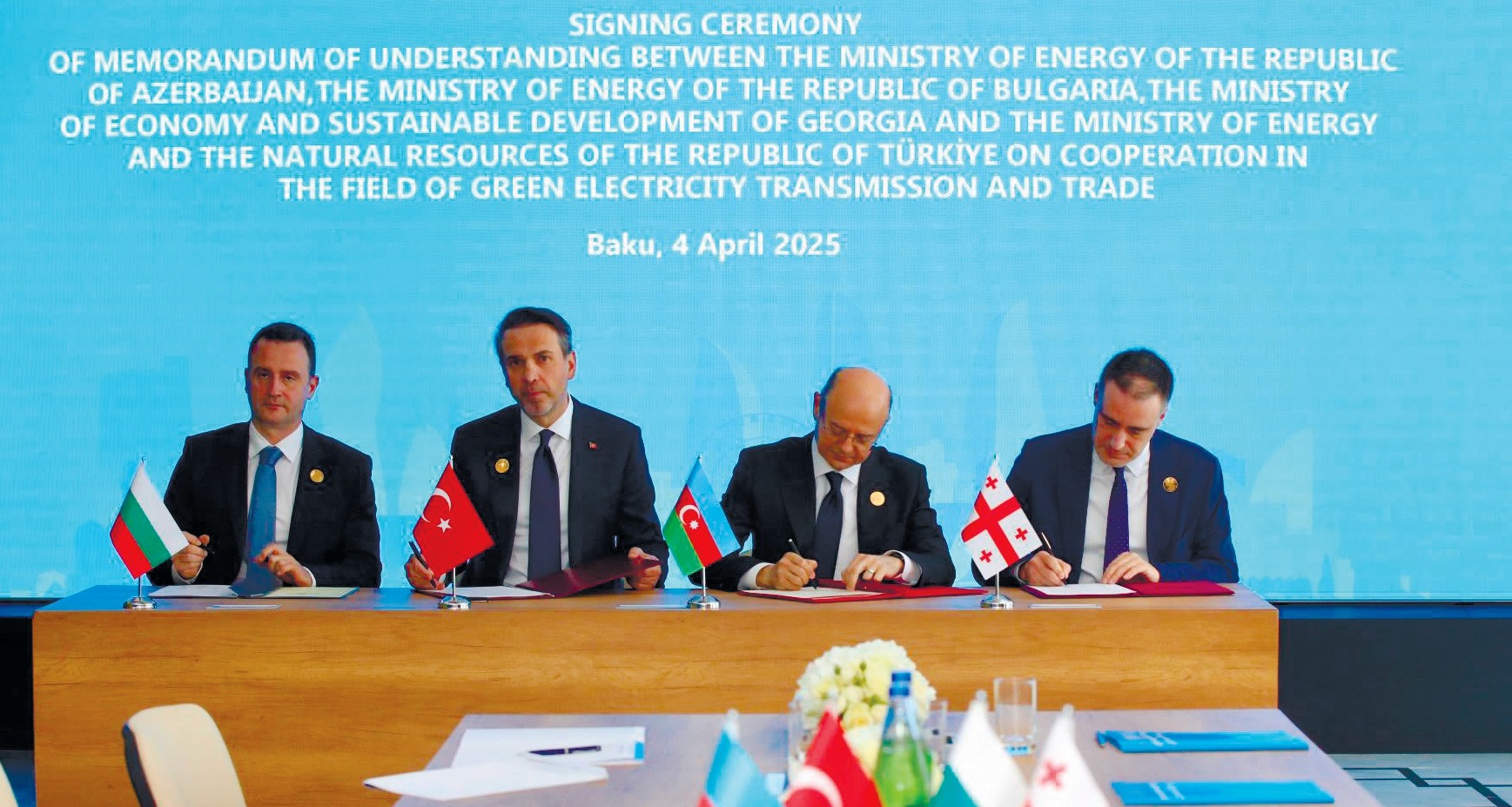
As a result of reconnecting European demand with Azerbaijani supply, a Memorandum between Azerbaijan, Türkiye, Georgia and Bulgaria was signed in April during the third meeting of the Green Energy Advisory Council held in Baku. This initiated the process of creating a new green energy corridor between Azerbaijan and Europe.
According to the memorandum, the energy ministries of these four countries will foster stronger public-private cooperation to explore opportunities to modernise power systems and implement joint investment projects aimed at enhancing electricity transmission and trade.
The memorandum places special emphasis on measures to encourage the use of RES and improve energy infrastructure. The first investments will focus on maximising efficient use of existing capacities.
Azerbaijan's Energy Minister Parviz Shahbazov immediately clarified that the new energy corridor would not compete with the already implemented Black Sea Energy initiative but rather complement it. He added that work is underway to establish a "green interconnector" between Kazakhstan, Uzbekistan and Azerbaijan (the Trans-Caspian Energy Corridor), whose endpoint will also be Europe.
"All these initiatives mean not only access to green energy but also strengthened regional cooperation. Romania, Hungary and Bulgaria are key partners, while Georgia, Türkiye, Uzbekistan, Kazakhstan and Azerbaijan offer new prospects for green energy exports. This creates great opportunities for developing wind energy infrastructure in the Caspian Sea, supply of equipment, energy trade and financing of energy projects," Shahbazov noted.
In other words, green energy from Azerbaijan and Central Asia can supply both directions. This occurs despite Baku's plans to allocate part of its clean energy to cover domestic demand and another part for export to Türkiye via the Nakhchivan Autonomous Republic.
Bulgarian Energy Minister Zhecho Stankov said that in the long term Bulgaria will benefit not only from cheaper gas but also renewable electricity—wind and solar.
Another significant development was the signing of a Memorandum of Understanding between Azerbaijan, Kazakhstan, Uzbekistan as well as the Asian Development Bank and the Asian Infrastructure Investment Bank—financial institutions that allocated $2 million in technical assistance for preparing a feasibility study of the Trans-Caspian Energy Corridor.
Regarding organising green energy supplies from Azerbaijan via Nakhchivan to Türkiye, an important step to accelerate progress was the signing of an operational agreement by the Turkish Electricity Transmission Company (TEIAS) and Azerenerji to develop energy cooperation between the two countries. The agreement will ensure uninterrupted and reliable transmission of electricity between Türkiye and Nakhchivan while modernising existing infrastructure and increasing capacity.
According to Turkish Energy and Natural Resources Minister Alparslan Bayraktar, transmitting electricity generated in Azerbaijan—especially renewable electricity—to Türkiye via Georgia and Nakhchivan is currently under consideration: "Of course, we want to connect this line to the European market."
New RES capacities
During ministerial meetings in Baku, documents on three solar energy projects with a combined capacity of 130MW were also signed.
These projects are important for developing green energy zones in Garabagh and East Zangezur. They are expected to produce a total of 268 million kWh of electricity annually, saving 59 million cubic metres of gas each year and reducing carbon emissions by 128 million tonnes.
Furthermore, the Ministry of Energy of Azerbaijan and the Ministry of Environment, Climate and Energy of Slovenia signed a memorandum of understanding on cooperation in the energy sector. The document supports developing energy ties between Azerbaijan and Slovenia in natural gas and renewable energy fields.
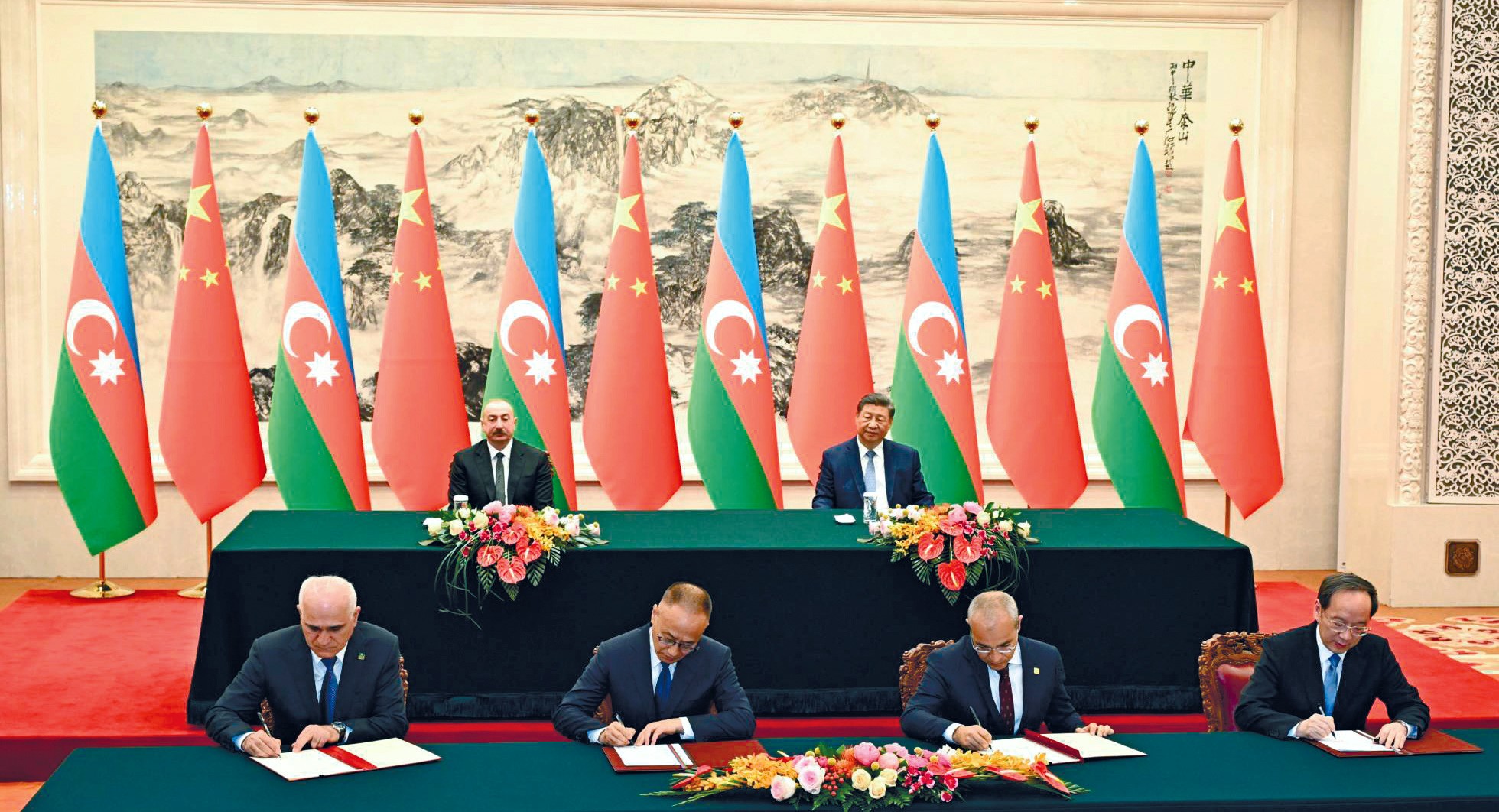
The process of developing Azerbaijan's own "green" energy capacities was significantly advanced in Beijing on April 22 during President Ilham Aliyev's state visit to China where six documents on cooperation in renewable energy were signed.
These agreements cover constructing solar power plants (260MW), a floating SES on the Boyukshor Lake (100MW), a battery energy storage system (30MW), an offshore wind farm with at least 2GW capacity, further wind project development, as well as general cooperation on renewable energy and power system planning.
Thus, all these agreements confirm Azerbaijan's commitment to strengthening its role as one of Europe's key suppliers of green energy. The signed agreements and launched projects testify to expanding international energy cooperation, developing RES infrastructure and opening new prospects for sustainable economic growth in the country.
RECOMMEND:
 238
238

