

HEADING SOUTHEAST
Azerbaijan and Vietnam to expand cooperation
Author: Ilgar VELIZADE
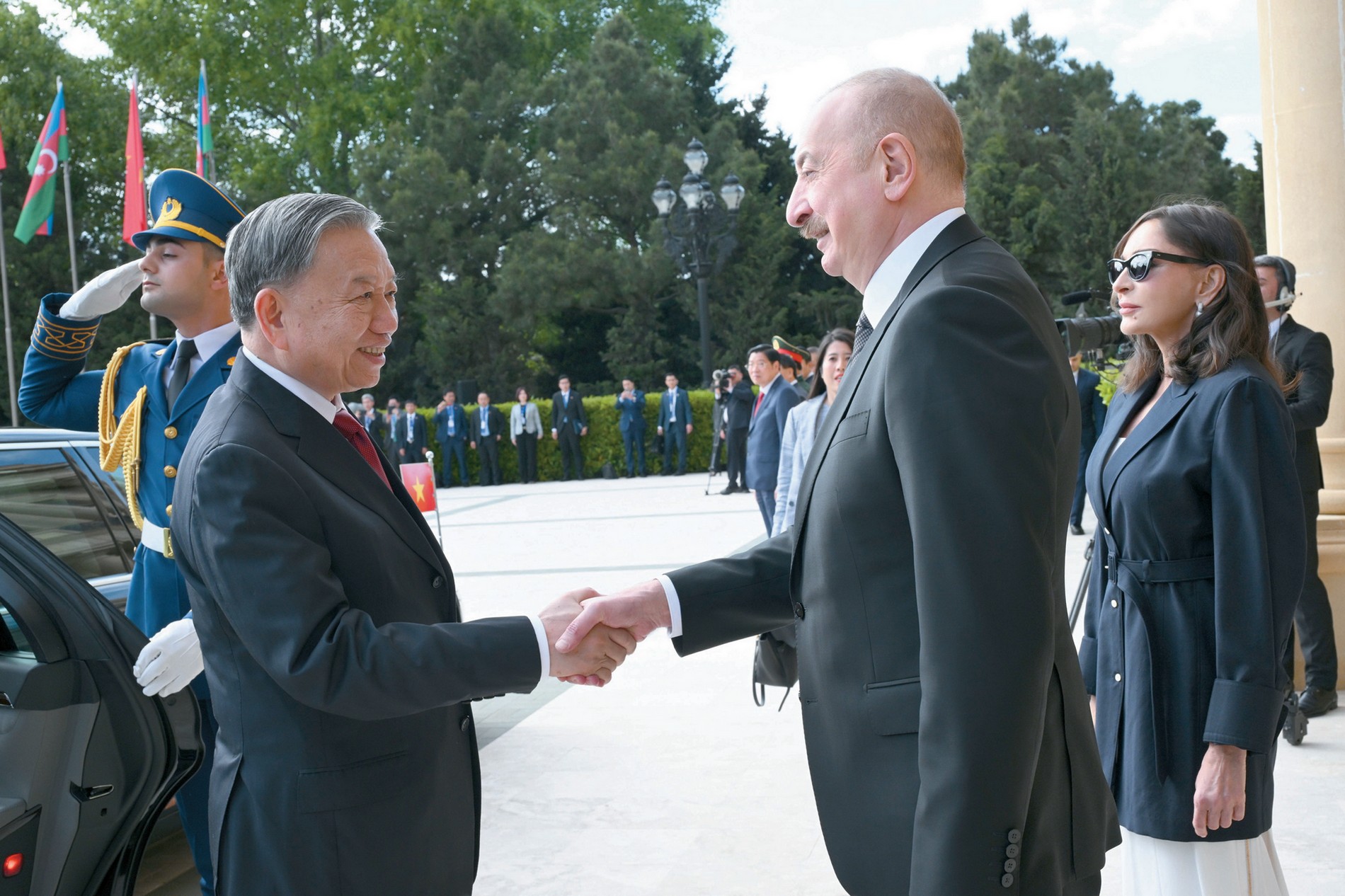
Azerbaijan has recently expanded the geography of its foreign policy activities significantly. Baku has established close relations with a number of regions, but the Middle East, South and South-East Asia are particularly noteworthy. The state visit to Azerbaijan by Tho Lam, General Secretary of the Communist Party Central Committee of the Socialist Republic of Vietnam (SRV), is a clear example of this. This is the first visit to Azerbaijan at such a high level. Previous official visits to the country have been made by President Truong Tan Sang of the Socialist Republic of Vietnam (SRV) in 2015 and by the state's founder, Ho Chi Minh, in 1959.
With regard to the visit of Azerbaijani leaders, Heydar Aliyev attended a meeting in Hanoi in 1983. Aliyev was a member of the Politburo of the CPSU Central Committee and First Deputy Chairman of the USSR Council of Ministers at the time. The first state visit of Azerbaijan's President to Vietnam took place in 2014.
Dynamic dialogue
Relations between Azerbaijan and Vietnam have developed dynamically in recent years. This dialogue has unfolded both within the framework of the Non-Aligned Movement — which Azerbaijan chaired in the early 2020s and where Vietnam has always sought to play an active role — and through bilateral ties.
Vietnamese Vice President Dang Thi Ngoc Thinh also visited Azerbaijan in 2019. This visit became one of the key milestones in the history of bilateral relations, strengthening political co-operation and trust between the two countries.
This was reflected during the second Garabagh war in 2020. Hanoi, despite pressure from the OSCE Minsk Group Co-Chair countries, adopted a restrained and balanced position in the conflict between Armenia and Azerbaijan. In particular, as a member of the Non-Aligned Movement, Vietnam supported efforts to achieve a peaceful resolution and advocated adherence to international law principles, including respect for Azerbaijan's sovereignty and territorial integrity. In fact, it supported Baku’s position. The Vietnamese delegation did not vote for an anti-Azerbaijani resolution in the UN Security Council demanding an immediate suspension of hostilities, which earned official Baku’s respect.
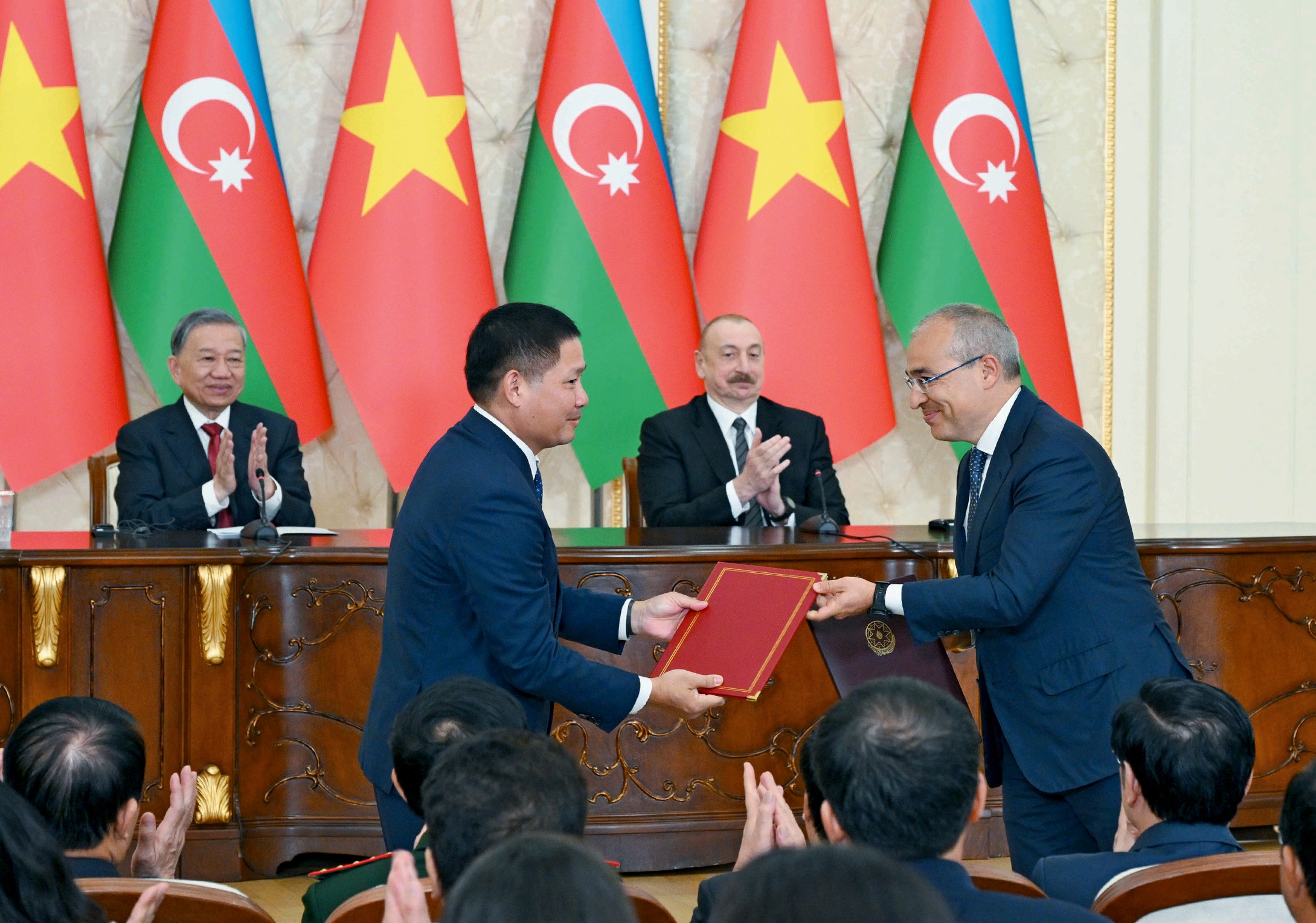
A notable feature of Tho Lam’s visit to Baku was the signing of a strategic partnership agreement between the two countries. After concluding a similar agreement with China in April 2025, Azerbaijan has considerably strengthened its position in the Far East and Southeast Asia, reflecting Baku’s growing authority on the Asian continent. This is particularly important as Azerbaijan currently chairs the pan-Asian organisation, the Conference on Interaction and Confidence Building Measures in Asia (CICA).
Similarity of strategies
In recent years, Vietnam has significantly enhanced its standing regionally and internationally by demonstrating an active foreign policy, economic growth, and diplomatic flexibility. Hanoi adheres to the concept of "bamboo diplomacy", symbolising strong roots and flexible branches. This approach allows Vietnam to maintain independence while adapting to changing international conditions. The country develops relations with various states and international organisations, seeking balance between major powers such as the US and China.
Azerbaijan follows a similar direction. This alignment in foreign policy contributes to closer ties between the two countries. However, despite high-level political dialogue, trade and economic relations do not yet reflect their full cooperative potential. Azerbaijan’s President Ilham Aliyev has addressed this issue. According to him, trade turnover depends largely on Azerbaijani oil sales to Vietnam: when oil sales are high, trade turnover grows; when sales fall, it decreases accordingly. “Of course, we would like to see our trade turnover more balanced. For this, mutual exchange of information is essential—on ongoing projects, investment opportunities, regulations, legislative frameworks, taxation—all these must be clear to business communities. In such a case, I am confident trade turnover will not depend solely on oil,” stressed the Azerbaijani leader.
Indeed, trade turnover between Vietnam and Azerbaijan has fluctuated significantly in recent years, reflecting shifts in global energy prices. In 2022, when oil prices surged amid negative forecasts linked to the Russian-Ukrainian war, trade turnover between the countries reached $702.5 million—the highest on record in bilateral relations history. However, in 2024 it fell to $223.93 million, continuing a downward trend. The main reasons were reduced exports of oil and oil products from Azerbaijan to Vietnam and falling global prices for these goods.
The two countries are now seeking to diversify and expand co-operation across various fields including education, science, technology, culture, and tourism. Notably, during the Soviet period Azerbaijan assisted Vietnam in educating students and training specialists; negotiations have now been finalised on a new agreement in this area.
Important arrangements
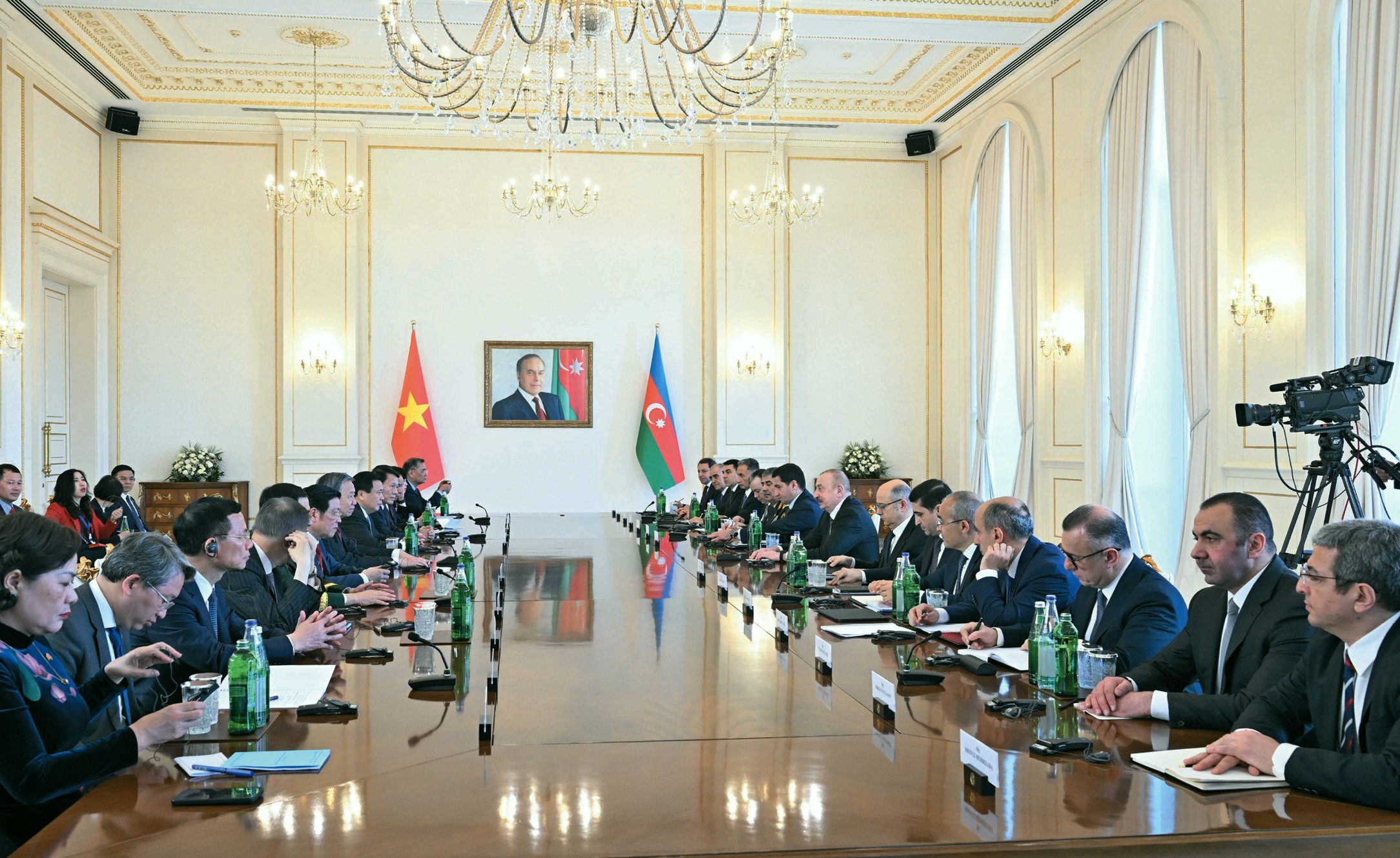
During talks, both sides agreed to intensify defence and security ties and exchange experience in areas such as information sharing and combating transnational crime and cybercrime.
It is important to note that Vietnam is actively developing its defence industry, striving for technological independence and modernisation of its armed forces. In recent years, it has demonstrated notable success producing armaments and military equipment. The key enterprise within its military-industrial complex is the Z111 plant (Thanh Hoa), specialising in production and modernisation of small arms. Vietnam also manufactures short- and medium-range radars, AJAS-1000 electronic warfare systems, and other high-tech equipment. Their experience and production technologies may be valuable for Azerbaijan as its defence industry is also developing projects in similar areas.
A joint meeting of the inter-legal commission is scheduled soon to develop a roadmap for trade and economic cooperation between the two countries for coming years.
The Vietnamese leader proposed strengthening ties between the Communist Party of Vietnam and Azerbaijan’s Yeni Azerbaijan Party to deepen political dialogue and invited President Ilham Aliyev to visit Vietnam soon. The Azerbaijani leader accepted the invitation.
Regarding agreements signed during this visit, they significantly reinforce the political and legal foundations of bilateral cooperation covering a wide variety of sectors. A total of 11 agreements and memoranda were concluded during the visit.
Effective logistical arrangements are necessary for implementing this extensive package of agreements. The two countries are separated by vast distance; moreover, Azerbaijan has no direct access to open seas. Consequently, optimal channels for interaction include the Trans-Caspian International Transport Route (TCITR) and the North-South International Transport Corridor (NSC). One provides access to China’s coast and even reaches the China-Vietnam border; the other connects to the Persian Gulf. Both routes are currently being explored for their full potential.
New approaches in a changing world
Strengthening relations with Vietnam aligns with Azerbaijan’s foreign policy strategy aimed at broadening its presence across various global regions — especially Southeast Asia. At the end of 2024, Baku became a full member of the Islamic G8, two members of which — Malaysia and Indonesia — are ASEAN states.
Establishing strategic partnership relations with another ASEAN member state such as Vietnam allows Azerbaijan not only to diversify its foreign policy but also to forge close economic ties with some of Asia’s most dynamically developing countries and regions. Many observers consider these states poised to become key drivers of global economic growth in coming years.
For Hanoi, developing ties with Azerbaijan — the largest country in the South Caucasus with a favourable geopolitical position — is crucial for expanding its interests. Vietnam aims to become a responsible middle power that balances major powers, promotes economic development, and defends sovereignty — particularly in maritime disputes. It seeks not simply to adapt to the changing global order but to actively shape it. In this regard, Baku’s and Hanoi’s goals fully coincide.
RECOMMEND:
 240
240

