

"EVEREST IS MY TEACHER"
Azerbaijan’s first mountaineer to conquer Everest shares her journey and lessons
Author: Sanan SHAFIZADE
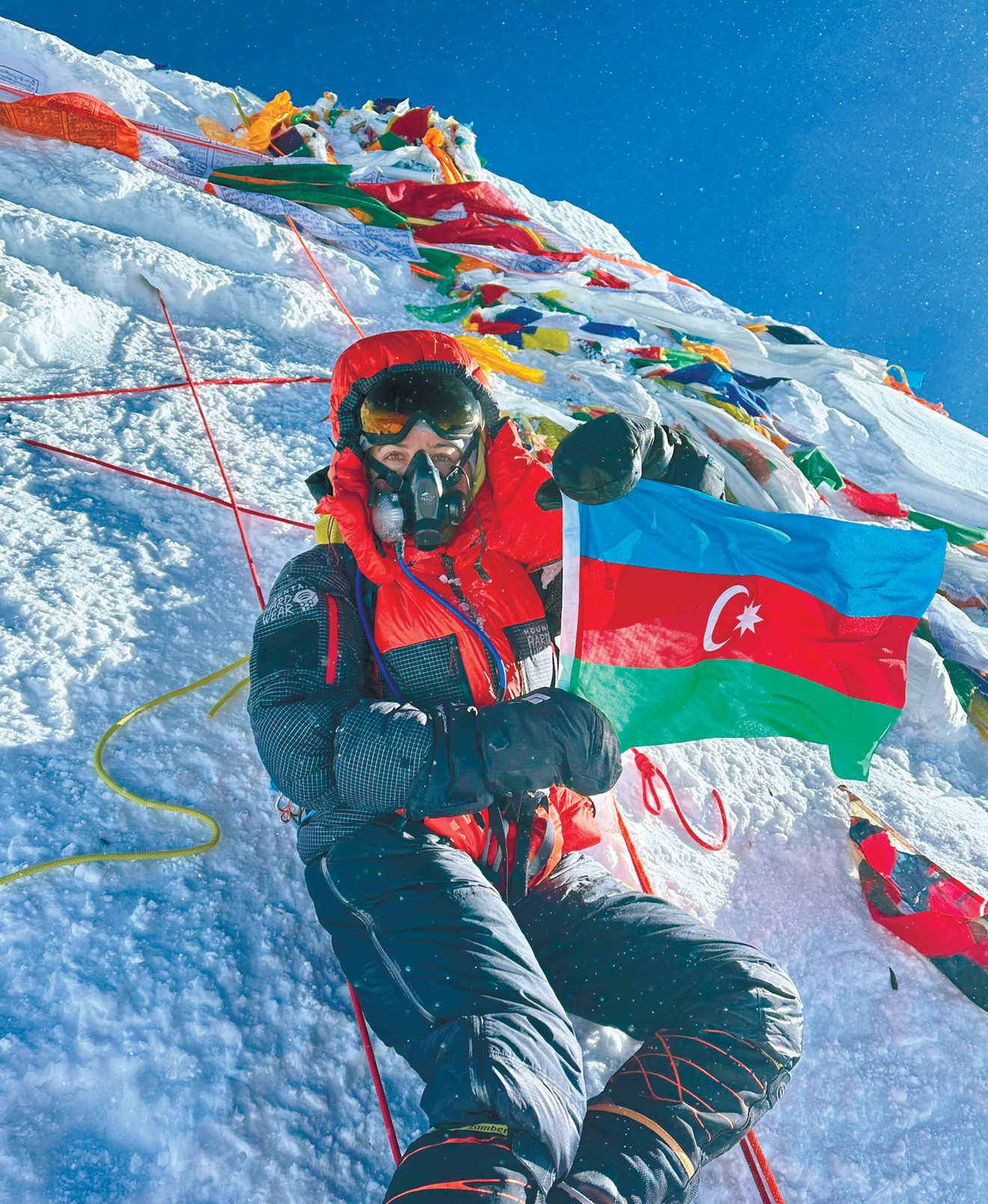
A new shining chapter has been added to Azerbaijani sports history. This time, the success comes from mountaineering. The author of this milestone is Vafa Musayeva, the first Azerbaijani mountaineer to reach the summit of Mount Everest, the highest peak on Earth at 8,849 metres.
The dream of many
It is no secret that one of the most coveted goals for mountaineers worldwide is Everest — the peak known locally as Jomolungma. Everest constantly calls out to climbers, most of whom are highly skilled professionals. There are two main routes: one in southeastern Nepal and another in northern Tibet. While the standard route does not pose extreme technical challenges, it presents dangers such as altitude sickness, fierce winds, and avalanches. Official figures report that Everest claimed around 300 lives in 2017 alone. Many attempts to conquer this peak have ended tragically, yet it continues to attract generations of climbers.
The earliest recorded attempts to reach Everest’s summit were made by British climbers. At that time, Nepal did not allow foreigners to enter, so expeditions took the more difficult northern route from Tibet multiple times. In 1921, during their first reconnaissance expedition, the British reached 7,000 metres. By 1922, they achieved the first human ascent above 8,000 metres.
Climbing to the summit is extremely demanding. Climbers must overcome steep rocks and endure long periods without food or water. For women, climbing Everest has always been regarded as a particularly courageous feat.
The first woman to reach Everest’s summit was Japan’s Junko Tabei on 16 May 1975. Ten days later, Tibetan climber Phantog also succeeded. Wanda Rutkiewicz was the third woman to achieve this goal.
As noted, every ascent carries life-threatening risks. In 2015, catastrophic earthquakes in Nepal triggered avalanches on Everest’s slopes, killing at least 19 people at the southern base camp and destroying established routes. That year was the deadliest in Everest’s climbing history. Prior to this tragedy, no one had reached the summit during the spring climbing season for 41 years.
In May 2025, Vafa Musayeva celebrated her historic triumph. The news was first announced by legendary Nepali climber Lakpa Sherpa, who holds the world record for summiting Everest ten times via different routes.
Remarkably, Vafa did not stop there. After descending to a camp at about 8,000 metres, she set out to climb Lhotse (8,516 metres), the world’s fourth highest peak located on the border between China and Nepal. Vafa successfully summited and returned safely to base camp. “I wanted to climb Everest and Lhotse in one season—and fortunately, I succeeded,” she said.
Mood for the summit
Vafa Musayeva shared her experience with Region Plus: “Climbing Everest is a strenuous and lengthy process that takes more than a month. You live at high altitude without oxygen; your nutrition and sleep patterns are completely disrupted. If you want to see the summit, patience is essential. Climbing for a whole month without oxygen or rest is truly challenging. The mountain limits your time due to weather and other factors—you can’t waste a moment; every day demands effort. That’s the hardest part."
Calling Everest her teacher, Vafa is still processing her achievement emotionally: “Honestly, it takes time to realise that I was on Everest. When I saw the summit, I was overwhelmed by unusual feelings. After conquering Everest, I consider it my teacher—it helped me understand myself better. I was fortunate to succeed on this path. My next goals will be different but before pursuing them, I need time to recover from climbing the highest peak on Earth.”
RECOMMEND:
 326
326

