

REGION OF OPPORTUNITIES
Azerbaijan prioritises practical initiatives during its chairmanship of the Conference on Interaction and Confidence-Building Measures in Asia (CICA)
Author: Nurlana GULIYEVA
Thanks to its advantageous geographical location, stable domestic political environment, and strict adherence to principles of good neighbourliness and loyalty towards all friendly countries, Azerbaijan today participates actively in various regional communities and associations. It cooperates successfully with European and Asian states alike, as well as with the Turkic world among others.
Each partnership or alliance brings not only mutual support on the international political stage but also substantial economic benefits.
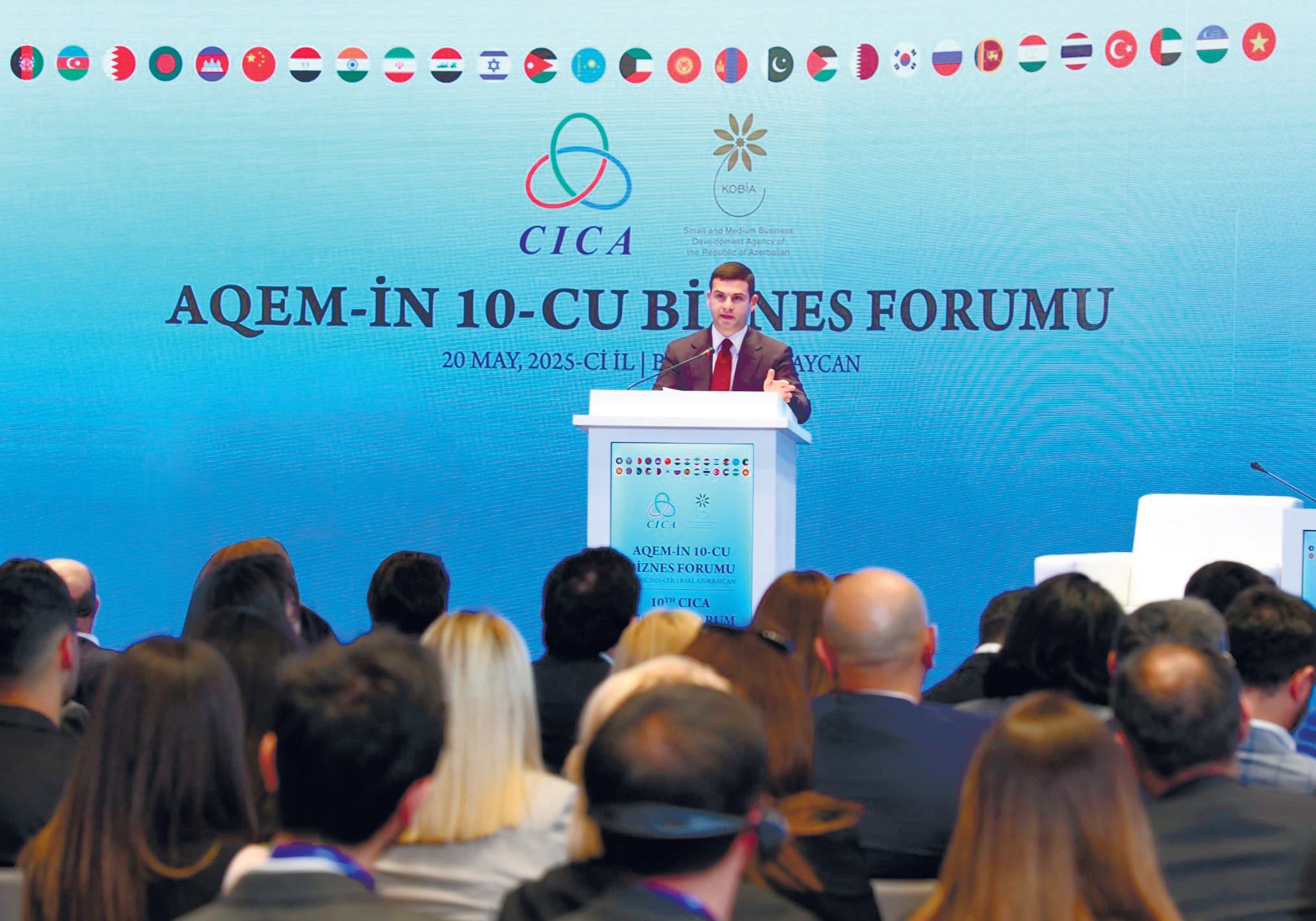
From 2024 through 2026 Azerbaijan chairs CICA—a major international forum aimed at strengthening relations and cooperation among Asian and Eurasian states to ensure regional stability and security. For participation in CICA’s 8th Plenary Session of the Business Council and 10th Business Forum held in Baku, member states sent their delegations.
Region of opportunities
Asia represents vast opportunities with its rich human capital, innovative potential, and strong economic base. As Secretary-General Kairat Sarybay aptly remarked: while government officials and diplomats set frameworks and provide backing, entrepreneurs, investors, and innovators are the true engines driving economic growth and future prosperity across this vast continent.
Statistics underline the benefits cooperation within this Asian framework can bring. Yusif Abdullayev—the Executive Director of Azerbaijan’s Export and Investment Promotion Agency (AZPROMO)—noted that in Q1 2025 exports from Azerbaijan to CICA member countries reached $1.2 billion with total trade turnover amounting to $4.6 billion. “These numbers reflect growing ties between our economies. Azerbaijan places particular emphasis on CICA’s mission. We are proud to lead this platform at such a critical moment for regional cooperation and economic transformation,” he stated.
Kairat Sarybay sees the Business Council’s current main focus as fostering international relations among small and medium-sized business (SMB) representatives from member countries: “The Business Council brings together government officials and business associations. Therefore it is crucial to have a platform covering 90% of Asia—28 member states spanning from the Pacific Ocean to the Mediterranean Sea and from the Arctic Ocean down to the Indian Ocean.”
Nearly all these nations are developing economies where SMBs play an essential role; hence it is vital that businesses gain access to all continental cooperation opportunities.
The Secretary-General encouraged member states to propose new projects for the CICA Fund established in 2022—and contribute financially: “The Fund has already launched its first project in Central Afghanistan—a sustainable wheat cultivation initiative proposed by Kazakhstan with financial support from Iraq. The Fund operates transparently on voluntary principles based on consensus.”
Currently six priority development directions have been outlined: promoting digitalisation to stimulate SMB growth; advancing women entrepreneurship; supporting green transition; enhancing SMB roles in smart cities alongside state incentives; facilitating cross-border trade and e-commerce; plus integrating SMBs into global value chains.
These aims are resonating strongly with entrepreneurs across member countries.
For example, Nahid Salameh from Palestine’s Ministry of National Economy explained her country’s shift towards a green economy during Baku’s forum session. Ninety-five percent of Palestinian businesses are SMBs employing over 80% of the population—playing a pivotal economic role. Consequently, authorities view green transition as a strategic path towards sustainable development and self-reliance.
Similarly, Emre Gürlek from Türkiye’s Ministry of Trade highlighted reforms supporting green transformation: “Türkiye’s 2021 Green Reconstruction Plan promotes technological advancement within industry while raising awareness about eco-labelling and waste management—prioritising SMB support as essential climate action.”
Pavel Kondrashov, the Head of International Activities at Russia’s SMB Corporation, focused on digital business support through a dedicated platform launched jointly with Russia’s Ministry of Economic Development in 2022. It offers unified access for nearly one million SMB entities to government services, support measures, training programmes, analytics resources; creates digital entrepreneur profiles; automates service selection tailored to needs; simplifies documentation workflows; gauges satisfaction; ensures direct communication with authorities.
Kyrgyzstan proposed expanding cooperation via its diplomatic platform—the initiative aims at effective transfer of best practices among SMB representatives—as noted by Kyrgyzstan’s Ambassador to Azerbaijan Maksat Mammadli.
Azerbaijani initiatives
Orkhan Mammadov—Chairman of Azerbaijan’s Small and Medium Business Development Agency—stated that during Azerbaijan’s chairmanship priority is given to practical initiatives including a “SMB Guide” project offering recommendations on starting businesses, financing options, and market entry strategies.
He believes that sharing local information alongside legal innovations and successful practices can turn this Guide into an essential resource for SMBs operating effectively: “Digital transformation is a key priority for our chairmanship. We believe adopting digital tools will boost SMB efficiency while opening access to new markets. Accordingly we organise training sessions covering digital marketing, e-commerce, data management.”
Mammadov emphasised his agency prioritises practical help for entrepreneurs: “In Azerbaijan where SMBs constitute 99% of all business entities we operate SMB houses providing registration services, licensing assistance, financial consulting and export support through ‘single window’ principle.” Educational programmes focus on e-trade, digital marketing and data management alongside fostering international partnerships.
As for the trendy green transition, in line with COP29, Azerbaijan initiated creation of Baku Climate Coalition supporting business sustainability efforts: helping enterprises implement eco-friendly practices; reduce environmental impact; integrate green technologies into operations.
Mammad Musayev, President of Azerbaijan’s National Confederation of Entrepreneurs (Employers’ Organisations)—asserted that sustainable economic models featuring green technologies digitalisation and inclusivity will define future entrepreneurial systems: “As Azerbaijan’s Entrepreneurs’ Confederation we remain active participants in these developments anticipating new initiatives projects and cooperation formats emerging from this forum.”
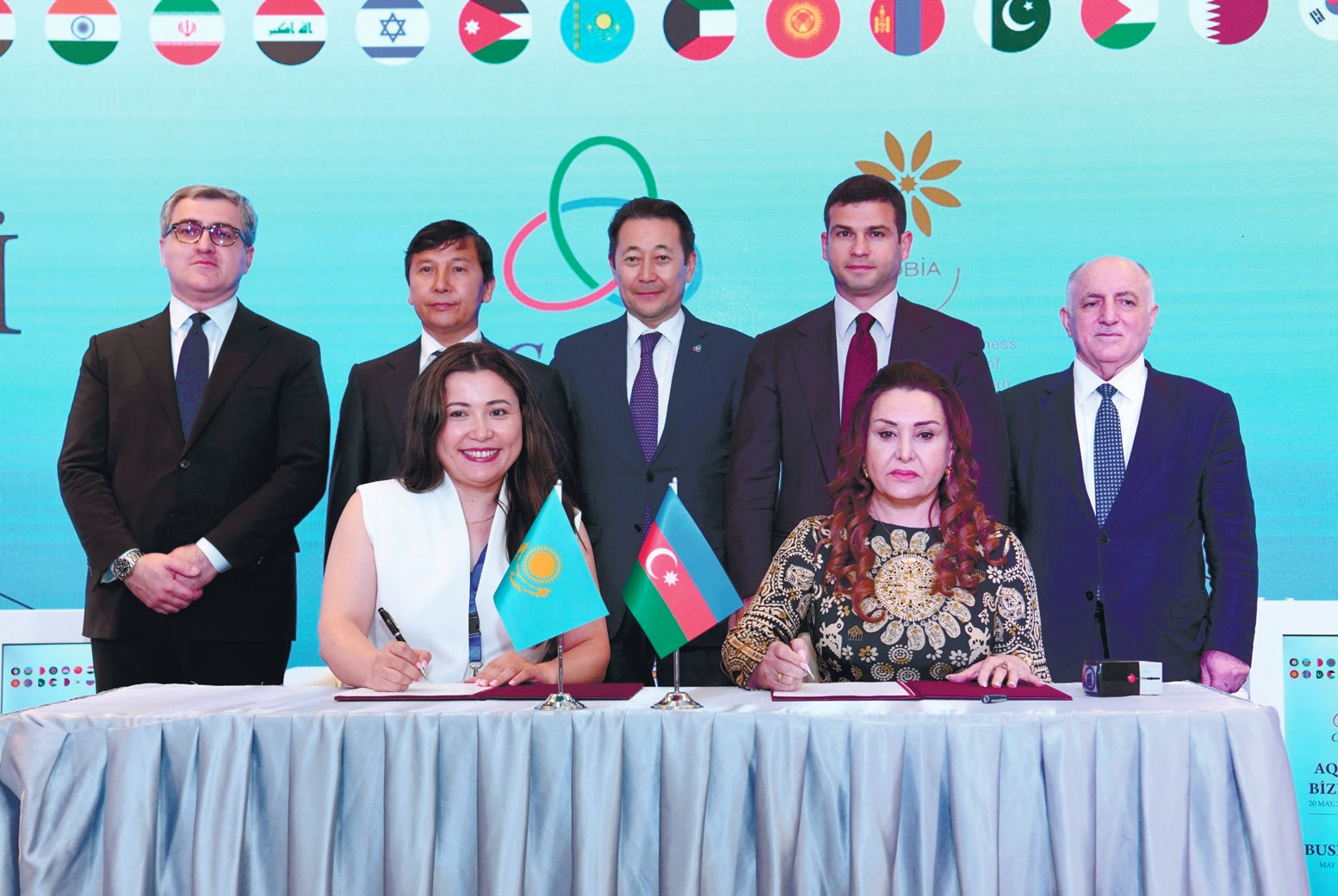
A key outcome from Baku’s business forum was signing a Memorandum between Azerbaijan’s Women Entrepreneurs Development Association and Kazakhstan’s Association for Business-Society-State Relations focusing on supporting women-owned businesses via strategic partnerships expanding women’s economic opportunities; fostering creative industries; collaborating on digital economy platforms and services targeting women entrepreneurs; co-developing educational programmes seminars and trainings enhancing women’s skills in management innovation.
Sarybay stressed empowering women is both just and strategically necessary for sustainable growth while Mammadov urged CICA partners: “We launched training programmes mentoring and networking opportunities for women entrepreneurs in Azerbaijan inviting partners to share experiences and strategies so we can learn and cooperate.”
Thus, through Azerbaijan’s active role within regional economic communities local entrepreneurship gains expanded access to advanced international expertise and new market horizons.
RECOMMEND:
 235
235

