

GEOPOLITICS RULES
Romania has elected a new pro-European president
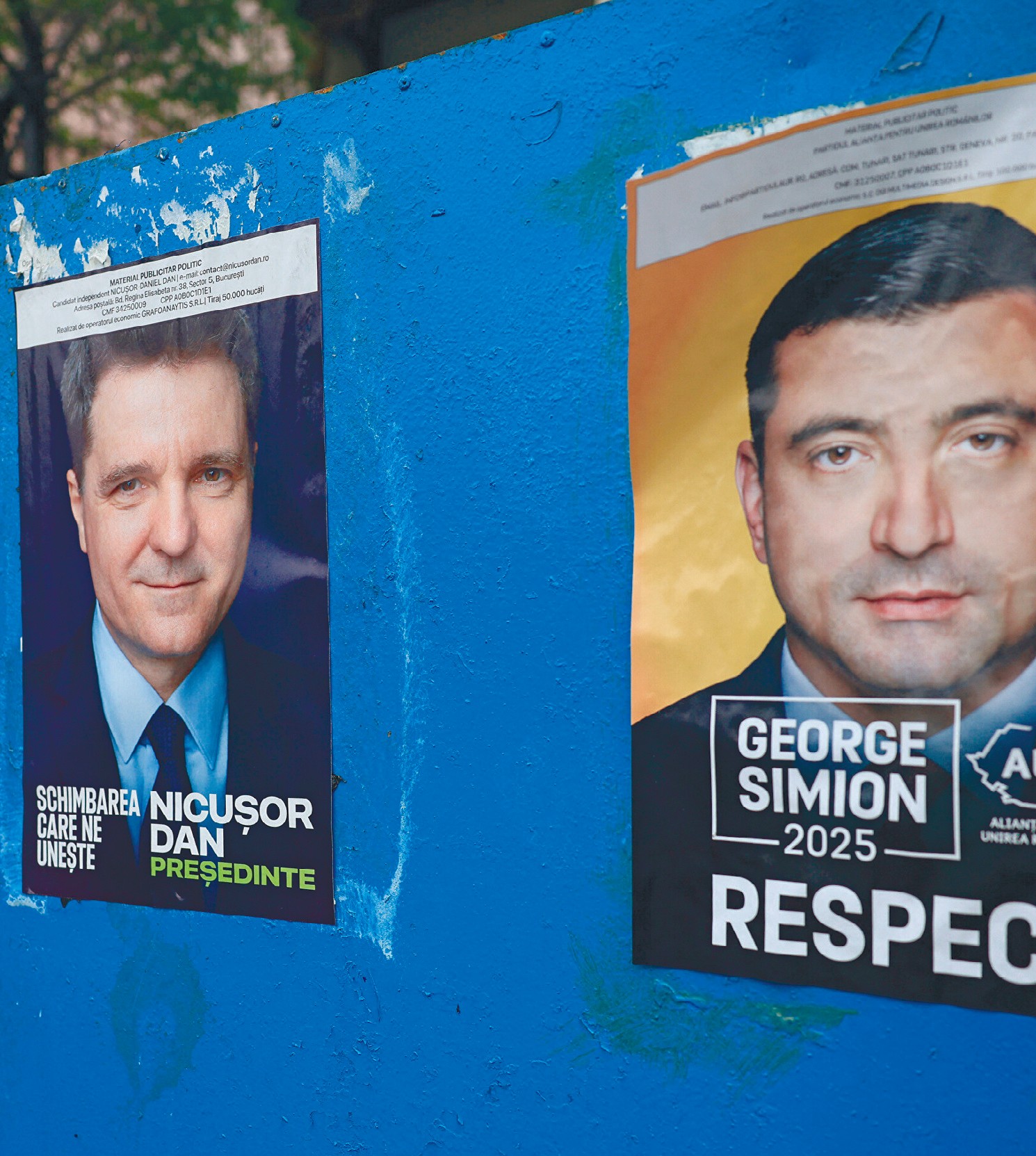
Author: Natig NAZIMOGHLU
On 26 May, Romania held a ceremony to inaugurate its new president. He is Nicusor Dan, who was elected after two rounds of voting and declared the need for "fundamental changes" in the Romanian state. The changes he has announced are intended to affect mainly the internal life of the country. As the election results demonstrated, Romania will continue to pursue its foreign policy strategy of deeper integration into the Euro-Atlantic community.
Dan defeated Simon
The recent election campaign in Romania was notable for its dramatic and unpredictable developments, reminiscent of a thriller. Elections were held on 24 November 2024, in which the independent candidate Calin Georgescu was successful. With nearly 23 per cent of the vote, Gheorgescu, who was considered far-right and had called for the country to move away from pro-Western policies, beat Elena Lasconi, leader of the pro-European, liberal Union for the Salvation of Romania party. Georgescu was widely tipped as the likely winner of the second round, but the Constitutional Court stepped in and ruled that the results of the first round should be annulled and a second round held. The primary motivation behind this decision was the endorsement of Georgescu by Russian information media outlets. In other words, this is an instance of foreign interference in the electoral process in Romania.
The repeat presidential elections were held in two rounds on 4 and 18 May 2025. The primary contest was between the pro-Western candidate, the Mayor of Bucharest Nicusor Dan, and the candidate from the far-right Alliance for the Unification of Romanians, George Simion, who, incidentally, regarded the cancellation of the election held on 24 November as a "coup". At the conclusion of the initial round of voting, Simion received 40.96 per cent of the votes, while Dan received only 20.99 per cent. However, in the second round, Dan secured the support of all pro-Western forces, which enabled him to garner 54 per cent of the votes against 46 per cent for Simion, a nationalist and Eurosceptic.
It is interesting to note that Dan's victory was significantly influenced by ethnic Hungarians residing in Romania and Moldovan citizens who also hold Romanian citizenship. It is estimated that as many as 700,000 voters from these two groups cast their ballots for the pro-European candidate. At the conclusion of the second round, Dan's total lead over Simon stood at 830,000 votes. Therefore, as observers believe, without the support of Hungarians and Moldovans, Dan's victory would probably not have taken place.
However, it is noteworthy that the majority of Romanian Hungarians, whose total number is about one million people, or about 5.5 per cent of Romania's population, are considered supporters of Hungarian Prime Minister Viktor Orban. In the period leading up to the second round of Romania's presidential election, Orban expressed his support for Simion. Notwithstanding the fact that the latter has, on occasion, issued statements that are critical of the Hungarian minority. However, the Hungarian prime minister's actions were primarily driven by geopolitical considerations. According to it, Orbán, who is an opponent of Brussels and the liberal European bureaucracy, not without reason believed that his confederate Simion, although a Romanian nationalist, would be a more favourable head of Romania for Budapest.
Meanwhile, the Romanian Hungarians themselves did not appear to have forgiven Simion's attacks on them, and therefore showed favour to the pro-European candidate Dan. Romanian Moldovans' support for Dan is also explained by the fact that they generally dislike Simion. Although approximately 650,000 of Moldova's 2.5 million inhabitants are also Romanian citizens (many of whom now reside in Western European countries), the majority hold a critical stance towards Simion's denial of their national identity, favouring Moldova's inclusion in the "Greater Romania" concept espoused by Romanian nationalists. Please note that Simon has not been granted permission to enter Moldova since 2014. However, the key circumstance that influenced the choice of Moldovans who are Romanian citizens was Simion's anti-European stance. This was one of the key factors that influenced their decision to vote for Dan. This is just one of the factors that demonstrate that the presidential elections in Romania were organised under the sign of geopolitics.
Who intervened this time?
Geopolitical considerations were also evident in another aspect of the Romanian elections. Following the second round, Simion submitted a petition to the Constitutional Court to invalidate the results. He cited the same reason for which the court cancelled the November 24 elections as justification for his demand. To be precise, the issue at hand is that of external interference in the electoral process. In contrast to the alleged "Russian support" that denied Georgescu victory, Simion attributed his loss to the backing of several European leaders.
Firstly, the responsibility for the issue was attributed to France. Emmanuel Macron, the President of France, has issued a formal invitation to Romanian citizens to cast their vote in favour of Dan in the upcoming election, emphasising the crucial nature of this vote for Romania's proper European trajectory. The leaders of Poland and Moldova were also found guilty of similar interference. Consequently, Polish Prime Minister Donald Tusk publicly endorsed Dan. And Moldovan President Maia Sandu, who is also a Romanian citizen, urged Romanians to vote for Dan, calling Simion "a character controlled by the Kremlin".
The founder of Telegram, Pavel Durov, has unexpectedly come forward to back up such accusations. It is his assertion that, during his arrest in France, that country's intelligence service attempted to persuade him to suppress Romanian conservative channels on Telegram. Furthermore, Durov drew attention to the striking coincidence in timing between the statement of support from French MEP Valerie Aye for the pro-Western presidential candidate Dana and the visit of French intelligence chief Nicolas Lerner to that country a few days before the election. French intelligence has formally denied the allegations, stating that they are unfounded. In response, Durov has indicated his readiness to provide testimony regarding external interference in Romania's presidential election.
Meanwhile, Russia has decided not to miss the opportunity to contribute to the substantiation of the version of French interference in the Romanian presidential election. Maria Zakharova, the Russian Foreign Ministry spokeswoman, stated that the arrest of Durov by Macron was not an attempt to resolve internal issues with the messenger via such brutal methods, but rather a strategy to influence the elections in Romania. This was due to Macron's realisation that the candidate representing the liberal dictatorship would not be able to win under any legal conditions.
Notwithstanding, Romania's Constitutional Court dismissed Simion's petition to challenge the outcomes of the run-off election for the nation's head of state. Dan, a 55-year-old mathematician by training, former civic activist and, in recent years, mayor of Bucharest, took office as president of Romania. Based on the promises he has made, it is likely that he will negotiate a coalition government "with all four democratic parties" represented in parliament. This is in reference to the Social Democratic Party and the National Liberal Party, as well as the liberal Union for the Salvation of Romania and the Democratic Union of Hungarians of Romania. According to Romanian media reports, the new prime minister could be Ilie Bolhogan, the PNLP representative who served as Romania's president from 12 February to 26 May 2025.
With regard to the "fundamental changes" referenced by Dan in his election pledges and inaugural address, the new Romanian president considers them to be primarily concerned with addressing issues of waste within the public sector. To this end, it is envisaged that the high budget deficit (9.3% of GDP in 2024) will be reduced by increasing the efficiency of the use of the funds allocated by the European Union.
However, the primary significance of Nicusor Dan's victory and subsequent assumption of the presidency is the continuation of Romania's Euro-Atlantic-oriented foreign policy. The newly elected president of this country has confirmed his intention to strengthen its positions in both the EU and NATO. It is evident that Bucharest will pursue a course of rapprochement with the leading European countries. This is in pursuit of opportunities to strengthen the EU's self-sufficiency in the context of the global changes that are taking place, particularly in the Euro-Atlantic region following Donald Trump's return to power in the United States. It is interesting to note that George Simion, who was unsuccessful in the recent elections, refers to himself as a supporter of the American president. This suggests that when Nicusor Dan became president of Romania, the country rejected the possibility of implementing a far-right, nationalist policy, which was primarily directed against the ruling elite of the European Union.
In light of the ongoing Russian-Ukrainian war, it is crucial to emphasise Romania's pro-Western stance. It is evident that Bucharest will not refrain from aligning with the EU's planned measures to reinforce sanctions against Russia and to persist in providing military and financial support to Ukraine. In this regard, it is worth noting the congratulatory message that Ukrainian President Vladimir Zelensky sent to Nicusor Dan on his "historic election victory". "By working together, we can enhance the strength of our nations and Europe as a whole," the Ukrainian leader emphasised.
Therefore, the outcome of the presidential election in Romania was indicative of the current European reality, with implications for a range of issues. From the various manifestations of political and ideological discord among European elites, including individual countries and the EU itself, to the various factors that influence the course of the largest and bloodiest conflict on the continent since World War II.
RECOMMEND:
 240
240

