

BETWEEN TRADITION AND INNOVATION
Azerbaijan supports energy transition within reasonable limits
Author: Nurlana GULIYEVA
Today, the global renewable energy sources (RES) capacity stands at approximately 4.5 TW. In order to achieve the global goal of tripling this indicator by 2030, it is necessary to increase their volume to 11 TW.
In this context, the experience of Azerbaijan is of particular interest. Traditionally associated with the oil and gas sector, in recent years Azerbaijan has been actively diversifying its energy portfolio and integrating into the international green energy sector. For this reason, the majority of discussions at Baku Energy Week, the 30th anniversary Baku Energy Forum, focused specifically on the challenges of energy transition and the experience of our country in this area.
Balanced approach
According to the International Renewable Energy Agency (IRENA), despite a significant increase in renewable energy capacity, the growth rate has not yet matched the ambitious targets.
Investment in renewable energy has seen significant growth, with an increase of almost $100 billion compared to the previous year. On initial review, an annual growth rate of 23% is impressive and substantial. However, it is evident that these measures are not sufficient to ensure the desired outcome," said IRENA Deputy Director General Gauri Singh during the forum.
At the same time, the situation shows that existing technologies allow for the active commissioning of new RES facilities. Conversely, the cost of producing energy from these sources is considerably lower than that of constructing new coal and gas-fired power plants.
"In 96 per cent of cases, energy from new RES facilities is cheaper. This means that RES now has not only an environmental rationale but also a significant economic rationale – it has become a profitable business, and this is what will support further growth," Singh pointed out.
With regard to the latest RES statistics for Azerbaijan, as of 2025, the country's power system has an installed capacity of 8,976 MW, an increase of 2,676 MW since 2018. However, the generation mix is still oriented towards conventional sources: thermal power plants (predominantly gas-fired) provide 80.2% of the total capacity, hydroelectric power plants 15.6%, and the share of RES is only 4.2% with a capacity of 379.1 MW.
Azerbaijan has not yet announced any plans to fully transition to RES, leaving traditional fuels as a viable option. Vitaly Beylarbayov, deputy vice-president of SOCAR, has stated that the use of renewable energy sources alone is insufficient for ensuring a stable and sustainable energy supply.
"We expect to extract over 12 billion cubic metres of gas from our fields in Azerbaijan, with a view to exporting a proportion of this," he said. However, he also noted that recent power outages in Spain and Portugal have clearly demonstrated that RES alone cannot be relied upon.
"RES do not provide a reliable balance of energy supply. Refusal to invest in oil and gas projects will lead to higher prices for consumers," Beylarbayov said.
Azerbaijan's Energy Minister, Parviz Shahbazov, has expressed concerns that a unilateral approach to the energy transition could pose significant risks, given the ongoing vital importance of reliable oil and gas supplies. Over the past 30 years, the global share of hydrocarbons in primary energy consumption has remained relatively unchanged, with a change of only 5 per cent. Today, hydrocarbons account for more than 80 per cent of primary energy consumption in the US, around 90 per cent in China and 70 per cent in the European Union.
This demonstrates that alternative energy sources are not replacing traditional energy sources, but rather complementing them. Therefore, given the continued centrality of oil and gas in the global energy mix and the likelihood that this will continue to be the case in the coming years, it is important that funding for this sector is timely and not delayed," Shahbazov said.
Solar project
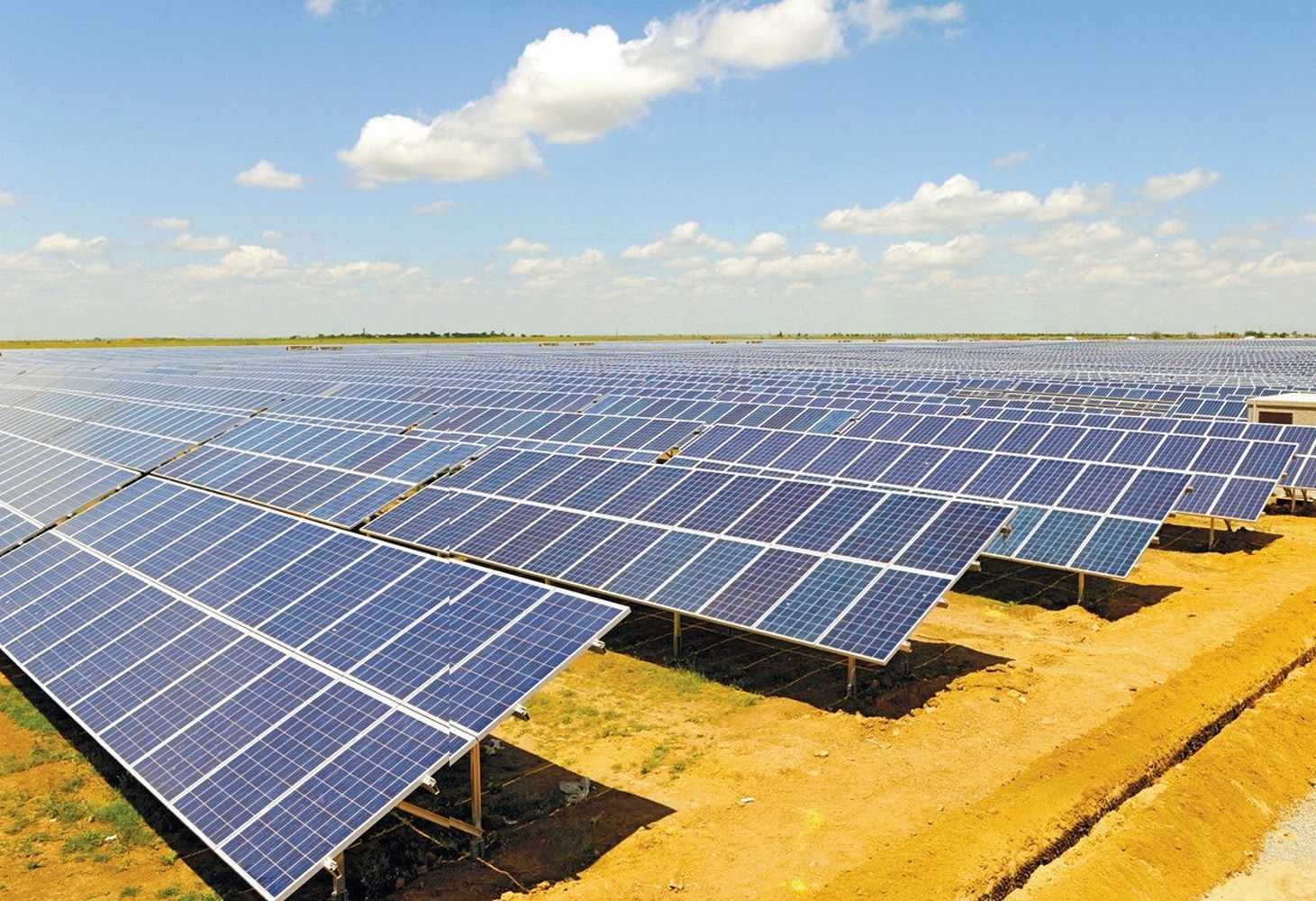
SOCAR President Rovshan Najaf also stated that the State Oil Company of Azerbaijan is offering its partners joint investments in RES projects, including solar energy, given its high potential. A prime example of this is the 240 MW Shafag power plant in Jabrayil, the first solar project in the region.
On 2 June in Baku, British BP, SOCAR Green and the Entrepreneurship Development Fund signed a final investment decision on the project.
On the same day, a number of companies approved the Sangachal terminal electrification project.
"The unique aspect of this project is the agreement signed with Azerenerji, which we term a virtual deal. The electricity generated will be used to support the rehabilitation and development of the liberated territories, and in turn, we will receive an equivalent amount of electricity to decarbonise the Sangachal terminal," said Gary Jones, BP's regional president for Azerbaijan, Georgia and Turkey.
He asserts that this will eliminate the use of fuel at the terminal. The gas released will be channelled into the Southern Gas Corridor to supply energy-starved countries. This decision will also reduce the terminal's emissions by about 50 per cent.
Overall, Azerbaijan is on track to complete the first phase of green energy development within the next two years, with the commissioning of 10 solar and wind power plants during this period. "Construction of a 240 MW wind farm will be completed by the end of 2025. The foundation stone of four additional stations with a total capacity of 1,240 MW has been laid. "This year, we will commence construction of three additional solar power stations, with a combined capacity of 200 MW. Preparatory work is currently underway for a floating solar power station project with a capacity of 100 MW," Shahbazov stated.
He anticipates that the implementation of these projects, with a total investment of $2.7 billion, will result in a 33.7% share of renewable energy in Azerbaijan's installed capacity by 2027.
The minister confirmed that Azerbaijan intends to increase this figure to 38 per cent by 2030 and 42.5 per cent by 2035.
Shahbazov also announced that 6 GW of green energy capacities are to be developed over the next five years, with 4 GW intended for export.
Ensuring stability
The active development of renewable energy sources also entails new technological challenges. One of the key challenges is to ensure the stability of the energy system, particularly in light of the increasing share of variable generation sources, such as solar and wind power. A large-scale project is underway in Azerbaijan to create energy storage systems, with the aim of facilitating their effective integration.
Yusif Garayev, First Deputy Vice-President of Azerenerji, is quoted as saying: Battery storage systems with a capacity of 250 MW and a storage capacity of 500 MWh are being integrated into the country's energy network. This is the first project of this scale in the South Caucasus region.
"Two main factors are important for the integration of renewable energy into the power grid and its safe management. The first is the existence of strong integration and interconnection with the energy systems of neighbouring countries. In such cases, the requirement for storage systems is reduced. However, the power system of Azerbaijan has limited capacity in this respect. Consequently, battery storage systems are being integrated into the energy system to manage 2 GW of renewable energy capacity across the country," Garayev explained.
It is anticipated that the system will be connected to the grid by the end of 2025. It is anticipated that such projects will undergo further expansion. According to Azerenerji, there is no such large-scale energy storage system in the South Caucasus countries, or in the grids of Turkey and Russia. This emphasises the regional uniqueness of this solution.
Furthermore, the country is developing financial support instruments to stimulate the development of renewable energy. Samir Akhundov, Chairman of the Board of the Energy Regulatory Agency of Azerbaijan, has stated that...
"We recognise that the energy transition is unfeasible without the active involvement of private business. Consequently, loans for renewable energy projects will be available in Azerbaijan," he stated.
The loan programme will cover projects of all scales, from small to large. The minimum loan amount will be ₼1,000 and the maximum will be ₼10 million. For the most substantial projects, a grace period of up to 24 months is envisaged. It is anticipated that the availability of credit resources will serve as a catalyst for businesses, providing them with additional incentives to accelerate the implementation of RES projects.
Key element
Attracting foreign partners and facilitating technology transfer are pivotal to the development of renewable energy in Azerbaijan. One such example of this kind of collaboration is the active involvement of Masdar Company (UAE).
Murad Sadikhov, Head of its Representative Office in Azerbaijan, made the following observation:
Masdar's total portfolio in Azerbaijan is expected to reach 1.2 GW by 2027. He emphasised that the government's consistent policy, stability and commitment to diversification have made Azerbaijan an attractive destination for clean energy investors.
In addition to the aforementioned information, Maryam Rashed Al Mazrouei, Head of the Business Development and Investment Department at the Masdar Company, has confirmed that the company is prepared to commence construction of a 240 MW wind farm by the end of the current year. In addition, solar power plant projects are being actively promoted and are already under construction. Al Mazrouei confirmed that the company is on track to achieve generation within the next year.
Masdar is also considering participating in green energy exports to neighbouring countries and Europe, including through the creation of regional green export corridors.
Azerbaijan is committed to overcoming the challenges posed by limited access to the open sea and a shortage of specialised vessels in the construction of offshore wind farms, with the support of its partners.
Therefore, ACWA Power, a Saudi company, is making a significant contribution to the development of "green" energy in Azerbaijan. The company is implementing a project to build a wind farm with a capacity of 240 MW in the regions of Gobustan and Khyzi.
Abid Malik, ACWA Power's President for Central Asia, has announced that the production of electricity at the Khyzi-Absheron Wind Farm will commence in July 2025, with a gradual increase in output. By the end of the year, the facility will reach full capacity. Furthermore, ACWA Power is poised to initiate the inaugural water desalination project in Azerbaijan. This undertaking will mark a significant milestone in the pursuit of environmentally sustainable freshwater production through the utilisation of renewable energy sources.
A new energy architecture for Azerbaijan is taking shape, integrating traditional and alternative energy sources, cutting-edge storage technologies, sustainable financial support and proactive international collaboration.
Akhundov noted that the future of the country is contingent on the effective implementation of a systematic approach to decarbonisation, infrastructure development and energy security. Simultaneously, Azerbaijan maintains a pragmatic balance between the oil and gas industry, which remains the most significant revenue stream, and large-scale expansion of green energy, laying the foundation for energy independence and sustainable growth in the long term.
RECOMMEND:
 210
210

