

SURPRISING STRATEGY
Can Ukraine's military operation change the course of negotiations with Russia?
Author: Tofigakhanym GASIMOVA
"Every war ends with peace and negotiations," "peace is better than war," "all problems should be solved at the negotiating table, not on the battlefield." Azerbaijani audiences—and many others—have heard such sayings countless times over more than a quarter of a century of talks under the now-defunct OSCE Minsk Group. Today, something similar is happening again in relation to the war in Ukraine. Negotiations seemed to have started in Istanbul, yet this much-desired peace remains distant and intangible. The war continues with the same intensity, but a new turning point is clearly emerging.
A new meaning of “long-haul driver”
When historians write about the Ukrainian war, June 1, 2025, may be marked as a significant date. On that day, Ukraine launched its boldest and most unexpected operation so far, codenamed “Web”: an attack on Russian strategic airfields deep behind enemy lines. Experts agree this Special Services operation will enter the global history of intelligence agencies.
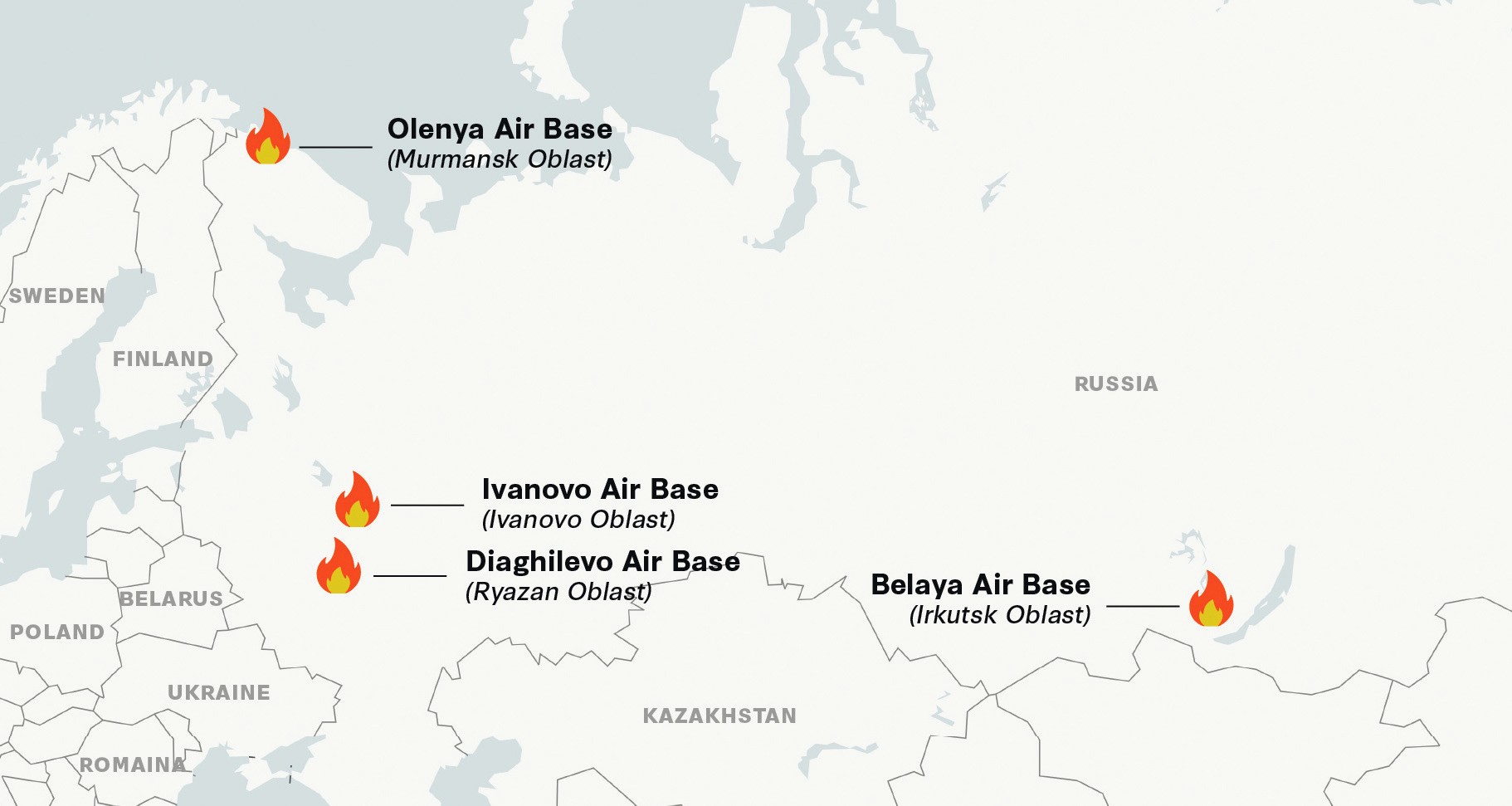
Four airbases were targeted on June 1: Dyagilevo near Ryazan, Ivanovo near the city of Ivanovo, Olenya near Murmansk, and Belaya near Irkutsk. According to the Security Service of Ukraine (SBU), 41 aircraft were destroyed or severely damaged. The operation itself astonishes by its audacity and sophistication. Ukraine used FPV drones—small, inexpensive devices that nonetheless inflict serious damage. These drones were hidden inside civilian trucks, which freely travel Russian roads. Once near the strategic aviation bases, drones launched from these trucks and attacked aircraft. According to multiple leaked sources, the drones were equipped with artificial intelligence trained on museum exhibits to strike the most vulnerable points of Russian planes.
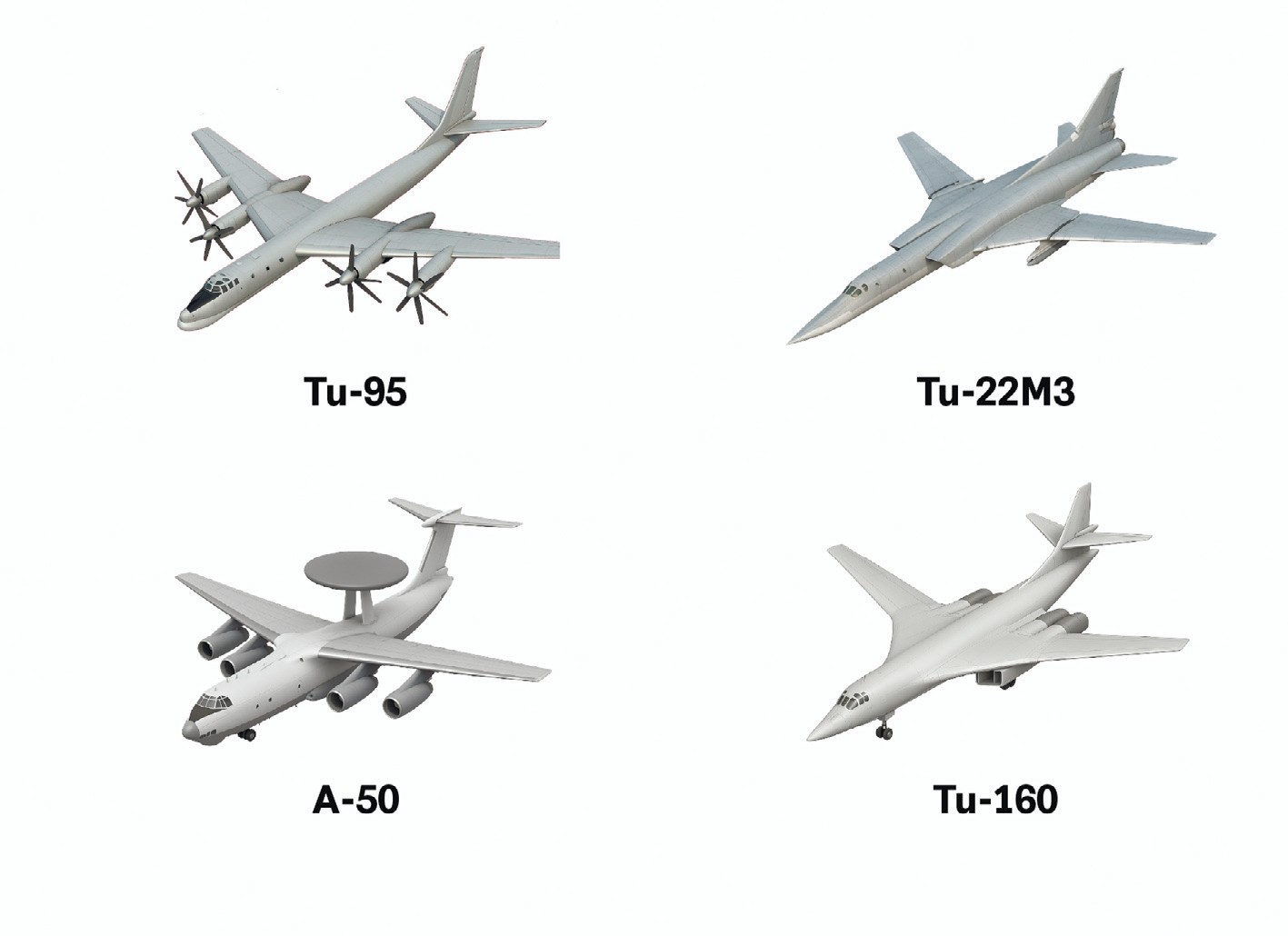
Many will recall the Chernobaevka airfield near Kherson, where early in the war Ukraine repeatedly struck concentrated Russian forces more than 20 times. “Chernobaevka” became a household name. Whether Ukraine reduced these bases to Chernobaevka’s level remains uncertain. However, destroying or damaging 41 aircraft is a massive blow to strategic aviation. Among the targets were A-50 early warning aircraft—of which Russia had only four, now reduced to one. Moreover, Russia currently cannot produce such planes, making replacement nearly impossible.
Perhaps even more importantly, Kiev inflicted a painful—mildly put—blow on one of Kremlin’s key military assets: the nuclear triad. Bombers and missile carriers capable of carrying nuclear weapons were targeted.
The operation also severely damaged the image of Russian intelligence services. They successfully identify “foreign agents” and arrest people for social media likes or reposts but failed to protect strategic aviation airfields. This represents more than just a failure.
The Ukrainian special services’ operation required extensive planning: finding locations to prepare drones and trucks, conducting reconnaissance to approach airfields undetected... Not even once did Russian intelligence come close to detecting these activities. This is a grave failure.
Importantly, Kiev demonstrated what its special services are capable of. It seems unlikely Ukraine can repeat this exact operation, but what other surprises its intelligence agencies might devise remains an open question.
Ukrainian surprises
Kiev has once again shown it can surprise on the battlefield—and this is not the first time. After Russia’s large-scale invasion began, most experts predicted Ukraine would hold out for only a few days. The war has now lasted four years. Despite initially having less than a tenth of today’s weaponry supplies, Ukraine repelled Russia’s first attack and severely weakened its elite units. During the war, Ukraine—without even possessing a navy—sank the flagship of the Russian Black Sea Fleet, the cruiser Moskva, inflicting such damage that experts doubt its continued status as a serious naval combat force.
Ukraine demonstrated its ability to strike deep inside Russia well before June 1, 2025. Russia has no difficulty bombing large Ukrainian cities like Kiev, Kharkov, and Odessa. Conversely, Ukraine was not supposed to have means to strike deep inside Russia due to two factors: the vast size of Russia and Western allies’ restrictions when supplying weapons—they explicitly prohibited using long-range systems against targets inside Russia.
Nevertheless, in the first year of full-scale invasion Ukraine attacked an airfield in Engels near Saratov. At that time, there were doubts whether Ukrainian drones caused serious damage to Russian strategic aviation. Regardless, Ukraine showed its drones can penetrate Russian air defences near borders and strategic objects. Strikes have been recorded near Moscow, Kazan, and even as far as the Urals. Therefore, Ukraine’s capacity to surprise on the battlefield no longer causes disbelief or questions.
Negotiations amid war
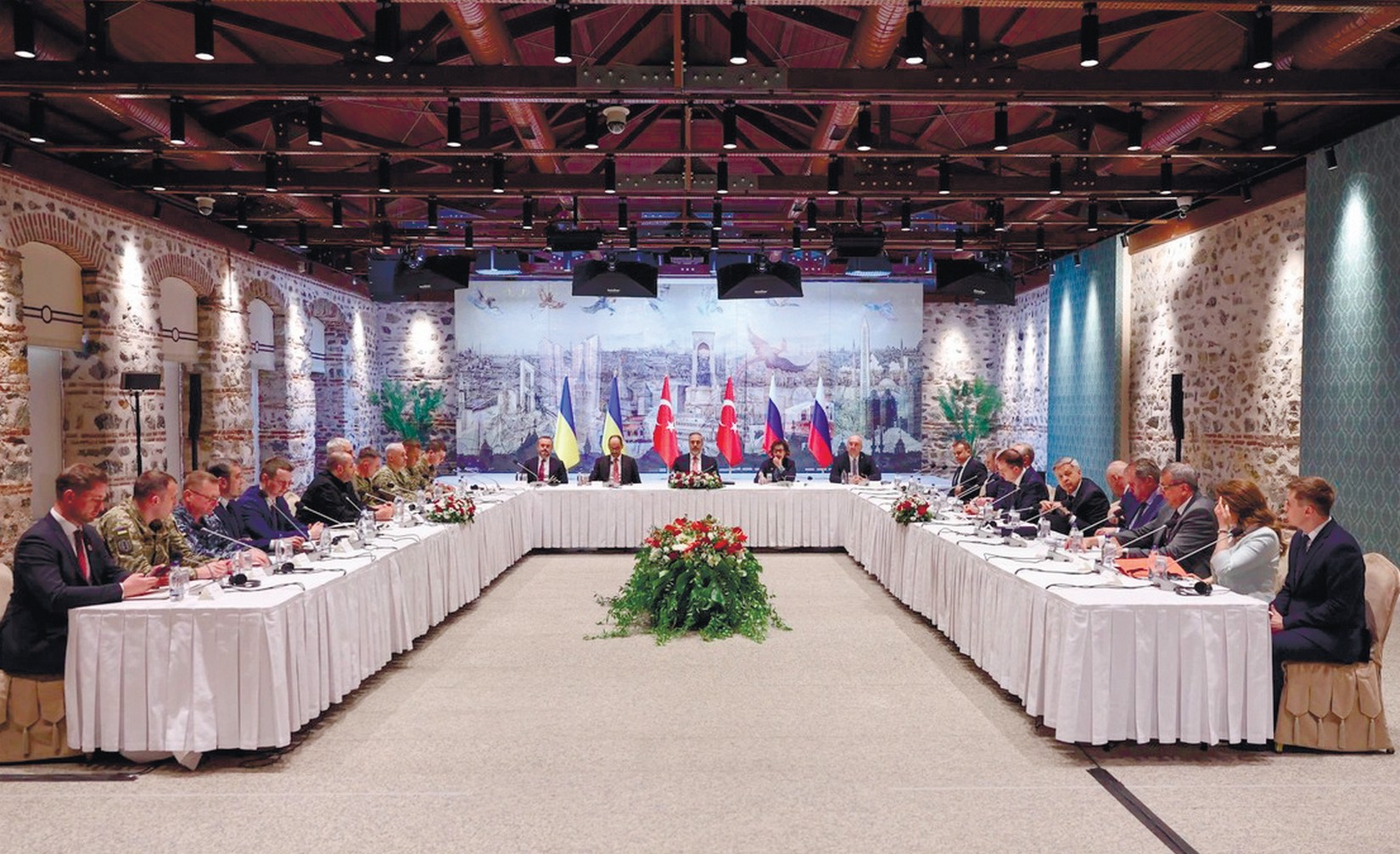
Operation “Web” took place just before another round of talks in Istanbul attracting huge attention. The expectation was for agreements on ceasefire; these were not achieved. Positions remain too divergent. Like in earlier talks in Istanbul, Russia’s demands resembled unconditional surrender: Kiev must withdraw forces from territories Russia claims as its own—not only Crimea but also Donetsk, Luhansk, Zaporozhye, and Kherson regions. Yet Russia does not fully control Donetsk and Luhansk regions; regional centres of Kherson and Zaporozhye are outside its control. Russia demands demobilisation, disbanding “nationalist formations,” and rejecting glorification of historical figures Moscow dislikes. Such demands might make sense if Russia had defeated Ukraine militarily—but so far it has not.
One could advise Ukrainian officials to “face reality,” as was often said during Minsk Group talks—accepting no side gets 100% of what it wants—but Moscow’s conditions effectively block negotiations. The process is deadlocked until one side achieves a decisive battlefield success.
Moscow apparently believes Ukraine will eventually be crushed due to vast military disparities. However, recent Ukrainian surprises deep inside Russia show nothing is decided yet; surrender is premature.
Vladimir Medinsky, head of the Russian delegation in Istanbul talks, expressed not his personal opinion but Moscow’s official position—one that needs revision to better reflect reality.
An operation to save diplomacy
Ending the Russia-Ukraine war is currently perhaps the most prominent diplomatic project of the US administration under Donald Trump (note: text original; likely refers to previous administration or mistake). The new White House pledged to end the war within 24 hours. Today, the US clearly does not want to accept ongoing intense fighting—it damages American diplomatic credibility.
Until recently, most military experts in Washington believed neither Russia nor Ukraine would soon achieve victory on the battlefield; they saw stalemate and recommended ceasing fighting altogether. Operation “Web” challenges these assumptions and implies Washington must adjust its negotiating stance accordingly.
The US now needs an operation to rescue its diplomacy—one that accounts for new realities revealed by “Web.” Clearly, Ukraine was prematurely written off as a loser with unofficial advice to limit demands and share territory.
Kiev’s surprises leave no doubt: unexpected turns remain possible in this war.
RECOMMEND:
 272
272

