

"THE GOAL IS TO MAKE ANTI-DOPING UNDERSTANDABLE TO EVERYONE"
Executive Director of AMADA: on prevention, sanctions, and new control tools
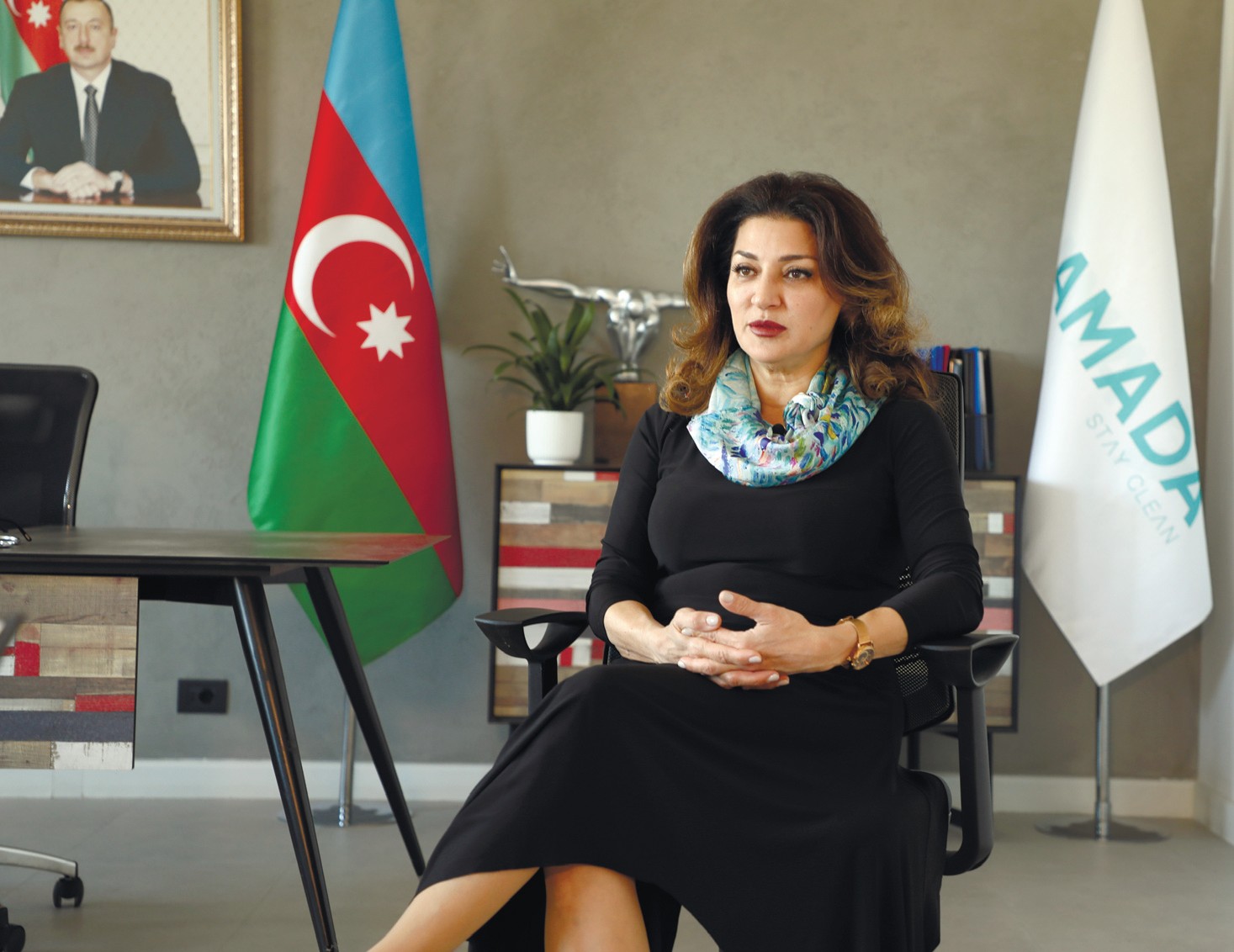
Author: Sanan SHAFIZADE
Despite new trends in global sports development, completely ending the use of prohibited substances has not yet been achieved. Athletes in various sports continue to use substances classified as doping to accelerate recovery. In recent years, new substances have been added to the banned list. The fight led by the World Anti-Doping Agency (WADA) in Baku is conducted by the Azerbaijan National Anti-Doping Agency (AMADA).
We spoke with AMADA Executive Director Tahmina TAGHIZADE to learn more about the agency’s work.
"Tahmina-khanym, could you please share the results of athlete doping control for 2025?"
"In accordance with AMADA’s Testing Distribution Plan, 380 tests were conducted from January to June 2025, with 236 of them during competitions. Of these, 56% were in high-risk sports (weightlifting, wrestling, cycling, taekwondo, among others), and 9% were carried out in regional parts of the country. In total, 411 biological samples were collected. Additionally, eight tests were performed upon international requests. All activities were implemented systematically and fully complied with international standards."
"Which athletes were found to have prohibited substances?"
"By mid-2025, the greatest number of doping cases was recorded in boxing. According to the laboratory at the Turkish Anti-Doping Centre at Hacettepe University in Ankara, two boxers showed an adverse analytical finding (AAF), and one showed an atypical finding (ATF), where the substance was detected at a low concentration requiring further investigation.
"Cases of AAF or ATF were also identified in wrestling, basketball, arm wrestling, judo, and karate. Detected substances include cannabinoids, furosemide, luteinizing hormone, boldenone, and ephedrine."
"Who most often attempts to avoid taking tests?"
"Primarily, these are athletes who have already decided to end their careers, those who lost competitions and are under strong emotional stress, as well as those suspected of using prohibited substances. Agency inspectors always remind athletes about the consequences of refusal, give them time to calm down, and try to persuade them to undergo testing. This often helps. Since 2017, 13 athletes from boxing, weightlifting, cycling, athletics, wrestling, and powerlifting have been sanctioned for refusing to provide samples."
"Is the list of prohibited substances growing? How many are there now?"
"The WADA prohibited list is updated at least once a year: new substances are added or old ones removed. For example, in 2024 tramadol, previously monitored, was officially included as banned during competitions. Currently, the list contains over 520 substances and methods grouped into three categories: always prohibited, prohibited only during competitions, and prohibited in certain sports. Moreover, substances with similar chemical composition or biological effects are also considered banned even if not explicitly listed."
"How many athletes have been suspended for anti-doping rule violations?"
"As of today, 34 individuals are under sanctions. All data about them are published on the agency’s official website under ‘Sanctions,’ except for one case involving an amateur athlete. Since 2016—the agency’s entire operational period—120 different sanctions have been imposed.
"According to the International Standard for Results Management and WADA Code, these data must be made public. However, exceptions exist when sanction information is not published or presented anonymously. For example, if the offender is a minor (under 18 years old), it may simply state: ‘A minor athlete was disqualified for two years for using a prohibited substance.’ Also, if an athlete is legally incapacitated due to mental or other medical conditions, their name and case details may be protected."
"Doping cases are often seen in sports like weightlifting and powerlifting. Is preventive work conducted with these athletes?"
"You are correct; doping risk is higher in certain sports. This is taken into account when planning our education and prevention programmes. We conduct targeted seminars, webinars, and training campaigns—including in regions—to ensure maximum coverage. In 2024 alone, we held 79 events involving more than 3,000 participants. In the first half of 2025, nearly 1,700 people took part.
"We actively use traditional and social media: over six months our information campaigns on social networks reached nearly 300,000 people.
"Our primary goal is to make information accessible and understandable so every athlete and their team can confidently navigate the anti-doping system and contribute to the cleanliness of Azerbaijani sport. Currently, we are reviewing our educational strategy to make training more effective."
"Could you share AMADA’s main plans for the near future?"
"The year 2025 is significant for us: we are implementing an updated strategy covering all areas—from testing and investigations to science, medicine, and international cooperation.
"Key tasks include completing the agency’s rebranding, launching new online platforms for athletes and doctors, opening a Regional Anti-Doping Centre of Excellence, and preparing to harmonise national legislation with the updated World Anti-Doping Code.
"We will also continue expanding international partnerships, strengthening trust in our work, and improving the effectiveness of educational programmes."
"Which laboratory do you primarily collaborate with now for test verification?"
"There are currently 29 WADA-accredited anti-doping laboratories worldwide on all continents—in major countries and regions—all undergoing annual audits and periodic re-accreditations according to international standards.
"At present, AMADA’s main partner remains the WADA-accredited laboratory at the Turkish Anti-Doping Centre. Cooperation with it enables us to ensure timely and high-quality processing of all collected biological samples in compliance with international standards."
RECOMMEND:
 290
290

