

QUICK QUARREL AND PEACE
Five-day clashes between Thailand and Cambodia: resilience test for Southeast Asia’s security
Author: Natig NAZIMOGHLU
The military actions that took place from July 24 to 28 marked the most significant confrontation between Thailand and Cambodia in the last decade. However, like previous manifestations of the conflict between these two Southeast Asian countries, which has historical roots, the recent escalation was contained quite swiftly. This was due to the lack of interest from both Thailand and Cambodia in escalating the confrontation, as well as—importantly—the active role of powerful external actors who urged Bangkok and Phnom Penh to cease fire as soon as possible.
Mutual accusations
The fighting broke out on the night of July 24 along the border between Thailand and Cambodia. More precisely, it occurred at a disputed border area near the Tamoanthom temple. The shootouts between ground forces quickly escalated within days into intense clashes along the shared land border, which stretches over 800 kilometres. Thailand also employed air strikes on military targets within the neighbouring country’s territory, officially confirming the use of six F-16 fighter jets against Cambodia.
Both sides blamed each other for initiating the armed escalation. Bangkok accused Phnom Penh of opening fire in Surin province, resulting in civilian casualties, while Phnom Penh denied these accusations and described the events as "unprovoked aggression" by Thailand involving heavy weaponry and air force involvement.
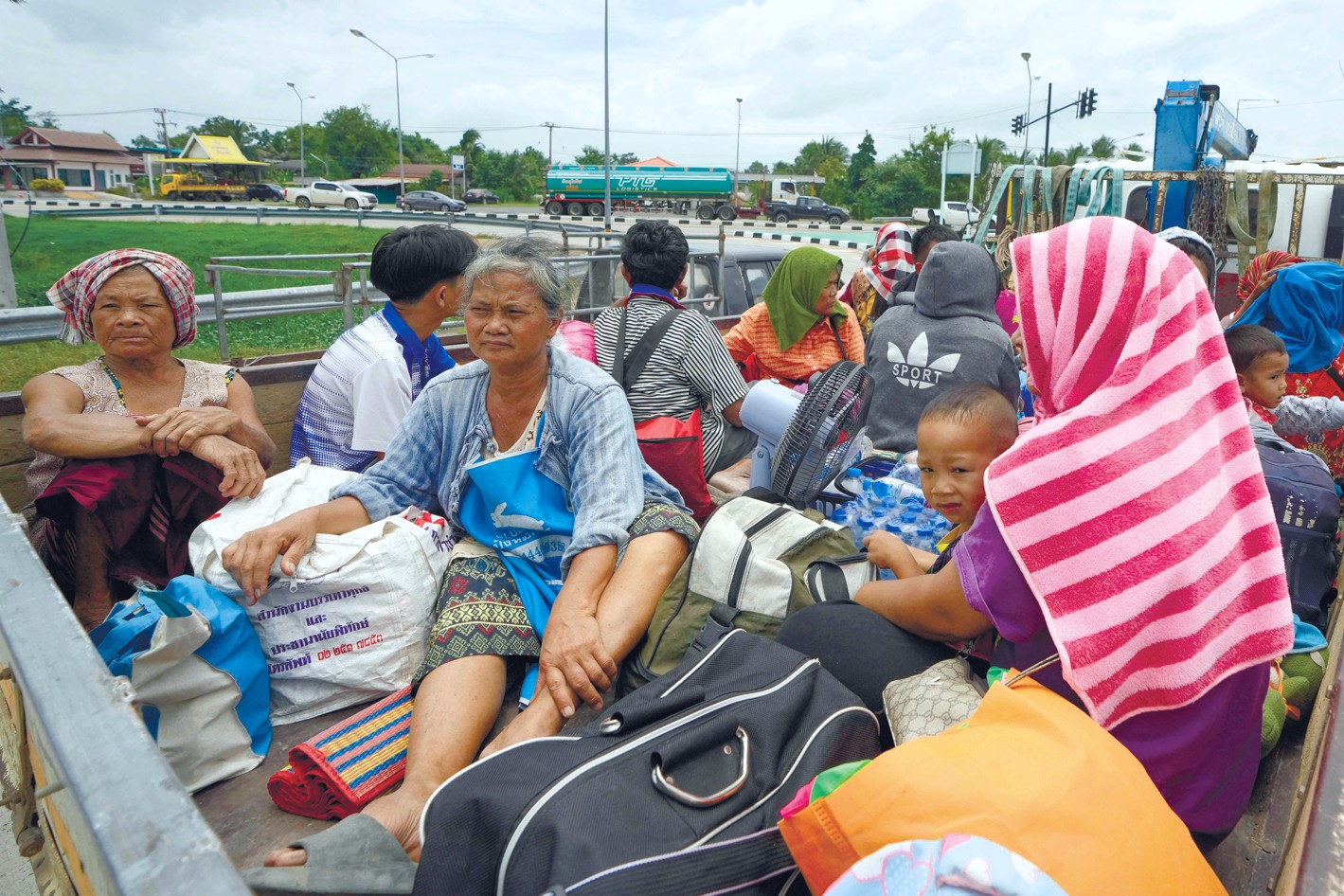
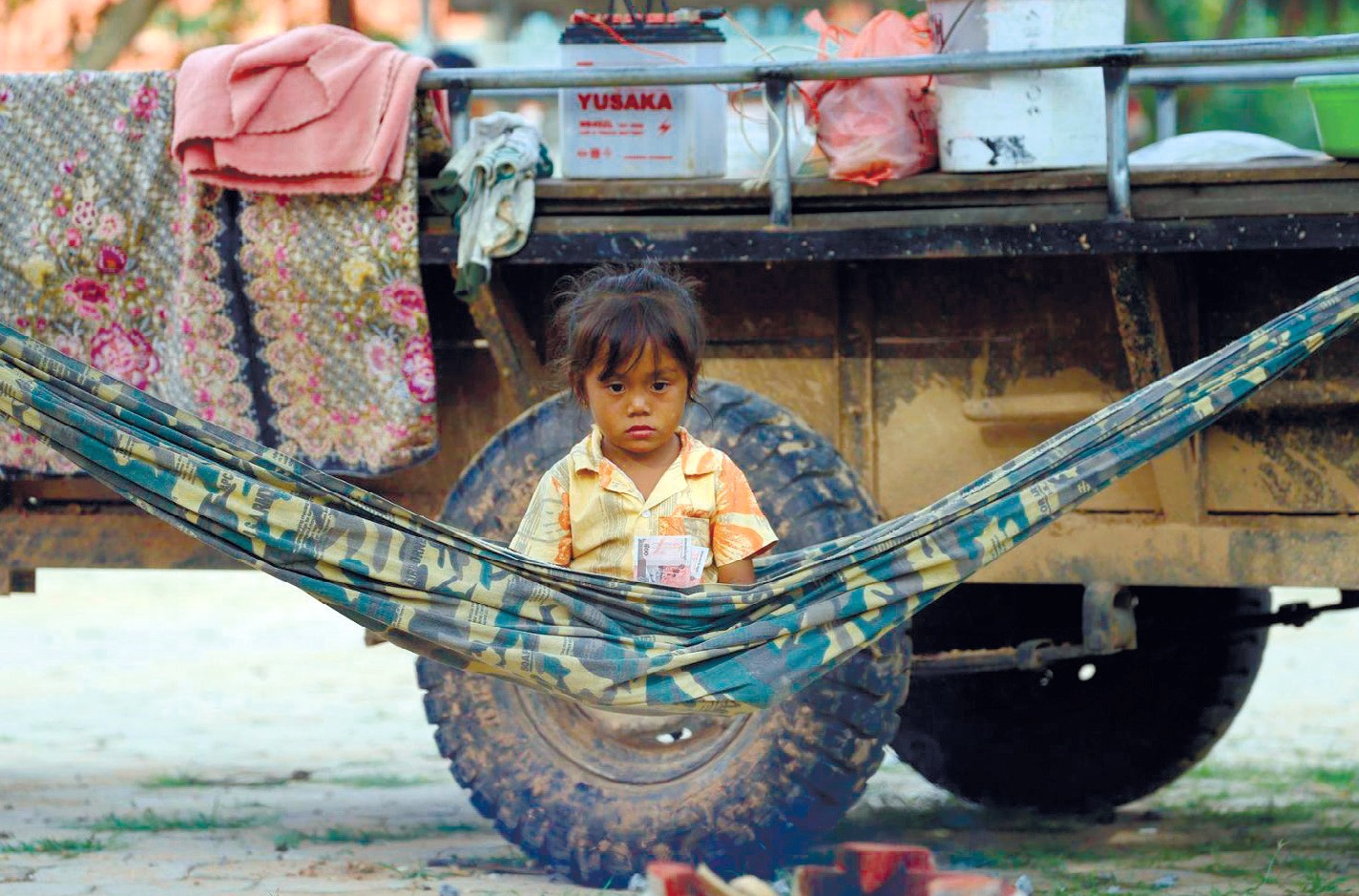
As a result of five days of fighting, at least 35 people were killed (including soldiers and civilians) on both sides; 14 were wounded, and approximately 300,000 were evacuated.
The very fact of military clashes demonstrated that despite relatively long periods of calm, the dispute between Thailand and Cambodia retains its potentially destructive energy. Neutralising this energy remains a complex challenge due to the historically rooted Thai-Khmer dispute, which in past decades often took on a hostile character.
Whose temples and whose territory?
The border dispute dates back to the latter half of the 19th century when Cambodia was part of French Indochina. It was during this colonial period that the process of demarcating the Cambodian-Thai border began. The ownership of certain sections remains unresolved to this day. The cause is a dispute over territories where ancient temples from the Khmer Empire era are located—Preah Vihear, Tamoanthom, Tamoantauch, and Takrabei.
In the late 1950s, Thailand annexed the area around Preah Vihear temple. Phnom Penh appealed to the International Court of Justice (ICJ), which in 1962 ruled that Preah Vihear belongs to Cambodia. However, this did not bring an end to the conflict—not only because Thailand does not recognise the ICJ’s jurisdiction but also due to the large territory covered by the temple complex itself. While it is considered Cambodian, much of the surrounding land is regarded primarily as Thai territory.
This explains periodic border clashes that have been accompanied by serious escalations, such as those between 2008 and 2011. The current confrontation began at the end of May 2025 when a Cambodian soldier was killed in a shootout in the disputed area and a Thai soldier lost a leg after stepping on a mine. Both sides increased their military presence near the border and downgraded diplomatic relations to their lowest level. Thailand closed its border with Cambodia in seven provinces. Cambodia, in turn, suspended imports of fruits and vegetables from Thailand.
The five-day fighting brought Thailand and Cambodia to the brink of a larger war. Yet it was clear that neither country desired a full-scale conflict. Moreover, influential global actors—namely the US and China—intervened. Each saw itself as a mediator but ultimately limited itself to acting as an active observer during negotiations between Bangkok and Phnom Penh.
The Putrajaya Peace
Amidst the clashes, US President Donald Trump announced phone calls with Cambodian Prime Minister Hun Manet and Thailand’s acting Prime Minister Phumtham Wechayachai. The American leader expressed readiness for the conflicting parties to "meet immediately" for negotiations. Trump also warned that he would not conclude trade agreements with Cambodia or Thailand if hostilities continued. However, should peace be achieved, he promised that the US would enter into trade agreements with both countries.
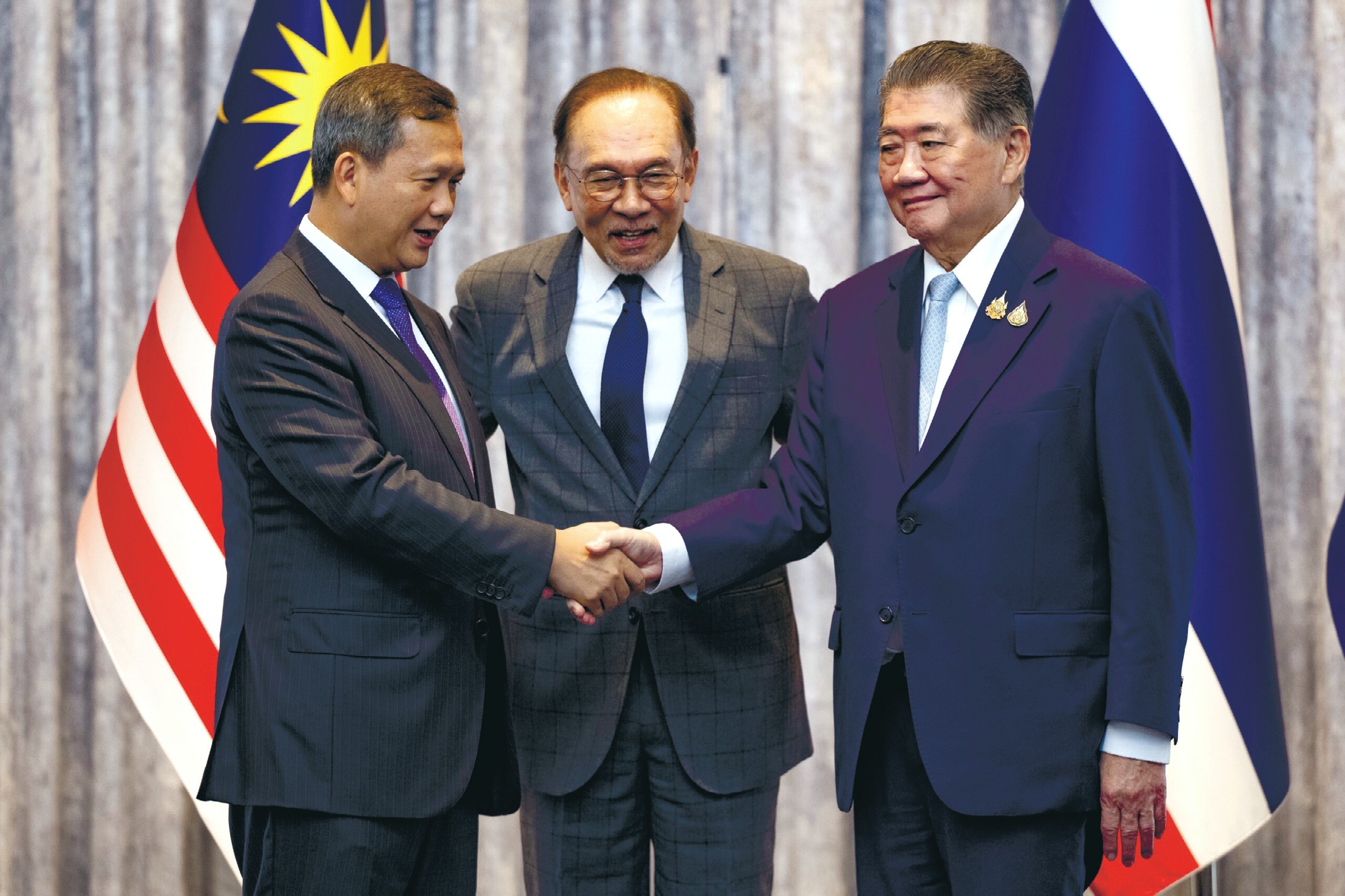
On the evening of July 27, an agreement was reached for a meeting between Hun Manet and Phumtham Wechayachai. Instead of American mediation, Bangkok and Phnom Penh chose Malaysia—the chair of the Association of Southeast Asian Nations (ASEAN)—as arbitrator. Nevertheless, representatives from both the US State Department and China attended the talks that began on July 28 in Putrajaya, Malaysia. China also visibly supported efforts to resolve the Thai-Cambodian conflict.
The meeting between the leaders of Cambodia and Thailand was held under the auspices of Malaysian Prime Minister Anwar Ibrahim. Cambodia and Thailand agreed to cease fire and resume direct dialogue. Anwar Ibrahim announced: "An immediate and unconditional cease-fire will take effect at midnight on July 29. This is final."
Both Thai and Cambodian leaders praised the talks. Cambodian Prime Minister Hun Manet stressed: "Today we had a very good meeting with very positive results that give hope for an immediate halt to hostilities that have caused deaths and injuries to many people, as well as mass displacements."
Acting Thai Prime Minister Phumtham Wechayachai stated that the agreement with Cambodia "will be successfully implemented by both sides in a spirit of goodwill."
It is worth noting that former Thai Prime Minister Phetrongthan Chinnawat did not represent Thailand at the Putrajaya meeting due to her temporary removal from power by the military—a development rooted in Thailand’s history of confrontation between military and civilian authorities. Meanwhile, Chinnawat faced sharp criticism from Thai society for her perceived weak stance during the conflict with Cambodia. This criticism was fuelled by reports of a phone call between Chinnawat and former Cambodian Prime Minister Hun Sen, who had friendly ties with her father Thaksin Chinnawat—the Prime Minister of Thailand from 2001 to 2006 until ousted by a military coup. During this phone call, she reportedly complained about Thailand’s military leadership, prompting calls for her resignation.
This incident reveals two things: first, the high degree of mistrust and even hostility between Thais and Khmers; second, certain political ties between elites in both countries that serve as a strong argument for the possibility of peaceful dialogue between Thailand and Cambodia.
On July 29, the first day of the declared ceasefire, representatives of Thai and Cambodian armed forces began negotiations on implementing the ceasefire agreement. At this stage, it is possible to consider the conflict resolved. But whether the agreements reached in Putrajaya will lead to long-term comprehensive peace between Thailand and Cambodia remains unclear.
There is no clear answer yet; however, it can be said with certainty that US President Trump is keen to claim credit for this Thai-Cambodian ceasefire, openly expressing his desire to win a Nobel Peace Prize. At least he asserted that Washington’s mediation efforts ended the border conflict between Thailand and Cambodia. "We stopped the war, and we are happy about it," Trump said during a meeting with British Prime Minister Keir Starmer in Turnberry (Scotland), making it clear that he expects credit for his exceptional contribution to resolving yet another conflict—this time between two Southeast Asian countries.
Whether Thais and Khmers agree with this is unknown but apparently not crucial—the main thing is that their ceasefire truly transforms into lasting peace, with or without Trump.
RECOMMEND:
 337
337

