

A JOURNEY INTO THE UNKNOWN
What lies behind Nikol Pashinyan’s visit to Altai?
Author: Tofigakhanym GASIMOVA
The Prime Minister of Armenia, Nikol Pashinyan, has gone on holiday — on his second attempt, so to speak. He had already taken leave, which he suddenly interrupted for a visit to Russia. And now, he has once again opted for a break — one that will last virtually until early September. Those familiar with Armenia’s political traditions since the so-called “barbecue revolution” point out that such a holiday is, above all, a "pause" — a time to reflect on the evolving situation and, crucially, decide how to present it to the public. And there is certainly much to reflect upon. Judging by recent developments, another shift appears to be taking place in the relationship between Armenia and Russia — or, more precisely, between Pashinyan’s camp and Moscow.
What lies behind environmental pretext?
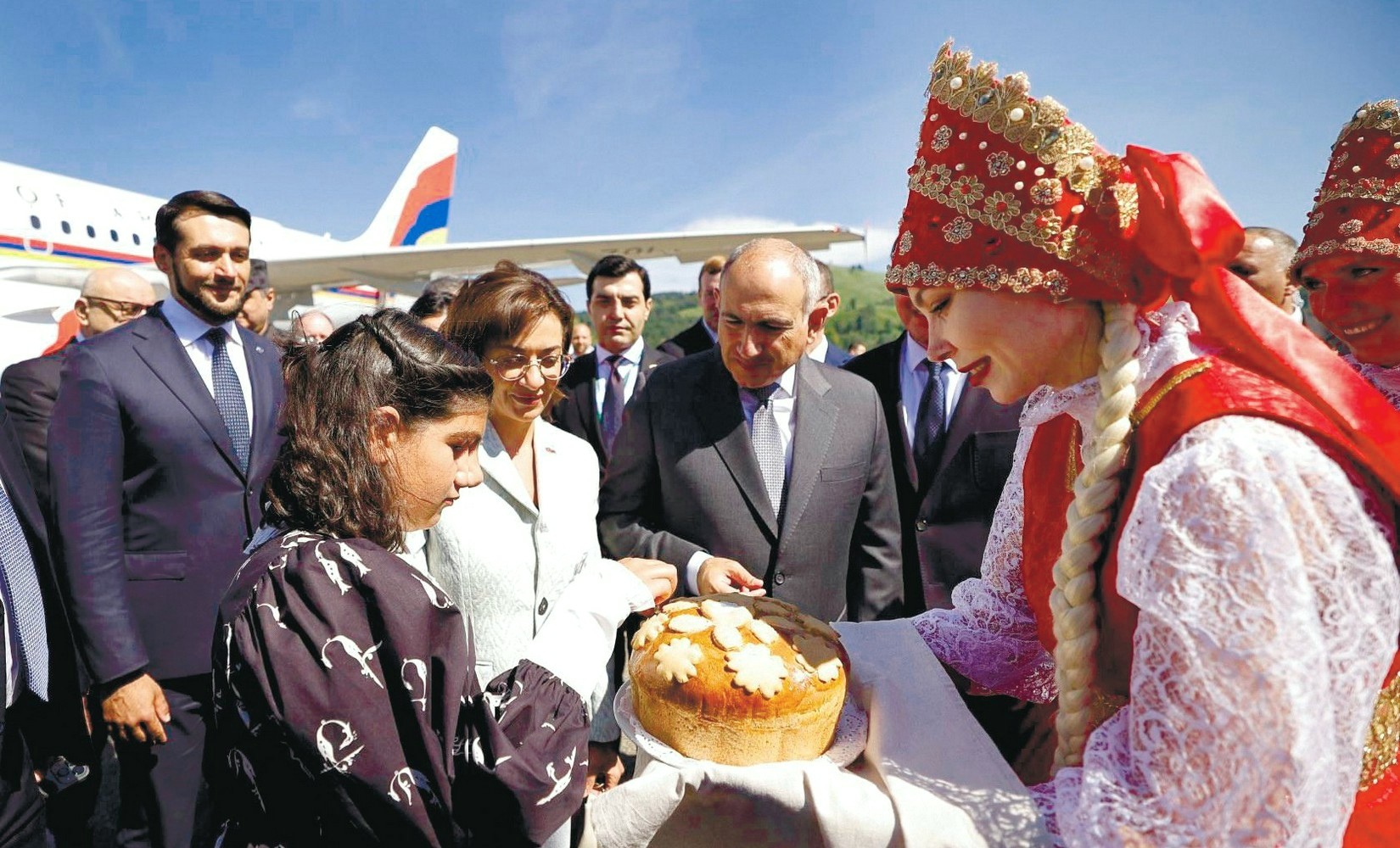
Pashinyan’s visit to Altai in late July is notable for a number of reasons. The formal pretext was an international environmental conference attended by Russian Prime Minister Mikhail Mishustin, along with the prime ministers and ministers of Uzbekistan, Kazakhstan, Belarus, Tajikistan, Kyrgyzstan, and Turkmenistan. Typically, Pashinyan would delegate such gatherings to Deputy Prime Minister Mher Grigoryan, reserving for himself only the events more befitting a "presidential" presence. In Armenia, while the country nominally has a president, the office is largely ceremonial, devoid of substantive powers.
In recent months, Pashinyan has repeatedly emphasised his pro-Western orientation and hinted at a desire to distance himself from Moscow. At one point, he even stated that “there is an 80% chance Armenia will leave the CSTO, and a 20% chance it will remain”. In this context, Pashinyan’s decision to appear in Altai constitutes a geopolitical shift.
Moreover, the Armenian Prime Minister brought along his wife and youngest daughter — a charming familial touch. This is a gesture typical of politicians who enjoy friendly relations with the host country, and who wish to highlight that rapport. Yet Pashinyan, in recent times, has been embroiled in persistent tensions with Russia.
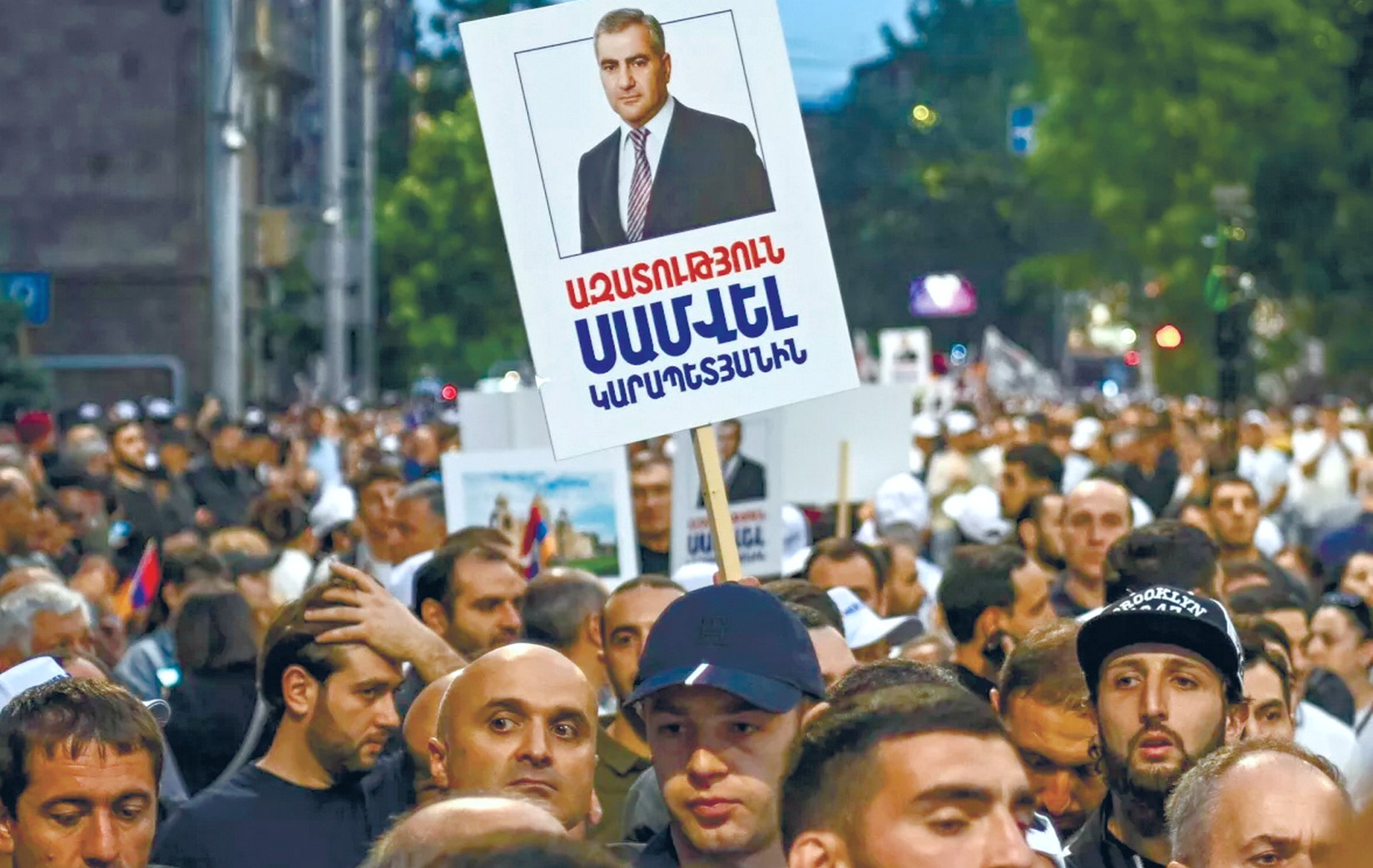
It is also worth recalling that just prior to Pashinyan’s trip to Altai, a clash erupted on social media between Armenian parliamentary speaker Alen Simonyan and Russian propagandist Margarita Simonyan. Russian state media figures have been waging an open information war against Pashinyan, expressing displeasure over a broad spectrum of issues — from his formal recognition of Garabagh as part of Azerbaijan, effectively nullifying Moscow’s attempts to insert a “deferred status for Garabagh” into negotiations, to his overtures toward the West. The arrest of Tashir Group head Samvel Karapetyan — whom Moscow had clearly been grooming as a local Ivanishvili figure — was especially provocative.
Following yet another televised tirade from Margarita Simonyan, Alen Simonyan issued a sharply worded response on the social media platform X, without much restraint:
"Another vile specimen from the freak show now operating on Russian soil continues to meddle in the sovereign affairs of our country. Appealing to her Armenian roots while sharing nothing with Armenia or the Armenian people — aside from a surname ending in 'yan' — she constantly resurfaces in the media, insults Armenia’s leadership, incites public protest in our country, and calls for the overthrow of the government… Elections are approaching in our country, and the frenzied yapping in our direction will grow louder each day — until that mouth, whimpering, finally snaps shut for good."
Simonyan responded but soon deleted her post without explanation.
Meanwhile, the Yerevan-based newspaper Graparak reported the redeployment of armoured vehicles to the Russian military base in Gyumri. Analysts linked this move to possible preparations by Moscow for forthcoming regional shifts. Despite facing an acute shortage of military resources due to the war in Ukraine, Russia has reportedly begun reinforcing its presence in Armenia — an assessment shared by Ukrainian military intelligence. Yerevan attempted to deny these reports, albeit with little credibility.
With all the above in mind, Pashinyan’s family outing to Altai looks increasingly like an effort to execute another geopolitical manoeuvre — to rebuild bridges with Moscow, or at least dismantle existing barricades.
Slogans vs. practical policy-making
In recent times, Pashinyan has made numerous declarations with a distinctly pro-Western flair. Yet his reputation for walking back such statements is well known. Often, he simultaneously issues signals in contradictory directions. During his trip to Altai, he once again affirmed that Armenia has no intention of leaving the Eurasian Economic Union (EAEU). And this is entirely logical. EAEU membership enables Armenia to procure oil, gas, and uncut diamonds at internal Russian prices. Without such economic support, the Armenian economy would collapse.
As has been frequently observed, Russia controls Armenia’s critical infrastructure — its railway system, telecommunications, energy sector, gas distribution network, and more. Some of this infrastructure is owned by Russian state enterprises, some by private Russian oligarchs, and some operates under concession agreements. Thus, Russia possesses the means to “tighten the infrastructural noose” and bring the Armenian economy to the brink of collapse.
It should also be noted that Samvel Karapetyan, aside from heading the Tashir Group, is the owner of Armenia’s power grid. His associates could easily orchestrate a nationwide blackout — a political electroshock for Pashinyan. One must recall how a proposed electricity tariff hike once triggered Armenia’s “Electric Maidan”.
Pashinyan has already received warnings: blackouts occurred in the Armenian parliament and during the opening of a supermarket attended by the Prime Minister. An attempt to nationalise the power grid failed — Yerevan lost its case in arbitration.
One can speak at length about a Western pivot, but in this case, the economy does not allow for such plans — the dependence on Russia remains overwhelming.
Yerevan has likely been emboldened by the apparent “complications” in relations between Baku and Moscow — particularly against the backdrop of commentary by Russian military correspondents who suggest that Armenia should again be turned into a threat to Azerbaijan and pushed back toward the “Artsakh” narrative. The wave of Islamophobia and Turkophobia currently sweeping Russia appears to have inspired certain circles in Yerevan.
Especially when considering that Pashinyan began presenting himself as a pro-Western figure only after failing to secure weapons from Russia on the eve of the war in Ukraine — despite nearly begging for them. Before that, the leader of the “barbecue revolution” had not uttered a word about turning to Europe. He dutifully dispatched Armenian sappers to the Russian military mission in Syria and engaged in discussions with Moscow on establishing new military bases, including in Zangezur.
Many observers have long questioned whether Pashinyan’s demonstrative pro-Western gestures are genuinely ideological — or merely a bargaining tactic with Moscow.
The West fails to deliver
Another factor nudging Pashinyan back toward Moscow is that things on the Western front are going far worse than anticipated. Donald Trump has won the US presidential election. The “most pro-Armenian administration” under Biden has now passed into history.
France, too, is grappling with crises — from New Caledonia to Africa. Paris is being pushed out, often unceremoniously, from nearly every region where it once held influence, particularly due to the legacy of its colonial past. In such a climate, President Macron has little time for Yerevan.
The European Union has undergone a leadership change — Charles Michel and Josep Borrell are gone, along with the previous level of sympathy for Armenia. Pashinyan’s recent European tour yielded little. He managed to secure a mere €10 million for combatting Russian disinformation. Yet he had clearly hoped for more robust support in reducing Armenia’s dependency on Russia.
But the prevailing sentiment in the West appears to be that Armenia must shoulder the bulk of the burden itself. In other words, foreign help will not come — and the time has come to bow once more before Moscow.
But will Moscow accept the gesture? It is far from certain that Pashinyan’s previous pronouncements and embraces with Western politicians will be forgiven. Russia does not overlook such conduct from its strategic outposts.
Nor is it likely to forget the arrest of Karapetyan, which conveniently allowed the current Prime Minister to eliminate his most formidable rival — who also happened to be Moscow’s clear favourite.
A great deal could change before the 2026 elections. Russia, for one, might still have an ace up its sleeve: a political protégé currently operating in the shadows.
Political analysts are not ruling out a force-based scenario — ranging from a palace coup, akin to the one that unseated Levon Ter-Petrosyan, to a classic military takeover. And there are no guarantees that the West, even in such circumstances, would step in to save Pashinyan.
RECOMMEND:
 328
328

