
SHAPELESS FRONT
Media forum in Khankendi: different rhetoric with broad audience

Author: NURANI
On 22 July, Azerbaijan marked National Press Day. One hundred and fifty years ago, the first issue of the newspaper Akinchi, founded by Hasan-bey Zardabi, was published. Over a century and a half, the Azerbaijani press, along with the entire country, has passed through various trials. The history of Azerbaijani journalism has never been cloudless. Under the harsh censorship of the Tsarist era, newspapers such as Sharqi-Rus and Kaspii were published. The satirical magazine Molla Nasraddin, edited by Jalil Mammadguluzade, gained unprecedented popularity—being read almost throughout the entire Turkic world. The collapse of the Russian Empire and the proclamation of the Azerbaijan Democratic Republic opened a new chapter in the history of the entire East—and introduced a new newspaper: Azerbaijan.
Following the establishment of Soviet Azerbaijan in 1920, many newspapers ceased to exist. The Baku Worker, the organ of the local Bolsheviks, continued publication. Later came Vyshka, Communist, and a whole range of city and district newspapers. Another turning point in the history of the Azerbaijani press came in the late 1980s, when independent and opposition publications began to reappear.
Today, the national press comprises hundreds of newspapers—both nationwide and regional—as well as magazines covering every conceivable field, from political science and economics to glossy women's publications, internet portals, independent television channels, and YouTube projects.
In his congratulatory message to Azerbaijani journalists, President Ilham Aliyev remarked: "Today, we can proudly say that our national press has traversed a glorious and progressive path of development over the past century and a half. It is particularly notable that it marks its current jubilee in an Azerbaijan that has fully restored its territorial integrity and sovereignty.
During the 44-day Patriotic War and the anti-terrorist operation, the Azerbaijani media worked with dedication and perseverance, both at the front and in the rear, ensuring the prompt coverage of events. At this historic and decisive stage for our country and people, Azerbaijani media played a major role in the rapid and objective dissemination of information, in countering mass disinformation attacks, and demonstrated high professionalism, genuine patriotism, and solidarity in conveying our just cause and position to the international community. Without a doubt, the victory we achieved in the information sphere is an inseparable part of our glorious battlefield Victory, whose fifth anniversary we shall celebrate this year."
Khankendi: the capital of media dialogue
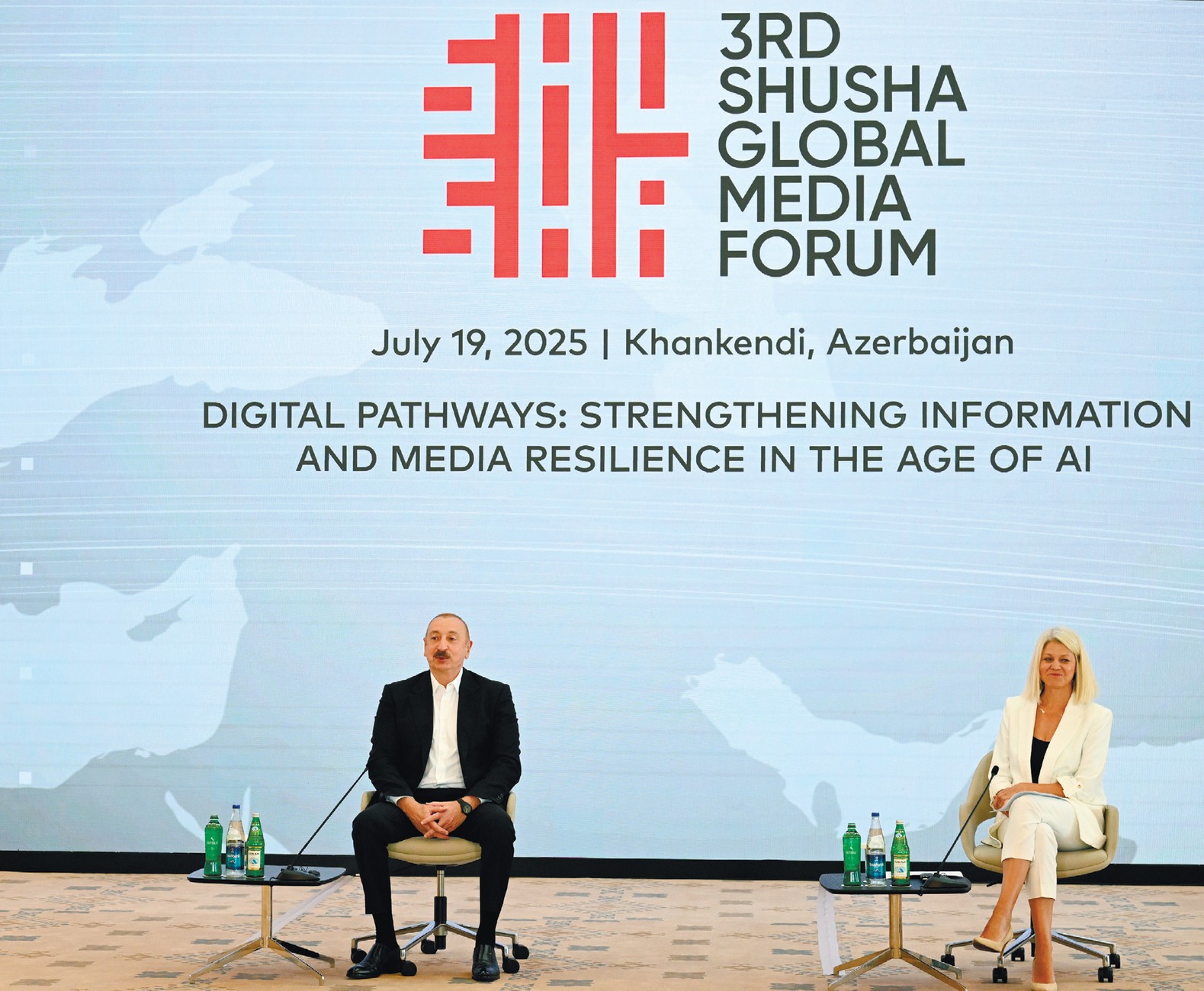
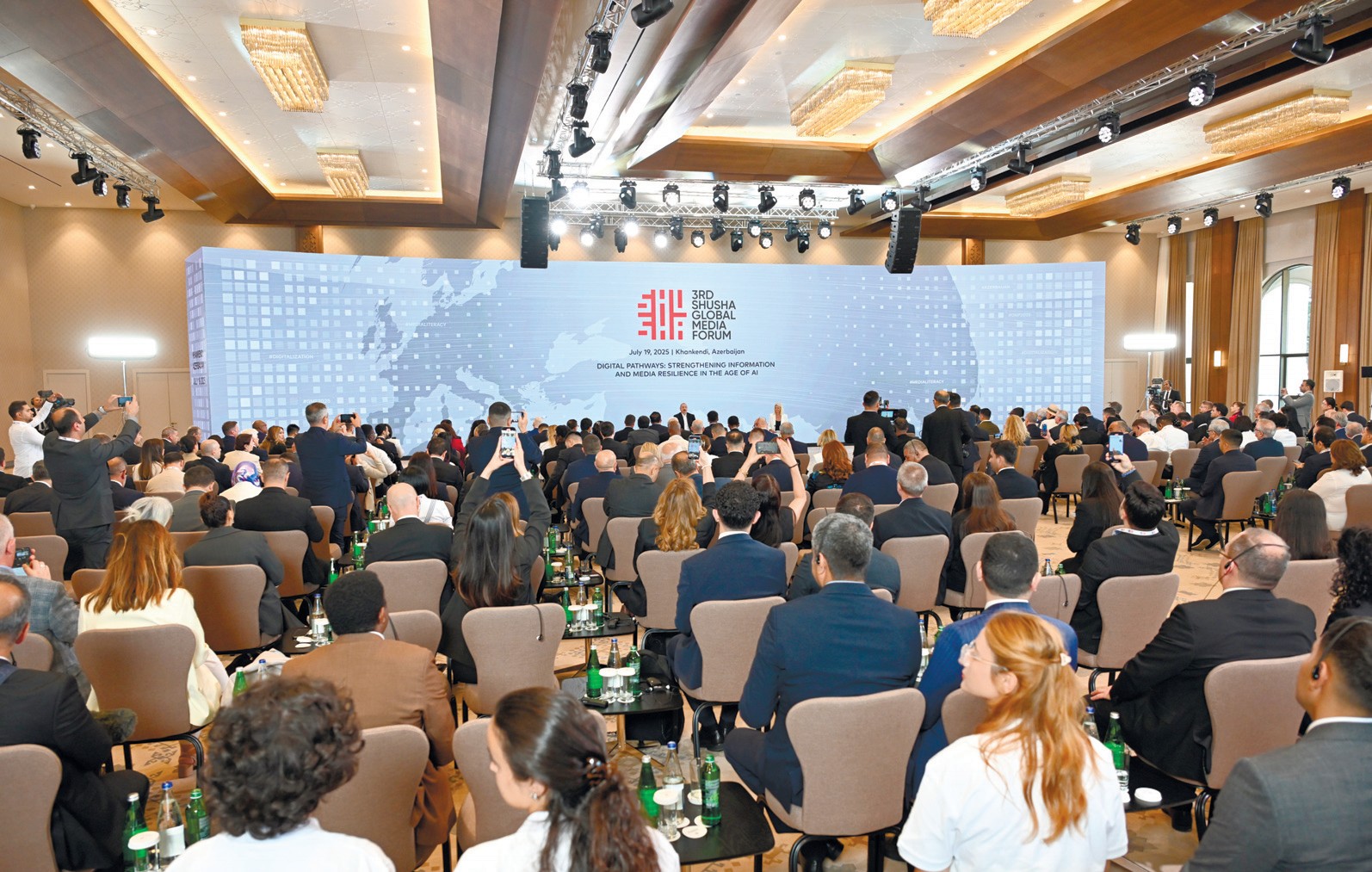
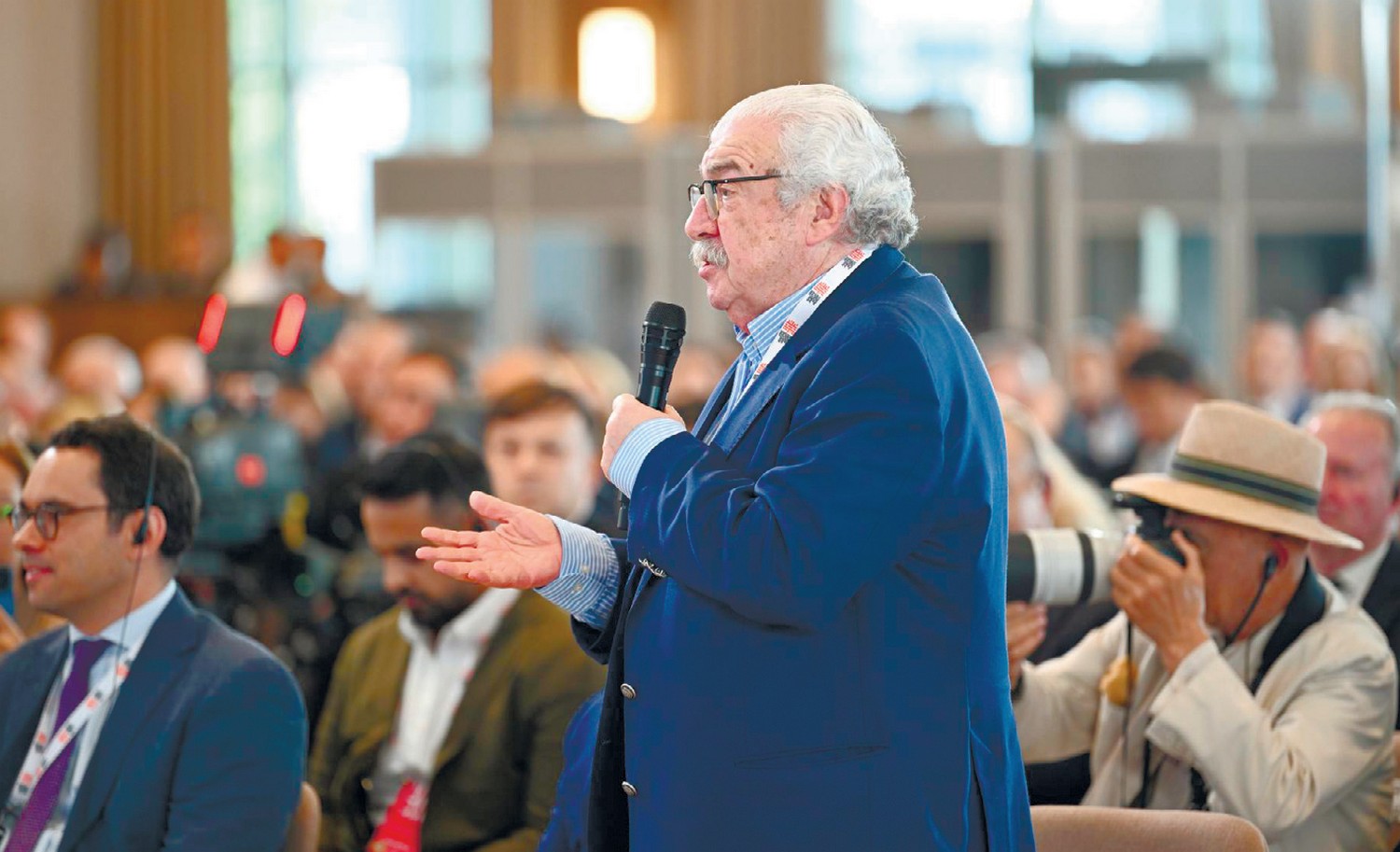
Coinciding with the professional holiday of journalists, Khankendi hosted the third Global Media Forum. This year, it brought together around 140 participants from 52 countries, representing over 30 news agencies, 7 international organisations, and approximately 80 media outlets.
For Azerbaijan, the Shusha Media Forum is a highly significant and responsible event. Its very holding is one of the key indicators of the success of the Garabagh Revival policy. Shusha and Khankendi are increasingly becoming venues for major diplomatic meetings, expert dialogue, and more. Nor has the task of conveying Azerbaijan's position on many issues to the global public disappeared—especially now, when the country's foreign policy is advancing to new levels and horizons in every respect. Its "information support" remains a priority.
Naturally, the central event of the forum has always been the President’s live interaction with participants and his responses to questions covering a wide array of pressing issues. This year’s forum was no exception. The President of Azerbaijan spoke about the prospects for the peace process between Baku and Yerevan, the opening of the Zangezur Corridor, and cautioned that if it were not opened, Armenia would lose the opportunity to become a transit country. He also touched upon the delicate issue of relations between Azerbaijan and the US, thanking Donald Trump for his willingness to help Azerbaijan and Armenia reach an agreement: "Despite being occupied with far more global issues of international security, he has also kept the situation in the South Caucasus within his field of vision. We in Azerbaijan are, of course, pleased that he has won, for many reasons. And naturally, we wish him success in bringing his work to completion—especially when it comes to the Washington swamp—so that he drains it to the very bottom."
In the same address to forum participants, Ilham Aliyev revealed genuinely intriguing details of the negotiations on preparing a peace agreement between Azerbaijan and Armenia: "We prepared the text of the peace agreement and sent it to Armenia. They had various comments. For two years, there was no progress. The main reason was that the Armenian side wanted to include the issue of 'Nagorno-Karabakh' in the text. We told them that 'Nagorno-Karabakh' exists in your imagination; in reality, it does not. It is part of Azerbaijan, and any matter relating to our internal policy cannot be included in the text of a peace treaty." He stressed that only after the liberation of the territories in September 2023 did Armenia abandon this demand, as the matter was closed. He added: "In essence, real negotiations began in January 2024, and on the basis of our draft, the text was agreed. But there were two—or perhaps more—points to which the Armenian side did not want to agree. They agreed only after President Trump won, and I told my colleague, Mr Pashinyan: 'You probably hoped that Madam Harris would win and that you would once again find yourself on a "white horse", but that did not happen.' I am personally convinced that had Trump not won, they would not have agreed, because they wanted more than they deserved and more than they could handle. Now, since they have agreed to all points, only two legal issues remain, as I have already mentioned: the constitution and the dissolution of the Minsk Group. Once these are resolved, the document can be signed."
This statement by the President of Azerbaijan was warmly received by the occupant of the White House. Donald Trump reposted Ilham Aliyev’s remarks on his social media account, for which the Azerbaijani leader expressed his gratitude. Washington values that its peace efforts are held in such high regard. Moreover, the US clearly took note of the words about the ‘Washington swamp’. From the outset, Baku has resolutely supported many of Donald Trump’s initiatives aimed against the pseudo-liberal establishment.
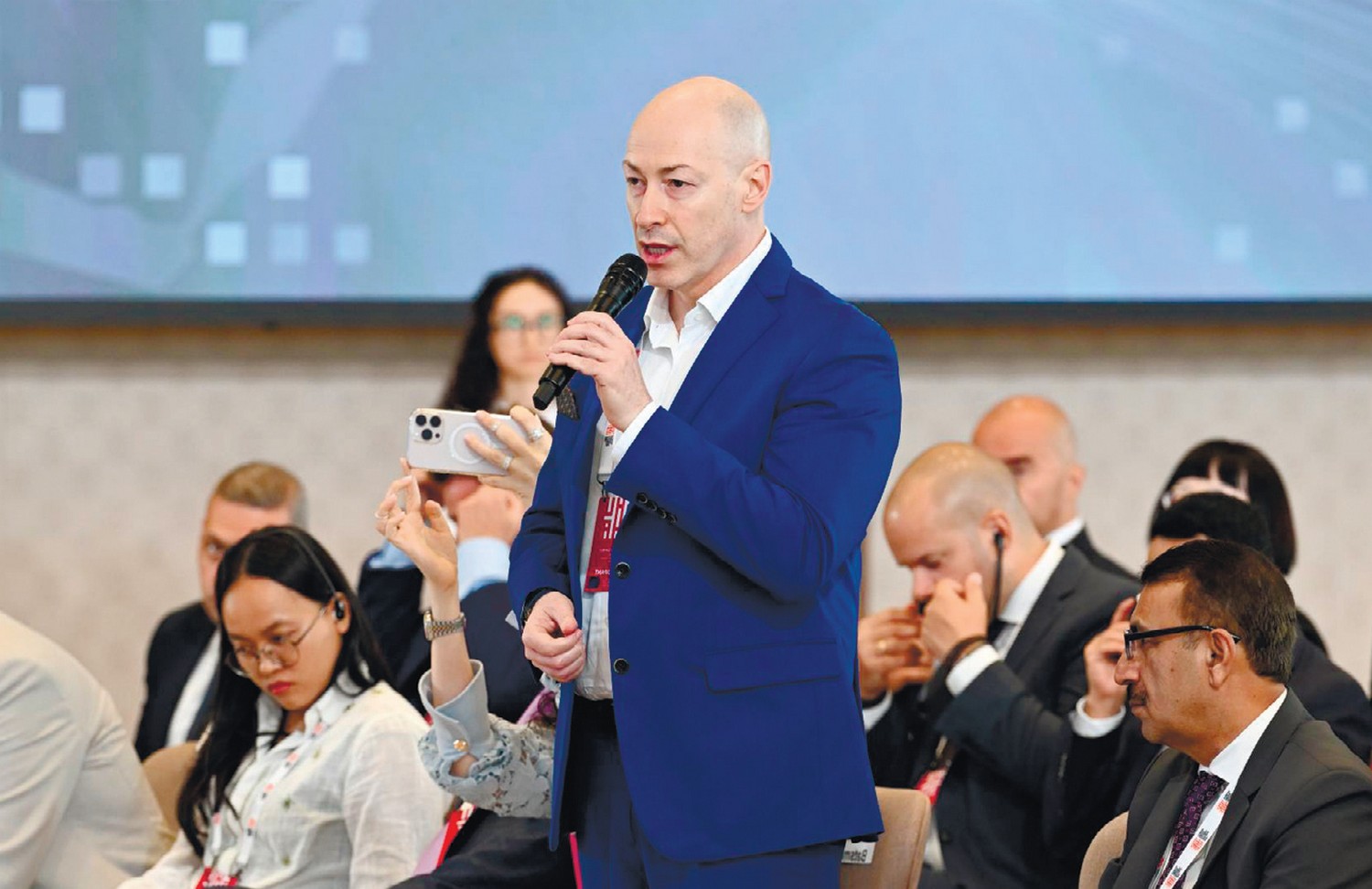
Another exchange also drew the attention of the world’s media. Ukrainian journalist Dmitry Gordon asked the President of Azerbaijan: "As the leader of a victorious nation, what advice could you offer Ukraine and Ukrainians?" President Ilham Aliyev replied: "I once had the opportunity to answer a similar question from a Ukrainian representative at an event several years ago. My response will be no different from what I said then, and I believe it resonates with the aspirations of the Ukrainian people: never agree to occupation! That is the main advice. This is what we did—or rather, how we viewed the process." Ilham Aliyev recalled the First Garabagh War, the million refugees, and the fact that justice exists, but one must fight for it oneself. He concluded: "So I will return to where I began—never surrender!"
Old methods – new realities
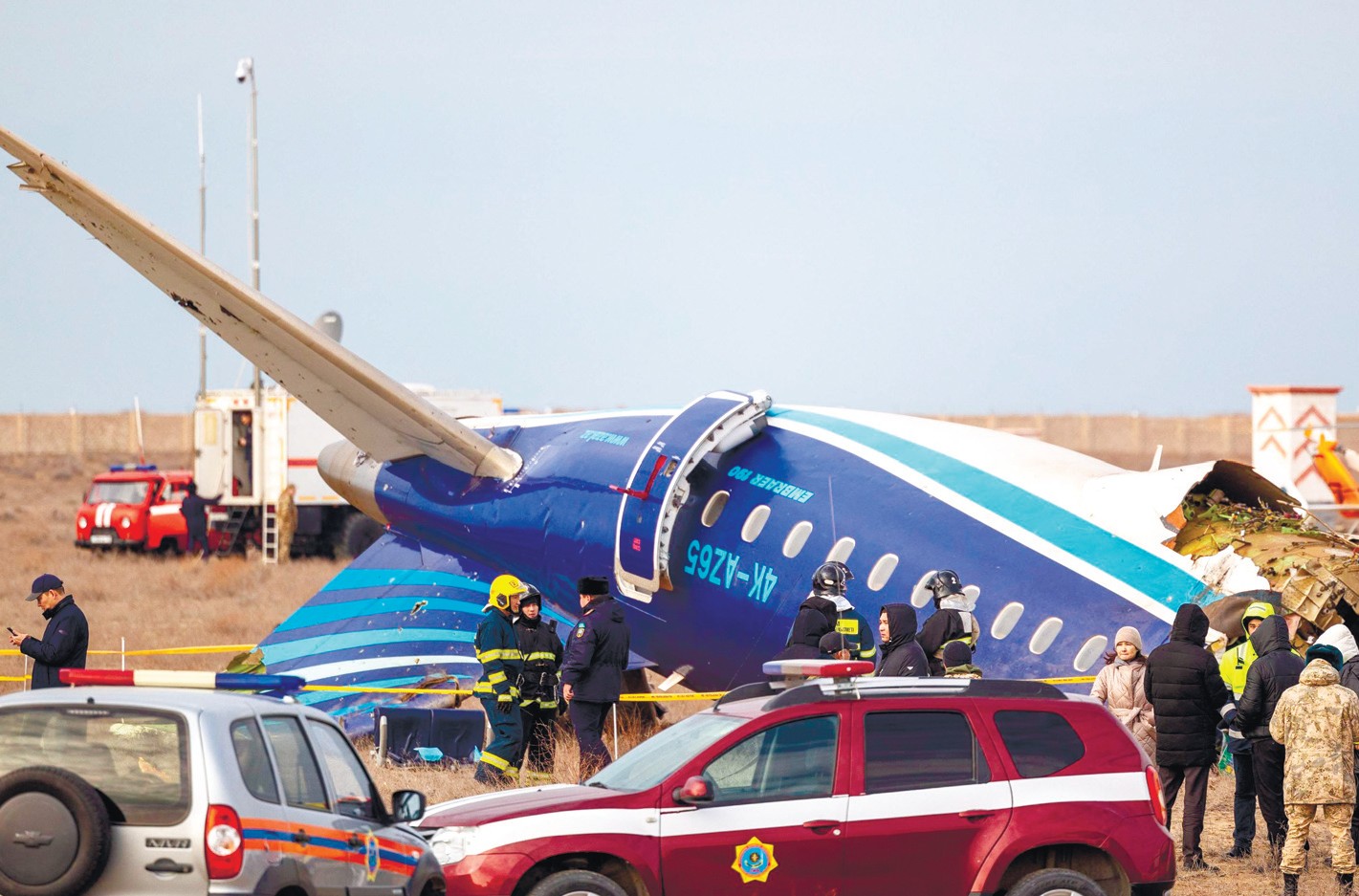
This dialogue, which drew the attention of foreign mass media, provoked a sharp reaction from official Moscow. Russian Foreign Ministry spokesperson Maria Zakharova expressed displeasure: how could Dmitry Gordon have been invited to the forum? It appears Moscow has still not reconciled itself to the fact that Azerbaijan is an independent state and that Baku decides for itself whom to invite. Russian pro-Kremlin media and bloggers have also unleashed an unprecedented campaign against Azerbaijan. They were outraged by Ilham Aliyev’s statement that Azerbaijan is preparing a portfolio of documents for submission to international judicial bodies regarding its aircraft shot down by Russian air defence forces near Grozny. Some pro-Kremlin bloggers have already begun threatening to "strike Baku’s centre with an 'Oreshnik'". There is no doubt that such a campaign is being coordinated from the top.
Meanwhile, pressure on the Azerbaijani diaspora continues. Previously, the main targets were small traders and market vendors, but today the blow is aimed at the elite—clearly illustrated by the resignation of TASS Deputy Director General Mikhail Gusman.
It hardly needs proving that applying to the International Court is the sovereign right of any state—especially when Russia, on whose territory the incident occurred, is actively obstructing the investigation, shielding the main figures involved, one of whom has even been promoted.
Perhaps each situation should be examined individually. But in any case, the conclusion is clear: Moscow was unprepared for Azerbaijan’s firm and principled stance on investigating the airliner disaster. They were confident that the first bark from Moscow would be obeyed without question, but it turned out otherwise. They were equally certain that the moment Moscow began "pressuring" ethnic Azerbaijanis in the city’s markets, Baku would panic and change its policy. That too failed. Now the situation is developing along a rather dangerous trajectory. Russia is attempting to act with methods from the early 1990s, but these no longer work. And no new tools have appeared in the arsenal of Russian diplomacy. Under such circumstances, the Kremlin has no chance of success—even in theory.
RECOMMEND:
 340
340