

WILL ISRAEL CAPTURE GAZA?
The war between the Jewish state and the Palestinian Hamas results in increasingly tragic consequences
Author: Natig NAZIMOGHLU
The Israeli-Palestinian conflict is entering a new phase of violence, which threatens to significantly exacerbate the long-standing confrontation in the land sacred to three religions. The Jewish state has initiated a military operation with the objective of occupying the Gaza Strip and completely removing the Palestinians from this area of their homeland.
Gideon's Chariots 2
Israel and its army (IDF) have openly declared that the aim of the second phase of the ground operation, "Gideon's Chariots", is to take full control of the capital of the sector, the city of Gaza. The cabinet of Prime Minister Benjamin Netanyahu has approved a plan for a major attack on the city, which is considered to be the last stronghold of the radical Hamas movement.
Israeli Defence Minister Israel Katz has made it clear that Gaza City will be destroyed if Hamas does not agree to disarm and release the hostages it is still holding as a result of the terrorist attack on 7 October 2023. The threat to "raze the entire city of Gaza to the ground if Hamas does not surrender" began to be implemented amid a humanitarian catastrophe that engulfed the sector, which had been reduced to ruins and was under a prolonged blockade.
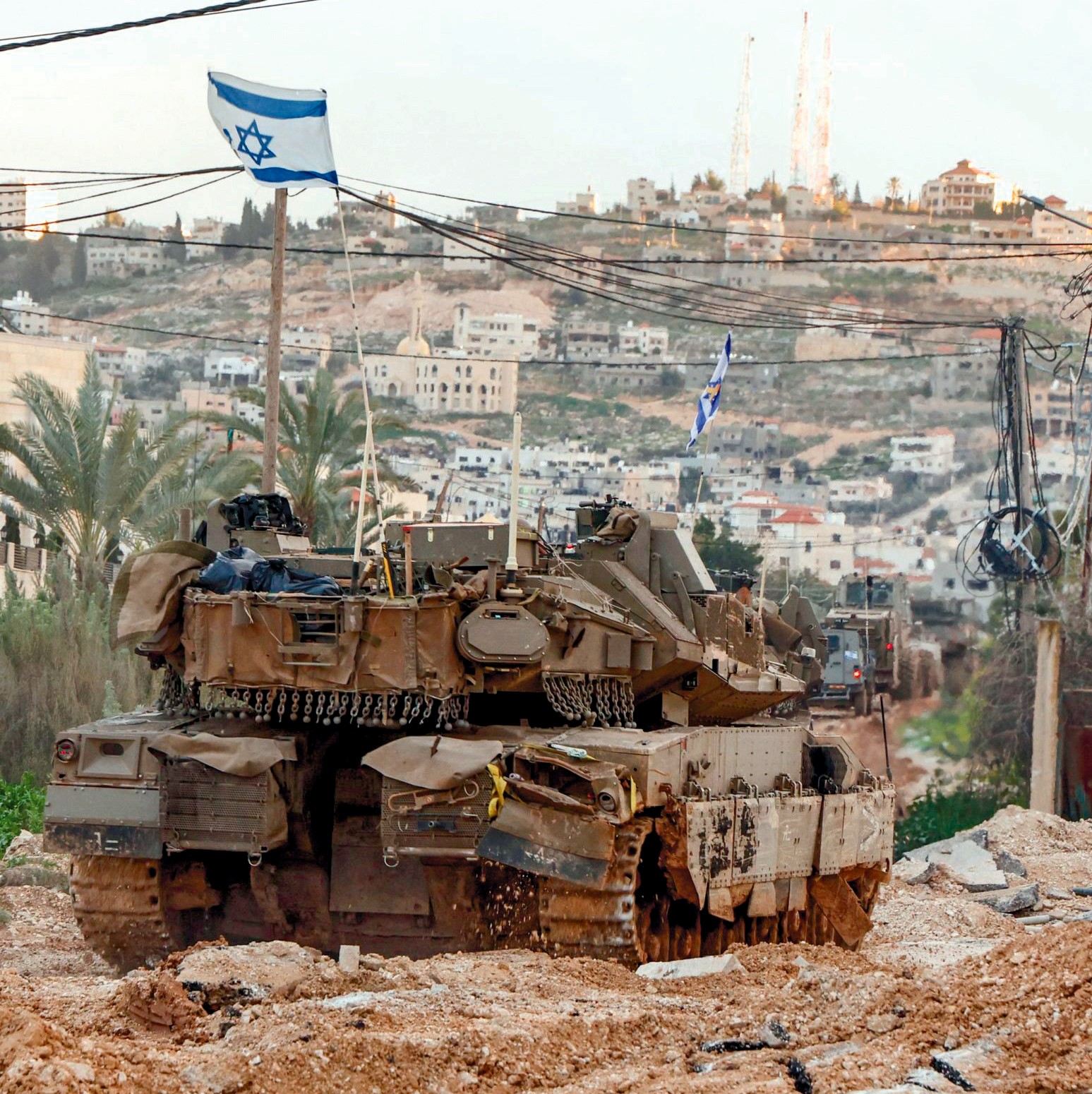
Between 23-25 August, Israeli tanks entered the suburbs of Gaza, while Israeli Air Force planes subjected the outskirts of the city to heavy destructive bombardment. Furthermore, Israeli troops returned to the Jabalia refugee camp north of Gaza City to destroy a number of buildings (according to some reports, along with their inhabitants) and tunnels. The IDF command stated that this was in order to "expand combat operations to other areas and prevent Hamas terrorists from returning and operating in these areas." Concurrently, air strikes were conducted on camps of refugees awaiting humanitarian aid in Qadisiya and Asda, west and north of Khan Yunis. It is reported that dozens of people have lost their lives and hundreds have been injured. The latest figures show that the number of people killed since the start of Israel's military operation against Hamas has now exceeded 62,000, with nearly 158,000 wounded.
The UN has stated that the "merciless bombing" of Gaza is leading to "a large number of civilian casualties and widespread destruction." The UN and international non-governmental organisations are warning of the "horrific humanitarian consequences" that the Israeli offensive on the city will have.
Meanwhile, on the eve of the Israeli army's invasion of Gaza City, the Famine Review Committee (FRC), operating within the framework of the Integrated Food Security Phase Classification (IPC) — a global initiative bringing together UN agencies, humanitarian organisations and the governments of a number of countries — published a report. This indicates the onset of a fifth, catastrophic level of famine in the Gaza province in the north of the sector, with the threat of this situation spreading in the coming weeks to the provinces of Deir el-Balah and Khan Yunis. The report states that across the sector, "half a million people are already facing hunger, poverty and death."
Israeli Prime Minister Netanyahu has described the global initiative's data as "blatant lies," and the country's Foreign Ministry has accused the UN of basing the report on "Hamas' lies" filtered by "organisations pursuing their own interests."
Israel has demanded that the UN withdraw the expert group's report with immediate effect. Meanwhile, another accusation against the Jewish state was made by Joyce Msuya, deputy director of the UN Environment Programme. She stated that the famine in the Gaza Strip was the result of conflict, the expulsion of people from their homes, 22 months of obstacles to the delivery of humanitarian aid, and the destruction of food production. The UN representative has warned that if no action is taken now, it will lead to "irreversible consequences."
A similar warning, albeit from a different perspective, was issued by US President Donald Trump. According to media reports, the head of the White House used the expression "I can't watch this anymore" to demand that Netanyahu speed up the military operation in Gaza. The aim was to enable the delivery of humanitarian aid and the reconstruction of the region to proceed more quickly. However, it is important to consider whether this "acceleration" will lead to a comprehensive settlement of the conflict, or whether it will in fact compromise the possibility of implementation.
A peaceful proposal and an irrefutable principle of settlement
Following the breakdown in negotiations with Hamas on a ceasefire and the release of hostages in July, Israel announced its intention to occupy the entire Gaza Strip. At present, the mediators Qatar and Egypt, with the active involvement of Turkey, are attempting to reach an agreement that will prevent a large-scale offensive by the Israeli army. A 60-day truce has been proposed, during which Hamas would release half of its remaining hostages and Israel would withdraw its troops from Gaza "under Arab-American supervision". Simultaneously, the mediators will be required to ensure that Hamas will freeze all military activities, paving the way for negotiations on a comprehensive cessation of hostilities. According to Sky News, the plan is designed to "deprive Benjamin Netanyahu of any pretext for occupying Gaza."
It appears that Hamas is willing to accept this plan. However, Israel has made it clear that it will not accept a partial agreement and is demanding a comprehensive one, with the release of all hostages. Furthermore, Prime Minister Netanyahu has announced his decision to initiate negotiations with mediators on the release of all remaining hostages in Gaza and to achieve an end to the war on terms that are "acceptable to Israel."
It is evident that Israel's primary condition remains the eradication of Hamas, or at the very least, the termination of its governance in Gaza. However, the future of the Palestinian civilian population remains uncertain, particularly in light of Israel's proposal, supported by the United States, to resettle them in neighbouring Arab countries, such as Egypt and Jordan.
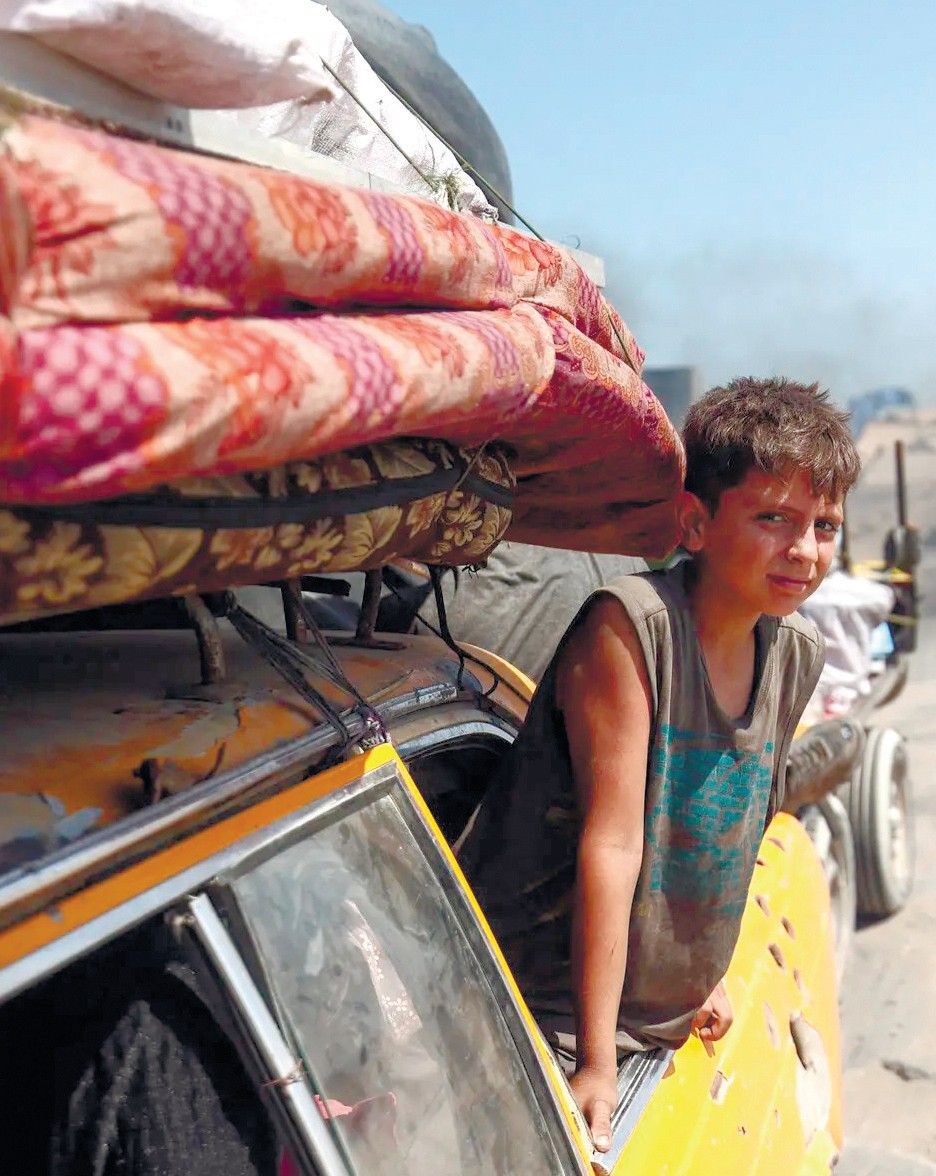
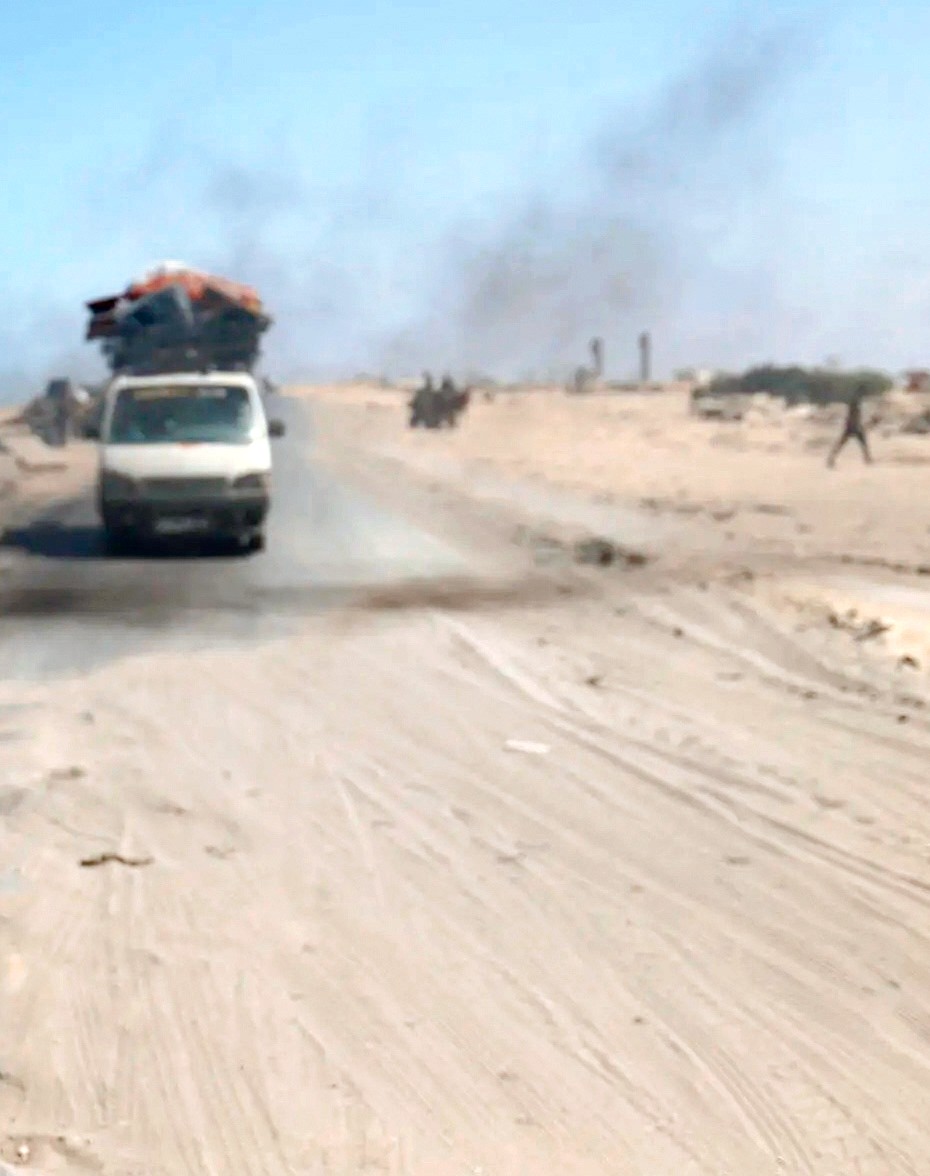
Since the commencement of the Israeli military operation, approximately one million Palestinians have been displaced from their homes. According to the UN, since 20 August this year alone, approximately 5,000 Palestinians have been forcibly relocated from the north of Gaza to the central and southern parts of the Strip. The plan to capture the city will necessitate the relocation of approximately one million people. Israel has openly declared its pursuit of this objective. The IDF has called on residents of Gaza City and the northern part of the enclave to evacuate ahead of the "destruction of the remaining strongholds" of the Hamas group. This information has also been communicated to international organisations so that they can prepare for the planned evacuation of the entire population of Gaza City to shelters in the south of the sector.
However, it should be noted that these steps could potentially exacerbate the international context of Israel's military operation. As the situation continues, with the suffering and death of Palestinian civilians, the international community's condemnation of Israel is increasing. Even Tel Aviv's traditional allies and partners, represented by leading European countries, are pointing to the need for an immediate end to the tragedy in Gaza, are taking decisions to suspend arms supplies to the Jewish state and are expressing their readiness to recognise a Palestinian state. This underscores the urgency for a swift resolution to the core issues of the Israeli-Palestinian conflict, guided by the principle of "two states for two peoples," a stance that has garnered widespread international acceptance.
However, should the global community reach a consensus on the necessity of an immediate ceasefire in Gaza and, consequently, a suspension of military action by Israel, it appears that there would be a corresponding consensus on the matter of removing Hamas from power in the sector. As reported by the Wall Street Journal, Egypt has initiated a training programme for Palestinians, with the aim of establishing a contingent of up to 10,000 individuals. This contingent is expected to contribute to security measures in the Gaza Strip following the conclusion of the armed conflict. The future security forces will be comprised of representatives of the Palestinian National Authority's security forces, including supporters of the Fatah movement. Furthermore, the armed forces of Egypt, Jordan and several Persian Gulf countries may be requested to assist in maintaining order in Gaza.
There is an increasing demand in the Arab world for Hamas to relinquish power and withdraw from the political scene. Most recently, the League of Arab States called on the radical movement to disarm and relinquish control of the Strip. It is evident that the promotion of peace in Gaza is contingent upon the fulfilment of this demand, in conjunction with Israel's withdrawal from its intentions to occupy the sector and expel the Palestinian population.
RECOMMEND:
 244
244