

TURKIC TROIKA MOVES CLOSER IN AVAZ
Visit of Ilham Aliyev and trilateral meeting in Turkmenbashi marked agreements of bilateral and regional significance
Author: Natig MAMMADZADE
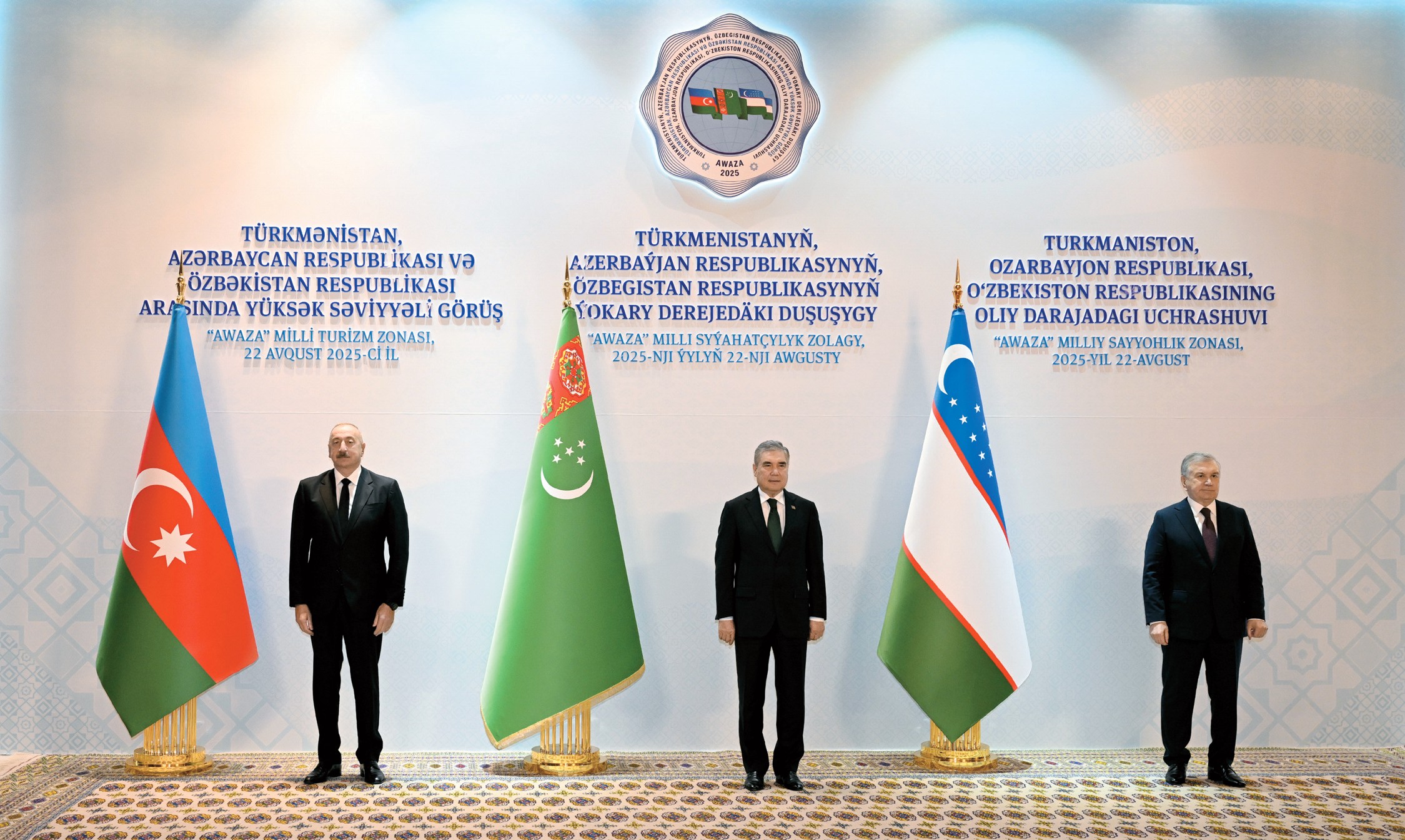
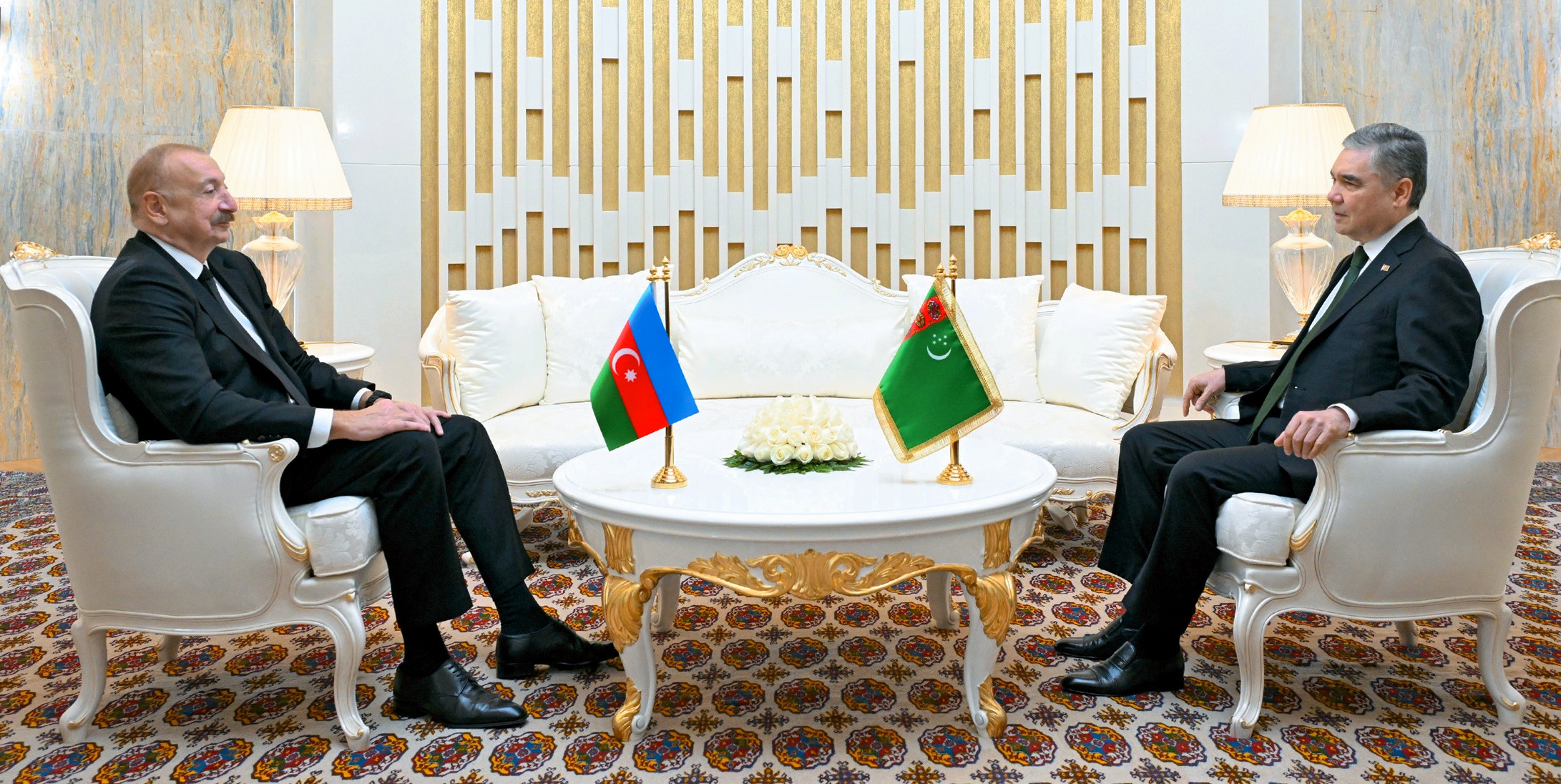
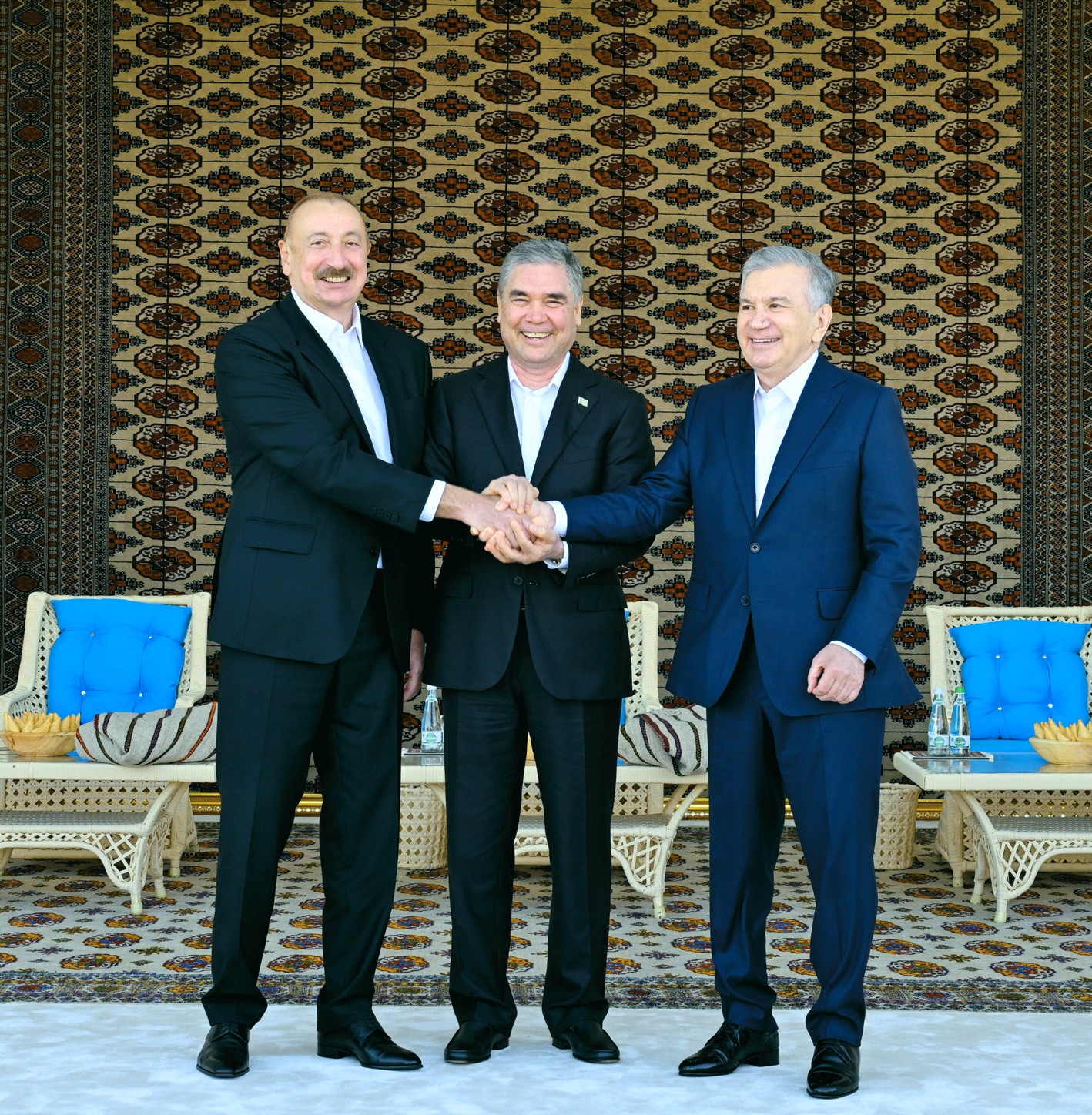
The working visit of the President of Azerbaijan, Ilham Aliyev, to Turkmenistan on August 22 was an important event in the development of bilateral relations. However, the significance of the event extended beyond the scope of the three-way meeting, which was attended by the Azerbaijani head of state, along with the leaders of Turkmenistan and Uzbekistan. This meeting took place in Avaz, a resort area located within the city of Turkmenbashi. The summit was a significant contribution to the ongoing process of enhanced integration among the Turkic countries.
Strategic rapprochement between Baku and Ashgabat
In mid-July of this year, the Chairman of the Halk Maslahaty of Turkmenistan, Gurbanguly Berdimuhamedov, who also holds the status of national leader of the Turkmen people, made an official visit to Azerbaijan. This visit resulted in bilateral cooperation being raised to a new strategic level. The Turkmen leader visited the liberated territories of Azerbaijan — Fuzuli and Shusha — and also expressed his country's intention to participate in the reconstruction of Garabagh.
During Berdimuhamedov's visit to Azerbaijan, it became evident that the bilateral relationship had finally overcome a certain estrangement that had accompanied it since the collapse of the USSR and the states'entry into a phase of independent development. A key reason for the breakdown in relations was a dispute over the large oil and gas field known as Kyapaz (or Serdar as it is known by the Turkmen). This field is located in the Caspian Sea on the border between the Azerbaijani and Turkmen sectors. On 21 January 2021, the parties signed a memorandum of understanding that established a new name for the field: Dostlug. On 25 February of that year, a joint working group was established with the objective of preparing an intergovernmental agreement on the exploration, development and exploitation of the field.
The Dostlug agreement was regarded in political and expert circles as a turning point in the creation of the Trans-Caspian gas pipeline. This was intended to become an important element of the region's energy diversification and to secure deliveries of Turkmen gas to the European market.
The Azerbaijan-Turkmen breakthrough was confirmed during Ilham Aliyev's visit to Turkmenbashi. In their respective statements, the leaders of both countries placed special emphasis on the historical and cultural basis of the rapprochement between Azerbaijan and Turkmenistan. "We are united by a shared history, culture, ethnic roots, language and religion. The Turkmen and Azerbaijani peoples have a long-standing tradition of shared heritage and cultural ties, fostering a sense of kinship that has been nurtured over centuries," Ilham Aliyev emphasised. As Berdimuhamedov stated: "The foundations of our bilateral relationship can be traced back to the annals of history, where we find commonalities in our traditions and cultural values. These shared elements serve as the cornerstones of our unified purpose. "On that basis, we develop our political, diplomatic, trade-economic, cultural and humanitarian relations."
A clear sign of the good relations between the two countries was the signing of a protocol establishing twinning relations between the Azerbaijani city of Fuzuli and the Turkmen city of Arkadag during Ilham Aliyev's visit to Turkmenbashi. Furthermore, Ilham Aliyev commended the swift development of an architectural blueprint for a mosque that Gurbanguly Berdimuhamedov had proposed to construct in the liberated city of Fuzuli during his visit just over a month earlier. Ilham Aliyev stated that this was an example of the Turkmen people and the leader of Turkmenistan supporting the Azerbaijani people and the Azerbaijani state, and that it was an embodiment of brotherhood.
The energy aspect of bilateral cooperation was consolidated by confirmation of agreements aimed at bringing Caspian hydrocarbon resources to western markets. Furthermore, as Ilham Aliyev stated, "when considering transport opportunities, a new potential has emerged: the East-West transport corridor that traverses the territories of Turkmenistan and Azerbaijan. It is evident that our collaborative efforts in this domain, the measures we are implementing to ensure coordination, will prove advantageous across a broad geographical area. In today's globalised business environment, reliable transport links are essential for facilitating trade and investment.
It is evident that Baku and Ashgabat are committed to establishing a pivotal hub and transport-communication corridor in Eurasia through their active involvement. The foundation for this is the modern logistics infrastructure that has been developed in Azerbaijan and Turkmenistan, including seaports, airports and railways. The formation of a three-way cooperation format involving Azerbaijan, Turkmenistan and Uzbekistan, a leading Central Asian country, reflects the ambitious geo-economic nature of the project.
The troika format, Eurasian communication and pan‑Turkic integration
A high-level meeting was also held in Ashgabat on 22 August, with the participation of Azerbaijan, Turkmenistan and Uzbekistan. In addition to Ilham Aliyev and Gurbanguly Berdimuhamedov, the meeting was attended by the President of Uzbekistan, Shavkat Mirziyoyev.
The Chairman of the Halk Maslahaty of Turkmenistan emphasised: "Today's meeting is of historical significance for multilateral relations. Today, Turkmenistan, Azerbaijan and Uzbekistan engage in open dialogue, collaborate and support each other's initiatives within international organisations, including the UN. In terms of economic cooperation, we considered the potential of our countries, which contributes to the development not only of our region, but of the entire Eurasian area.
The President of Uzbekistan gave a positive evaluation of the outcomes of the meeting, noting that it "clearly demonstrated a firm political will to deepen strategic partnership in the interests of our peoples. Taking into account geographic location, economic complementarity and transport-communication interconnection, such cooperation will bring benefits to all of us." He added that, in view of the unpredictable global political processes and the changing world economic situation, the aim of our partnership is to ensure sustainable development.
The President of Azerbaijan expressed his confidence that a new, promising and peace-oriented format of cooperation is being established in the region. He also reported that "instructions have already been given to the relevant state bodies to create a three-way format of cooperation and to present proposals on concrete directions for our next meeting."
In practice, this concerns the establishment of a format that aims to strengthen three-way cooperation between Azerbaijan, Turkmenistan and Uzbekistan. The format is also intended to make it one of the defining elements of geo-economics across Eurasia. This is most relevant to the transport sector, as Berdimuhamedov noted: the three countries have agreed to enhance cooperation within the framework of establishing transport corridors connecting Europe with Asia, with a view to reviving the historic Silk Road trade route. In particular, they considered the possibility of strengthening transport infrastructure in Central Asia and the Caspian basin."
In this context, the development of transit corridors is of particular importance. In addition, the pooling of capabilities of the ports of Baku and Turkmenbashi, the integration of railway lines and the development of ferry services are also essential. "This will strengthen the economies of the countries in the region and create conditions for more effective functioning of new trade routes connecting Europe and Asia," emphasised Uzbekistan's President Mirziyoyev.
The Azerbaijani head of state Ilham Aliyev also drew attention to the favourable geostrategic position of Azerbaijan, Turkmenistan and Uzbekistan, which connects East with West and North with South. In this regard, new tasks and opportunities in the sphere of transport-transit cooperation are opening up for our countries. It is clear that the Zangezur corridor will play a significant role in the transport and communications integration between Europe and Asia, as Ilham Aliyev has stated.
Furthermore, Azerbaijan, Turkmenistan and Uzbekistan explored opportunities to enhance collaboration among the three nations in the energy sector. This included the potential implementation of projects aimed at developing hydrocarbon fields and exporting "green" electricity. The financial sphere of cooperation also merits separate mention, within which new investment projects are envisaged. The overall objective of this initiative is to strengthen regional integration, thereby establishing the South Caucasus and Central Asia as a self-sufficient centre on an Eurasian scale.
Meanwhile, when speaking about the outcomes of the three‑way summit in Avaz, it is necessary to note its Turkic dimension. This is already not only a geo‑economic but a prospective geopolitical factor, substantially activated in large measure thanks to Azerbaijan’s victory in the Garabagh war. A factor that is being institutionally affirmed through the Organisation of Turkic States (OTS), in which Azerbaijan and Uzbekistan are, alongside Türkiye, Kazakhstan and Kyrgyzstan, full members, while Turkmenistan, following its declared principle of neutrality, participates as an observer. The formation of the Azerbaijan‑Turkmenistan‑Uzbekistan three‑way format clearly fits the logic of strengthening the OTS and pan‑Turkic integration. And in the specific case of Azerbaijan it confirms that cooperation and integration with brotherly Turkic countries is a priority of our country’s foreign policy — the leader of the South Caucasus and a key player at a strategically important Eurasian crossroads.
RECOMMEND:
 269
269

