

RAISING THE STATUS BAR
Baku set foreign policy priorities at the SCO summit, underscoring the importance of the Middle Corridor and new logistics routes
Author: Elchin HUSEYNOV
The Shanghai Cooperation Organisation (SCO) summit, which was successfully held on August 31–September 1 in Tianjin, China, was the largest in the organisation's history in terms of participating heads of state. The event was held under the slogan "Promoting the Shanghai Spirit: SCO in Action," the summit was attended by leaders from more than 20 countries and eight international organisations. The President of Azerbaijan, Ilham Aliyev, was among the guests in attendance. The meeting was of particular significance as it coincided with the 24th anniversary of the SCO, and was the first to include the full complement of members, including Russian leader Vladimir Putin and Indian premier Narendra Modi.
Shaping the agenda for the future: SCO to 2035
The Shanghai Cooperation Organisation was founded in 2001 and includes the following countries: India, Iran, Kazakhstan, China, Kyrgyzstan, Russia, Tajikistan, Pakistan, Uzbekistan and Belarus. The two countries in question are Afghanistan and Mongolia. Dialogue partners include Azerbaijan, Armenia, Bahrain, Egypt, Cambodia, Qatar, Kuwait, Maldives, Myanmar, Nepal, UAE, Saudi Arabia, Türkiye, and Sri Lanka. To date, there have been 23 summits in total, with five of these being chaired by China.
Azerbaijan has been actively engaged in international and regional organisations for some time, and has also expanded cooperation with the SCO in recent years. The decision to grant Azerbaijan dialogue partner status was taken in July 2015 at the organisation's summit in Ufa. In 2016, the parties formally documented the areas of existing cooperation in a memorandum. Azerbaijan has participated actively in a variety of SCO events over the intervening period.
It is important to note the following indicators of the SCO's activity. The combined territory of member states exceeds 35–36 million sq. km — about 65% of Eurasia. The SCO population is approximately 3.4–3.6 billion people, representing 40–47% of the world's population. In 2024, the combined foreign trade volume of SCO countries accounted for approximately 25% of global trade. The SCO accounts for 24–25% of world GDP. It is estimated that the combined GDP of member states by purchasing power parity, including associate members, will reach $82 trillion in 2025.
Key issues at this summit included improving the fight against international terrorism, extremism and separatism, strengthening cooperation in international information security, and accelerating the creation of specialised centres to counter terrorism. SCO leaders in Tianjin adopted a substantial package of documents. During the two-day summit, a set of 20 strategic decisions was signed, outlining the organisation's future for the coming decades. The main outcome was the Tianjin Declaration, which reflects consolidated approaches of member states to pressing regional and international problems and sets out the organisation's goals across its fields of activity. In accordance with the declaration, members reaffirmed their commitment to an approach that excludes bloc-based and confrontational methods for resolving international development issues.
One of the key documents adopted at the summit was the SCO Development Strategy to 2035, which sets out the organisation's long-term priorities. Programmes were also approved to counter extremist ideology for 2026–2030 and a roadmap for developing energy cooperation to 2030.
A significant development was the granting of dialogue partner status to the Lao People's Democratic Republic within the SCO, a move which signalled the organisation's growing influence in Southeast Asia. In addition, the SCO gained observer status with the CIS, strengthening ties between the two integration groupings in the post-Soviet space.
The summit placed particular emphasis on security issues. Agreements were signed to establish an SCO Anti-Narcotics Centre and a Universal Centre to counter challenges and threats to member states' security. SCO leaders also issued a statement marking the 80th anniversary of the end of World War II and the founding of the UN, underlining the organisation's commitment to the principles of international law and multilateral diplomacy.
A separate set of documents addressed the subject of economic cooperation. Statements were adopted to strengthen cooperation in the digital economy, sustainable energy development, cooperation in "green" industry and support for a multilateral trading system. Significant attention was given to innovation. SCO leaders signed a statement to deepen international cooperation in artificial intelligence and in scientific‑technical and innovation cooperation.
SCO Plus
At the Tianjin summit, a high-level "SCO Plus" meeting was convened, bringing together a diverse range of interested partners. The invited observers comprised states and representatives of partner organisations, including Azerbaijan, Armenia, Egypt, Türkiye, Mongolia, as well as the UN, ASEAN, CIS, CSTO and other bodies.
Chinese President Xi Jinping addressed SCO member states, emphasising the importance of adhering to fundamental foreign policy principles. He emphasised that member states should continue to avoid joining blocs and refrain from confrontation. He also emphasised the significance of pursuing a course that is not directed towards third parties. Xi put forward a proposal for a global governance initiative with the aim of establishing a fairer world system.
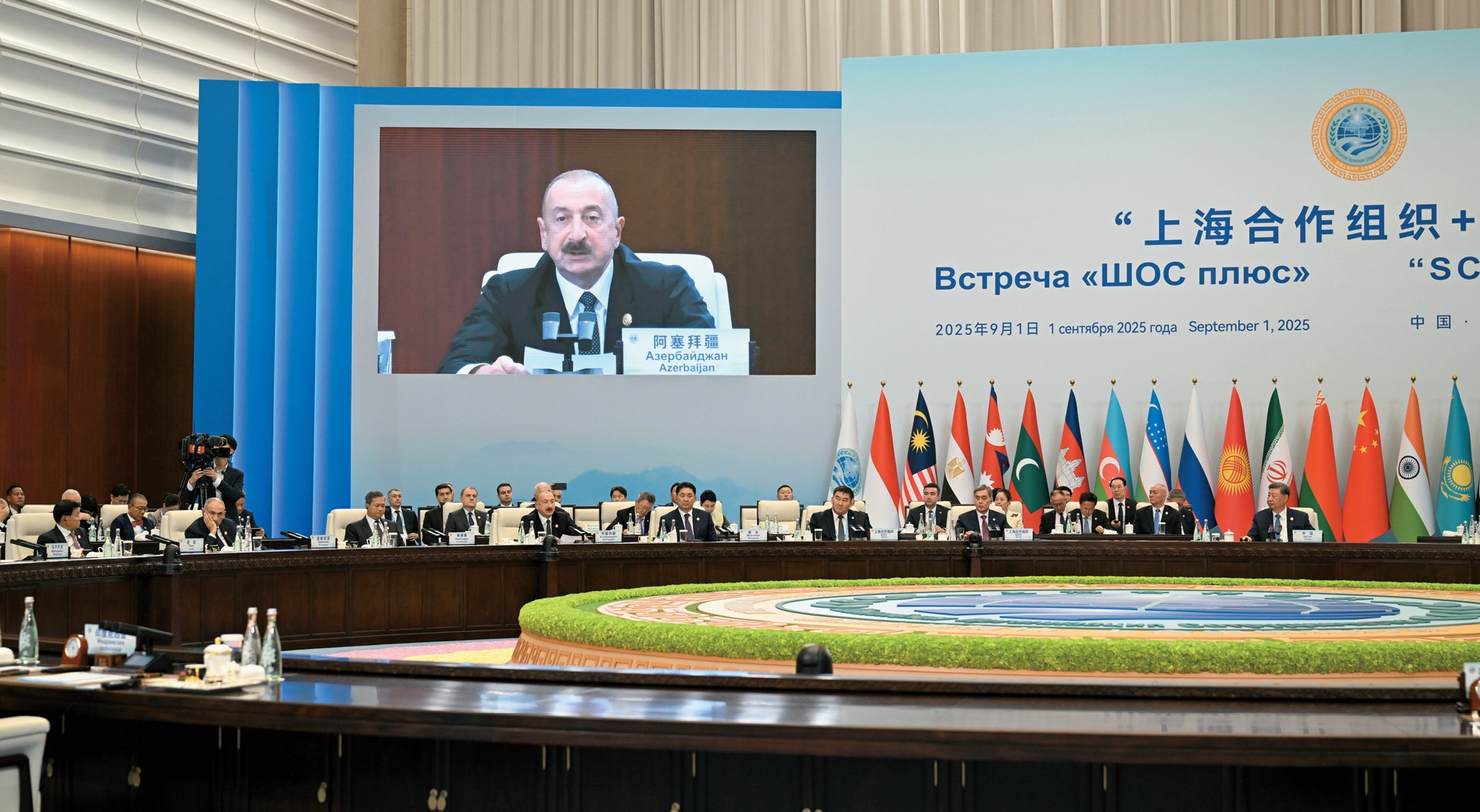
At the summit, Ilham Aliyev stated that Azerbaijan is committed to supporting China's initiatives on global development, global security and global civilisation. These initiatives aim to promote international peace, security and development. We would like to express our support for the initiative on global governance presented by the President of the People's Republic of China. This is an important and timely measure that will improve international relations on the basis of sovereign equality of states and respect for the UN Charter and international law.
Ilham Aliyev has stated that Azerbaijan is a reliable partner of China in the region. "We are committed to playing a constructive role in maintaining international and regional peace and security. We also implement large-scale economic, transport and energy projects." He added that Azerbaijan was among the first to support the One Belt, One Road initiative proposed by the Chinese leader and is implementing substantial practical projects in this direction.
The Zangezur Corridor, Aliyev noted, will soon become another important segment of the Middle Corridor and of the North‑South corridor, which will strengthen peace and multilateral partnership. The Middle Corridor, Aliyev continued, is a reliable and secure route connecting China and Central Asia with Europe through Azerbaijan. Since 2022, freight traffic through Azerbaijan on the Middle Corridor has increased by almost 90%.
The President noted a significant reduction in transit time along this corridor. "The recently reached agreements to connect the mainland Azerbaijan with its Nakhchivan Autonomous Republic will facilitate expanded transit capacities for international transportation," he added.
A partnership of strategic scale
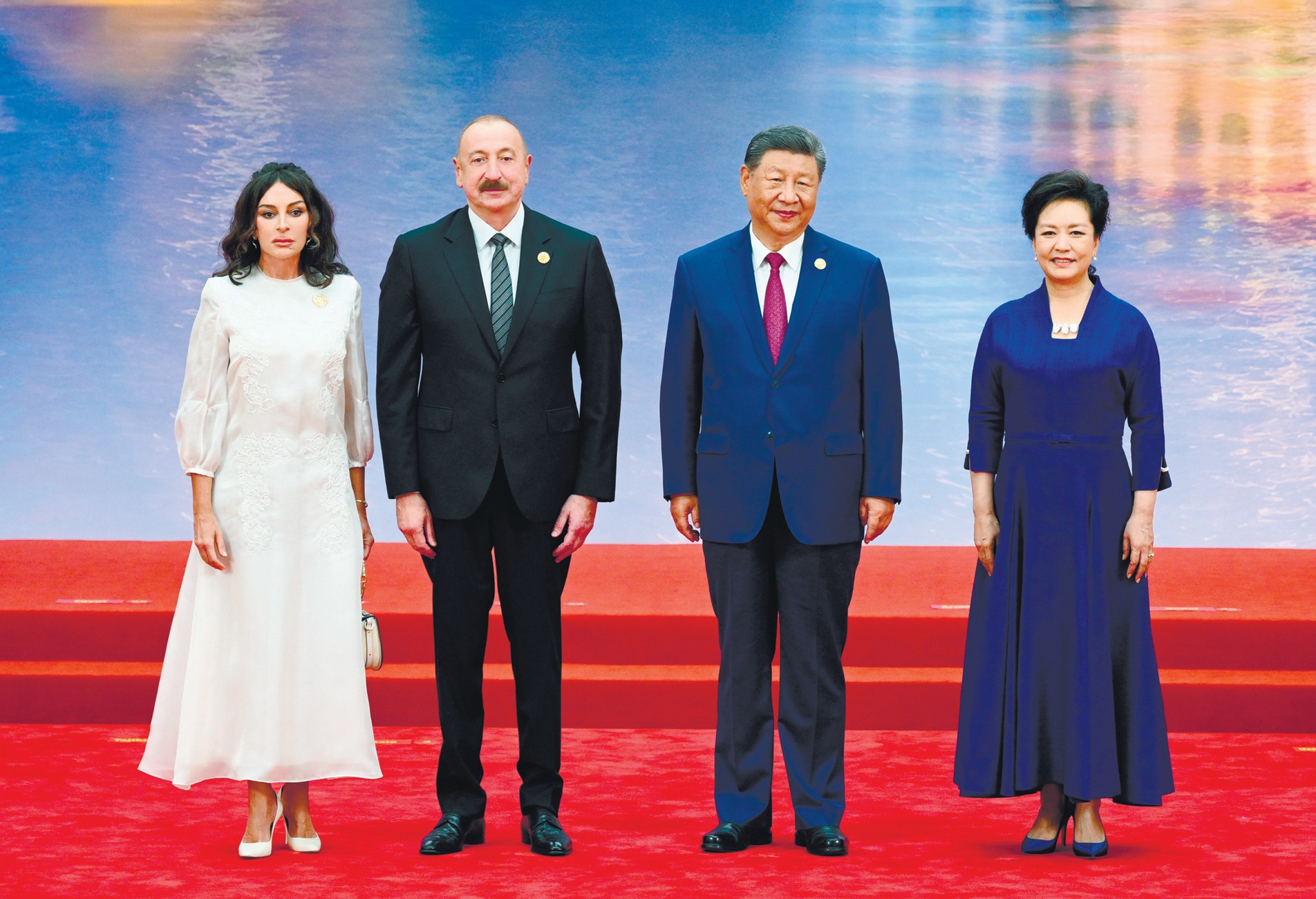
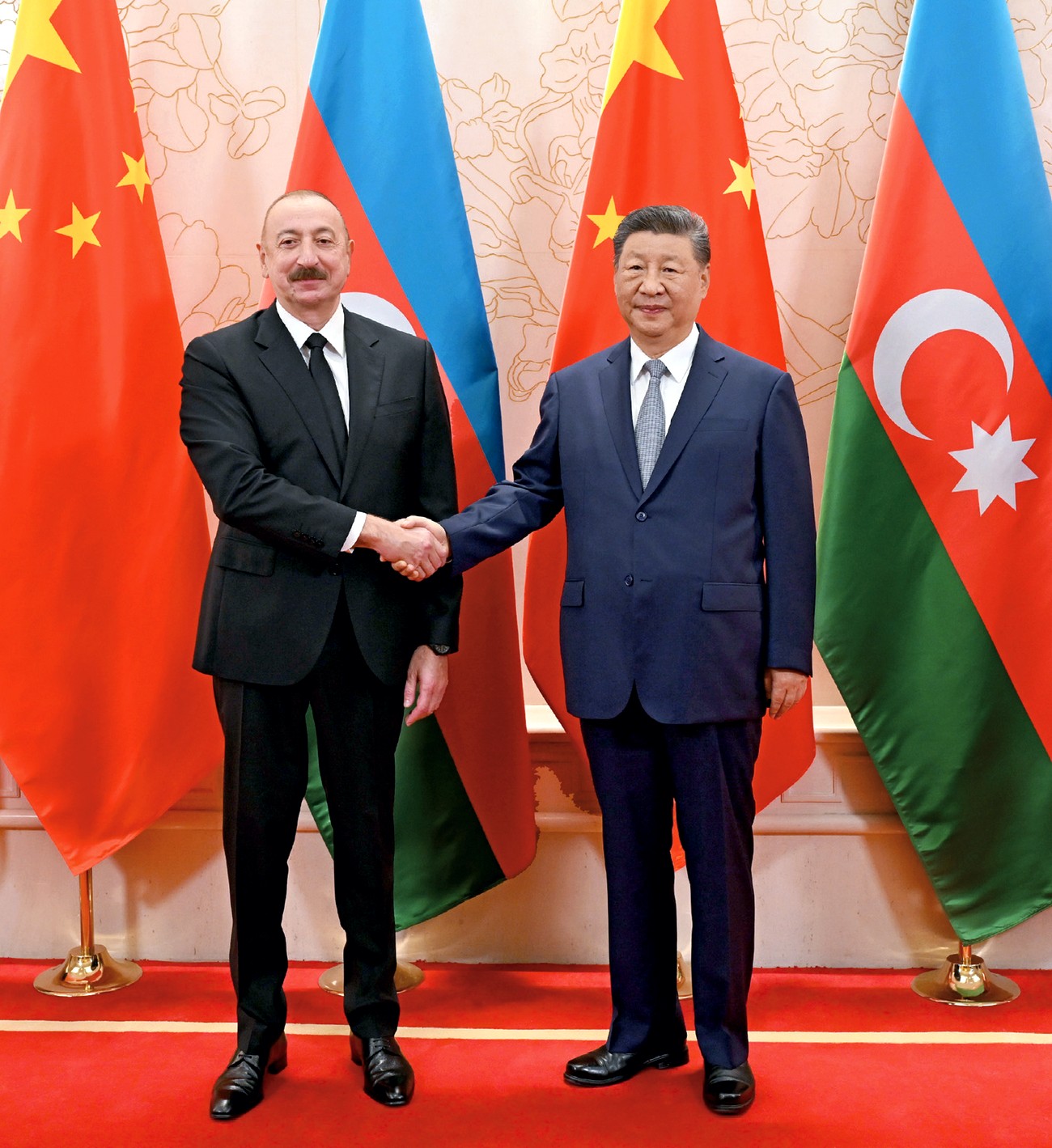
One of the key items on the agenda of the Azerbaijani President's visit to China was a meeting with the Chinese President, Xi Jinping. During the meeting, Xi referred to Ilham Aliyev as a "dear friend" and expressed his gratitude for his attendance at the SCO Plus summit, as well as the commemorative events and the military parade celebrating the 80th anniversary of China's triumph over foreign military aggression and fascism.
He stated that successful cooperation between Azerbaijan and China has been in place for over 30 years, and that bilateral relations have now developed into a comprehensive strategic partnership. Xi emphasised the growth of bilateral trade, expanded cooperation in energy, including renewable energy, and digitalisation. He also noted the strengthening of Azerbaijan-China cooperation within the One Belt, One Road initiative, highlighting the importance of transporting Chinese goods via Azerbaijani territory and underscoring the significance of the Trans-Caspian route. The Chairman announced China's support for expanding Azerbaijan's ties with the SCO, for the model of sovereign development, and reaffirmed Beijing's commitment to the principle of non‑interference in other countries' internal affairs.
Ilham Aliyev expressed satisfaction with his state visit to China, noting that his meetings and dialogue with Xi had given a strong impetus to the comprehensive development of cooperation between the two countries. He underscored the importance of the signed document on comprehensive strategic partnership. The President emphasised that cultivating ties with China is a top foreign policy priority for the nation. He stated that bilateral trade has seen significant growth. With regard to the One Belt, One Road initiative, Aliyev acknowledged the surge in shipments, including Chinese cargo, via the Middle Corridor — of which Azerbaijan plays a pivotal role — as a testament to the corridor's efficacy and appeal. It was noted that recently, following the entry into force of the visa-free regime document, there has been an increase in tourist relations.
During the visit, the Azerbaijani head of state held a series of high-level meetings with representatives of major Chinese economic enterprises. A meeting was held with Sun Hailiang, Chairman of CCCC (China Communications Construction Company), during which they exchanged views on developing the Trans-Caspian transport corridor and the company's participation in the second phase of construction of Baku International Sea Port. The parties discussed ways to improve transport infrastructure, including the construction of metro stations, the production of equipment, and the development of comprehensive urban transport. They also discussed Azerbaijan's transit potential. Sun Hailiang stated that conceptual proposals for cleaning and restoring the lakes on the Absheron Peninsula would be presented.
In discussions with Ju Peng, CEO of CETC (China Electronics Technology Group Corporation), the two parties exchanged views on potential areas for collaboration. These included the modernisation of national management systems and the development of managerial capacities through digital technologies. Other topics included the development of the digital economy, the assurance of national network security, cybersecurity and the use of data applications.
Discussions between Se Yi, Head of Sichuan Sunsync Photovoltaic Technology Co., and relevant parties covered the creation of a high-tech plant for solar panel manufacture in the Alat Free Economic Zone and the export of panels to global markets. Se Yi stated that the decision to invest in Azerbaijan was made with a view to the strategic relations between the two countries.
During a meeting with Ni Zheng, the head of China Energy Engineering Corporation Limited (Energy China), productive cooperation between Azerbaijan, including SOCAR, and the company was welcomed. This cooperation would cover projects in alternative and renewable energy. In this context, particular emphasis was placed on Energy China's commitment to sustainable energy initiatives, as illustrated by the construction of solar and offshore wind farms in Azerbaijan. Ni Zheng expressed interest in implementing new projects in our country, including wastewater cleaning, processing and reuse, optimisation of water‑resource management operations, and joint construction of photovoltaic panels in water basins.
The summit as an opportunity
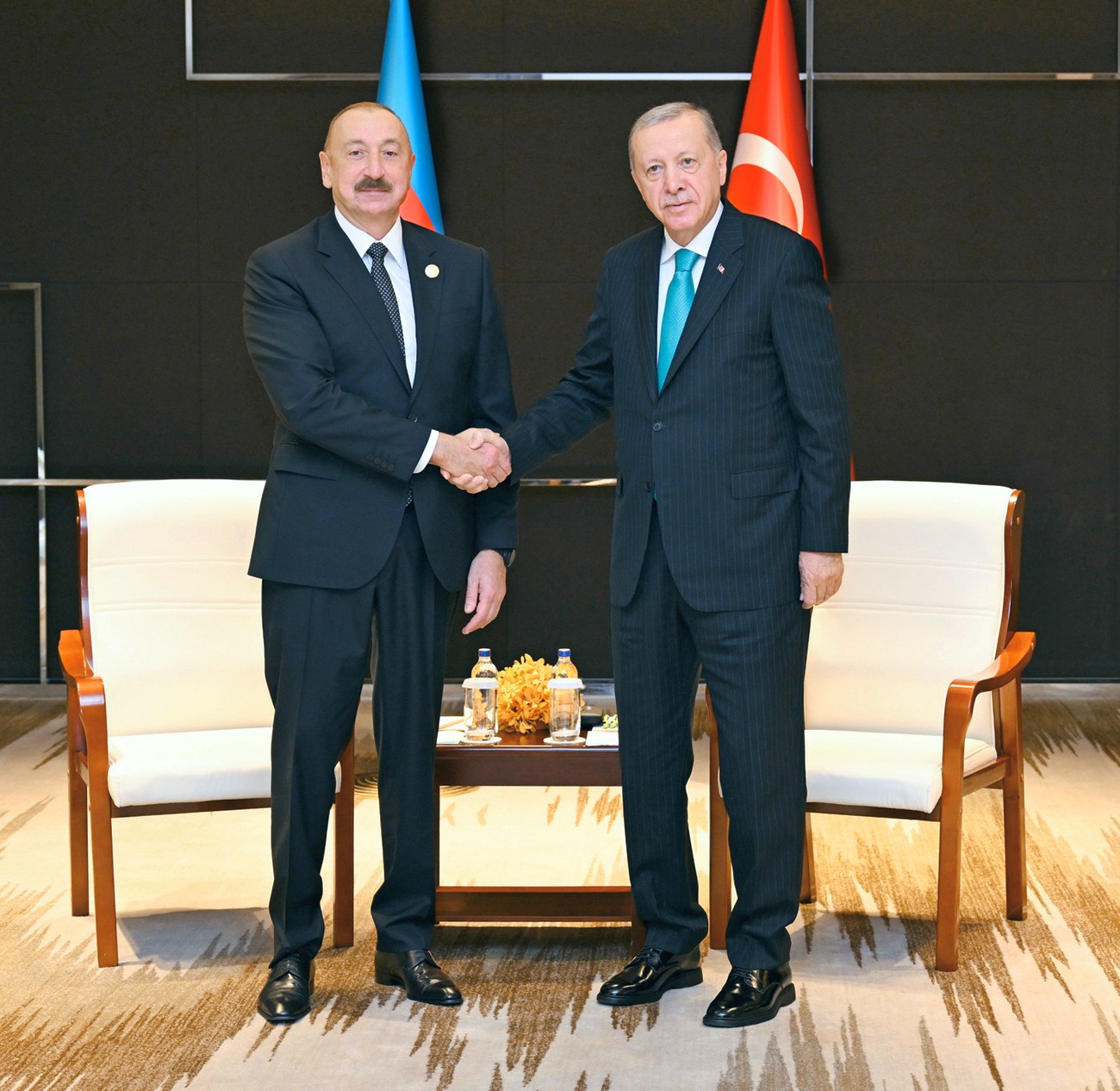
The high-level meeting in Tianjin was an opportunity for a series of important top-level discussions. For instance, Ilham Aliyev and the President of Turkey, Recep Tayyip Erdogan, addressed SOCAR's cooperation with the Turkish company BOTAŞ. In this context, the importance of Azerbaijani gas supplies to Syria via Turkey with Qatar's financial support was noted. In addition, the parties involved explored the potential for the implementation of joint energy projects between Azerbaijan and Türkiye in other countries. It was emphasised that it is essential to lay the foundation for the Kars-Igdir-Dilucu railway line. A discussion was held on the implementation of railway projects in Azerbaijan, with a particular focus on the Nakhchivan region.
The process of normalising relations between Azerbaijan and Armenia was discussed, with Türkiye's stabilising role in regional matters being highly appreciated. The upcoming Organisation of Turkic States summit, to be held in Azerbaijan this year, was also discussed.
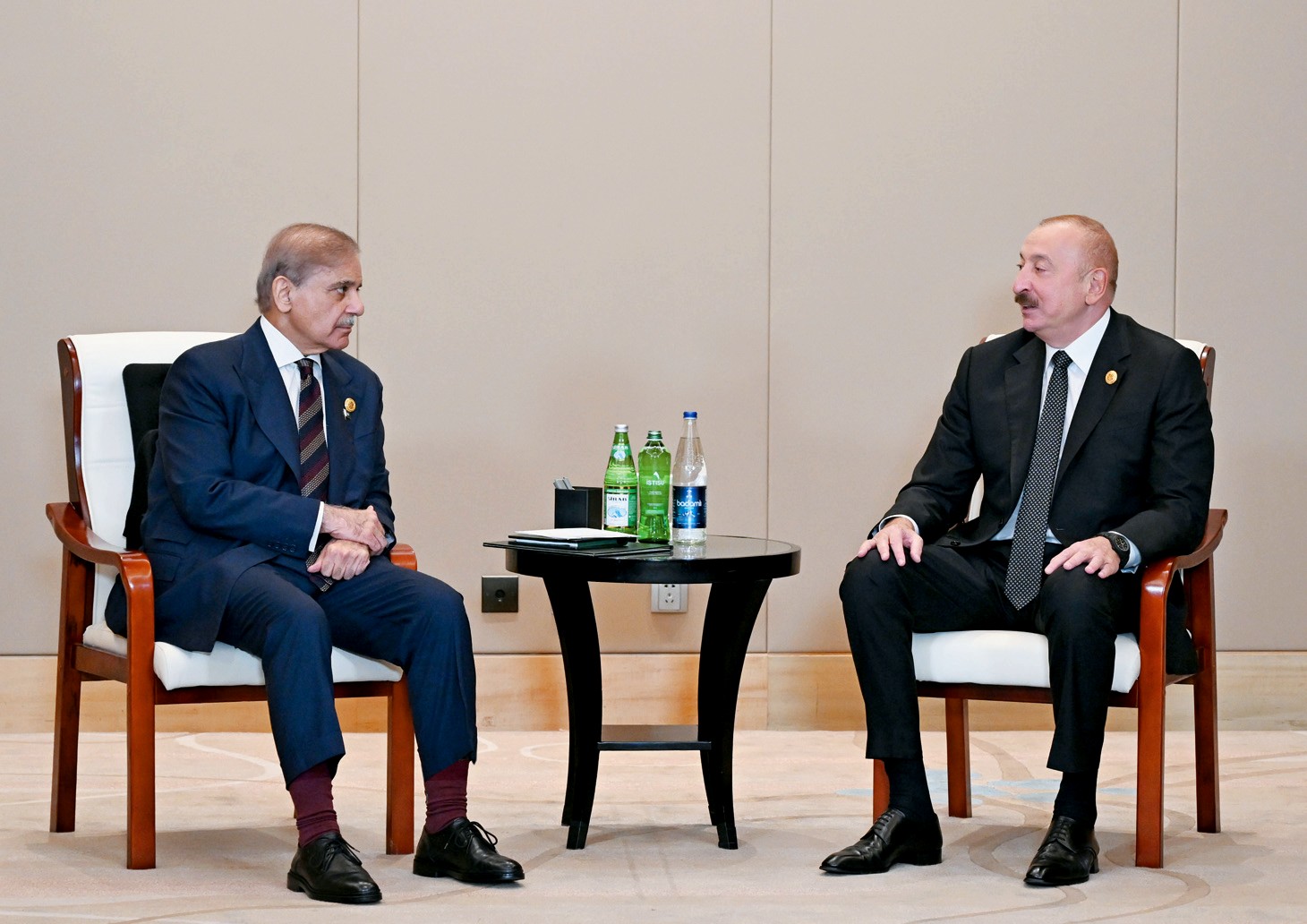
In a meeting with Ilham Aliyev, Pakistani Prime Minister Muhammad Shehbaz Sharif expressed his gratitude for the political support and solidarity shown by Azerbaijan during India's military aggression against Pakistan in April–May this year. Sharif expressed satisfaction at his visits to Azerbaijan and underlined the significance of the Lachin three-way meeting between Azerbaijan, Turkey and Pakistan. President Ilham Aliyev, in turn, emphasised that measures are being implemented to address matters discussed in the context of the Azerbaijan‑Türkiye‑Pakistan trilateral format.
The Pakistani Prime Minister acknowledged the historic significance of the normalisation and peace agenda between Azerbaijan and Armenia, with Ilham Aliyev emphasising the importance of progress within the framework of the Azerbaijan-Armenia peace process. The head of state also said that his visit to Washington is of great importance for developing Azerbaijani-American relations, and stressed the role of the President of the US, Donald Trump, in these processes.
The President of Azerbaijan met with the Armenian Prime Minister, Nikol Pashinyan, on the sidelines of the SCO summit. The leaders discussed the Azerbaijan-Armenia peace agenda, reaffirming the importance of constructive dialogue, mutual trust and regional stability. Both leaders acknowledged the positive outcomes of the recent Washington summit, which demonstrated international support for advancing peace and the normalisation process. The two sides have agreed to maintain ongoing dialogue.
The meeting between Ilham Aliyev and Maldivian President Mohamed Muizzu also discussed the significant potential for strengthening tourism and people-to-people connections between the two nations. The Azerbaijani delegation visited the Maldives for political consultations, during which they discussed potential areas for cooperation in the spheres of trade, the economy and investment. The role of direct flights from Azerbaijan to the Maldives in developing tourism was raised, as were simplification of the visa regime, cooperation in mutual investments and expansion of the treaty-legal framework between the two countries. Mohamed Muizzu invited his Azerbaijani counterpart to visit the Maldives on an official visit, which was accepted.
The President of Azerbaijan also held a meeting with the President of the Asian Infrastructure Investment Bank, Mr Jin Liqun. The parties acknowledged the success of their collaboration in various areas, including "green" energy, and explored potential future cooperation along the Middle Corridor, in metro construction and water resources. The meeting concluded with the signing of a joint declaration on strategic partnership.
The SCO summit in Tianjin marked a significant milestone in the organisation's development, underscoring its commitment to sustainable growth, security and technological advancement. The adopted documents set a long-term agenda, strengthening the SCO's position as one of the centres of influence in a changing world order. Special attention was drawn to the expansion of cooperation with dialogue partners, including Azerbaijan, which is showing growing interest in assuming a more active role within the organisation. Baku considers the SCO to be a significant platform for political dialogue, economic initiatives and energy projects. In this context, Azerbaijan's deepening engagement is fully consistent with the SCO's broader strategy of expansion and balanced development.
RECOMMEND:
 302
302

